Reflective Film
CN → US| HS Code | Tariff Rate | Origin | Destination | Doc |
|---|---|---|---|---|
| 3919905010 | 40.8% | CN | US | Official Doc |
| 3920992000 | 39.2% | CN | US | Official Doc |
| 3919101010 | 41.5% | CN | US | Official Doc |
| 5903102010 | 35.0% | CN | US | Official Doc |
| 5903102090 | 35.0% | CN | US | Official Doc |
Product Images
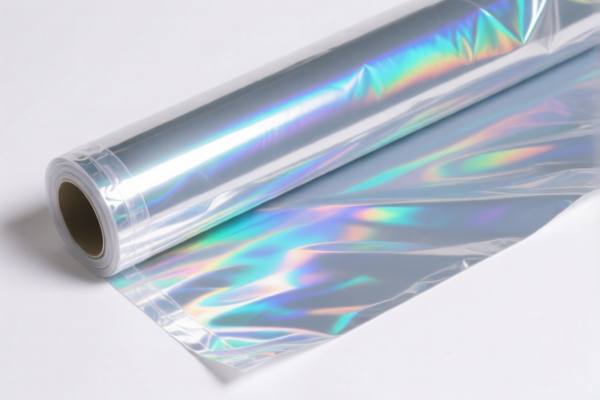

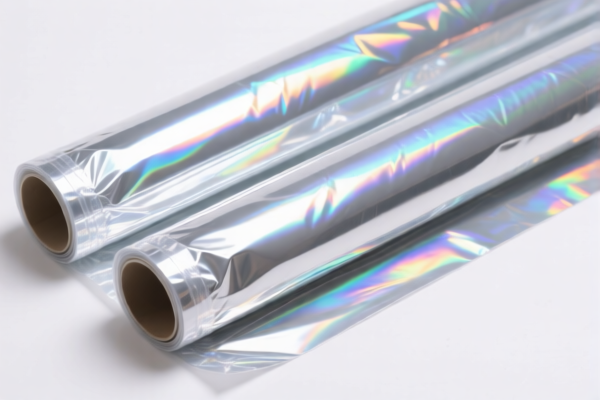
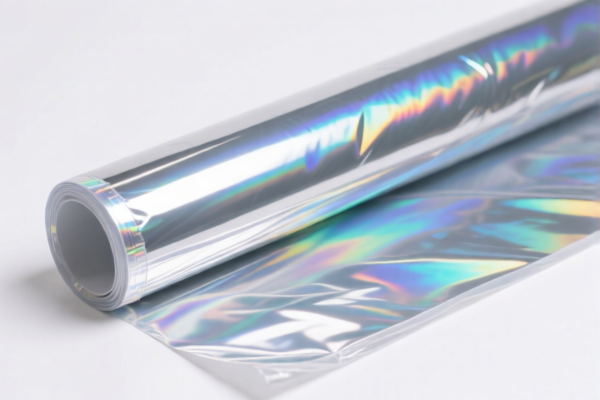
AI Analysis
🌟 Reflective Film (反光夜光膜): HS Code Classification & Customs Clearance Guide 2026
🌐 HS Code Reference & Customs Clearance Guide | Latest Tariff Analysis | Professional Entry Strategy
📌 Product Definition: What is "Reflective Film"?
Reflective Film (often referred to as Night-Glow Film or Retroreflective Sheeting) is a specialized material used in traffic signs, clothing, vehicle markings, and safety equipment. It works by reflecting light back to its source, enhancing visibility in low-light conditions.
In international trade, the classification depends heavily on the material composition, structure (e.g., laminated, coated, or solid film), and intended use.
⚠️ Key Distinction:
- Is it a simple plastic film with a reflective coating?
- Is it a fabric covered with plastic (PVC)?
- Does it function primarily as a transparent/translucent film vs. a textile composite?
This determines whether it falls under Chapter 39 (Plastics) or Chapter 59 (Impregnated Textiles).
📦 HS Code Classification Details (Based on Provided Data)
The following five HS Codes are identified as potential classifications for "Reflective Film" based on specific material and structural characteristics.
| HS Code | Summary Description | Key Classification Criteria |
|---|---|---|
3919.90.50.10 |
Reflective Night-Glow Film | Form: Film. Use: Reflective. Material: Inferred as Plastic. |
3920.99.20.00 |
Reflective Night-Glow Film | Form: Film. Material: Plastic. Category: Flexible film pieces under "Other" categories. |
3919.10.10.10 |
Reflective Night-Glow Film | Material: Plastic Film. Attribute: Similar to glass-bead-based luminous surfaces. |
5903.10.20.10 |
Reflective Night-Glow Film | Structure: Laminated/Covered. Material: Plastic-coated/covered (e.g., PVC substrate). |
5903.10.20.90 |
Reflective Night-Glow Film | Structure: Fabric impregnated/covered. Material: Plastic-covered textile. Type: Other types in this category. |
🔍 Critical Analysis:
- Codes3919...and3920...are for pure plastic films. If the product is a self-adhesive plastic sheet with retroreflective beads or prisms, these are likely candidates.
- Codes5903...are for textiles/laminates. If the reflective material is bonded to a fabric backing (common in safety vests), Chapter 59 applies.
- Note: The distinction between 3919 and 3920 often lies in whether the film is "Self-Adhesive" (3919) or "Non-Self-Adhesive" (3920).
💰 Tariff Rate Breakdown (US Market Analysis)
✅ Applicable Country: United States (US)
✅ Origin: China (CN) (Inferred from "122-Clause" and "Section 301" context in data)
✅ Effective Date: Current applicable rates as per data provided.
All listed HS Codes share a similar tariff structure due to the "Trade War" tariffs and specific trade remedies.
🎯 1. 3919.90.50.10 & 3920.99.20.00 & 3919.10.10.10 (Plastic Films)
| Item | Content |
|---|---|
| Base Duty | 4.2% - 6.5% (Varies by specific sub-heading) |
| Section 301 Surcharge | +25.0% (Additional tariff under US Trade Law Section 301) |
| Section 122 Tariff | +10.0% (Specific duty under Section 122 of the Trade Expansion Act) |
| Total Tax Rate | 39.2% - 41.5% |
| Tax Calculation | CIF Value × Total Rate |
| De Minimis Exemption | ❌ Not Applicable (High tariff rates usually exclude small parcel exemptions in strict enforcement) |
| Legal Basis | USITC Harmonized Tariff Schedule + IEEPA/Section 301 Orders |
📌 Explanation:
- Base Duty: Low, as plastics are generally not protected heavily.
- Section 301 (25%): This is the major cost driver for Chinese-origin goods.
- Section 122 (10%): Often applied to protect specific US industries; here it adds to the burden.
- Result: Even the "cheapest" plastic film option carries a ~39-41% total duty burden.
🎯 2. 5903.10.20.10 & 5903.10.20.90 (Plastic-Laminated Textiles)
| Item | Content |
|---|---|
| Base Duty | 0.0% |
| Section 301 Surcharge | +25.0% |
| Section 122 Tariff | +10.0% |
| Total Tax Rate | 35.0% |
| Tax Calculation | CIF Value × 35% |
| De Minimis Exemption | ❌ Not Applicable |
| Legal Basis | USITC + Section 301/122 |
📌 Explanation:
- Base Duty: 0% because textiles/laminates often have lower base protection in this specific sub-category.
- Surcharges: The same 35% (25% + 10%) applies.
- Result: This is the lowest total tax rate (35%) among all options, making it the most cost-effective if the product structure qualifies (i.e., it must be a plastic-covered textile).
🛠️ Customs Clearance Practical Advice
✅ 1. Documentation Checklist (Essential)
| Document | Required? | Purpose |
|---|---|---|
| Product Specification Sheet | ✔️ | Must detail: Layer structure, adhesive type, base material (PVC/PE/Fabric), reflectivity method (beads/prisms). |
| Commercial Invoice | ✔️ | Must clearly state: "Reflective Film," Material Composition, Country of Origin. |
| Packing List | ✔️ | Weight, dimensions, number of rolls. |
| Certificate of Origin (CO) | ✔️ | Critical for verifying origin to apply/exempt surcharges. |
| Photos of Product | ✔️ | Show cross-section to prove if it is "Pure Plastic" (Ch. 39) or "Laminated Fabric" (Ch. 59). |
| Section 301 Exclusion Proof | ✔️ | If applicable, provide evidence of exclusion (if any were granted). |
✅ 2. Classification Strategy (How to Choose)
| Scenario | Recommended HS Code | Why? |
|---|---|---|
| Pure Plastic Sheet (Self-Adhesive) | 3919.90.50.10 or 3919.10.10.10 |
Best if it's a standard sticker-like film. |
| Pure Plastic Sheet (Non-Adhesive) | 3920.99.20.00 |
Best if it's a plain roll for further processing. |
| Reflective Fabric/Vest Material | 5903.10.20.10 / .90 |
Cost Savings: Lowest total tax (35%). Must prove it is a textile composite. |
🔥 Pro Tip:
If your reflective film has a fabric backing (even a thin one), argue for Chapter 59. The 5% tax difference (35% vs 40%) is significant. However, you must provide strong evidence (e.g., manufacturing process, material analysis) that the textile nature is essential.
✅ 3. Common Pitfalls to Avoid
❌ Mistake 1: Declaring "Plastic Film" when it's actually "Plastic-Coated Fabric"
👉 Risk: Customs may reclassify to 5903... (lower tax) but demand back-taxes if they disagree, OR classify as a higher-duty category if documentation is vague.
✅ Fix: Provide material composition breakdown (% of plastic vs. fabric).
❌ Mistake 2: Ignoring Section 301 & 122 Tariffs
👉 Risk: Underpayment of duties, penalties, and detention of goods.
✅ Fix: Always include the +35% to +41.5% surcharge in your landed cost calculation.
❌ Mistake 3: Vague Description "Reflective Material"
👉 Risk: Customs exam will take weeks to determine the correct sub-heading.
✅ Fix: Use precise language: "Retroreflective PVC film with glass beads, self-adhesive, for traffic signs."
🌍 Global Market Comparison (Contextual)
| Region | Likely HS Code | Approx. Total Duty | Notes |
|---|---|---|---|
| 🇺🇸 USA | 3919/3920/5903 |
35% - 41.5% | Heavy Section 301 & 122 tariffs on CN origin. |
| 🇨🇳 China (Import) | 3919/5903 |
~5% - 10% | Lower base rates, no Section 301. |
| 🇪🇺 EU | 3919/5903 |
~4% - 6.5% | Generally no high surcharges for this category. |
| 🇯🇵 Japan | 3919/5903 |
~5% - 8% | Competitive rates, no major surcharges. |
📌 Conclusion:
The US market is the most challenging due to the cumulative 35-41% tariff burden. Exporters should: 1. Optimize Classification: Ensure correct Chapter 59 classification if applicable to save ~5%. 2. Supply Chain Diversification: Consider sourcing from non-China countries (e.g., Vietnam, Mexico) if exempt from Section 301/122. 3. Advance Rulings: Apply for a Binding Tariff Information (BTI) or Advance Ruling from US CBP to mitigate risk.
📌 Summary & Action Items
- Identify Material: Is it pure plastic or plastic-coated fabric?
- Select HS Code:
- Pure Plastic →
3919.90.50.10/3920.99.20.00(Tax: ~40%) - Coated Fabric →
5903.10.20.10(Tax: 35%) - Calculate Landed Cost: Include Base Duty + 25% Sec 301 + 10% Sec 122.
- Prepare Docs: Clear description, material breakdown, and origin proof.
🎯 Final Advice:
🔹 "Material Defines Duty, Documentation Defends Value!"
🔹 "For US Imports, Chapter 59 is your best friend (35% vs 40%)."
🔹 "Never underestimate the +35% Surcharge – it’s the new normal for Chinese goods."
📣 Immediate Action:
📞 Contact a Licensed Customs Broker for a pre-submission review.
📄 Request a Sample Test Report to confirm material layers (Plastic vs. Fabric).
🚀 Update Your Pricing Model to reflect the 35-41.5% effective duty rate.
✨ Smart Classification Saves Money!
💼 Precision in Customs Leads to Profitability in Trade.
Customer Reviews
About HS Code Classification
The Harmonized System (HS) is an internationally standardized nomenclature developed by the World Customs Organization (WCO) to classify traded products. Over 200 countries use the HS system as the basis for customs tariffs, trade statistics, and import/export regulations.
Each HS code follows a hierarchical structure:
- Chapter (2 digits) — Broad category of goods (e.g., Chapter 84: Machinery and Mechanical Appliances)
- Heading (4 digits) — More specific grouping within the chapter
- Subheading (6 digits) — Internationally standardized breakdown, used by all WCO member countries
- National subdivisions (8-10 digits) — Country-specific extensions for further classification, such as US HTSUS 10-digit codes
Correct HS code classification is essential for smooth customs clearance, accurate duty payment, and compliance with trade regulations. Misclassification can lead to customs delays, overpayment of duties, or penalties.
When importing from CN to US, the applicable tariff rates may include:
- Most-Favored-Nation (MFN) rate — The standard duty rate applied to WTO members
- General rate — Applied to countries without trade agreements
- Trade remedy duties — Additional tariffs such as Section 301 (anti-dumping), Section 232 (national security), or countervailing duties
The information provided on this page is for reference purposes only. For official classification, please consult with your local customs authority or a licensed customs broker.