Reflective Road Sticker
CN → US| HS Code | Tariff Rate | Origin | Destination | Doc |
|---|---|---|---|---|
| 3919905010 | 40.8% | CN | US | Official Doc |
| 3919101010 | 41.5% | CN | US | Official Doc |
| 5903102090 | 35.0% | CN | US | Official Doc |
| 5903102010 | 35.0% | CN | US | Official Doc |
| 3921110000 | 40.3% | CN | US | Official Doc |
Product Images
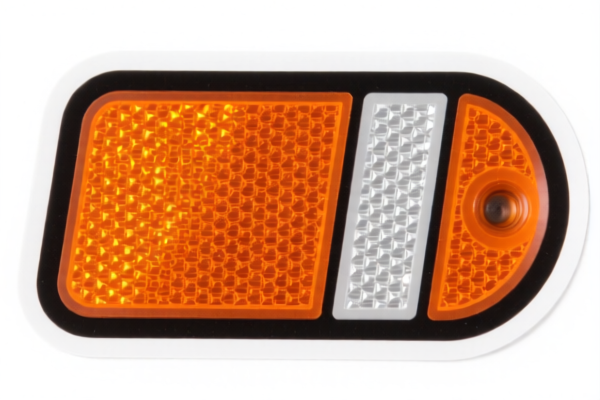
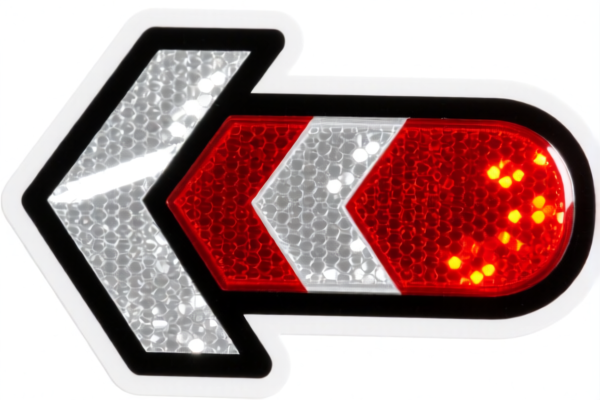


AI Analysis
🚧 Reflective Road Sticker (Reflective Adhesive Sheet)
🌐 HS Code Reference & Customs Clearance Guide | 2026 Latest Tariff Analysis | Professional-Level Clearance Strategy
📌 I. Product Definition & Classification: What Exactly Is a "Reflective Road Sticker"?
Reflective road stickers (often referred to as reflective self-adhesive films or sheets) are critical safety components used in traffic management, vehicle markings, and industrial identification. They consist of a plastic substrate (PVC, PET, or polymer) coated with high-refractive-index glass beads or prismatic structures, backed by a pressure-sensitive adhesive.
In international trade, the classification depends heavily on material composition and manufacturing process: * Plastic Sheets/Films: If the primary characteristic is the plastic film itself, regardless of coating, it often falls under Chapter 39. * Textiles/Fabrics: If the substrate is a woven fabric impregnated with plastic, it falls under Chapter 59.
⚠️ Key Distinction Point:
- If the product is a plastic film/coating applied to plastic or general materials → Chapter 39 (Plastics).
- If the product is a fabric/textile that has been impregnated, coated, or covered with plastics → Chapter 59 (Textiles impregnated with plastics).
📦 II. HS Code Classification Details (2026 Latest Tariff Authority Comparison)
| HS Code | Product Description | Application Scenario | Material/Structure |
|---|---|---|---|
3919.90.50.10 |
Self-adhesive plates, sheets, film, foil, tape, and other flat shapes, of plastics: Other | General reflective stickers, PVC-based reflective tapes | ✅ Plastic Substrate (Self-adhesive) |
3919.10.10.10 |
Self-adhesive plates, sheets, film, foil, tape, and other flat shapes, of plastics: In rolls of a width not exceeding 20 cm | Narrow reflective strips, small reflective decals | ✅ Plastic Film/Substrate |
5903.10.20.90 |
Textiles impregnated, coated, covered or laminated with plastics: Of polyethylene, polypropylene or polyvinyl chloride | Reflective materials on textile/fabric backing | ✅ Textile Base + Plastic Coating |
5903.10.20.10 |
Textiles impregnated, coated, covered or laminated with plastics: Other functional coatings | Reflective materials where the fabric structure is dominant | ✅ Fabric Base + Plastic Functional Layer |
3921.11.00.00 |
Other plates, sheets, film, foil and strip, of plastics: Of polymers of ethylene | Reflective tapes made specifically from PE films | ✅ Polymer Film (PE) |
🔍 Important Reminder:
- If the sticker is primarily plastic (even if it has a reflective layer), it usually goes to Chapter 39 (3919or3921).
- If the sticker is primarily textile (fabric) with a plastic coating for reflectivity, it goes to Chapter 59 (5903).
- Do not mix up "Plastic Film" and "Fabric". The base material determines the chapter.
💰 III. 2026 Latest Tariff Rate Breakdown (Including Additional Taxes & Policy Surcharges)
✅ Applicable Country: United States (US)
✅ Country of Origin: China (CN)
✅ Effective Date: Including imports after 2025-11-10 (Note: Data reflects current known surcharges based on provided input)
🎯 1. 3919.90.50.10 —— Self-adhesive Plastic Plates (General Reflective Sticker)
| Item | Content |
|---|---|
| Base Duty Rate | 5.8% (ad valorem) |
| Section 301 Surcharge | +25.0% (U.S. Trade Law Section 301) |
| Section 122 Surcharge | +10.0% (Specific trade remedy/tariff clause) |
| Total Duty Rate | 40.8% |
| Tax Calculation | CIF Value × 40.8% |
| De Minimis Exemption | ❌ Not Available (deny_de_minimis) |
| Legal Basis Path | Section 301 → Section 122 → USITC:3919.90.50.10 |
📌 Explanation:
- Base 5.8%: Standard MFN duty for other self-adhesive plastic sheets.
- 301 Clause (25%): Standard tariff imposed on Chinese plastic products.
- Section 122 (10%): Additional levy under specific trade provisions.
- Total 40.8%: A significant cost burden. Importers must factor this into pricing.
🎯 2. 3919.10.10.10 —— Self-adhesive Plastic Rolls (<20cm Width)
| Item | Content |
|---|---|
| Base Duty Rate | 6.5% (ad valorem) |
| Section 301 Surcharge | +25.0% |
| Section 122 Surcharge | +10.0% |
| Total Duty Rate | 41.5% |
| Tax Calculation | CIF Value × 41.5% |
| De Minimis Exemption | ❌ Not Available |
| Legal Basis Path | Section 301 → Section 122 → USITC:3919.10.10.10 |
📌 Note:
- Slightly higher total rate than3919.90.50.10due to a higher base duty (6.5% vs 5.8%).
- Applies to narrow reflective tapes (e.g., for bicycle reflectors, small vehicle markings).
🎯 3. 5903.10.20.90 & 5903.10.20.10 —— Textiles Impregnated/Coated with Plastics (Reflective Fabric)
| Item | Content |
|---|---|
| Base Duty Rate | 0.0% (ad valorem) |
| Section 301 Surcharge | +25.0% |
| Section 122 Surcharge | +10.0% |
| Total Duty Rate | 35.0% |
| Tax Calculation | CIF Value × 35.0% |
| De Minimis Exemption | ❌ Not Available |
| Legal Basis Path | Section 301 → Section 122 → USITC:5903.10.20.XX |
📌 Critical Advantage:
- Lower Total Rate (35.0%): Because the base duty is 0%, the total tax burden is 5.8% - 6.5% lower than plastic-based stickers.
- Condition: Must prove the product is textile-based (woven/non-woven fabric) impregnated with PVC/PE/PP.
- Usage: Reflective vests, traffic cones fabric covers, heavy-duty reflective tapes on fabric backing.
🎯 4. 3921.11.00.00 —— Plates/Sheets of Polymers of Ethylene
| Item | Content |
|---|---|
| Base Duty Rate | 5.3% (ad valorem) |
| Section 301 Surcharge | +25.0% |
| Section 122 Surcharge | +10.0% |
| Total Duty Rate | 40.3% |
| Tax Calculation | CIF Value × 40.3% |
| De Minimis Exemption | ❌ Not Available |
| Legal Basis Path | Section 301 → Section 122 → USITC:3921.11.00.00 |
📌 Note:
- Applies only if the reflective sheet is specifically made from Polyethylene (PE) polymers.
- Total rate is 40.3%, slightly lower than general plastic (3919) due to lower base duty (5.3%).
🛠️ IV. Customs Clearance Practical Advice (Real-World Pitfall Avoidance)
✅ 1. Preparation Checklist (All Required)
| Document | Required? | Explanation |
|---|---|---|
| ✅ Product Specification Sheet | ✔️ | Must detail: Base material (Plastic vs. Fabric), Coating type, Reflectivity class (Class 1/2/3), Adhesive type. |
| ✅ Product Photos | ✔️ | Clear images showing the cross-section (to prove base material) and reflective surface. |
| ✅ Commercial Invoice | ✔️ | Must explicitly state: "Reflective Self-Adhesive Sheet, Material: PVC/PET/Fabric". Avoid vague terms like "Sticker". |
| ✅ Packing List | ✔️ | Detail rolls, sheets, or cut pieces. |
| ✅ Certificate of Origin (CO) | ✔️ | Proof of Chinese origin triggers the surcharges. |
| ✅ Test Report | ✔️ | Reflectivity performance test (retroreflective coefficient) helps justify use and classification. |
✅ 2. Declaration Tips (Key Mantra)
🔥 “Base Material Defines Chapter, Fabric Saves 5%, Plastic Costs 40%+!”
| Scenario | Correct HS Code | Wrong Action | Consequence |
|---|---|---|---|
| Reflective Tape on Plastic Film | 3919.90.50.10 or 3921.11.00.00 |
Classify as Fabric (5903) |
Audit Failure → Fine + Back Duties + Potential Fraud Charges |
| Reflective Material on Fabric | 5903.10.20.90 or 5903.10.20.10 |
Classify as Plastic (3919) |
Overpay Tax → Lose 5.8%-6.5% competitive edge |
| Narrow Strips (<20cm) | 3919.10.10.10 |
Classify as Wide Sheets | Slightly higher duty (6.5% base) |
| Reflective Vest (Garment) | 6101/6202 (Not in Data) |
Classify as Material | Major Error → Different Chapter Entirely |
✅ 3. Special Handling Cases
| Case | Handling Advice |
|---|---|
| Mixed Materials (Plastic + Fabric) | If >50% value or essential character is fabric, argue for 5903. If plastic dominates, use 3919. Provide BOM (Bill of Materials). |
| Self-Adhesive vs. Heat-Activated | Self-adhesive clearly falls under 3919 or 5903. Heat-activated might be different. Clarify in specs. |
| High-Visibility Safety Gear | If it's a finished garment (vest), it's Chapter 61/62. If it's a raw sticker/sheet, it's 39/59. Do not confuse finished goods with raw materials. |
| Section 122 Application | Ensure your broker checks if Section 122 applies to your specific manufacturer/exporter list, as some entities may be exempt or targeted. |
🌍 V. Global Market Clearance Comparison (2026 Update)
| Country/Region | Recommended HS Code (Reflective Sticker) | Base Duty | Surcharges (China) | Total Effective Rate | Remarks |
|---|---|---|---|---|---|
| 🇺🇸 USA | 5903.10.20.90 (Fabric) or 3919.90.50.10 (Plastic) |
0% / 5.8% | +35% (301+122) | 35.0% / 40.8% | Fabric is cheaper. |
| 🇨🇳 China (Export) | N/A | N/A | N/A | 0% (Export Duty Free) | Check destination rules. |
| 🇪🇺 EU | 3919.90 or 5903.10 |
6.5% / 0% | None (Generally) | 6.5% / 0% | No Section 301/122 equivalents. Much cheaper! |
| 🇬🇧 UK | Similar to EU | 6.5% / 0% | None | 6.5% / 0% | Post-Brexit, no US-style surcharges. |
| 🇨🇦 Canada | 3919.90 |
5% | None (USMCA if Canadian) | 5% (if CN origin, MFN) | MFN duty is low, no 301. |
📌 Conclusion:
- USA is the most expensive market due to Section 301 and 122 tariffs.
- EU/UK/Canada are significantly cheaper for Chinese-origin reflective stickers.
- Strategy: If exporting to the US, try to classify as Fabric (5903) to save ~6% in total tax, or consider supply chain diversification to avoid surcharges if volumes are high.
📌 VI. Common Errors & Pitfalls (Lessons Learned)
❌ Error 1: Calling it "Reflective Sticker" without specifying material.
👉 Result: Customs may default to the highest duty rate or reject the entry.
✅ Fix: Always specify "Reflective Self-Adhesive Sheet, PVC/PET/Fabric Base".
❌ Error 2: Misclassifying Fabric-based reflective tape as Plastic.
👉 Result: Paying 40.8% instead of 35.0%. Unnecessary cost.
✅ Fix: Provide fabric samples or weave diagrams to prove textile base.
❌ Error 3: Ignoring Section 122.
👉 Result: Underpayment of duties, leading to penalties and audits.
✅ Fix: Always check if your specific HS code is subject to Section 122 (10%).
❌ Error 4: Using "De Minimis" for small shipments.
👉 Result: Denied. Reflective materials from China are explicitly not eligible for $800 de minimis exemption.
✅ Fix: Pay duties upfront, even for small batches.
🎯 VII. Conclusion: Precise Classification, Cost Optimization!
🎯 Remember the Mantra:
🔹 "Fabric saves 6%, Plastic costs 40%!"
🔹 "Section 122 is 10%, don't skip it!"
🔹 "No De Minimis for Chinese Reflective Stickers!"
📌 Pro Tip:
If you are importing large volumes, consider:
1. Pre-Submission Ruling: Submit samples and specs to US Customs for an official HS Code determination.
2. Supplier Audit: Confirm if your supplier is on any restricted entity lists that might trigger higher scrutiny under Section 122.
3. Material Optimization: Can your product be made on a fabric backing instead of plastic? It might save you 5.8% - 6.5% in total landed cost.
📣 Take Action Now:
📞 Contact your customs broker with the exact material composition (Plastic vs. Fabric).
📋 Prepare your BOM (Bill of Materials) and product photos.
🚀 Classify correctly, clear smoothly, and protect your margins!
✨ Professional Customs Clearance Starts with Accurate Classification!
💼 Every Percent of Tax Savings Counts!
Customer Reviews
About HS Code Classification
The Harmonized System (HS) is an internationally standardized nomenclature developed by the World Customs Organization (WCO) to classify traded products. Over 200 countries use the HS system as the basis for customs tariffs, trade statistics, and import/export regulations.
Each HS code follows a hierarchical structure:
- Chapter (2 digits) — Broad category of goods (e.g., Chapter 84: Machinery and Mechanical Appliances)
- Heading (4 digits) — More specific grouping within the chapter
- Subheading (6 digits) — Internationally standardized breakdown, used by all WCO member countries
- National subdivisions (8-10 digits) — Country-specific extensions for further classification, such as US HTSUS 10-digit codes
Correct HS code classification is essential for smooth customs clearance, accurate duty payment, and compliance with trade regulations. Misclassification can lead to customs delays, overpayment of duties, or penalties.
When importing from CN to US, the applicable tariff rates may include:
- Most-Favored-Nation (MFN) rate — The standard duty rate applied to WTO members
- General rate — Applied to countries without trade agreements
- Trade remedy duties — Additional tariffs such as Section 301 (anti-dumping), Section 232 (national security), or countervailing duties
The information provided on this page is for reference purposes only. For official classification, please consult with your local customs authority or a licensed customs broker.