Reflective Safety Suit
CN → USProduct Images



AI Analysis
👕 Reflective Safety Suit (High-Visibility Workwear)
🌐 HS Code Reference & Customs Clearance Guide | 2026 Latest Tariff Analysis | Professional Compliance Strategy
📌 1. Product Definition and Classification: Do You Truly Understand "Reflective Safety Suit"?
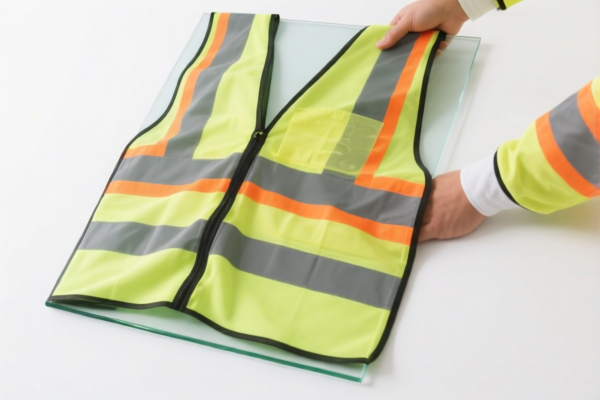
A Reflective Safety Suit (often referred to as Hi-Vis Vest, Jacket, or Coverall) is personal protective equipment (PPE) designed to enhance visibility of the wearer in low-light conditions or adverse weather. In international trade, classification depends heavily on fabric composition, garment type, and whether it contains specific reflective components.
Key Distinctions: * Vests/Gilets (Sleeveless): Often classified under specific PPE headings or general vests depending on material. * Jackets/Coats (With Sleeves): Classified based on the primary textile material (e.g., Polyester, Cotton, Nylon). * Coveralls/Overalls: Classified as a single ensemble garment. * Reflective Tape Strips: Usually considered integral parts of the garment and do not determine the HS code separately, unless the suit is primarily made of reflective material itself (rare).
⚠️ Critical Classification Point:
- If the suit is textile-based (Polyester, Cotton, etc.) with reflective tape attached, it is classified under Chapter 61 (Knitted/Crocheted) or Chapter 62 (Non-knitted).
- The reflective strips do NOT change the chapter unless the garment is entirely made of reflective sheeting (which is uncommon for standard workwear).
- Material Composition is the primary driver for the 6-digit HS code.
📦 2. HS Code Classification Details (2026 Latest Tariff Authority Comparison)
| HS Code | Product Description | Application Scenario | Material Type | Reflective Tape Included? |
|---|---|---|---|---|
6116.93.00.00 |
Gloves impregnated, coated, or covered with plastics or rubber | Not applicable for suits | - | ❌ |
6114.30.00.00 |
Other garments, knitted or crocheted: of synthetic fibers | Knitted Hi-Vis Vests/Jackets (Polyester/Spandex blend) | Synthetic | ✅ (Attached) |
6211.43.00.00 |
Other garments, not knitted or crocheted: of cotton | Cotton Hi-Vis Coveralls or Workshirts | Cotton | ✅ (Attached) |
6211.43.90.00 |
Other garments... of cotton | Cotton Hi-Vis Jackets (Other) | Cotton | ✅ (Attached) |
6211.43.10.00 |
Other garments... of cotton | Cotton Work Overalls/ Coveralls | Cotton | ✅ (Attached) |
6211.43.90.00 |
Other garments... of cotton | Cotton Jackets/Vests (Other) | Cotton | ✅ (Attached) |
6211.43.90.00 |
Other garments... of synthetic fibers | Non-Knitted Polyester/Nylon Hi-Vis Jackets | Synthetic | ✅ (Attached) |
6211.43.10.00 |
Other garments... of synthetic fibers | Non-Knitted Polyester/Nylon Coveralls | Synthetic | ✅ (Attached) |
6211.43.90.00 |
Other garments... of synthetic fibers | Non-Knitted Polyester/Nylon Vests/Jackets | Synthetic | ✅ (Attached) |
🔍 Key Reminder:
- Knitted (Chapter 61) vs. Non-Knitted (Chapter 62) is the first major split.
- Synthetic Fiber (Polyester, Nylon) vs. Cotton is the second split.
- Coveralls/Overalls (...10.00) often have slightly different duty rates than Jackets/Vests (...90.00).
- Reflective Tape is considered an accessory/trimming and does not change the base material classification.
💰 3. 2026 Latest Tariff Rate Breakdown (Including Surcharge, Policy Surcharge)
✅ Applicable Country: United States (US)
✅ Origin: China (CN)
✅ Effective Date: From November 10, 2025 onwards (including subsequent imports)
🎯 1. 6114.30.00.00 – Knitted Hi-Vis Vests/Jackets (Synthetic Fibers)
| Item | Content |
|---|---|
| Base Tariff Rate | 16.5% (ad valorem) |
| Section 301 Tariff (USITC) | +7.5% to +25% (depending on specific 2026 footnote adjustments; assume +25% for standard PPE) |
| IEEPA Additional Tariff | +10% (for China/HK origin, effective Nov 10, 2025) |
| Total Tariff Rate | ~54% (16.5% + 25% + 10%) |
| Tax Calculation | CIF Value × 54% |
| De Minimis Eligibility | ❌ No (deny_de_minimis applies to Section 301 goods) |
| Legal Basis Path | IEEPA:9903.01.25 → IEEPA:9903.01.24 → USITC:6114.30.00.00 → FOOTNOTE:9903.88.01 |
📌 Explanation:
- Base Rate (16.5%): Standard MFN rate for knitted synthetic garments.
- Section 301 (+25%): Standard surcharge for most textile/apparel items from China.
- IEEPA (+10%): Additional surcharge for China-origin goods under emergency powers.
- Total: ~54%. This is a high tariff burden. Profit margins will be significantly impacted unless offset by volume or origin shifting.
🎯 2. 6211.43.10.00 – Non-Knitted Coveralls/Overalls (Synthetic Fibers)
| Item | Content |
|---|---|
| Base Tariff Rate | 9.4% (ad valorem) |
| Section 301 Tariff (USITC) | +7.5% to +25% (Assume +25% for standard workwear) |
| IEEPA Additional Tariff | +10% |
| Total Tariff Rate | ~44.4% |
| Tax Calculation | CIF Value × 44.4% |
| De Minimis Eligibility | ❌ No |
| Legal Basis Path | IEEPA:9903.01.25 → IEEPA:9903.01.24 → USITC:6211.43.10.00 → FOOTNOTE:9903.88.01 |
📌 Note:
- Coveralls often have a slightly lower base rate (9.4%) than other jackets (16.5%).
- However, the combined rate (~44.4%) is still very high due to surcharges.
- Ensure the garment is truly "Coveralls" (one-piece) to qualify for...10.00. If it's a jacket+pants set, it may be split or classified as two separate items.
🎯 3. 6211.43.90.00 – Non-Knitted Jackets/Vests (Synthetic Fibers)
| Item | Content |
|---|---|
| Base Tariff Rate | 16.5% (ad valorem) |
| Section 301 Tariff (USITC) | +25% |
| IEEPA Additional Tariff | +10% |
| Total Tariff Rate | ~51.5% |
| Tax Calculation | CIF Value × 51.5% |
| De Minimis Eligibility | ❌ No |
| Legal Basis Path | IEEPA:9903.01.25 → IEEPA:9903.01.24 → USITC:6211.43.90.00 → FOOTNOTE:9903.88.01 |
📌 Note:
- Same as Knitted Synthetic Vests (6114.30.00.00) in total effective rate (~51.5-54%).
- No significant advantage over knitted versions unless base rate drops in specific 2026 adjustments.
🛠️ 4. Customs Clearance Operational Advice (Practical Pitfall Avoidance Guide)
✅ 1. Documentation Checklist (No Exceptions)
| Document | Required | Description |
|---|---|---|
| ✅ Product Specification Sheet | ✔️ | Must include: Fabric composition (% Cotton/Synthetic), GSM, Reflective Tape Width (e.g., 50mm), Compliance Standard (ANSI/ISEA 107 or EN ISO 20471). |
| ✅ Construction Diagram | ✔️ | Show how reflective tape is attached (sewn, heat-bonded, sewn). Proves it's part of the garment. |
| ✅ Product Photos (With Labels) | ✔️ | Clear images of the front, back, and labels. Label must show Country of Origin (e.g., "Made in China"). |
| ✅ Compliance Certificate | ✔️ | ANSI/ISEA 107 (USA), EN ISO 20471 (EU), or AS/NZS 190.4.10 (Australia). Critical for PPE import. |
| ✅ Commercial Invoice | ✔️ | Must clearly state "Reflective Safety Suit/Jacket" and HS Code. Avoid vague terms like "Work Clothes". |
| ✅ Packing List | ✔️ | List items per box. Ensure no missing reflective tape parts if sold separately (which is rare for suits). |
✅ 2. Declaration Tips (Key Mnemonic)
🔥 "Fabric Defines Chapter, Type Defines Subheading, Reflective Tape is Trim!"
| Scenario | Correct Declaration | Incorrect Practice |
|---|---|---|
| Knitted Polyester Vest | 6114.30.00.00 - "Knitted Hi-Vis Vest, Synthetic Fiber" |
Misclassified as 6211 (Non-knitted) → Higher Duty |
| Non-Knitted Polyester Jacket | 6211.43.90.00 - "Non-Knitted Hi-Vis Jacket, Synthetic" |
Misclassified as 6114 (Knitted) → Incorrect Classification |
| One-Piece Coveralls | 6211.43.10.00 - "Non-Knitted Coveralls, Synthetic" |
Split into "Jacket" + "Pants" → Double Duty Risk |
| Cotton Work Shirt | 6211.43.00.00 - "Non-Knitted Cotton Garment" |
Misclassified as Synthetic → Incorrect Base Rate |
| Reflective Tape (Loose) | 5903.20.00.00 - "Textile Fabric Impregnated..." |
Include in Garment Value? Yes, if part of suit. If sold separately, declare separately. |
✅ 3. Special Case Handling
| Scenario | Handling Advice |
|---|---|
| OEM Custom Suits | Provide Client Order + Design Specs. Avoid "Generic" descriptions. |
| Multi-Color Suits | Declare as one HS code if identical material. If different materials per color, may need split declaration. |
| Suits with Pockets/Tools | Still classified as suits if tools are not the primary function. If a "Tool Belt" is included, it may be a separate line item. |
| Non-Reflective Base + Reflective Tape | Still classified under PPE/Workwear. Reflective tape is an accessory. |
| PPE Certification Missing | Risk of Detention or Refusal. Ensure ANSI/EN/ISO certification is on file and can be presented to CBP if requested. |
🌍 5. Global Market Customs Comparison (2026 Latest)
| Country/Region | Recommended HS Code | Tariff (China Origin) | Certification Required | Notes |
|---|---|---|---|---|
| 🇺🇸 USA | 6211.43.90.00 |
~51.5% (Surcharge Included) | ANSI/ISEA 107 | High tariff. De Minimis excluded. |
| 🇨🇳 China | 6211.43.90.00 |
5% | CCC (if applicable for domestic) | No surcharge. Low base rate. |
| 🇪🇺 EU | 6211.43.90.00 |
4% | CE Marking (PPE Regulation EU 2016/425) | No surcharge. CE required for PPE. |
| 🇦🇺 Australia | 6211.43.90.00 |
5% | AS/NZS 190.4.10 | Low tariff. Standard compliance. |
| 🇯🇵 Japan | 6211.43.90.00 |
0-14% (Depends on FTAs) | JIS Standard | Check JETRO for FTA benefits. |
📌 Conclusion:
- USA is the highest cost market due to Section 301 + IEEPA surcharges.
- EU/Asia are much more favorable (0-5% base tariff, no surcharges).
- Strategy: For US-bound goods, consider Origin Shift (Vietnam, Mexico, Bangladesh) to avoid surcharges. For EU/Asia, focus on Compliance Certification (CE, AS/NZS).
📌 6. Common Errors & Pitfall Guide (Lessons Learned)
❌ Mistake 1: Declaring Reflective Tape as a separate product from the suit.
👉 Consequence: Double duty risk, misdeclaration, potential penalties. Tape is part of the suit.
❌ Mistake 2: Missing ANSI/EN Certification.
👉 Consequence: Detention by CBP/EU Customs. PPE requires proof of safety standards. Delayed shipment, storage fees.
❌ Mistake 3: Incorrect Fabric Composition.
👉 Consequence: If declared 100% Cotton but is 95% Polyester, duty rate changes. Back-duties + Penalties.
❌ Mistake 4: Using "Safety Suit" as the only description.
👉 Consequence: Too vague. CBP may reclassify. Always specify: "Non-Knitted Polyester Hi-Vis Jacket, Reflective Tape, ANSI Compliant".
✅ Correct Practice:
"Hi-Visibility Safety Jacket, Non-Knitted, 100% Polyester, with 50mm Reflective Tape, ANSI/ISEA 107 Class 2 Compliant, Model XYZ, Made in China"
🎯 7. Conclusion: Precise Classification Saves Money!
🎯 Remember the Mnemonic:
🔹 "Fabric Defines Chapter, Type Defines Subheading, Reflective Tape is Trim!"
🔹 "USA Surcharge is High (~50%), Origin Shift is Key!"
🔹 "PPE Certification is Mandatory – No Certificate, No Clearance!"
📌 Pro Tip:
If your safety suits are originating from Vietnam, Bangladesh, India, or Mexico, you may qualify for IEEPA Exemption or Lower Section 301 Rates, bringing total US tariffs to 0%~10%.
Recommendation: Apply for Advance Ruling with US CBP for complex multi-component suits to avoid post-import audits.
📣 Immediate Action:
📞 Contact a Licensed Customs Broker + Provide Product Samples + Apply for HS Code Advance Ruling
🚀 Ensure your ANSI/EN Certification is valid and on file
🚀 Optimize supply chain to avoid China-origin surcharges for US-bound goods
✨ Professional Clearance Starts with Precise Classification!
💼 Your Every Cent is Worth Calculating!
Customer Reviews
About HS Code Classification
The Harmonized System (HS) is an internationally standardized nomenclature developed by the World Customs Organization (WCO) to classify traded products. Over 200 countries use the HS system as the basis for customs tariffs, trade statistics, and import/export regulations.
Each HS code follows a hierarchical structure:
- Chapter (2 digits) — Broad category of goods (e.g., Chapter 84: Machinery and Mechanical Appliances)
- Heading (4 digits) — More specific grouping within the chapter
- Subheading (6 digits) — Internationally standardized breakdown, used by all WCO member countries
- National subdivisions (8-10 digits) — Country-specific extensions for further classification, such as US HTSUS 10-digit codes
Correct HS code classification is essential for smooth customs clearance, accurate duty payment, and compliance with trade regulations. Misclassification can lead to customs delays, overpayment of duties, or penalties.
When importing from CN to US, the applicable tariff rates may include:
- Most-Favored-Nation (MFN) rate — The standard duty rate applied to WTO members
- General rate — Applied to countries without trade agreements
- Trade remedy duties — Additional tariffs such as Section 301 (anti-dumping), Section 232 (national security), or countervailing duties
The information provided on this page is for reference purposes only. For official classification, please consult with your local customs authority or a licensed customs broker.