Refractory Castable (Phosphate Bonded)
CN → US| HS Code | Tariff Rate | Origin | Destination | Doc |
|---|---|---|---|---|
| 3824500050 | 35.0% | CN | US | Official Doc |
| 3824992100 | 35.0% | CN | US | Official Doc |
Product Images
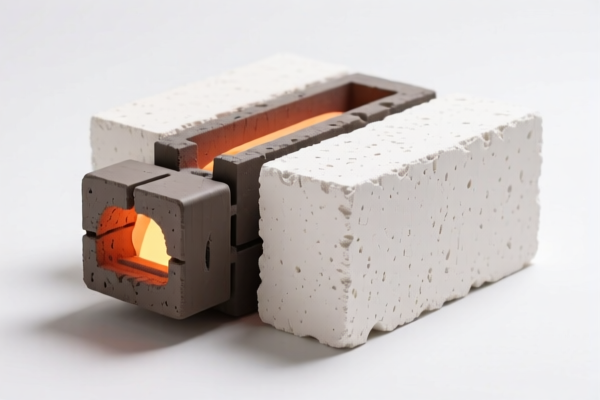
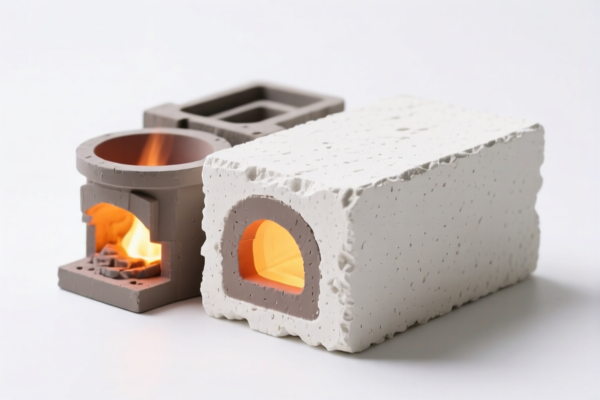
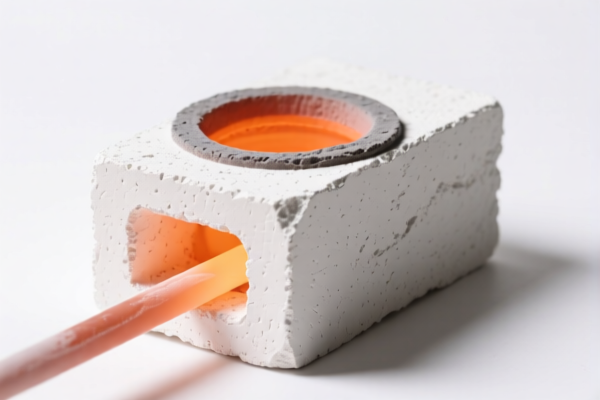
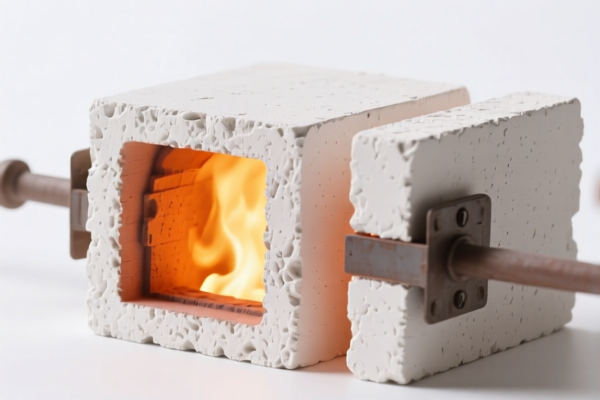
AI Analysis
🏗️ Refractory Castable (Phosphate Bonded)
🌐 HS Code Classification & Customs Clearance Guide | 2026 Latest Tariff Analysis | Specialized Logistics Strategy
📌 I. Product Definition & Classification: Do You Truly Understand "Phosphate-Bonded Castables"?
Refractory Castables are unshaped refractory materials used for high-temperature industrial applications (kilns, furnaces, boilers). Phosphate-Bonded Castables specifically use phosphoric acid or aluminum phosphate as a binder. In international trade and customs classification, these are not classified as pure refractory ceramics (Chapter 69) nor simple building concretes. Instead, they are classified under Chapter 38 as "Prepared binders" or "Chemical products/preparations."
Key Distinction:
- Unshaped Refractory Materials (Chapter 69): Typically refer to raw clay, silica, or magnesium-based unshaped materials without complex chemical binding systems that define them as "chemical preparations."
- Phosphate-Bonded Castables (Chapter 38): Because the phosphate binding system involves significant chemical processing and mixtures not elsewhere specified, US Customs and Border Protection (CBP) often classifies these under Heading 3824 ("Prepared binders for foundry molds or cores; chemical products and preparations...").
⚠️ Critical Clarification Point:
- If the product is a simple mixture of refractory aggregates with a basic cement or clay binder, it might be considered "Nonrefractory mortars and concretes" or refractory ceramics.
- However, Phosphate-Bonded systems are chemically complex. The data provided classifies them under HS 3824.50.00.50 ("Prepared binders... Nonrefractory mortars and concretes") or HS 3824.99.21.00 ("Other chemical preparations").
- Do not assume all refractories go to Chapter 69. The chemical nature of phosphate bonding triggers Chapter 38 classification in many US interpretations.
📦 II. HS Code Classification Details (2026 Latest Tariff Authority Comparison)
| HS Code | Product Description | Application Scenario | Chemical Nature |
|---|---|---|---|
3824.50.00.50 |
Prepared binders for foundry molds or cores; chemical products...: Nonrefractory mortars and concretes: Other | Phosphate-bonded castables used in general industrial kilns, not specifically for foundry cores but falling under "prepared binders/mortars" | ✅ Chemical preparation, phosphate-based binder |
3824.99.21.00 |
Other chemical preparations: Other: Other: Mixtures containing 5%+ aromatic substances: Consisting wholly of substances found naturally in coal tar | ⚠️ NOT APPLICABLE to standard phosphate castables unless they contain >5% coal tar derivatives. This code is for specific aromatic mixtures. | ❌ Incorrect for standard phosphate castables |
🔍 Key Analysis of Provided Data:
The provided dataset includes two codes.
1.3824.50.00.50is the most relevant for Phosphate-Bonded Castables if classified as "Prepared binders" or "Nonrefractory mortars."
2.3824.99.21.00is for coal tar aromatic mixtures. Standard phosphate castables do not consist of coal tar. Therefore, this code is incorrect unless the specific product contains coal tar binders.
- Conclusion: The primary correct classification for standard phosphate-bonded castables in this context is likely3824.50.00.50.
💰 III. 2026 Latest Tariff Rate Details (Including Additional Taxes)
✅ Applicable Country: United States (US)
✅ Country of Origin: China (CN)
✅ Effective Date: November 10, 2025 (including subsequent imports)
🎯 1. 3824.50.00.50 — Prepared Binders / Nonrefractory Mortars
| Item | Content |
|---|---|
| Base Tariff Rate | 0.0% (ad valorem) |
| Section 301 Additional Duty | +25.0% |
| Total Tariff Rate | 25.0% |
| Tax Calculation | CIF Value × 25% |
| De Minimis Exemption Eligibility | ❌ Not Eligible (USITC Section 301 duties apply to all imports regardless of value, with very limited exceptions) |
| Legal Basis Path | USITC:3824.50.00.50 → USITC:Footnote 9903.88.01 (Section 301 List 4C) |
📌 Explanation:
- Base Rate 0%: Many chemical preparations and prepared binders have a low base rate.
- Additional Duty 25%: This is the Section 301 tariff imposed on Chinese goods. HS 3824.50.00.50 is included in List 4C of Section 301 actions.
- Total 25%: This is a significant cost. Importers must budget for this in CIF pricing.
🎯 2. 3824.99.21.00 — Coal Tar Aromatic Mixtures (If Applicable)
| Item | Content |
|---|---|
| Base Tariff Rate | 0.0% |
| Section 301 Additional Duty | 0.0% |
| Total Tariff Rate | 0.0% |
| Tax Calculation | CIF Value × 0% |
| De Minimis Exemption Eligibility | ✅ Eligible (If value < $800, though Section 301 rules vary; generally, 0% duty means no additional tax) |
| Legal Basis Path | USITC:3824.99.21.00 |
📌 Warning:
- Only use this code if your phosphate castable explicitly contains >5% coal tar derivatives.
- Misclassifying a standard phosphate castable under this code to achieve 0% duty is high-risk and constitutes smuggling/fraud.
- Most standard phosphate-bonded castables do not meet this description.
🛠️ IV. Customs Clearance Practical Advice (Real-World Pitfall Guide)
✅ 1. Document Checklist (Essential Items)
| Document | Required | Notes |
|---|---|---|
| ✅ Product Specification Sheet | ✔️ | Must detail: Composition (aggregate % vs. binder %), phosphate content, setting time, max temp. |
| ✅ Material Safety Data Sheet (MSDS/SDS) | ✔️ | Critical for chemicals. Must list hazardous components (phosphoric acid residues). |
| ✅ Commercial Invoice | ✔️ | Must clearly state: "Phosphate-Bonded Refractory Castable, Chemical Preparation." Do NOT just say "Cement." |
| ✅ Certificate of Origin (CO) | ✔️ | To prove China origin for Section 301 assessment. |
| ✅ Packaging List | ✔️ | Weight and dimensions per bag/ton. |
✅ 2. Declaration Tips (Key Mantras)
🔥 "Chemical Nature, Not Cement Name! Specify Phosphate Binder!"
| Scenario | Correct Declaration | Wrong Practice |
|---|---|---|
| Standard Phosphate Castable | 3824.50.00.50 - "Prepared binder for refractory use" |
Misdeclaring as "Building Cement" (Chapter 38 or 69 mismatch) |
| Coal-Tar Modified Castable | 3824.99.21.00 (if applicable) |
Using this code for non-coal-tar products |
| Simple Clay Castable | Might be Chapter 69 or 3824.10 | Ensure accurate chemical classification |
📌 Critical Warning:
- Do not declare as "Refractory Concrete" (Chapter 69) if it is chemically bonded with phosphate. CBP has strict guidelines: chemical preparations go to Chapter 38.
- If you declare under3824.50.00.50, ensure the product description highlights its chemical preparation nature.
✅ 3. Special Cases
| Case | Handling Advice |
|---|---|
| OEM/Private Label | Provide supplier’s technical data sheet to prove composition. |
| Mixed Shipments | If shipping with other goods, separate phosphate castables to avoid misclassification of the entire container. |
| Hazardous Goods | Phosphate binders may be hazardous (corrosive). Ensure proper UN labeling (UN 1760, for example, if applicable). |
🌍 V. Global Market Comparison (2026 Latest)
| Country/Region | Recommended HS Code | Tariff (China Origin) | Certification | Notes |
|---|---|---|---|---|
| 🇺🇸 USA | 3824.50.00.50 |
25% (Section 301) | SDS, UN Packaging | High tariff due to Section 301 |
| 🇨🇳 China | 3824.50.00.50 |
0-5% (varies) | CCC (if applicable) | Lower import duty |
| 🇪🇺 EU | 3824.99.80 |
6.5% (standard) | REACH Compliance | No Section 301, but REACH strict |
| 🇮🇳 India | 3824.50.00 |
10-15% | BIS Certification | Varies by state |
📌 Conclusion:
- USA is the most costly market for Chinese refractory castables due to the 25% Section 301 tariff.
- EU and India do not have equivalent Section 301 tariffs, but may have other non-tariff barriers (REACH, BIS).
📌 VI. Common Errors & Pitfall Guide (Lessons Learned)
❌ Error 1: Declaring as "Refractory Cement" (Chapter 30 or 69)
👉 Consequence: CBP may reject as incorrect classification, leading to delays, audits, and potential penalties.
❌ Error 2: Using 3824.99.21.00 for standard phosphate castables
👉 Consequence: Fraud risk. If audited, CBP will demand proof of coal tar content. Failure leads to fraud penalties (up to 3x value).
❌ Error 3: Ignoring SDS requirements
👉 Consequence: US Customs may refuse entry if hazardous material documentation is missing. Phosphate binders can be corrosive.
❌ Error 4: Not separating from non-chemical goods
👉 Consequence: Misclassification of entire shipment if not clearly documented.
✅ Correct Practice:
"Phosphate-Bonded Refractory Castable, Chemical Preparation for Industrial Kilns, UN1760 Compatible Packaging, SDS Attached, HS 3824.50.00.50"
🎯 VII. Conclusion: Professional Declaration Saves Costs!
🎯 Remember the Mantra:
🔹 "Phosphate = Chemical Prep, Not Cement!"
🔹 "Section 301 Applies: 25% Tax for China!"
🔹 "SDS is Mandatory! No Docs, No Entry!"
📌 Pro Tip:
- If your castable is phosphate-bonded, assume 25% duty for US imports from China.
- Consult a licensed customs broker to confirm if your specific formulation might qualify for a different subheading (e.g., if it’s truly a "mortar" under 3824.50).
- Apply for a Binding Ruling (CBP Ruling) before shipment to lock in the classification and duty rate.
📣 Immediate Action:
📞 Contact a US Customs Broker + Provide SDS + Request CBP Ruling
🚀 Ensure smooth clearance, avoid penalties, and protect your margin!
✨ Professional Customs Clearance Starts with Accurate Classification!
💼 Every dollar of duty saved is profit earned!
Customer Reviews
About HS Code Classification
The Harmonized System (HS) is an internationally standardized nomenclature developed by the World Customs Organization (WCO) to classify traded products. Over 200 countries use the HS system as the basis for customs tariffs, trade statistics, and import/export regulations.
Each HS code follows a hierarchical structure:
- Chapter (2 digits) — Broad category of goods (e.g., Chapter 84: Machinery and Mechanical Appliances)
- Heading (4 digits) — More specific grouping within the chapter
- Subheading (6 digits) — Internationally standardized breakdown, used by all WCO member countries
- National subdivisions (8-10 digits) — Country-specific extensions for further classification, such as US HTSUS 10-digit codes
Correct HS code classification is essential for smooth customs clearance, accurate duty payment, and compliance with trade regulations. Misclassification can lead to customs delays, overpayment of duties, or penalties.
When importing from CN to US, the applicable tariff rates may include:
- Most-Favored-Nation (MFN) rate — The standard duty rate applied to WTO members
- General rate — Applied to countries without trade agreements
- Trade remedy duties — Additional tariffs such as Section 301 (anti-dumping), Section 232 (national security), or countervailing duties
The information provided on this page is for reference purposes only. For official classification, please consult with your local customs authority or a licensed customs broker.