refractory castable phosphate bonded
CN → US| HS Code | Tariff Rate | Origin | Destination | Doc |
|---|---|---|---|---|
| 3824999361 | 40.0% | CN | US | Official Doc |
| 3824993990 | 35.0% | CN | US | Official Doc |
| 3824405000 | 40.0% | CN | US | Official Doc |
| 3824500050 | 35.0% | CN | US | Official Doc |
Product Images
AI Analysis
🧱 Refractory Castable: Phosphate Bonded Systems
🌐 HS Code Reference & Customs Clearance Guide | 2026 Latest Tariff Analysis | Professional Clearance Strategy
📌 Part I: Product Definition & Classification: What Exactly is "Phosphate Bonded Refractory Castable"?
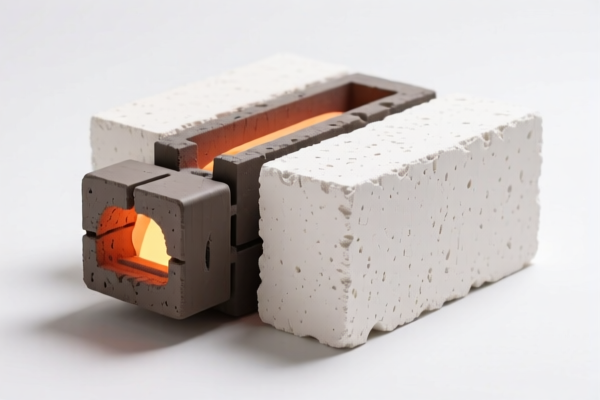
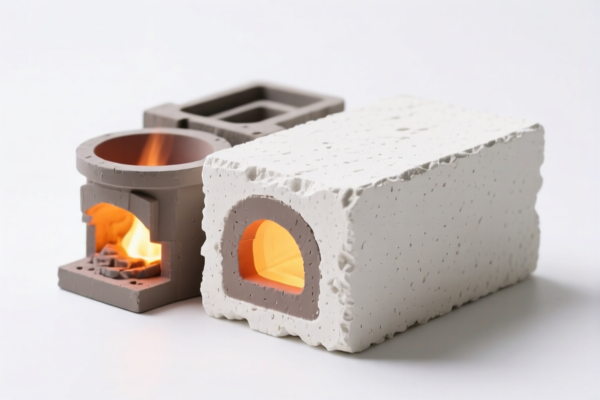
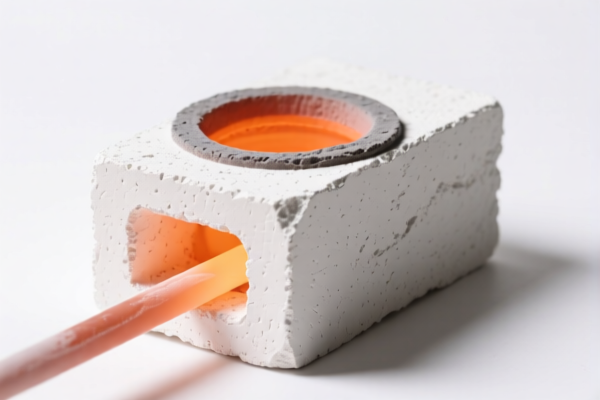
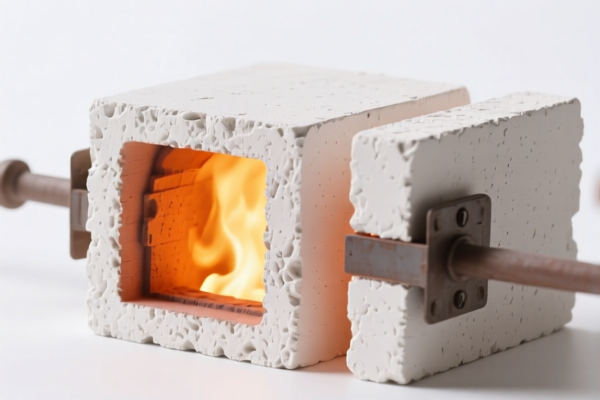
Refractory castables are unshaped refractory materials mixed with water for placement by casting. Phosphate-bonded systems are a high-performance class where the binder reacts with alumina to form aluminum phosphate bonds, offering superior performance at high temperatures and in corrosive environments compared to traditional cement-bonded castables.
In international trade, these products are not a single HS Code but are classified based on their primary chemical nature and intended industrial application. The key differentiator is whether the product is viewed as a generic chemical mixture, a specific chemical product of the chemical industry, or a construction/repair additive.
⚠️ Key Classification Distinction:
- If the product is primarily defined by its chemical composition (phosphates + chemical additives) → 3824.99.93.61
- If the product is defined as an inorganic compound mixture → 3824.99.39.90
- If the product is marketed as a repair material for concrete/cement structures → 3824.40.50.00
- If the product is marketed as a general chemical product/preparation for industrial use → 3824.50.00.50
📦 Part II: HS Code Classification Details (2026 Latest Tariff Authority Comparison)
| HS Code | Product Description | Application Scenario | Primary Attribute |
|---|---|---|---|
3824.99.93.61 |
High-temperature phosphate binder, matching phosphorous chemical substances & preparations | Specialized chemical binders, custom refractory mixes | 🧪 Chemical Substances |
3824.99.39.90 |
High-temperature phosphate binder, matching inorganic compound mixtures | General inorganic refractory mixtures | ⚗️ Inorganic Mixtures |
3824.40.50.00 |
Refractory Repair Material (Phosphate), matching additives for cement mortar/concrete | Repair of kiln linings, concrete structures, industrial floors | 🏗️ Construction/Additive |
3824.50.00.50 |
Refractory Repair Material (Phosphate), matching chemical products/preparations for chemical industry | General industrial chemical preparations, non-specific repair | 🧫 Chemical Preparation |
🔍 Critical Note:
- HS 3824 generally covers "Prepared binders for foundry molds or cores; chemical products and preparations of the chemical or allied industries... not elsewhere specified or included."
- Refractory castables often fall here because they are pre-mixed dry preparations.
- Misclassification Risk: Do not classify as simple "Cement" (3820) if phosphate is the primary binder. Do not classify as simple "Oxides" (2818/2825) if it is a pre-mixed castable.
💰 Part III: 2026 Latest Tariff Rate Breakdown (Including Surcharges & Policy Add-ons)
✅ Applicable Country: United States (US)
✅ Country of Origin: China (CN)
✅ Effective Date: Post-November 2025 (Includes subsequent imports)
🎯 1. 3824.99.93.61 —— High-Temperature Phosphate Binder (Chemical Substances)
| Item | Content |
|---|---|
| Base Tariff | 5.0% (Ad valorem) |
| Section 301 Surcharge | +25.0% |
| 122 Section Surcharge | +10.0% |
| Total Tax Rate | 40.0% |
| Tax Calculation | CIF Value × 40% |
| De Minimis Eligibility | ❌ Not Eligible (Denied) |
| Legal Pathway | Base: 5% → 301: 25% → 122: 10% |
📌 Explanation:
- Base (5%): Standard MFN rate for miscellaneous chemical preparations.
- Section 301 (25%): Standard US-China trade war tariff on most chemical/refractory goods from China.
- 122 Section (10%): Additional punitive tariff under specific trade enforcement provisions.
- Total 40%: This is a high-cost entry category. Buyers must factor this into landed costs.
🎯 2. 3824.99.39.90 —— High-Temperature Phosphate Binder (Inorganic Mixtures)
| Item | Content |
|---|---|
| Base Tariff | 0.0% (Ad valorem) |
| Section 301 Surcharge | +25.0% |
| 122 Section Surcharge | +10.0% |
| Total Tax Rate | 35.0% |
| Tax Calculation | CIF Value × 35% |
| De Minimis Eligibility | ❌ Not Eligible (Denied) |
| Legal Pathway | Base: 0% → 301: 25% → 122: 10% |
📌 Explanation:
- Base (0%): Some inorganic mixtures enjoy a lower base rate.
- Surcharges: Still subject to the full 35% total burden (25% + 10%).
- Advantage: 5% lower than3824.99.93.61due to the 0% base, but still heavily taxed.
🎯 3. 3824.40.50.00 —— Refractory Repair Material (Phosphate) / Concrete Additive
| Item | Content |
|---|---|
| Base Tariff | 5.0% (Ad valorem) |
| Section 301 Surcharge | +25.0% |
| 122 Section Surcharge | +10.0% |
| Total Tax Rate | 40.0% |
| Tax Calculation | CIF Value × 40% |
| De Minimis Eligibility | ❌ Not Eligible (Denied) |
| Legal Pathway | Base: 5% → 301: 25% → 122: 10% |
📌 Explanation:
- Classified under "Prepared binders... for molds or cores" or similar construction chemical subheadings.
- Despite being a "repair material," it is treated as a chemical preparation in many contexts, leading to the 40% total rate.
🎯 4. 3824.50.00.50 —— Refractory Repair Material (Phosphate) / Chemical Industry Preparation
| Item | Content |
|---|---|
| Base Tariff | 0.0% (Ad valorem) |
| Section 301 Surcharge | +25.0% |
| 122 Section Surcharge | +10.0% |
| Total Tax Rate | 35.0% |
| Tax Calculation | CIF Value × 35% |
| De Minimis Eligibility | ❌ Not Eligible (Denied) |
| Legal Pathway | Base: 0% → 301: 25% → 122: 10% |
📌 Explanation:
- This code captures "chemical products and preparations" not specified elsewhere.
- Like Code 2, it benefits from a 0% base tariff, resulting in a 35% total rate.
- Often used for general-purpose phosphate-based refractory mortars.
🛠️ Part IV: Customs Clearance Practical Advice (Real-World Pitfall Guide)
✅ 1. Documentation Checklist (Essential)
| Document | Mandatory? | Explanation |
|---|---|---|
| ✅ Product Specification Sheet | ✔️ | Must specify: Phosphate content, binder type, operating temperature, chemical composition. |
| ✅ Formula/MSDS | ✔️ | Critical for proving it is a "prepared mixture" (3824) and not a raw material. |
| ✅ Product Photos | ✔️ | Show packaging, labeling, and physical form (powder/granules). |
| ✅ Commercial Invoice | ✔️ | Must clearly state: "Refractory Castable, Phosphate Bonded." Avoid vague terms like "Construction Material." |
| ✅ Certificate of Origin | ✔️ | To confirm Chinese origin for tariff calculation. |
| ✅ Packing List | ✔️ | Detail net/gross weight to ensure accurate duty calculation. |
✅ 2. Declaration Tactics (Key Mnemonic)
🔥 "Binders are Chemicals, Repairs are Prep; Base Rate Matters, Surcharges Apply!"
| Scenario | Correct Declaration | Incorrect Action |
|---|---|---|
| Pure Phosphate Binder Powder | 3824.99.93.61 (40%) or 3824.99.39.90 (35%) |
Misdeclare as "Cement" → High Risk |
| Pre-mixed Repair Mortar for Kilns | 3824.50.00.50 (35%) |
Misdeclare as "Construction Equipment" → Delay |
| General Chemical Refractory Mix | 3824.50.00.50 (35%) |
Use vague "Other Chemicals" → Audit Risk |
| Cement-Based Refractory (Non-Phosphate) | NOT 3824 (Check 3820/25) | Force into 3824 → Wrong Classification |
📌 Crucial Tip:
- Phosphate is the key identifier. If the product uses Cement as the primary binder, it may fall under different headings (e.g., 3820.10.50.00 or 2523.30.00.00), which have different tariff profiles.
- Do not split shipments: If you ship a binder and an aggregate separately, they may be taxed individually, potentially increasing total duties or triggering separate inspections.
✅ 3. Special Circumstances Handling
| Situation | Handling Advice |
|---|---|
| OEM Custom Mix | Provide client order + formula. Proves it's a "prepared preparation" (3824). |
| High Alumina Content | Ensure it's not misclassified as pure Alumina (2818). The binding agent determines the classification for castables. |
| Liquid vs. Dry | Liquid phosphate binders are definitely 3824. Dry castables are also 3824 if pre-mixed. |
| Origin Non-China | If from Vietnam/Mexico, IEEPA Exemptions may apply, reducing the 10% 122 Section tariff. Check for eligibility! |
🌍 Part V: Global Market Comparison (2026 Latest)
| Country/Region | Recommended HS Code | Tariff (China Origin) | Certification Req. | Notes |
|---|---|---|---|---|
| 🇺🇸 USA | 3824.99.39.90 or 3824.50.00.50 |
35.0% (Base 0%) | SDS, Safety Data Sheet | Highest cost due to 301+122 tariffs. |
| 🇺🇸 USA | 3824.99.93.61 |
40.0% (Base 5%) | SDS, Safety Data Sheet | Higher base rate, same surcharges. |
| 🇨🇳 China | 3824.50.00.50 |
5% - 10% (Import) | N/A | Lower duty for re-export or domestic use. |
| 🇪🇺 EU | 3824.50.00 |
6.5% - 12% | REACH, CLP | No Section 301 equivalent, but strict chemical regs. |
| 🇦🇺 Australia | 3824.50.00 |
5% | GHS | Moderate duty, standard import checks. |
📌 Conclusion:
- The US market is the most expensive for Chinese phosphate refractories due to the 35-40% total tariff burden.
- EU and Australia have lower tariffs but stricter chemical safety regulations (REACH/CLP).
- Strategy: For US exports, consider supply chain diversification (e.g., sourcing from ASEAN countries) to avoid the 122 Section tariff if possible.
📌 Part VI: Common Errors & Pitfall Guide (Lessons Learned)
❌ Error 1: Classifying as "Cement" (302/3820) because it looks like construction material.
👉 Result: Customs audit, reclassification to 3824, back taxes + penalties. Phosphate binders are chemically distinct from Portland cement.
❌ Error 2: Ignoring the 122 Section 10% Surcharge.
👉 Result: Underpayment of duty by 10%. This is a punitive tariff that applies to most Chinese chemical goods.
❌ Error 3: Mixing "Base Rate" logic.
👉 Result: Assuming 0% base means 0% total. Remember: 0% Base + 25% + 10% = 35% Total.
✅ Correct Approach:
"Refractory Castable, Phosphate Bonded, High Temperature, Pre-mixed Dry Powder, for Industrial Kiln Lining, Model XYZ, SDS Provided"
🎯 Part VII: Conclusion: Precision in Classification Saves Money!
🎯 Key Takeaway:
🔹 "Phosphate = Chemical Preparation (3824)"
🔹 "China Origin = 301 + 122 Surcharges"
🔹 "Base Rate Matters: 0% vs 5% changes Total from 35% to 40%"🔹 "Don't guess the HS Code; verify the binder chemistry!"
📌 Pro Tip:
If your phosphate castables are not of Chinese origin, check for IEEPA Exemptions. If exempt, the 10% 122 Section tariff may be waived, lowering the total cost significantly.
📣 Immediate Action:
📞 Consult a licensed customs broker before shipment.
📄 Ensure SDS (Safety Data Sheet) explicitly lists phosphate chemistry.
🚀 Accurate classification = Predictable costs = Smooth clearance!
✨ Professional Clearance, Starting with Precise Classification!
💼 Your Cost Efficiency Depends on the Last Digit of the HS Code!
Customer Reviews
About HS Code Classification
The Harmonized System (HS) is an internationally standardized nomenclature developed by the World Customs Organization (WCO) to classify traded products. Over 200 countries use the HS system as the basis for customs tariffs, trade statistics, and import/export regulations.
Each HS code follows a hierarchical structure:
- Chapter (2 digits) — Broad category of goods (e.g., Chapter 84: Machinery and Mechanical Appliances)
- Heading (4 digits) — More specific grouping within the chapter
- Subheading (6 digits) — Internationally standardized breakdown, used by all WCO member countries
- National subdivisions (8-10 digits) — Country-specific extensions for further classification, such as US HTSUS 10-digit codes
Correct HS code classification is essential for smooth customs clearance, accurate duty payment, and compliance with trade regulations. Misclassification can lead to customs delays, overpayment of duties, or penalties.
When importing from CN to US, the applicable tariff rates may include:
- Most-Favored-Nation (MFN) rate — The standard duty rate applied to WTO members
- General rate — Applied to countries without trade agreements
- Trade remedy duties — Additional tariffs such as Section 301 (anti-dumping), Section 232 (national security), or countervailing duties
The information provided on this page is for reference purposes only. For official classification, please consult with your local customs authority or a licensed customs broker.