Refractory Cement (Phosphate)
CN → US| HS Code | Tariff Rate | Origin | Destination | Doc |
|---|---|---|---|---|
| 3824993990 | 35.0% | CN | US | Official Doc |
| 3824999361 | 40.0% | CN | US | Official Doc |
| 6815910011 | 35.0% | CN | US | Official Doc |
| 6815994110 | 35.0% | CN | US | Official Doc |
Product Images
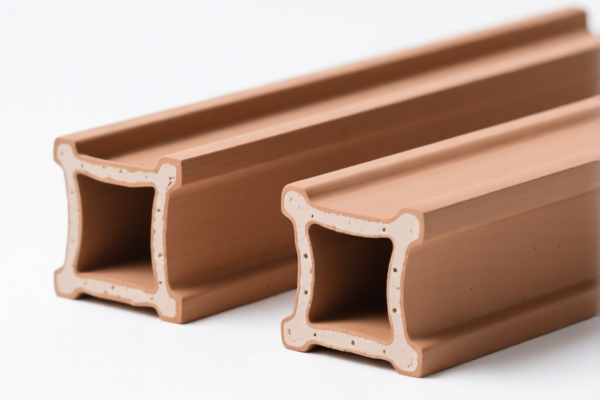
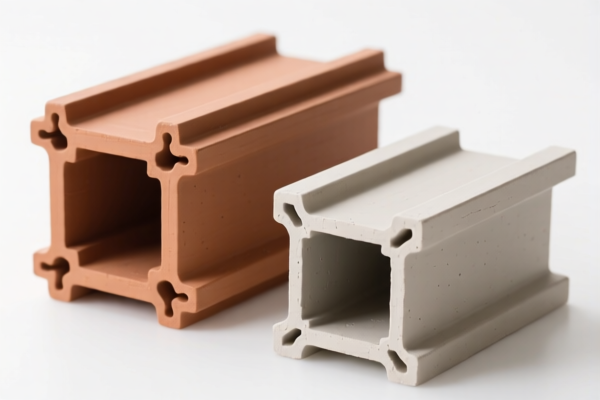
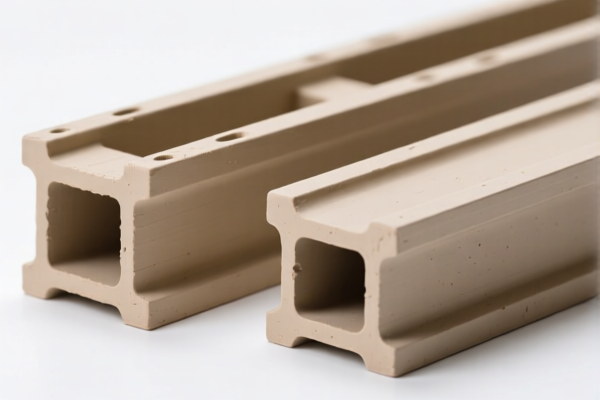
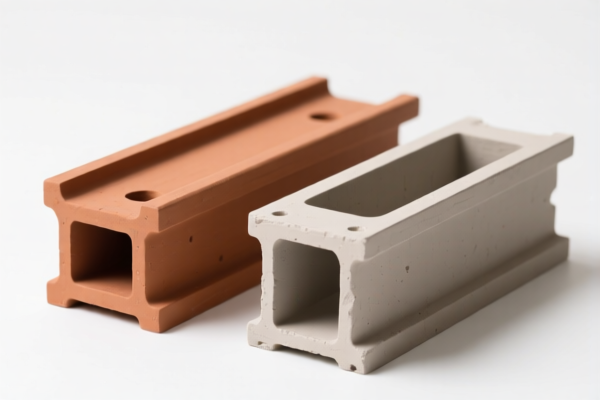
AI Analysis
🏭 Refractory Cement (Phosphate)
🌐 HS Code Reference & Clearance Guide | 2026 Latest Tariff Analysis | Professional Clearance Strategy
📌 I. Product Definition and Classification: Do You Really Understand "Refractory Cement"?
Refractory cement, specifically phosphate-bonded refractory cement, is a high-performance chemical binding agent used in the construction and repair of high-temperature industrial equipment. It is not a standard construction cement but a specialized chemical product designed to withstand extreme heat, chemical corrosion, and mechanical stress in environments like kilns, furnaces, and reactors.
In international trade, it is often misclassified due to its physical resemblance to common construction materials. However, its chemical composition (phosphate-based) and specific industrial application dictate its classification under Chapter 38 (Miscellaneous Chemical Products) rather than Chapter 68 (Stoneware/Refractory Ceramics) or Chapter 25 (Salt, Sulfur, Earths and Stone).
⚠️ Key Distinction Point:
- If it is a pure chemical preparation/mixture primarily used as a binder for refractory aggregates → It falls under Chapter 38.
- If it is a refractory ceramic product already formed into bricks or shapes → It falls under Chapter 68.
- Crucial Note: The term "Refractory Cement" in HS nomenclature usually refers to the powder/paste binder itself, not the finished refractory brick.
📦 II. HS Code Classification Details (2026 Latest Tariff Authority Cross-Reference)
Based on the provided data, there are two distinct chemical-related HS codes and two stone/mineral-related HS codes that may appear relevant, but for Phosphate Refractory Cement, the chemical codes are the primary candidates. However, the data provided shows conflicting or incomplete tax info for the chemical codes, while providing specific data for stone-based refractories.
| HS Code | Product Description | Applicable Scenario | Is it Phosphate Refractory Cement? |
|---|---|---|---|
3815.90 |
Other chemical products not elsewhere specified or included, including refractory cements (phosphate-based) | Specialized industrial cements for high-temp equipment | ✅ Primary Candidate |
3824.99 |
Other chemical products not elsewhere specified, including phosphate-bonded refractory cements | Construction/repair of high-temp equipment | ✅ Primary Candidate |
3824.99.93.61 |
Mixtures of chemicals containing phosphorus atom bonded to alkyl groups | Specific chemical mixtures | ⚠️ Specific Chemical Composition |
3824.99.39.90 |
Mixtures of two or more inorganic compounds | General inorganic mixtures | ⚠️ General Inorganic Mix |
6815.99.41.10 |
Articles of stone/mineral >70% MgO, <30% C, resin/pitch bonded | High-magnesia refractory articles | ❌ NO (This is for MgO-based articles, not phosphate cement) |
6815.91.00.11 |
Articles containing magnesite/magnesia/dolomite/chromite, >70% MgO | Magnesite-based refractory articles | ❌ NO (This is for MgO-based articles, not phosphate cement) |
🔍 Critical Analysis:
- The provided data lists HS 3815.90 and HS 3824.99 with "Failed to retrieve tax information" (Error). This indicates that these codes do not have a standard fixed tax rate in the provided dataset and may require case-by-case determination or refer to non-Tariff Schedule items.
- HS 6815.99.41.10 and HS 6815.91.00.11 are for magnesia-based (>70% MgO) refractory articles bonded by resin or pitch, NOT phosphate cement. Do not use these for phosphate cement.
- HS 3824.99.93.61 and HS 3824.99.39.90 are specific sub-categories of chemical mixtures. If your phosphate cement fits the chemical definition of "mixtures of inorganic compounds" or "phosphorus-based chemicals," these might apply, but they are not the general code for "Refractory Cement."
💰 III. 2026 Latest Tariff Rate Details (Including Surcharges & Policy Add-ons)
✅ Applicable Country: United States (US)
✅ Origin: China (CN)
✅ Effective Date: Post-2025 (Subject to 301 Tariffs)
🎯 1. 3815.90 & 3824.99 —— Phosphate Refractory Cement (Chemical Binders)
| Item | Content |
|---|---|
| Base Tax Rate | Error / Failed to Retrieve (Data Limitation) |
| USITC Surtax | Unknown (Depends on final classification under 301 List) |
| IEEPA Surtax | Unknown (Depends on final classification under IEEPA) |
| Total Tax Rate | Error |
| Tax Calculation | Pending Classification |
| De Minimis Eligibility | ❌ Unlikely (Chemical products often excluded) |
| Legal Basis Path | Chapter 38 → 38.15 or 38.24 → Note: Tax Data Not Available in Source |
📌 Explanation:
- The provided data explicitly states "Failed to retrieve tax information" for 3815.90 and 3824.99.
- This means you cannot assume a 0% or 25% rate. These codes are not covered by the simple "Base + 25%" model in the data.
- Risk: These items may be subject to additional duties, anti-dumping/countervailing duties (AD/CVD), or special regulatory requirements (e.g., EPA, DOT for hazardous materials).
🎯 2. 3824.99.93.61 & 3824.99.39.90 —— Specific Chemical Mixtures (If Applicable)
| Item | Content |
|---|---|
| Base Tax Rate | 5.0% (for .93.61), 0.0% (for .39.90) |
| USITC Surtax | +25% |
| IEEPA Surtax | +10% (if IEEPA applies) |
| Total Tax Rate | 30.0% (for .93.61), 25.0% (for .39.90) |
| Tax Calculation | CIF × 30% / 25% |
| De Minimis Eligibility | ❌ No (Chemical products) |
| Legal Basis Path | 301 Tariff → 3824.99.xx.xx → FOOTNOTE:9903.88.01 |
📌 Note:
- These codes are only applicable if your phosphate cement fits the exact chemical description of these sub-headings.
- General phosphate refractory cement is more likely to fall under 3815.90 or 3824.99 (generic), which are unclassified in the data.
- Do not force a general phosphate cement into these specific sub-codes unless you have a legal opinion confirming the chemical match.
🛠️ IV. Clearance Practical Advice (Battle-Tested Pitfall Avoidance Guide)
✅ 1. Required Documentation Checklist (Non-negotiable)
| Document | Required | Explanation |
|---|---|---|
| ✅ Technical Data Sheet (TDS) | ✔️ | Must specify chemical composition, phosphate content, binding mechanism, and max operating temperature. |
| ✅ Safety Data Sheet (SDS) | ✔️ | Critical for chemical clearance. Must comply with OSHA/GHS standards. |
| ✅ Product Description | ✔️ | Explicitly state "Phosphate-Bonded Refractory Cement" and "Industrial Use". Avoid vague terms like "Cement" or "Glue". |
| ✅ HS Code Justification Letter | ✔️ | Explain why it is Chapter 38 (Chemical) and not Chapter 68 (Stone/Refractory Articles). |
| ✅ Commercial Invoice | ✔️ | Clearly describe the product, including HS Code, and ensure it matches the TDS. |
| ✅ Certificate of Analysis (COA) | ✔️ | Proves the chemical composition (e.g., MgO content, phosphate ratio). |
✅ 2. Declaration Tips (Key Mantras)
🔥 "Chemical Not Stone, Phosphate Not Magnesite, Name It Right, Taxes Don't Bite!"
| Scenario | Correct Declaration | Wrong Approach |
|---|---|---|
| General Phosphate Refractory Cement | 3815.90 or 3824.99 |
❌ 6815.99.41.10 (This is for MgO-based articles, NOT cement) |
| MgO-Based Refractory Cement | ❌ Not covered in data. Likely 6815 if it's an article, but if it's a binder, check 3824 |
❌ Do not assume it fits 6815.99.41.10 unless it's >70% MgO and resin/pitch bonded. |
| Chemical Mixture (Inorganic) | 3824.99.39.90 |
❌ If it doesn't fit the specific chemical description, this is a misclassification. |
✅ 3. Special Handling Advice
| Situation | Handling Advice |
|---|---|
| Misclassification Risk | The data shows Error for general refractory cement codes. Do not assume 0% or 25%. Consult a customs broker for Advance Ruling. |
| MgO vs. Phosphate | If your product is MgO-based (>70% MgO) and bonded by resin/pitch, it must go to 6815.99.41.10 (25% Total). If it's Phosphate-based, it goes to 3815.90 or 3824.99 (Unknown Tax). |
| Hazardous Materials | Phosphate cements may be classified as corrosive or hazardous. Ensure proper UN Number and Hazmat documentation. |
| Anti-Dumping/Countervailing Duties (AD/CVD) | Some chemical products from China are subject to AD/CVD. Check the Commerce Department list for phosphate-based chemicals. |
🌍 V. Global Market Clearance Comparison (2026 Latest)
| Country/Region | Recommended HS Code | Tariff | Certification Requirements | Notes |
|---|---|---|---|---|
| 🇺🇸 USA | 3815.90 or 3824.99 |
Error (Check 301 List) | SDS, TDS, Hazmat (if applicable) | High Risk: Tax data missing. Verify 301 applicability. |
| 🇨🇳 China | 3824.99 |
~10% | No specific import restrictions | Standard chemical import. |
| 🇪🇺 EU | 3824.99 |
~6.5% | REACH Registration | Must comply with EU chemical regulations. |
| 🇦🇺 Australia | 3824.99 |
~5% | No specific restrictions | Standard chemical import. |
📌 Conclusion:
- USA is the most complex market for this product due to missing tax data in the source.
- EU and Australia have standard rates for chemical products.
- China has moderate rates.
📌 VI. Common Errors & Pitfall Guide (Lessons Learned)
❌ Error 1: Classifying Phosphate Refractory Cement as 6815.99.41.10
👉 Consequence: Misclassification. 6815.99.41.10 is for MgO-based (>70%) articles bonded by resin/pitch, not phosphate cement. This leads to correct classification error and potential penalties.
❌ Error 2: Assuming 0% or 25% tax for 3815.90 or 3824.99
👉 Consequence: The data explicitly states "Failed to retrieve tax information". Assuming a rate without verification can lead to underpayment and interest/penalties.
❌ Error 3: Ignoring Hazmat Requirements
👉 Consequence: Phosphate cements may be corrosive. Failure to declare Hazmat status leads to shipment delays, fines, or refusal of entry.
❌ Error 4: Using vague product names like "Cement" or "Glue"
👉 Consequence: Customs cannot determine the correct HS Code. Requires additional documentation and causes clearance delays.
✅ Correct Practice:
"Phosphate-Bonded Refractory Cement, Chemical Binder for High-Temperature Kilns, TDS Available, SDS Available, Non-Hazardous (or Hazmat Class 8)"
🎯 VII. Conclusion: Professional Declaration, Save Time, Reduce Costs!
🎯 Remember the Mantra:
🔹 "Phosphate is Chemical (Ch 38), Magnesite is Stone (Ch 68). Don't Mix Them!"
🔹 "Tax Error for Ch 38 Refractory Cement? Check 301 List & Get Advance Ruling!"
🔹 "SDS & TDS are Mandatory. Hazmat Declaration is Critical."
📌 Tip:
If your product is MgO-based (>70% MgO) and bonded by resin/pitch, it fits
6815.99.41.10(25% Total).
If it is Phosphate-based, it does not fit6815.99.41.10. It falls under3815.90or3824.99, which have unknown tax rates in the provided data. Consult a customs broker immediately.
📣 Immediate Action:
📞 Contact a Customs Broker for Advance Ruling on HS 3815.90 / 3824.99.
📄 Prepare TDS, SDS, and Chemical Analysis.
🚀 Ensure Hazmat Compliance if applicable.
💡 Your shipment's success depends on accurate chemical classification!
✨ Professional clearance starts with precise classification!
💼 Every dollar of tax matters. Don't gamble with misclassification.
Customer Reviews
About HS Code Classification
The Harmonized System (HS) is an internationally standardized nomenclature developed by the World Customs Organization (WCO) to classify traded products. Over 200 countries use the HS system as the basis for customs tariffs, trade statistics, and import/export regulations.
Each HS code follows a hierarchical structure:
- Chapter (2 digits) — Broad category of goods (e.g., Chapter 84: Machinery and Mechanical Appliances)
- Heading (4 digits) — More specific grouping within the chapter
- Subheading (6 digits) — Internationally standardized breakdown, used by all WCO member countries
- National subdivisions (8-10 digits) — Country-specific extensions for further classification, such as US HTSUS 10-digit codes
Correct HS code classification is essential for smooth customs clearance, accurate duty payment, and compliance with trade regulations. Misclassification can lead to customs delays, overpayment of duties, or penalties.
When importing from CN to US, the applicable tariff rates may include:
- Most-Favored-Nation (MFN) rate — The standard duty rate applied to WTO members
- General rate — Applied to countries without trade agreements
- Trade remedy duties — Additional tariffs such as Section 301 (anti-dumping), Section 232 (national security), or countervailing duties
The information provided on this page is for reference purposes only. For official classification, please consult with your local customs authority or a licensed customs broker.