Refractory Mud High Alumina
CN → US| HS Code | Tariff Rate | Origin | Destination | Doc |
|---|---|---|---|---|
| 2530908050 | 10.0% | CN | US | Official Doc |
| 2530908015 | 10.0% | CN | US | Official Doc |
| 6902201020 | 35.0% | CN | US | Official Doc |
| 6815994170 | 35.0% | CN | US | Official Doc |
| 6903200000 | 35.0% | CN | US | Official Doc |
Product Images
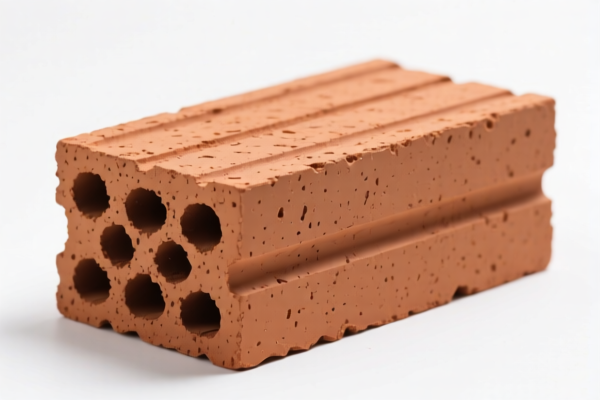
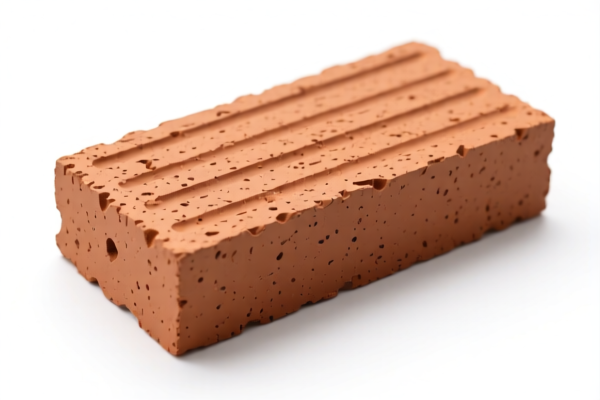
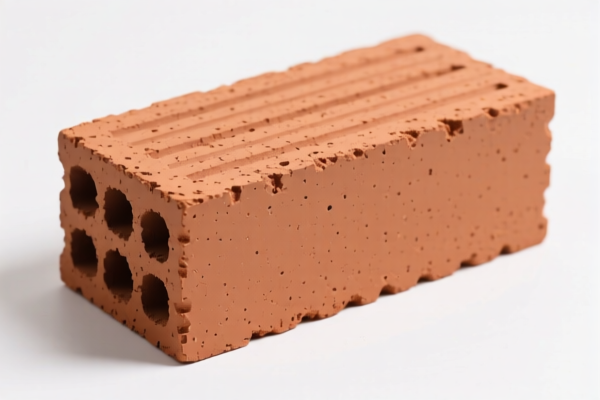
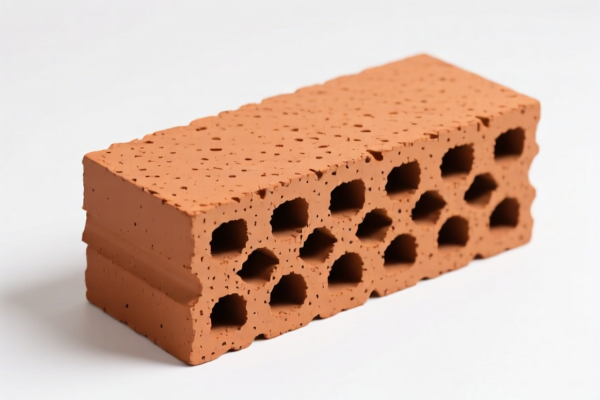
AI Analysis
🔥 High Alumina Refractory Mud (Refractory Cement & Mortar)
🌐 HS Code Reference & Customs Clearance Guide | 2024/2025 Latest Tariff Analysis | Professional Compliance Strategy
📌 1. Product Definition & Classification: Do You Truly Understand "High Alumina Refractory Mud"?
High Alumina Refractory Mud (also known as High Alumina Refractory Cement or Mortar) is a key material used in the construction and repair of high-temperature industrial furnaces, kilns, and boilers. It acts as a bonding agent for refractory bricks.
In international trade, it is classified based on its chemical composition (alumina content) and physical form (powder vs. pre-mixed mortar). Misclassification often leads to significant tariff discrepancies due to the complex layering of US trade remedies (Section 301 and Section 232/IEEPA).
⚠️ Key Distinction:
- Raw Mineral Materials: If the product is primarily an unprocessed mineral powder containing alumina, it may fall under Chapter 25 (Miscellaneous Stone, Plaster, Lime & Cement).
- Finished Refractory Products: If the product is processed into a specific mortar/cement with defined chemical properties (e.g., high Al₂O₃ content), it often falls under Chapter 68 (Articles of Stone or Similar Mineral Substances) or Chapter 69 (Ceramic Products).
📦 2. HS Code Classification Details (Based on Provided Data)
| HS Code | Product Description | Summary/Logic | Total Tax Rate (China Origin) |
|---|---|---|---|
2530.90.80.50 |
Other Mineral Products (Unnamed Minerals) | Classified as a mineral substance containing alumina-rich raw materials (like bauxite). Considered "Other" unnamed minerals. | 10.0% |
2530.90.80.15 |
Other Mineral Substances | Classified as a mineral/inorganic compound containing aluminum oxides. Fits the definition of "Other Mineral Substances." | 10.0% |
6902.20.10.20 |
Refractory Brick & Block (Other) | Classified as a refractory material with high alumina content (high Al₂O₃). Fits under "Other" refractory ceramic products. | 35.0% |
6815.99.41.70 |
Articles of Stone or Other Mineral Substances | Classified as a mineral article/制品. Fits the definition of manufactured stone or mineral articles. | 35.0% |
6903.20.00.00 |
Refractory Ceramic Goods of Other Materials | Classified because it contains >50% Alumina. Treated as a refractory ceramic intermediate or raw material form. | 35.0% |
🔍 Critical Insight:
- Chapter 25 (HS 2530) items are taxed at 10%. These are viewed more as raw mineral inputs.
- Chapter 68/69 (HS 6902, 6815, 6903) items are taxed at 35%. These are viewed as processed refractory products or ceramics.
- Risk: The difference between 10% and 35% is massive. Customs may reclassify based on processing level.
💰 3. 2024/2025 Latest Tariff Rate Breakdown (US Imports from China)
✅ Applicable Country: United States (US)
✅ Origin: China (CN)
✅ Effective Time: Current ongoing trade measures
🎯 1. HS Code 2530.90.80.50 & 2530.90.80.15 —— Mineral Products
| Item | Detail |
|---|---|
| Base Tariff | 0.0% (ad valorem) |
| Section 301 Additional Tariff | 0.0% (Note: Some 2530 items may be exempt or lower, but data specifies 0% base + 10% IEEPA) |
| IEEPA Tariff (122 Clause) | +10.0% |
| Total Effective Rate | 10.0% |
| Calculation | CIF Value × 10% |
| De Minimis Exemption | ❌ Not Eligible (Section 321 de minimis does not apply to Section 301/IEEPA goods from China) |
| Legal Basis | IEEPA:9903.01.24 (10% on specific mineral/manufactured goods) |
📌 Explanation:
- The 10% is driven by the IEEPA (International Emergency Economic Powers Act) provisions, often referred to as the "122 Clause" in trade circles, targeting specific Chinese mineral and industrial inputs.
- Base tariff is 0%, but the additional IEEPA surcharge makes it 10%.
🎯 2. HS Code 6902.20.10.20, 6815.99.41.70, 6903.20.00.00 —— Refractory & Ceramic Products
| Item | Detail |
|---|---|
| Base Tariff | 0.0% (Base rate for these specific subheadings is often 0% or low, but see below) |
| Section 301 Additional Tariff | +25.0% (Standard USITC Section 301 rate for Chapter 68/69 goods from China) |
| IEEPA Tariff (122 Clause) | +10.0% |
| Total Effective Rate | 35.0% |
| Calculation | CIF Value × 35% |
| De Minimis Exemption | ❌ Not Eligible |
| Legal Basis | USITC:301 (25%) + IEEPA:9903.01.24 (10%) |
📌 Explanation:
- 25% comes from USITC Section 301 tariffs, which target processed industrial goods, including refractory ceramics and stone articles.
- 10% comes from IEEPA measures.
- Total 35% is a high barrier. Many importers try to push classification toward Chapter 25 (10%) to save costs, but this requires strong technical justification.
🛠️ 4. Customs Clearance Practical Advice (Avoiding Pitfalls)
✅ 1. Preparation Checklist (Essential Documents)
| Document | Required? | Purpose |
|---|---|---|
| Technical Data Sheet (TDS) | ✔️ | Must specify Alumina (Al₂O₃) content % and Chemical Formula. Crucial for distinguishing between Ch. 25 and Ch. 68/69. |
| Material Safety Data Sheet (MSDS) | ✔️ | For safety handling and customs hazard classification. |
| Commercial Invoice | ✔️ | Must clearly state "High Alumina Refractory Mud" or "Refractory Cement" and HS Code. |
| Packing List | ✔️ | Net/Gross weight, dimensions. |
| Certificate of Origin (CO) | ✔️ | Required to prove Chinese origin (triggers tariffs). |
| Product Photos | ✔️ | Show packaging, labeling, and product state (powder vs. bagged). |
✅ 2. Classification Strategy (Key Debate)
| Scenario | Recommended HS Code | Why? | Risk Level |
|---|---|---|---|
| High Al₂O₃ (>50%) Processed Powder | Try 2530.90.80.50 |
Argue it is a "mineral substance" rather than a "ceramic." | ⚠️ Medium-High Customs may reject and reclassify to 6902/6815. |
| Pre-mixed Mortar with Binders | 6902.20.10.20 or 6903.20.00.00 |
Clearly a finished refractory product. Harder to argue as raw mineral. | ✅ Low Safe but costly (35%). |
| Raw Bauxite Powder (Unprocessed) | 2530.90.80.15 |
If it is essentially crushed bauxite/mineral with minimal processing. | ✅ Low Low risk, low tax. |
📌 Pro Tip:
- If you classify under Chapter 25 (10%), ensure your product description emphasizes "Mineral Substance" and "Raw Material" status. Avoid words like "Refractory Cement" or "Finished Mortar" in the clear text description if possible, unless technically accurate.
- If classified under Chapter 68/69 (35%), it is definitively a processed refractory product.
✅ 3. Common Errors & Penalties
❌ Error 1: Using "Refractory Cement" but classifying under 2530.90.80.50
👉 Consequence: Customs may view "Cement" as processed, forcing a reclassification to 6815.99.41.70 (35%). Result: 25% back-tax + penalties.
❌ Error 2: Ignoring the IEEPA 10% surcharge
👉 Consequence: Even if base tariff is 0%, failing to pay the 10% IEEPA fee leads to seizure or delayed clearance.
❌ Error 3: Declaring as "Building Material" generally
👉 Consequence: Vague descriptions lead to random inspection, increasing storage fees and detention costs.
✅ Correct Approach:
"High Alumina Refractory Mortar, Al₂O₃ > 50%, for Industrial Furnace Lining, HS 2530.90.80.50 (if arguable) or 6902.20.10.20 (standard)."
Ensure the Technical Data Sheet supports the chosen HS Code.
🌍 5. Global Market Comparison (Brief)
| Market | Typical HS Code | Est. Tariff (China Origin) | Notes |
|---|---|---|---|
| 🇺🇸 USA | 2530.90.80.50 / 6902.20.10.20 |
10% (Mineral) / 35% (Refractory) | High trade barriers. IEEPA + Section 301 apply. |
| 🇨🇳 China (Import) | 2530.90.80.50 / 6902.20.10.20 |
0% - 3% | Low tariffs for raw materials. |
| 🇪🇺 EU | 2530.90.00 / 6902.20 |
0% - 3% | Generally lower duties, but strict REACH compliance needed. |
📌 Conclusion:
The US market is the most challenging due to the 35% total tariff for refined refractory products.
For exporters, optimizing the supply chain or arguing for Chapter 25 classification (if technically valid) is critical for cost control.
📌 6. Final Recommendations
- Pre-Ruling Application:
- Consider applying for an US CBP Advance Ruling to confirm the HS Code. This provides legal certainty and avoids surprise duties.
- Technical Documentation:
- Maintain up-to-date Chemical Analysis Reports showing Alumina content. This is your best defense for Chapter 25 classification.
- Cost Calculation:
- Factor in the 35% tariff if classifying as refractory ceramic.
- Factor in 10% tariff if classifying as mineral.
- Example: On $100,000 CIF value, the difference is $25,000.
- Communication with Customs Broker:
- Provide the broker with the TDS and suggest the HS Code based on your technical profile. Do not leave it to chance.
📣 Immediate Action:
📞 Consult a Certified Customs Broker with experience in Industrial Minerals & Refractories.
📄 Prepare Technical Data Sheets highlighting Alumina content and processing level.
🚀 Secure the Lowest Applicable Tariff through precise classification and documentation!
✨ Precision Classification = Maximum Profitability
💼 Don't let tariff uncertainty drain your margins!
Customer Reviews
About HS Code Classification
The Harmonized System (HS) is an internationally standardized nomenclature developed by the World Customs Organization (WCO) to classify traded products. Over 200 countries use the HS system as the basis for customs tariffs, trade statistics, and import/export regulations.
Each HS code follows a hierarchical structure:
- Chapter (2 digits) — Broad category of goods (e.g., Chapter 84: Machinery and Mechanical Appliances)
- Heading (4 digits) — More specific grouping within the chapter
- Subheading (6 digits) — Internationally standardized breakdown, used by all WCO member countries
- National subdivisions (8-10 digits) — Country-specific extensions for further classification, such as US HTSUS 10-digit codes
Correct HS code classification is essential for smooth customs clearance, accurate duty payment, and compliance with trade regulations. Misclassification can lead to customs delays, overpayment of duties, or penalties.
When importing from CN to US, the applicable tariff rates may include:
- Most-Favored-Nation (MFN) rate — The standard duty rate applied to WTO members
- General rate — Applied to countries without trade agreements
- Trade remedy duties — Additional tariffs such as Section 301 (anti-dumping), Section 232 (national security), or countervailing duties
The information provided on this page is for reference purposes only. For official classification, please consult with your local customs authority or a licensed customs broker.