Reptile Leather Keychain
CN → US| HS Code | Tariff Rate | Origin | Destination | Doc |
|---|---|---|---|---|
| 4106910000 | 38.3% | CN | US | Official Doc |
| 4106400000 | 35.0% | CN | US | Official Doc |
| 4114207000 | 36.6% | CN | US | Official Doc |
| 4114100000 | 38.2% | CN | US | Official Doc |
| 4302196000 | 38.5% | CN | US | Official Doc |
Product Images
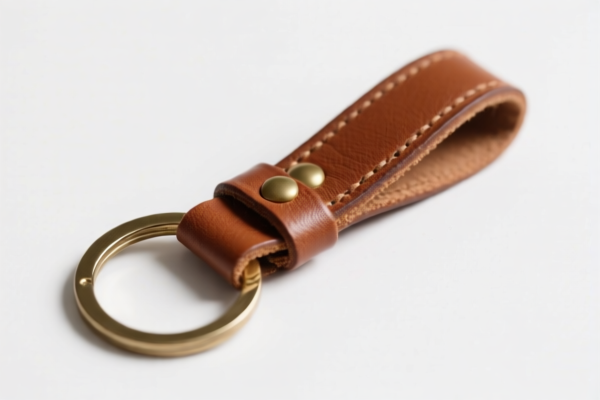
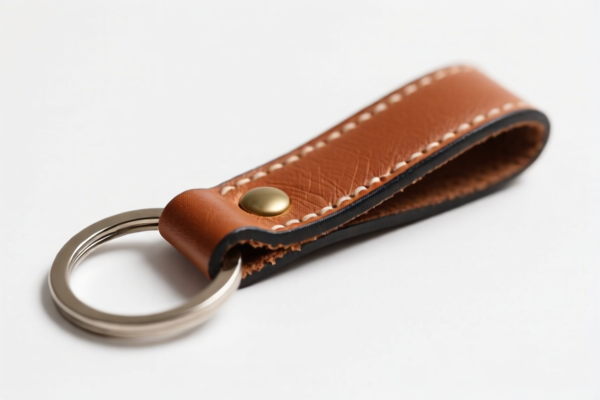
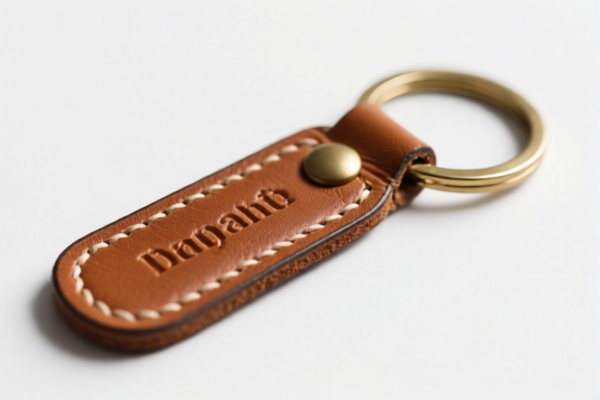
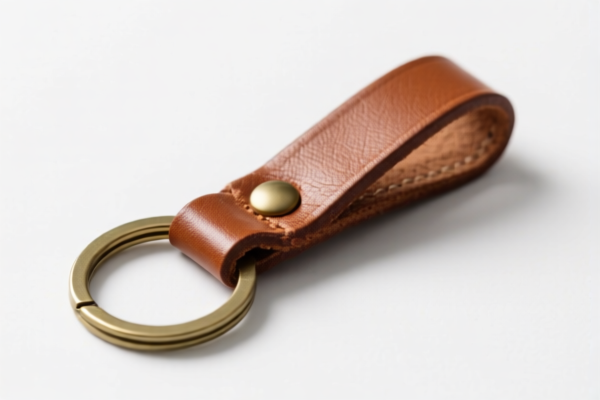
AI Analysis
🐊 Reptile Leather Keychain: HS Code Classification & Tax Breakdown
🌐 HS Code Reference & Customs Clearance Guide | 2026 Latest Tariff Analysis | Professional Clearance Strategy
📌 I. Product Definition & Classification: What Exactly Is “Reptile Leather”?
A Reptile Leather Keychain is a small accessory made from the tanned skin of reptiles (such as crocodile, alligator, snake, or lizard). In international trade, the classification depends heavily on the state of processing (raw, semi-processed, or finished) and the specific type of reptile.
- Raw/Semi-processed Hides: Unworked or simply preserved skins → Falls under Chapter 41 (Hides and Skins).
- Finished Leather Goods: Tanned, dyed, cut, and assembled into a keychain → Falls under Chapter 41 (Leather) or Chapter 43 (Furskins, if interpreted broadly as "other animal skin").
⚠️ Key Distinction:
- If the product is just the skin/hide (cut, not assembled) → Chapter 41.
- If the product is finished/constructed (keychain ring attached, shaped) → Could still be Chapter 41 if classified as "other leather articles," but often triggers scrutiny under "other animal skins."
- Note: Some codes treat "other animal skins" (non-reptile) differently, so specific reptile identification is crucial.
📦 II. HS Code Classification Matrix (Based on Provided Data)
| HS Code | Product Description | Suitability for Reptile Keychain | Total Tax Rate |
|---|---|---|---|
4106.91.00.00 |
Other reptile leather (specifically matched to reptile material) | ✅ High Match: Explicitly covers reptile hides. | 38.3% |
4106.40.00.00 |
Other reptile skins, tanned or crusted | ✅ Exact Match: Directly addresses reptile skin classification. | 35.0% |
4114.20.70.00 |
Other prepared leather (fallback for leather articles) | ⚠️ Fallback: Based on leather material & residual principle. | 36.6% |
4114.10.00.00 |
Other leather, tanned or crusted (general leather category) | ⚠️ General: Fits leather attribute, no material conflict. | 38.2% |
4302.19.60.00 |
Other fur skins, unstuffed (infered as uncolored whole skins) | ❌ Low Match: Implies "fur-like" or unworked skins; less accurate for tanned leather goods. | 38.5% |
🔍 Key Insight:
-4106.40.00.00is the most precise code for tanned reptile skins, offering the lowest total tax rate (35.0%).
-4106.91.00.00is a strong alternative for other reptile leathers, with a slightly higher rate (38.3%).
- Avoid4302.19.60.00unless the product is an unworked, unstuffed skin, as it misrepresents the "leather" nature of a keychain.
💰 III. 2026 Tariff Rate Breakdown (Including Additional Taxes & Policy Surcharges)
✅ Applicable Country: United States (US)
✅ Origin: China (CN)
✅ Effective Date: 2025 November 10 onwards (including subsequent imports)
🎯 1. 4106.40.00.00 – Reptile Skins, Tanned or Crusted
| Item | Detail |
|---|---|
| Base Duty | 0.0% (ad valorem) |
| USITC Additional Tariff | +25.0% (from USITC Footnote 9903.88.01) |
| IEEPA Additional Tariff | +10.0% (for China/HK products, effective 2025-11-10) |
| Total Tax Rate | 35.0% |
| Calculation Method | CIF Value × 35.0% |
| De Minimis Exemption | ❌ Not Eligible (deny_de_minimis) |
| Legal Basis Path | IEEPA:9903.01.25 → IEEPA:9903.01.24 → USITC:4106.40.00.00 → FOOTNOTE:9903.88.01 |
📌 Explanation:
- 0% Base Rate: Reptile skins often have low base duties under HTSUS.
- 25% USITC Tariff: Applied under Section 301 for Chinese goods.
- 10% IEEPA Tariff: A newer surcharge targeting specific Chinese imports.
- Total 35%: This is the lowest possible rate among the provided codes.
🎯 2. 4106.91.00.00 – Other Reptile Leather
| Item | Detail |
|---|---|
| Base Duty | 3.3% |
| USITC Additional Tariff | +25.0% |
| IEEPA Additional Tariff | +10.0% |
| Total Tax Rate | 38.3% |
| Calculation Method | CIF Value × 38.3% |
| De Minimis Exemption | ❌ Not Eligible |
| Legal Basis Path | IEEPA:9903.01.25 → IEEPA:9903.01.24 → USITC:4106.91.00.00 → FOOTNOTE:9903.88.01 |
📌 Note:
- Slightly higher base duty (3.3%) compared to4106.40.00.00.
- Same additional surcharges apply.
- Useful if the specific reptile type does not fall under4106.40but is still clearly reptile leather.
🎯 3. 4114.20.70.00 – Other Prepared Leather (Fallback)
| Item | Detail |
|---|---|
| Base Duty | 1.6% |
| USITC Additional Tariff | +25.0% |
| IEEPA Additional Tariff | +10.0% |
| Total Tax Rate | 36.6% |
| Calculation Method | CIF Value × 36.6% |
| De Minimis Exemption | ❌ Not Eligible |
| Legal Basis Path | IEEPA:9903.01.25 → IEEPA:9903.01.24 → USITC:4114.20.70.00 → FOOTNOTE:9903.88.01 |
📌 Warning:
- This code is a fallback ("residual" category).
- Using it for a clearly defined reptile leather item may raise customs flags if documentation doesn’t explicitly justify the "other prepared leather" classification.
- Rate is intermediate (36.6%).
🎯 4. 4114.10.00.00 – Other Tanned Leather
| Item | Detail |
|---|---|
| Base Duty | 3.2% |
| USITC Additional Tariff | +25.0% |
| IEEPA Additional Tariff | +10.0% |
| Total Tax Rate | 38.2% |
| Calculation Method | CIF Value × 38.2% |
| De Minimis Exemption | ❌ Not Eligible |
| Legal Basis Path | IEEPA:9903.01.25 → IEEPA:9903.01.24 → USITC:4114.10.00.00 → FOOTNOTE:9903.88.01 |
📌 Note:
- General leather category.
- Higher base duty than4106.40.00.00.
- Suitable if the reptile leather is considered part of a broader "other leather" group.
🎯 5. 4302.19.60.00 – Other Fur Skins, Unstuffed
| Item | Detail |
|---|---|
| Base Duty | 3.5% |
| USITC Additional Tariff | +25.0% |
| IEEPA Additional Tariff | +10.0% |
| Total Tax Rate | 38.5% |
| Calculation Method | CIF Value × 38.5% |
| De Minimis Exemption | ❌ Not Eligible |
| Legal Basis Path | IEEPA:9903.01.25 → IEEPA:9903.01.24 → USITC:4302.19.60.00 → FOOTNOTE:9903.88.01 |
📌 Caution:
- Least accurate for tanned leather goods.
- Implies "fur-like" or unworked skins.
- Highest total rate (38.5%) among the options.
- Only use if the product is an uncolored, unworked whole skin.
🛠️ IV. Customs Clearance Practical Advice (Risk Avoidance Guide)
✅ 1. Required Documentation Checklist
| Document | Required? | Purpose |
|---|---|---|
| ✅ Product Specifications | ✔️ | Detailed description: material (reptile type), dimensions, color, finish. |
| ✅ Material Certificate | ✔️ | Proof of reptile origin (CITES permits if applicable). |
| ✅ Product Photos | ✔️ | Clear images showing texture, grain, and construction. |
| ✅ Commercial Invoice | ✔️ | Must specify "Reptile Leather Keychain" and correct HS Code. |
| ✅ Packing List | ✔️ | Item count, weight, packaging details. |
| ✅ CITES Permit (if applicable) | ✔️ | Required for endangered species (e.g., certain crocodiles, pythons). |
✅ 2. Declaration Tips (Key Formulas)
🔥 "Be Specific: Reptile Type + Tanned State = Lower Risk!"
| Scenario | Correct Declaration | Wrong Declaration |
|---|---|---|
| Tanned Reptile Skin | 4106.40.00.00 – "Reptile Leather, Tanned" |
"Animal Leather" → Unclear, potential delay |
| Finished Keychain | 4106.40.00.00 or 4106.91.00.00 |
"Keychain Accessory" → Misclassification risk |
| Unworked Skin | 4302.19.60.00 |
"Leather" → Wrong, implies processing |
| Mixed Materials | 4106.40.00.00 (if reptile is principal material) |
"Fashion Accessory" → Vague, high scrutiny |
📌 Critical Note:
- Do not use generic terms like "Leather Keychain."
- Explicitly state "Reptile Leather" (e.g., "Croc-Embossed Leather" is not the same as "Genuine Crocodile Leather").
- If the product is faux reptile leather, it may fall under Chapter 39 (Plastics) or 42 (Articles of Leather), which have different tax rates.
✅ 3. Special Cases
| Case | Handling Suggestion |
|---|---|
| CITES-Listed Species | Must provide CITES Import/Export Permits. Failure leads to seizure. |
| Croc-Embossed Cow Leather | Not reptile leather! Classify under 4106.31.00.00 (Cowhide) → Lower tax. |
| Keychain with Metal Parts | Still classified under 4106.xxxx if leather is the principal material. |
| Samples for Display | May qualify for duty-free if marked "Not for Sale" and value is minimal. |
🌍 V. Global Market Comparison (2026)
| Country/Region | Recommended HS Code | Tax Rate | Certification | Notes |
|---|---|---|---|---|
| 🇺🇸 USA | 4106.40.00.00 |
35.0% | None specific | High additional tariffs (25% + 10%) |
| 🇨🇳 China | 4106.40.00.00 |
~5-10% | None | Lower base duties |
| 🇪🇺 EU | 4106.40.00.00 |
~5-10% | CITES | Strict CITES controls |
| 🇦🇺 Australia | 4106.40.00.00 |
~5-10% | CITES | Strict biosecurity |
| 🇯🇵 Japan | 4106.40.00.00 |
~5-10% | CITES | Moderate duties |
📌 Conclusion:
- USA has the highest total tax burden (35%) due to additional surcharges.
- CITES compliance is critical globally for reptile products.
- FAUX reptile leather should be declared accurately to avoid misclassification penalties.
📌 VI. Common Mistakes & Pitfalls (Lessons Learned)
❌ Mistake 1: Using "Leather" instead of "Reptile Leather"
👉 Consequence: Customs may suspect endangered species → Detention & Fine!
❌ Mistake 2: Declaring "Keychain" without material specification
👉 Consequence: Duty assessment based on "other articles" → Higher Tax (up to 38.5%)
❌ Mistake 3: Ignoring CITES requirements
👉 Consequence: Seizure of goods and potential legal action.
❌ Mistake 4: Using 4302.19.60.00 for tanned leather
👉 Consequence: Misclassification → Audit Risk
✅ Correct Practice:
"Reptile Leather Keychain (Genuine Crocodile), Tanned, Dyed, Model XYZ, CITES Compliant"
🎯 VII. Conclusion: Smart Classification, Smooth Clearance
🎯 Remember the Formula:
🔹 "Reptile + Tanned = 4106.40 (35%)
🔹 "Reptile + Other = 4106.91 (38.3%)
🔹 "Unworked Skin = 4302.19 (38.5%)"🔹 "HS Code Determines Cost, CITES Determines Legality!"
📌 Pro Tip:
If your reptile leather is faux (PU/PVC), declare it as "Synthetic Leather Keychain" → Likely falls under Chapter 39 or 42 → Much Lower Taxes!
📣 Immediate Action:
📞 Verify Material Authenticity
📄 Obtain CITES Permits (if applicable)
🚀 Apply for Advance Ruling to lock in the 35% rate
✨ Professional Clearance Starts with Accurate Classification!
💼 Every Percent Saved in Tariffs is Pure Profit!
Customer Reviews
About HS Code Classification
The Harmonized System (HS) is an internationally standardized nomenclature developed by the World Customs Organization (WCO) to classify traded products. Over 200 countries use the HS system as the basis for customs tariffs, trade statistics, and import/export regulations.
Each HS code follows a hierarchical structure:
- Chapter (2 digits) — Broad category of goods (e.g., Chapter 84: Machinery and Mechanical Appliances)
- Heading (4 digits) — More specific grouping within the chapter
- Subheading (6 digits) — Internationally standardized breakdown, used by all WCO member countries
- National subdivisions (8-10 digits) — Country-specific extensions for further classification, such as US HTSUS 10-digit codes
Correct HS code classification is essential for smooth customs clearance, accurate duty payment, and compliance with trade regulations. Misclassification can lead to customs delays, overpayment of duties, or penalties.
When importing from CN to US, the applicable tariff rates may include:
- Most-Favored-Nation (MFN) rate — The standard duty rate applied to WTO members
- General rate — Applied to countries without trade agreements
- Trade remedy duties — Additional tariffs such as Section 301 (anti-dumping), Section 232 (national security), or countervailing duties
The information provided on this page is for reference purposes only. For official classification, please consult with your local customs authority or a licensed customs broker.