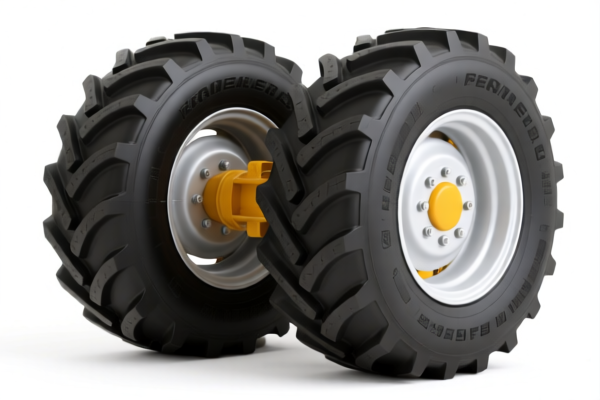
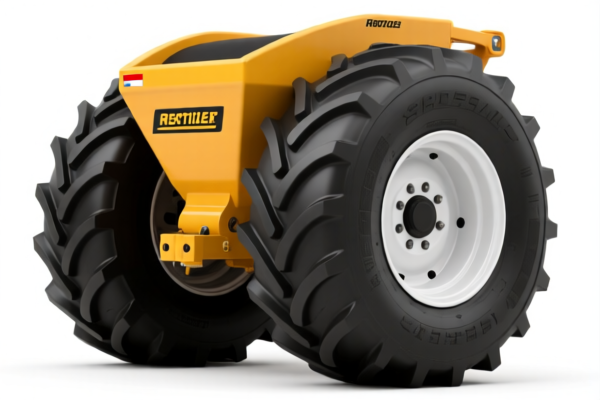
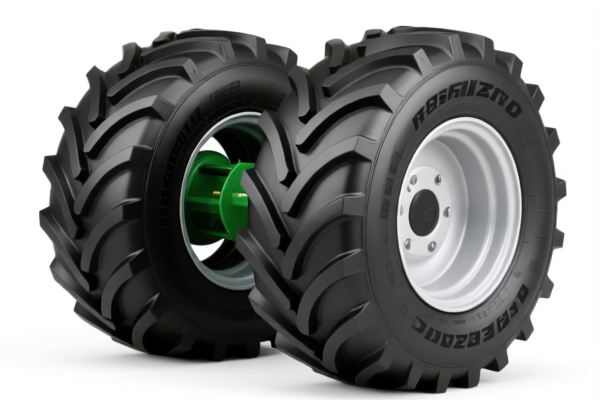
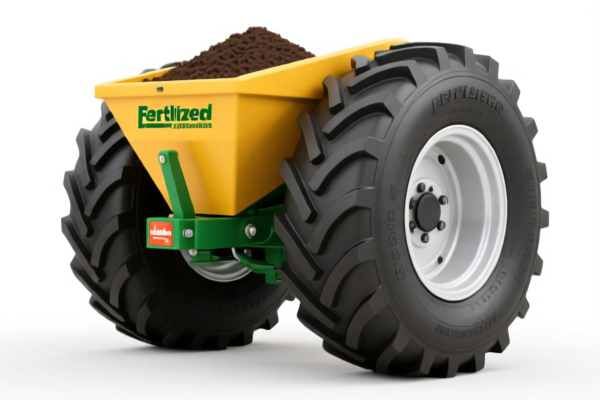
Retreaded Fertilizer Spreader Tires
CN → US| HS Code | Tariff Rate | Origin | Destination | Doc |
|---|---|---|---|---|
| 4012901000 | 35.0% | CN | US | Official Doc |
| 4011808020 | 38.4% | CN | US | Official Doc |
| 4016996010 | 37.5% | CN | US | Official Doc |
| 4012198000 | 20.9% | CN | US | Official Doc |
| 4011808010 | 38.4% | CN | US | Official Doc |
Product Images
AI Analysis
🚜 Retreaded Fertilizer Spreader Tires
🌐 HS Code Reference & Clearance Guide | 2026 Latest Tariff Analysis | Professional Customs Strategy
📌 I. Product Definition & Classification: Do You Really Understand "Fertilizer Spreader Tires"?
Retreaded tires for agricultural machinery, specifically fertilizer spreaders, fall under the category of industrial/agricultural vehicles rather than standard passenger cars or trucks. However, customs classification often hinges on whether the tire is pneumatic (air-filled) or non-pneumatic, and its specific application.
In international trade, retreaded tires are generally classified under Heading 40.12 (Retreaded or used pneumatic rubber tires) or Heading 40.16 (Other articles of vulcanized rubber other than hard rubber).
⚠️ Key Distinction Points:
- Pneumatic Retreaded Tires: If the tire is air-filled and retreaded, it typically falls under 4012.90 or 4012.19.
- Solid/Industrial Rubber Parts: If the product is not a standard pneumatic tire but a specialized rubber component for the spreader mechanism, it may fall under 4016.99.
- Specific Agricultural Use: Some HS codes specifically mention "industrial handling vehicles" or "agricultural machinery parts," which can affect duty rates.
📦 II. HS Code Classification Details (2026 Latest Tariff Authority Comparison)
Based on the provided data, here are the specific HS codes for retreaded tires applicable to industrial/agricultural equipment like fertilizer spreaders:
| HS Code | Product Description | Applicable Scenario | Total Tax Rate |
|---|---|---|---|
4012.90.10.00 |
Retreaded Pneumatic Tires | Retreaded or used pneumatic rubber tires (general industrial/agricultural) | 35.0% |
4011.80.80.20 |
Pneumatic Tires for Industrial Handling Vehicles | Inflated tires for industrial handling vehicles (e.g., forklifts, spreaders with industrial classification) | 38.4% |
4016.99.60.10 |
Vulcanized Rubber Articles | Other rubber articles, including parts for automotive/machinery (non-pneumatic or specialized) | 37.5% |
4012.19.80.00 |
Other Retreaded Pneumatic Tires | Retreaded tires not elsewhere specified (lower base tariff scenario) | 20.9% |
4011.80.80.10 |
Pneumatic Tires for Industrial Handling Vehicles | Inflated tires for industrial handling vehicles (similar to 4011.80.80.20) | 38.4% |
🔍 Key Reminder:
-4012series: Specifically for retreaded tires. If you are importing new tires, these codes may not apply.
-4011series: Often applies to new pneumatic tires for specific vehicles. Note that some entries in your data list "retreaded" in the summary but code under4011. This may indicate specific national interpretations or errors in the source summary. Verify with local customs.
-4016series: For other rubber articles. If the "tire" is actually a solid rubber wheel or a specialized rubber component, use this code.
💰 III. 2026 Latest Tariff Rate Breakdown (Including Surcharges & Policy Add-ons)
✅ Applicable Country: United States (US)
✅ Country of Origin: China (CN)
✅ Effective Time: Based on 122 Section (US-China Trade War) & 301 Tariffs
🎯 1. 4012.90.10.00 —— Retreaded Pneumatic Tires (General)
| Item | Content |
|---|---|
| Base Tariff | 0.0% (Most Favored Nation rate for retreaded tires often low) |
| Section 301 Surcharge | +25.0% |
| Section 122 Tariff | +10.0% |
| Total Tax Rate | 35.0% |
| Tax Calculation | CIF Value × 35% |
| De Minimis Exemption | ❌ Not Eligible (Deny de minimis for Chinese goods under current policies) |
| Legal Basis Path | USITC:4012.90.10.00 → Section 301: 25% → Section 122: 10% |
📌 Explanation:
- The base tariff for retreaded tires is often 0% or low to encourage recycling.
- However, US-China trade tensions have added significant surcharges: 25% (301) + 10% (122) = 35%.
- This is a high-cost category. Ensure your invoice clearly states "Retreaded" to avoid being misclassified as new tires (which may have different base rates).
🎯 2. 4011.80.80.20 & 4011.80.80.10 —— Pneumatic Tires for Industrial Handling Vehicles
| Item | Content |
|---|---|
| Base Tariff | 3.4% |
| Section 301 Surcharge | +25.0% |
| Section 122 Tariff | +10.0% |
| Total Tax Rate | 38.4% |
| Tax Calculation | CIF Value × 38.4% |
| De Minimis Exemption | ❌ Not Eligible |
| Legal Basis Path | USITC:4011.80.80.x0 → Section 301: 25% → Section 122: 10% |
📌 Note:
- Although the summary says "Retreaded," the HS Code4011typically covers new pneumatic tires.
- Risk: If you ship retreaded tires but declare under4011, you may face misdeclaration penalties.
- Recommendation: Use4012for retreaded tires unless specific bilateral agreements or national interpretations allow4011for retreads. Always verify with a licensed customs broker.
🎯 3. 4016.99.60.10 —— Other Vulcanized Rubber Articles
| Item | Content |
|---|---|
| Base Tariff | 2.5% |
| Section 301 Surcharge | +25.0% |
| Section 122 Tariff | +10.0% |
| Total Tax Rate | 37.5% |
| Tax Calculation | CIF Value × 37.5% |
| De Minimis Exemption | ❌ Not Eligible |
| Legal Basis Path | USITC:4016.99.60.10 → Section 301: 25% → Section 122: 10% |
📌 Use Case:
- This code is for non-pneumatic rubber parts or specialized rubber components.
- If your "fertilizer spreader tires" are solid rubber wheels or specialized rubber inserts, use this code.
- Do not use for standard air-filled retreaded tires.
🎯 4. 4012.19.80.00 —— Other Retreaded Pneumatic Tires
| Item | Content |
|---|---|
| Base Tariff | 3.4% |
| Section 301 Surcharge | +7.5% |
| Section 122 Tariff | +10.0% |
| Total Tax Rate | 20.9% |
| Tax Calculation | CIF Value × 20.9% |
| De Minimis Exemption | ❌ Not Eligible |
| Legal Basis Path | USITC:4012.19.80.00 → Section 301: 7.5% → Section 122: 10% |
📌 Strategic Advantage:
- This code has a significantly lower total tax rate (20.9%) compared to others.
- Why? The 301 surcharge is only 7.5% instead of 25%.
- Condition: You must qualify for this subheading. This usually applies to specific types of retreaded tires (e.g., for trucks, buses, or specific agricultural equipment) that are listed in the 7.5% exemption list or excluded from the higher 25% tariff.
- Action: Confirm if your fertilizer spreader tires qualify for the 7.5% 301 rate. If yes, this is the best option for cost savings.
🛠️ IV. Clearance Practical Advice (Real-World Pitfall Guide)
✅ 1. Preparation Checklist (Essential Documents)
| Document | Required | Explanation |
|---|---|---|
| ✅ Product Specification Sheet | ✔️ | Must clearly state: Retreaded, size, pattern, application (fertilizer spreader), and whether it is pneumatic or solid. |
| ✅ Certificate of Origin (CO) | ✔️ | Critical for determining eligibility for tariff exemptions or lower rates. |
| ✅ Commercial Invoice | ✔️ | Must explicitly state "Retreaded Tires" and HS Code. Avoid vague terms like "Rubber Parts." |
| ✅ Packing List | ✔️ | Detail quantity, weight, and packaging. |
| ✅ Third-Party Inspection Report | ✔️ | Proof of retreading process, quality, and origin. |
| ✅ Customs Declaration Form | ✔️ | Accurate HS Code selection. |
✅ 2. Declaration Tips (Key Mantras)
🔥 "Be Specific, Be Accurate, Avoid Misclassification!"
| Situation | Correct Declaration | Error Consequence |
|---|---|---|
| Standard Retreaded Tire | 4012.90.10.00 or 4012.19.80.00 |
If declared as new tire (4011), risk of penalty + back taxes. |
| Solid Rubber Wheel | 4016.99.60.10 |
If declared as pneumatic tire (4012), misclassification. |
| Industrial Handling Tire | 4011.80.80.x0 |
Only if new and for industrial handling. Do not use for retreads unless explicitly allowed. |
| Qualifying for 7.5% Rate | 4012.19.80.00 |
Must provide proof that the tire type is excluded from the 25% surcharge. |
✅ 3. Special Cases
| Situation | Handling Advice |
|---|---|
| OEM Retreaded Tires | Provide OEM contract and retreading process description. |
| Mixed Containers | Separate retreaded tires from new tires in the declaration. Mixed shipments may lead to full container inspection. |
| Origin: Vietnam/Mexico | If retreading occurs in Vietnam or Mexico, you may qualify for USMCA or other FTAs, reducing or eliminating the 301/122 tariffs. Verify rule of origin. |
| Agricultural Exemption | Some agricultural machinery parts may be exempt. Check if fertilizer spreader tires qualify as "agricultural equipment parts." |
🌍 V. Global Market Comparison (2026 Latest)
| Country/Region | Recommended HS Code | Tariff (China Origin) | Certification | Notes |
|---|---|---|---|---|
| 🇺🇸 USA | 4012.90.10.00 or 4012.19.80.00 |
20.9% - 35.0% | None | High tariffs due to 301/122. Best rate: 20.9% if eligible. |
| 🇨🇳 China | 4012.90.10.00 |
0% - 5% | None | Low import tariffs for retreaded tires. |
| 🇪🇺 EU | 4012.90.00 |
0% - 4.5% | CE | No 301/122 tariffs. |
| 🇦🇺 Australia | 4012.90.00 |
5% | ADR | No significant surcharges. |
| 🇯🇵 Japan | 4012.90.00 |
0% - 5% | JIS | No surcharges. |
📌 Conclusion:
- USA is the most expensive market due to trade war tariffs.
- China, EU, Australia, Japan have much lower tariffs.
- If you are exporting to the US, optimize HS Code selection (4012.19.80.00at 20.9%) to save 14-17% in duties.
📌 VI. Common Mistakes & Pitfall Guide (Lessons Learned)
❌ Mistake 1: Declaring retreaded tires as new tires (4011)
👉 Consequence: Higher base tariff + penalty for misdeclaration + potential seizure.
👉 Solution: Always declare as retreaded (4012).
❌ Mistake 2: Using 4012.90.10.00 when 4012.19.80.00 qualifies
👉 Consequence: Paying 35% instead of 20.9%.
👉 Solution: Verify if your tire type qualifies for the 7.5% 301 surcharge.
❌ Mistake 3: Vague product description ("Rubber Tire")
👉 Consequence: Customs may reclassify under a higher tariff code or demand additional documentation.
👉 Solution: Use precise terms: "Retreaded Pneumatic Tire for Fertilizer Spreader."
❌ Mistake 4: Ignoring Section 122 Tariffs
👉 Consequence: Unexpected 10% surcharge added to every shipment.
👉 Solution: Factor 10% into your cost calculation.
✅ Correct Approach:
"Retreaded Pneumatic Tire, Size 400/60-20, for Agricultural Fertilizer Spreader, Origin: China, HS Code: 4012.19.80.00"
🎯 VII. Conclusion: Professional Declaration, Save Costs, Efficient Clearance!
🎯 Remember the Mantra:
🔹 "Retreaded = 4012, New = 4011.
🔹 Check 301 Rate: 7.5% vs 25%.
🔹 Don't Ignore 122: Add 10%.
🔹 Total Tax: 20.9% to 38.4%."🔹 "HS Code determines tax, 14% difference can make or break profit!"
📌 Pro Tip:
If your tires are retreaded in Vietnam, Mexico, or Thailand, check if they qualify for USMCA or other FTAs. This could reduce tariffs to 0%.
Always apply for an Advance Ruling from US Customs if unsure about HS Code classification.
📣 Immediate Action:
📞 Contact a licensed customs broker.
📄 Prepare detailed product specs.
🚀 Optimize your HS Code to save up to 14% in duties!
✨ Professional Customs Clearance Starts with Accurate Classification!
💼 Every cent saved is pure profit!
Customer Reviews
About HS Code Classification
The Harmonized System (HS) is an internationally standardized nomenclature developed by the World Customs Organization (WCO) to classify traded products. Over 200 countries use the HS system as the basis for customs tariffs, trade statistics, and import/export regulations.
Each HS code follows a hierarchical structure:
- Chapter (2 digits) — Broad category of goods (e.g., Chapter 84: Machinery and Mechanical Appliances)
- Heading (4 digits) — More specific grouping within the chapter
- Subheading (6 digits) — Internationally standardized breakdown, used by all WCO member countries
- National subdivisions (8-10 digits) — Country-specific extensions for further classification, such as US HTSUS 10-digit codes
Correct HS code classification is essential for smooth customs clearance, accurate duty payment, and compliance with trade regulations. Misclassification can lead to customs delays, overpayment of duties, or penalties.
When importing from CN to US, the applicable tariff rates may include:
- Most-Favored-Nation (MFN) rate — The standard duty rate applied to WTO members
- General rate — Applied to countries without trade agreements
- Trade remedy duties — Additional tariffs such as Section 301 (anti-dumping), Section 232 (national security), or countervailing duties
The information provided on this page is for reference purposes only. For official classification, please consult with your local customs authority or a licensed customs broker.