Rinse Spray
CN → US| HS Code | Tariff Rate | Origin | Destination | Doc |
|---|---|---|---|---|
| 3924104000 | 13.4% | CN | US | Official Doc |
| 3924905650 | 20.9% | CN | US | Official Doc |
| 3402505100 | 10.0% | CN | US | Official Doc |
| 3808594000 | 40.0% | CN | US | Official Doc |
| 3402905030 | 38.7% | CN | US | Official Doc |
| 3808945095 | 40.0% | CN | US | Official Doc |
Product Images
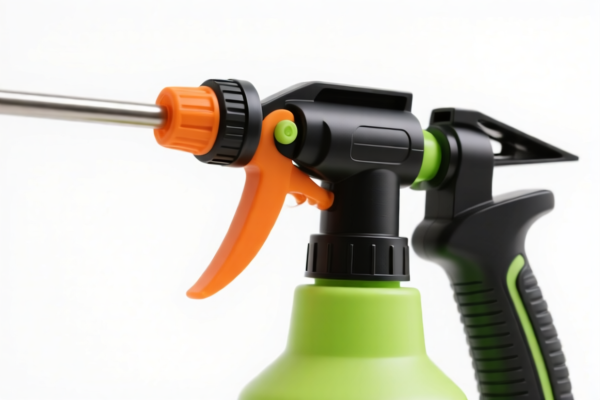
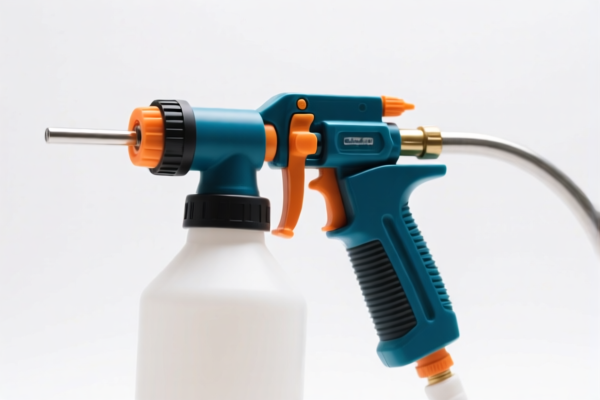
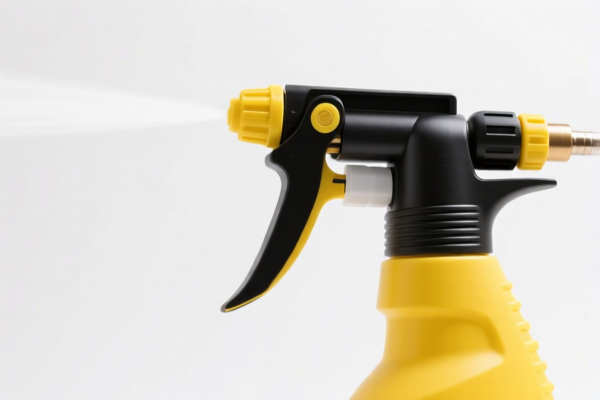
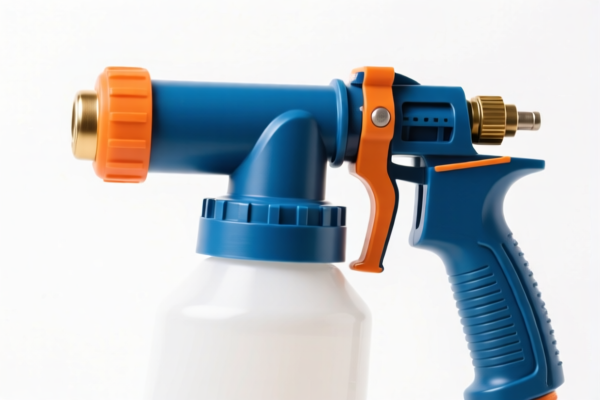
AI Analysis
🚿 Rinse Spray (Cleaning & Hygiene Solutions)
🌐 HS Code Reference & Customs Clearance Guide | 2026 Latest Tariff Analysis | Professional Entry Strategy
📌 I. Product Definition & Classification: What Exactly is "Rinse Spray"?
"Rinse Spray" is a broad term in the cleaning and hygiene sector. In international trade, it is rarely a standalone HS Code category. Instead, its classification depends entirely on its chemical composition and primary function.
Generally, Rinse Sprays fall into two main categories: 1. Household Cleaning/Hygiene Products: Plastic containers, sprays for dishes, surfaces, or personal hygiene (e.g., intimate washes, oral rinses). 2. Chemical Preparations: Organic surface-active agents (surfactants), disinfectants, or bleaching preparations.
⚠️ Key Distinction Point:
- If it is a finished consumer product in a plastic spray bottle for general hygiene/cleaning → Likely Chapter 39 (Plastics) or Chapter 34 (Soap/Cleaning Prep).
- If it has disinfectant/antimicrobial properties → Likely Chapter 38 (Miscellaneous Chemical Products).
📦 II. HS Code Classification Details (2026 Latest Tariff Authority Comparison)
Based on the inferred content, here are the five most likely HS Codes for "Rinse Spray," ranging from low to high tariffs.
| HS Code | Summary & Inference | Total Tax Rate | Tax Breakdown (Base + Additional + 122 Clause) |
|---|---|---|---|
3924.10.40.00 |
Plastic Container/Household Item: Inferred as a plastic container for household hygiene use. | 13.4% | Base: 3.4% Added: 0.0% 122 Clause: 10% |
3402.50.51.00 |
Organic Surfactant/Cleaning Prep: Organic surface-active agents or cleaning preparations. | 10.0% | Base: 0.0% Added: 0.0% 122 Clause: 10% |
3402.90.50.30 |
Chemical Preparation/Cleaning: Chemical preparations consistent with cleaning categories. | 38.7% | Base: 3.7% Added: 25.0% 122 Clause: 10% |
3924.90.56.50 |
Plastic Household Item (Other): Other plastic household/hygiene articles not elsewhere specified. | 20.9% | Base: 3.4% Added: 7.5% 122 Clause: 10% |
3808.59.40.00 |
Disinfectant (Formulation): Disinfectants in the form of preparations. | 40.0% | Base: 5.0% Added: 25.0% 122 Clause: 10% |
3808.94.50.95 |
Other Disinfectants (Liquid): Other disinfectants, liquid formulation logic. | 40.0% | Base: 5.0% Added: 25.0% 122 Clause: 10% |
🔍 Critical Insight:
- Lowest Risk/Cost:3402.50.51.00(10.0%) or3924.10.40.00(13.4%).
- Highest Risk/Cost:3808.59.40.00/3808.94.50.95(40.0%).
- Why the huge difference? If customs determines the product is a disinfectant (chemical action against pathogens) rather than a simple cleaner (mechanical/physical removal of dirt), the tariff jumps significantly due to anti-dumping/additional trade measures.
💰 III. 2026 Latest Tariff Rate Explanation (Detailed Tax Clauses)
✅ Applicable Country: United States (US)
✅ Origin: China (CN)
✅ Effective Date: Post-November 2025
🎯 1. 3924.10.40.00 & 3924.90.56.50 —— Plastic Household/Hygiene Articles
| Item | Detail |
|---|---|
| Base Duty | 3.4% |
| Section 301 (Added) Duty | 0.0% (for 3924.10) or 7.5% (for 3924.90) |
| Section 122 Duty | 10% |
| Total Effective Rate | 13.4% or 20.9% |
| Logic | These codes classify the product based on its packaging/material (plastic) or generic household use, assuming the content is not primarily a regulated chemical disinfectant. |
📌 Note:
- Section 301 tariffs apply to specific Chinese-origin goods.
- Section 122 (often associated with recent trade actions) adds a flat 10% on many consumer goods.
🎯 2. 3402.50.51.00 —— Organic Surface-Active Agents
| Item | Detail |
|---|---|
| Base Duty | 0.0% |
| Section 301 (Added) Duty | 0.0% |
| Section 122 Duty | 10% |
| Total Effective Rate | 10.0% |
| Logic | This is often the most favorable classification if the product is a standard cleaning rinse (e.g., dish rinse, fabric softener rinse) containing surfactants but no active disinfectant claim. |
📌 Logic:
- Base rate is 0% for many chemical surfactants.
- No Section 301 additional duty applies in this specific sub-category (depending on current updates).
- Only the 10% Section 122 duty applies.
🎯 3. 3808.59.40.00 & 3808.94.50.95 —— Disinfectants
| Item | Detail |
|---|---|
| Base Duty | 5.0% |
| Section 301 (Added) Duty | 25.0% |
| Section 122 Duty | 10% |
| Total Effective Rate | 40.0% |
| Logic | If the product is marketed or tested as a disinfectant (kills bacteria/viruses), it falls under Chapter 38. These goods are heavily targeted by trade policies, resulting in a 25% Section 301 duty. |
📌 Warning:
- 40% is the highest tier.
- Misclassifying a disinfectant as a cleaner can lead to customs audits, penalties, and back duties.
- Must have EPA registration (if in the US) to prove disinfectant status.
🎯 4. 3402.90.50.30 —— Other Chemical Preparations
| Item | Detail |
|---|---|
| Base Duty | 3.7% |
| Section 301 (Added) Duty | 25.0% |
| Section 122 Duty | 10% |
| Total Effective Rate | 38.7% |
| Logic | A "catch-all" for chemical preparations that don't fit neatly into surfactants or disinfectants. High tariffs apply due to Section 301. |
🛠️ IV. Customs Clearance Practical Advice (Pitfall Avoidance Guide)
✅ 1. Preparation Checklist (Non-Negotiable)
| Document | Required? | Explanation |
|---|---|---|
| ✅ Product Label & Marketing Copy | ✔️ | Does it say "Disinfectant," "Sanitizer," "Kill 99.9% of Germs"? If yes → Chapter 38 (High Tax). If it says "Cleans," "Rinses," "Shines" → Chapter 34/39 (Low Tax). |
| ✅ SDS (Safety Data Sheet) | ✔️ | Must clearly state active ingredients. |
| ✅ Formula Sheet | ✔️ | Percentage of surfactants vs. active biocides. |
| ✅ EPA Registration Number (USA) | ✔️ | Critical. If it claims disinfection, it MUST have an EPA number. If no EPA number but claims disinfection → Contraband/Seizure Risk. |
| ✅ Commercial Invoice | ✔️ | Clear description: "Plastic Spray Bottle with Cleaning Solution" vs. "Antimicrobial Rinse Spray". |
| ✅ Packing List | ✔️ | Net weight vs. Gross weight. |
✅ 2. Declaration Strategy (Key Mantras)
🔥 “Claim Determines Class, Class Determines Cost!”
| Scenario | Correct HS Code | Risk Level |
|---|---|---|
| Dish Rinse / Fabric Rinse (No germ-killing claim) | 3402.50.51.00 (10.0%) |
🟢 Low |
| Plastic Spray Bottle Empty | 3924.10.40.00 (13.4%) |
🟢 Low |
| Intimate Hygiene Rinse (Soap-like) | 3402.50.51.00 or 3924.90.56.50 |
🟡 Medium (Check ingredients) |
| Surface Disinfectant Spray | 3808.59.40.00 (40.0%) |
🔴 High Cost |
| Medical Sanitizer Spray | 3808.94.50.95 (40.0%) |
🔴 High Cost |
⚠️ Critical Warning:
- Do NOT misdeclare a disinfectant as a cleaner to save 30% in tariffs. US Customs and Border Protection (CBP) has strict rules.
- If your product has antimicrobial properties, you must declare it as such and pay the higher tax.
- If your product is just a cleaner, ensure your marketing materials DO NOT claim "kills germs" to avoid reclassification.
✅ 3. Special Cases
| Case | Handling Advice |
|---|---|
| OEM Private Label | Ensure the label matches the declared HS Code. If you claim "disinfectant" on the label but declare 3402, you will be caught. |
| Refill Packs | Often classified under 3402 or 3808 depending on content. Ensure packaging is clearly identified as "Refill." |
| Multi-Use Sprays | If it cleans AND disinfects, customs may default to the higher tariff (3808). Consult a customs broker. |
🌍 V. Global Market Comparison (2026)
| Country/Region | Recommended HS Code | Est. Total Duty | Key Certification | Notes |
|---|---|---|---|---|
| 🇺🇸 USA | 3402.50.51.00 |
10.0% | EPA (if disinfectant) | Best Option: Avoid 3808 if possible. |
| 🇨🇳 China | 3402.50.51.00 |
5% - 10% | CCC (if applicable) | Lower base tariffs, no Section 301. |
| 🇪🇺 EU | 3402 / 3808 |
0% - 6.5% | CLP, Biocidal Products Regulation (BPR) | Strict BPR rules for disinfectants. |
| 🇬🇧 UK | 3402 / 3808 |
0% - 6.5% | BPR (UK) | Post-Brexit rules apply. |
| 🇦🇺 Australia | 3402 / 3808 |
5% | ADR, APVMA | APVMA registration required for disinfectants. |
📌 Conclusion:
- USA: The difference between 10% and 40% is massive. Optimize marketing claims to stay in3402if the product is only a cleaner.
- EU/UK/AU: Disinfectants require strict biocidal registration, regardless of tariff.
📌 VI. Common Mistakes & Pitfalls (Lessons Learned)
❌ Mistake 1: Declaring a "Disinfectant Spray" as "Cleaning Spray" (3402)
👉 Consequence: Customs audit → Back duties (30% difference) + Penalties + Possible seizure.
❌ Mistake 2: No EPA Registration for a Disinfectant Claim
👉 Consequence: Goods held at port → Destruction or re-export. Illegal in the US.
❌ Mistake 3: Using Vague Descriptions like "Rinse Solution"
👉 Consequence: Customs may assign the highest possible duty (3808) due to uncertainty.
❌ Mistake 4: Ignoring Section 122 Duty
👉 Consequence: Underestimation of total landed cost. Always add 10% on top of base + 301.
✅ Correct Approach:
"Household Cleaning Rinse Spray, Plastic Bottle, Surfactant-Based, Non-Medical, No Antimicrobial Claims"
→ HS Code:3402.50.51.00
→ Tax: 10.0%
🎯 VII. Conclusion: Professional Declaration, Cost Optimization!
🎯 Remember the Mantra:
🔹 "Cleaners are Cheap (10-13%), Disinfectants are Expensive (40%)."
🔹 "Claims dictate Code. Code dictates Cost."
🔹 "If it kills germs, declare it as such. If it just cleans, don't claim killing."
📌 Pro Tip:
If your product is borderline, consider reformulating to remove active biocides to qualify for 3402 (10% tax).
If reformulation is not possible, budget for 40% tax and ensure full EPA compliance.
Always apply for a Binding Ruling (CBP) before shipping large volumes to lock in the HS Code.
📣 Take Action Now:
📞 Consult a licensed Customs Broker.
📄 Review your Marketing Label for "Disinfectant" claims.
🚀 Clear Customs, Save Money, Scale Fast!
✨ Professional Customs Clearance Starts with Precise Classification!
💼 Your Profit Margin Depends on This 30% Difference!
Customer Reviews
About HS Code Classification
The Harmonized System (HS) is an internationally standardized nomenclature developed by the World Customs Organization (WCO) to classify traded products. Over 200 countries use the HS system as the basis for customs tariffs, trade statistics, and import/export regulations.
Each HS code follows a hierarchical structure:
- Chapter (2 digits) — Broad category of goods (e.g., Chapter 84: Machinery and Mechanical Appliances)
- Heading (4 digits) — More specific grouping within the chapter
- Subheading (6 digits) — Internationally standardized breakdown, used by all WCO member countries
- National subdivisions (8-10 digits) — Country-specific extensions for further classification, such as US HTSUS 10-digit codes
Correct HS code classification is essential for smooth customs clearance, accurate duty payment, and compliance with trade regulations. Misclassification can lead to customs delays, overpayment of duties, or penalties.
When importing from CN to US, the applicable tariff rates may include:
- Most-Favored-Nation (MFN) rate — The standard duty rate applied to WTO members
- General rate — Applied to countries without trade agreements
- Trade remedy duties — Additional tariffs such as Section 301 (anti-dumping), Section 232 (national security), or countervailing duties
The information provided on this page is for reference purposes only. For official classification, please consult with your local customs authority or a licensed customs broker.