Rosin Alcohol Oil
CN → US| HS Code | Tariff Rate | Origin | Destination | Doc |
|---|---|---|---|---|
| 3911100000 | 41.1% | CN | US | Official Doc |
| 1301904000 | 18.8% | CN | US | Official Doc |
| 3806100010 | 40.0% | CN | US | Official Doc |
| 1301909190 | 17.5% | CN | US | Official Doc |
| 3806100050 | 40.0% | CN | US | Official Doc |
Product Images
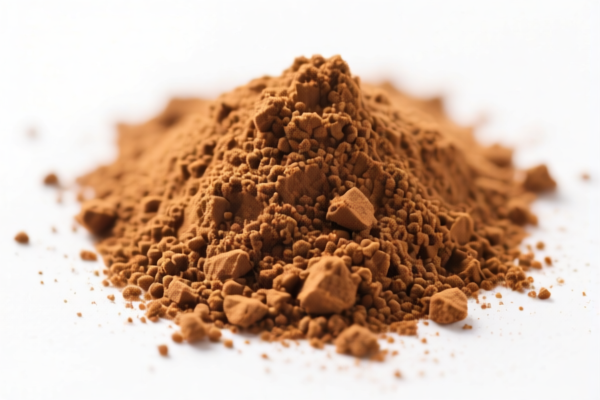
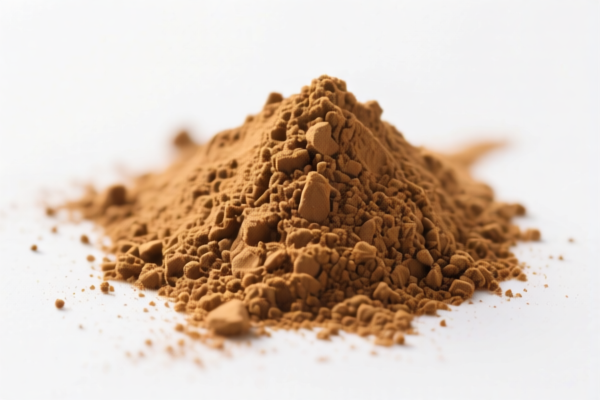


AI Analysis
🌲 Rosin Alcohol Oil (Rosin-Alcohol Solution)
Also known as: Rosin Rosin Solution, Alcohol-Soluble Rosin, Damar-like Resin Solution
🌐 HS Code Reference & Customs Clearance Guide | 2026 Latest Tariff Analysis | Professional Entry Strategy
📌 I. Product Definition: What is "Rosin Alcohol Oil"?
"Rosin Alcohol Oil" is not a single chemical compound but a solution where Rosin (Colophony) is dissolved in Alcohol (Ethanol/Methanol) as a solvent. It is widely used in adhesives, varnishes, printing inks, and fluxes.
⚠️ Critical Classification Challenge:
The Harmonized System (HS) does not have a specific heading for "Rosin dissolved in Alcohol." Therefore, classification depends on whether customs views it as: 1. The Base Material (Rosin): Classified under natural resins (Chapter 13 or 39). 2. The Processed Chemical Product: Classified under prepared resins/acids (Chapter 38).
Based on the provided data, there are five potential HS Code classifications, ranging from natural resin categories to processed chemical categories. Each has significantly different tax implications.
📦 II. HS Code Classification Details (2026 Latest Tariff Authority Comparison)
| HS Code | Product Description | Key Classification Logic | Base Duty | Add. Duty (301) | 122 Clause | Total Tax Rate |
|---|---|---|---|---|---|---|
3911.10.00.00 |
Natural Resins, in Primary Forms | Rosin is a natural resin; alcohol is seen as a non-conflicting solvent/forming agent. | 6.1% | 25.0% | 10% | 41.1% |
1301.90.40.00 |
Other Copal, Kauri, Gambir, etc. (Resinous Extracts) | Core component is Rosin (a resinous extract/oil resin); fits "natural resin" scope. | 1.3% | 7.5% | 10% | 18.8% |
3806.10.00.10 |
Rosins and Rosin Acids | Rosin is the key material; alcohol is a derivative/mixing form consistent with this category. | 5.0% | 25.0% | 10% | 40.0% |
1301.90.91.90 |
Other Natural Resins (Catch-all) | Rosin is a natural resin; alcohol is a solvent; this is the "other" catch-all for natural resins. | 0.0% | 7.5% | 10% | 17.5% |
3806.10.00.50 |
Other Rosins and Rosin Acids | Rosin fits the material definition; alcohol is a common processing/dissolved form. | 5.0% | 25.0% | 10% | 40.0% |
🔍 Key Insight:
- Lowest Tax Options:1301.90.40.00(18.8%) and1301.90.91.90(17.5%) rely on arguing that the product is a Natural Resin Extract. - Highest Tax Options:3911.10.00.00(41.1%),3806.10.00.10(40.0%), and3806.10.00.50(40.0%) apply high 301 tariffs (25%) because they are classified under broader resin/chemical headers that attract heavier punitive duties.
💰 III. 2026 Latest Tariff Rate Breakdown (Including Surtaxes & Policy Surcharges)
✅ Applicable Country: United States (US)
✅ Origin: China (CN)
✅ Effective Date: Post-November 10, 2025 (Includes subsequent imports)
🎯 1. 3911.10.00.00 —— Natural Resins, in Primary Forms
| Item | Content |
|---|---|
| Base Rate | 6.1% (ad valorem) |
| USITC Add. Duty (301) | +25.0% |
| Section 122 Duty | +10.0% |
| Total Rate | 41.1% |
| Calculation | CIF Value × 41.1% |
| De Minimis Exemption | ❌ Not Eligible (High risk of inspection) |
| Legal Basis Path | USITC:3911.10.00.00 → FOOTNOTE:301 → SECTION_122 |
📌 Explanation:
- Classified as "Natural Resin in Primary Forms." - High tariff burden due to 301 Section (25%) and Section 122 (10%). - Suitable only if the product is strictly defined as raw natural resin with minimal processing.
🎯 2. 1301.90.40.00 —— Other Resinous Extracts (Lowest Tax Strategy?)
| Item | Content |
|---|---|
| Base Rate | 1.3% |
| USITC Add. Duty (301) | +7.5% |
| Section 122 Duty | +10.0% |
| Total Rate | 18.8% |
| Calculation | CIF Value × 18.8% |
| De Minimis Exemption | ❌ Not Eligible |
| Legal Basis Path | USITC:1301.90.40.00 → FOOTNOTE:301 → SECTION_122 |
📌 Explanation:
- Significant Tax Savings: Only 18.8% vs. 41.1%. - Justification: Argues that Rosin is a "Resinous Extract" similar to Copal or Kauri. - Risk: Customs may challenge if the alcohol content is high, arguing it’s a "Prepared Chemical" (Chapter 38) rather than a "Natural Extract" (Chapter 13).
🎯 3. 3806.10.00.10 & 3806.10.00.50 —— Prepared Resins/Acids
| Item | Content |
|---|---|
| Base Rate | 5.0% |
| USITC Add. Duty (301) | +25.0% |
| Section 122 Duty | +10.0% |
| Total Rate | 40.0% |
| Calculation | CIF Value × 40.0% |
| De Minimis Exemption | ❌ Not Eligible |
| Legal Basis Path | USITC:3806.10.00.10/50 → FOOTNOTE:301 → SECTION_122 |
📌 Explanation:
- These codes fall under Chapter 38 ("Miscellaneous Chemical Products"). - Alcohol is viewed as a solvent creating a "prepared" product. - Subject to the full 25% 301 tariff, making it nearly as expensive as Code3911.
🎯 4. 1301.90.91.90 —— Other Natural Resins (Catch-All)
| Item | Content |
|---|---|
| Base Rate | 0.0% |
| USITC Add. Duty (301) | +7.5% |
| Section 122 Duty | +10.0% |
| Total Rate | 17.5% |
| Calculation | CIF Value × 17.5% |
| De Minimis Exemption | ❌ Not Eligible |
| Legal Basis Path | USITC:1301.90.91.90 → FOOTNOTE:301 → SECTION_122 |
📌 Explanation:
- Lowest Total Tax: Only 17.5%. - Logic: Uses the "Other" catch-all for natural resins. Base duty is 0%, and the 301 surcharge is only 7.5%. - Aggressive Strategy: Requires strong documentation proving the product is primarily a natural resin, not a manufactured chemical mixture.
🛠️ IV. Customs Clearance Practical Advice (Battle-Tested Pitfall Guide)
✅ 1. Document Checklist (Non-Negotiable)
| Document | Required | Purpose |
|---|---|---|
| ✅ Safety Data Sheet (SDS) | ✔️ | Must clearly list Rosin as the primary ingredient and Alcohol as the solvent. |
| ✅ Certificate of Analysis (CoA) | ✔️ | Specifies concentration of Rosin vs. Alcohol. Critical for distinguishing between "Natural Extract" (Ch. 13) and "Prepared Chemical" (Ch. 38). |
| ✅ Product Specification Sheet | ✔️ | Details the type of Rosin (Gum, Tall Oil, Wood Rosin) and type of Alcohol (Ethanol, Methanol). |
| ✅ Commercial Invoice | ✔️ | Description must match HS Code logic (e.g., "Rosin Resin Solution" vs. "Prepared Chemical"). |
| ✅ Bill of Lading | ✔️ | Ensure weight/volume matches CI. |
| ✅ Letter of Explanation | ✔️ | Crucial: Explain why HS 1301 is chosen over 3806 (i.e., "The essential character is the natural resin, not the solvent."). |
✅ 2. Declaration Strategy (Key Formulas)
🔥 "Low Tax Path: Natural Character, Not Chemical Mix!"
| Scenario | Recommended HS Code | Risk Level | Tax Rate |
|---|---|---|---|
| High Rosin Content (>70%), Low Solvent | 1301.90.91.90 |
⚠️ Medium | 17.5% |
| Standard Solution, Mixed Use | 1301.90.40.00 |
⚠️ Medium | 18.8% |
| Highly Processed/Purified | 3806.10.00.10/50 |
✅ Low (Safe) | 40.0% |
| Raw Natural Resin with Minimal Solvent | 3911.10.00.00 |
✅ Low (Safe) | 41.1% |
📌 Critical Warning:
- Do NOT declare as "Chemical Solvent Mixture" under Chapter 38 if you aim for low tax. Customs will assign3806and charge 40%. - If you declare under Chapter 13 (1301), be prepared for a technical inquiry from CBP. The argument is: "The alcohol is a processing medium, not a functional ingredient changing the essential character of the resin."
✅ 3. Special Case Handling
| Situation | Handling Advice |
|---|---|
| Tall Oil Rosin vs. Gum Rosin | Gum Rosin is more likely to be accepted under 1301. Tall Oil Rosin (a by-product of paper industry) might be challenged as "Industrial Chemical" (3806). |
| Alcohol Content >50% | High risk of reclassification to 3806 or 2207. If alcohol is the main component, it’s not a resin solution. |
| Labeling | Use terms like "Rosin-Based Solution" rather than "Chemical Adhesive." |
🌍 V. Global Market Comparison (2026)
| Country/Region | Recommended HS Code | Estimated Duty | Notes |
|---|---|---|---|
| 🇺🇸 USA | 1301.90.91.90 |
17.5% | Best Option: Requires strong justification. |
| 🇨🇳 China | 1301.90.40.00 |
~1-2% | Low duty, no punitive surcharges. |
| 🇪🇺 EU | 3806.10.00 |
~5-6% | No Section 122 or 301 equivalents. |
| 🇯🇵 Japan | 1301.90.00 |
~0-2% | Generally low duty for natural resins. |
📌 Conclusion:
- The US market is the most complex due to punitive tariffs (301 + 122). - China, EU, and Japan treat Rosin solutions as standard chemicals/natural resins with no geopolitical surcharges.
📌 VI. Common Errors & Pitfalls (Lessons Learned)
❌ Error 1: Declaring "Rosin Alcohol Oil" as 3824.99 (Prepared Binders)
👉 Consequence: CBP reclassifies to 3806.10 → 40% Tax.
👉 Fix: Provide CoA showing natural resin origin.
❌ Error 2: Using "Adhesive" in the description without HS Code alignment
👉 Consequence: Triggers scrutiny for "Chemical Mixtures" → 40-41% Tax.
👉 Fix: Use "Rosin Solution" in description.
❌ Error 3: Ignoring Section 122 Duty
👉 Consequence: Underpaying 10% of duty → Back Taxes + Penalties.
👉 Fix: Always include 10% Section 122 in cost calculations for China-origin goods.
✅ Correct Practice:
"Rosin Solution, Alcohol-Based, For Adhesive Use, Rosin Content: XX%, Model XYZ, Origin: China"
🎯 VII. Conclusion: Strategic Classification for Cost Optimization
🎯 Key Takeaway:
Classifying Rosin Alcohol Oil under Chapter 13 (
1301) rather than Chapter 38 (3806) can save you up to 22.6% in total duties (17.5% vs. 40.1%).🔹 "Natural Character is King!"
🔹 "Document the Resin, Not the Solvent!"
🔹 "Section 122 Adds 10% Always!"
📌 Pro Tip:
If your Rosin is Gum Rosin (from trees), it has a stronger case for 1301.90.91.90 (17.5%).
If it is Tall Oil Rosin (pulp industry by-product), Customs may prefer 3806.10 (40.0%).
Recommendation: Apply for an Advance Ruling from CBP if shipment volume is large, to lock in the 17.5% rate.
📣 Immediate Action:
📞 Consult your customs broker NOW.
📄 Prepare SDS and CoA highlighting Natural Resin Origin.
🚀 Optimize your supply chain costs by 22%+ through smart classification!
✨ Professional Clearance, Precise Classification, Maximizing Profit!
💼 Every dollar saved on duty is pure profit.
Customer Reviews
About HS Code Classification
The Harmonized System (HS) is an internationally standardized nomenclature developed by the World Customs Organization (WCO) to classify traded products. Over 200 countries use the HS system as the basis for customs tariffs, trade statistics, and import/export regulations.
Each HS code follows a hierarchical structure:
- Chapter (2 digits) — Broad category of goods (e.g., Chapter 84: Machinery and Mechanical Appliances)
- Heading (4 digits) — More specific grouping within the chapter
- Subheading (6 digits) — Internationally standardized breakdown, used by all WCO member countries
- National subdivisions (8-10 digits) — Country-specific extensions for further classification, such as US HTSUS 10-digit codes
Correct HS code classification is essential for smooth customs clearance, accurate duty payment, and compliance with trade regulations. Misclassification can lead to customs delays, overpayment of duties, or penalties.
When importing from CN to US, the applicable tariff rates may include:
- Most-Favored-Nation (MFN) rate — The standard duty rate applied to WTO members
- General rate — Applied to countries without trade agreements
- Trade remedy duties — Additional tariffs such as Section 301 (anti-dumping), Section 232 (national security), or countervailing duties
The information provided on this page is for reference purposes only. For official classification, please consult with your local customs authority or a licensed customs broker.