Rotary Handle
CN → US| HS Code | Tariff Rate | Origin | Destination | Doc |
|---|---|---|---|---|
| 7326908676 | 87.9% | CN | US | Official Doc |
| 7326908688 | 87.9% | CN | US | Official Doc |
| 3926301000 | 24.0% | CN | US | Official Doc |
| 3926902500 | 24.0% | CN | US | Official Doc |
| 8205595560 | 40.3% | CN | US | Official Doc |
Product Images
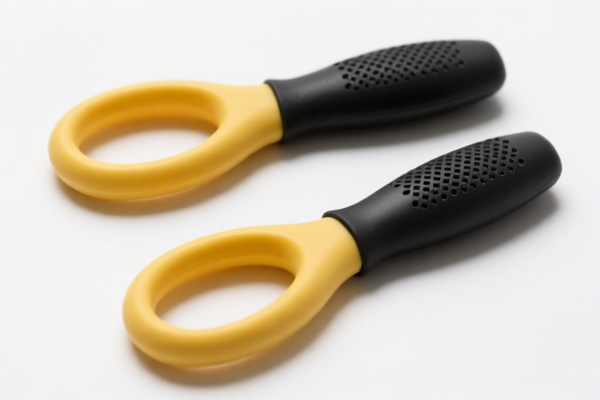
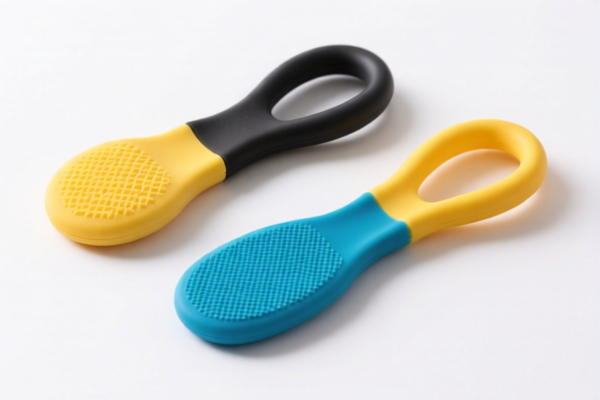
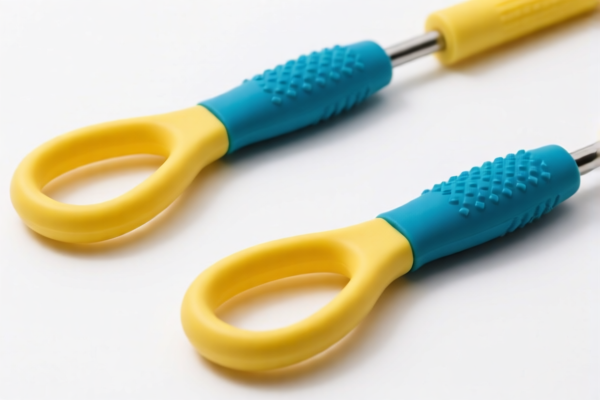
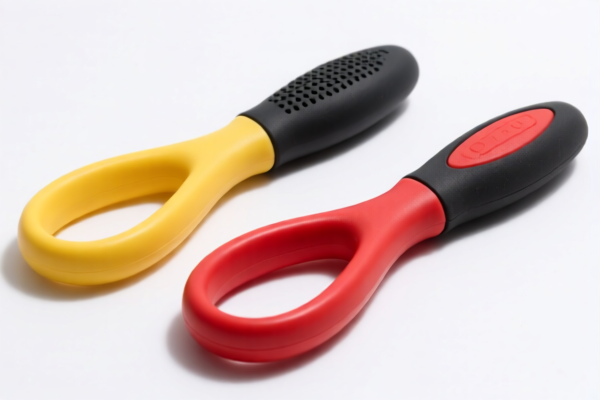
AI Analysis
🔄 Rotary Handle (Turning Handles / Knobs)
🌐 HS Code Reference & Customs Clearance Guide | 2026 Latest Tariff Analysis | Professional Strategy for Metal & Plastic Variants
📌 1. Product Definition & Classification: Do You Know What Your "Rotary Handle" Is Made Of?
The term "Rotary Handle" is a generic description that covers a wide range of components. In international trade, classification depends strictly on material composition and specific usage. Misclassification here leads to drastically different tax rates (from 24% to 87.9%).
There are two main categories: * Plastic Handles/Knobs: Made primarily of polymers (PP, ABS, PVC). * Metal Handles/Turns: Made of iron, steel, aluminum, or other base metals.
⚠️ Key Distinction Point:
- If the item is Plastic and used as a grip/knob → Likely 3926 series.
- If the item is Metal (Steel/Iron) and used as a turn/lever → Likely 7326 or 8205 series.
- Warning: Metal items are subject to significantly higher additional tariffs due to Section 301 and Section 232 measures.
📦 2. HS Code Classification Details (Based on Provided Data)
| HS Code | Summary / Inference Logic | Material Type | Primary Use |
|---|---|---|---|
| 7326.90.86.76 | Inferred based on parts rules: Metal handle turning component | Metal (General) | Industrial/Machinery Handle |
| 7326.90.86.88 | Inferred based on parts rules: Iron or Steel handle turning component | Iron / Steel | Heavy-duty or Structural Handle |
| 3926.30.10.00 | Inferred based on handle/knob usage: Plastic rotary handle | Plastic | Consumer Goods, Furniture, Appliances |
| 3926.90.25.00 | Inferred based on plastic product characteristics: Plastic handle & knob | Plastic | General Plastic Hardware |
| 8205.59.55.60 | Inferred based on tool accessory attributes: Iron/Steel handle part | Iron / Steel | Tool Handle / Hand Tool Accessory |
🔍 Important Note:
- The Metal HS codes (7326 and 8205) carry a Total Tax Rate of 87.9% or 40.3%.
- The Plastic HS codes (3926) carry a Total Tax Rate of 24.0%.
- Choosing the wrong material classification can result in an unexpected ~64% tax difference.
💰 3. 2026 Latest Tariff Rate Breakdown (Including Additional Taxes)
✅ Applicable Country: United States (US)
✅ Origin: China (CN) (Inferred from "Section 122" and "Section 301" references)
✅ Effective Time: Current regulations include Section 301 and Section 232 additions.
🎯 1. Metal Handles (HS 7326 & 8205 Series)
High Tariff Category – Heavy Additional Duties Apply
A. 7326.90.86.76 (Metal Handle Turning Part) & 7326.90.86.88 (Iron/Steel)
| Item | Content |
|---|---|
| Basic Tariff | 2.9% |
| Section 301 Additional Tariff | +25.0% (Trade Act Section 301) |
| Section 122 / Steel & Aluminum Tariff | +50.0% (Specific to steel/aluminum products under Section 232/122 rules) |
| Total Tax Rate | 87.9% |
| Tax Calculation | CIF Value × 87.9% |
| De Minimis Exemption? | ❌ NO (Deny De Minimis) |
📌 Explanation:
- The 2.9% is the standard Most Favored Nation (MFN) rate.
- The 25% is the standard USITC Section 301 tariff on Chinese goods.
- The 50% is the critical "Section 122" or "Steel/Aluminum" surcharge, often applied to metal hardware.
- Total Impact: Almost 90% of the value is tax. This makes metal handles extremely expensive to import into the US from China.
B. 8205.59.55.60 (Iron/Steel Tool Handle Part)
| Item | Content |
|---|---|
| Basic Tariff | 5.3% |
| Section 301 Additional Tariff | +25.0% |
| Section 122 Additional Tariff | +10.0% |
| Total Tax Rate | 40.3% |
| Tax Calculation | CIF Value × 40.3% |
| De Minimis Exemption? | ❌ NO |
📌 Explanation:
- While lower than the 7326 series, 40.3% is still very high.
- This classification assumes it is a "tool accessory" rather than a general metal article, hence the 10% additional tariff instead of 50%.
- Crucial: Ensure the "tool accessory" definition strictly applies; otherwise, customs may reclassify to 7326 (87.9%).
🎯 2. Plastic Handles (HS 3926 Series)
Lower Tariff Category – No Steel/Aluminum Surcharge
A. 3926.30.10.00 (Plastic Rotary Handle) & 3926.90.25.00 (Plastic Handle & Knob)
| Item | Content |
|---|---|
| Basic Tariff | 6.5% |
| Section 301 Additional Tariff | +7.5% |
| Section 122 Additional Tariff | +10.0% |
| Total Tax Rate | 24.0% |
| Tax Calculation | CIF Value × 24.0% |
| De Minimis Exemption? | ❌ NO |
📌 Explanation:
- Plastic is not subject to Section 232 (Steel/Aluminum) tariffs.
- The 7.5% Section 301 rate is lower than the 25% rate for some categories (or may reflect specific chapter exclusions/rates depending on the latest update).
- The 10% Section 122 tariff applies to general Chinese imports.
- Total Impact: 24% is manageable compared to 87.9%. This is the preferred classification if the product is indeed plastic.
🛠️ 4. Customs Clearance Practical Advice (Real-World Pitfall Guide)
✅ 1. Document Checklist (Non-Negotiable)
| Document | Required? | Explanation |
|---|---|---|
| Product Specification Sheet | ✔️ | Must explicitly state Material Composition (e.g., "100% ABS Plastic" or "Stainless Steel"). |
| Photographs (Clear) | ✔️ | Show texture (brushed metal vs. smooth plastic). Color alone is not proof of material. |
| Bill of Materials (BOM) | ✔️ | For composite items, breakdown must show if core material is metal/plastic. |
| Commercial Invoice | ✔️ | Description must be precise: "Plastic Rotary Handle" or "Steel Turning Lever". Avoid vague terms like "Handle Part". |
| Manufacturer Declaration | ✔️ | Confirm origin and material. |
✅ 2. Declaration Strategy (Key Mantras)
🔥 "Material is King, Description is Queen! Vague Descriptions = 88% Tax!"
| Scenario | Correct Declaration | Incorrect Declaration | Consequence |
|---|---|---|---|
| Plastic Handle | "Plastic Rotary Handle for Cabinet" | "Handle Part" | Risk of misclassification to Metal (87.9%) |
| Steel Handle | "Iron Steel Turning Lever" | "Knob" | Risk of being seen as "General Metal" (87.9%) |
| Tool Handle | "Steel Handle for Wrench" | "Metal Part" | Risk of being seen as General Metal (87.9%) |
| Composite | "Plastic Grip with Metal Insert" | "Rotary Handle" | Complex classification; usually taxed by main function/material |
✅ 3. Special Situations
| Situation | Handling Advice |
|---|---|
| Mixed Materials | If >50% by weight or essential character is plastic, try to argue for 3926. If metal core, prepare for 7326/8205. |
| Sample vs. Mass Production | Ensure samples match mass production material. Customs may seize if they suspect "Plastic" but find "Metal". |
| OEM Custom Parts | Provide the buyer's design spec that defines the material. |
| Section 122 Exemptions | Check if your specific product category has any temporary exemptions from the 10% Section 122 tariff. |
🌍 5. Global Market Comparison (2026 Snapshot)
| Country/Region | Recommended HS Code (Plastic) | Tariff (Plastic) | Recommended HS Code (Metal) | Tariff (Metal) | Notes |
|---|---|---|---|---|---|
| 🇺🇸 USA | 3926.30.10.00 / 3926.90.25.00 |
24.0% | 7326.90.86.76 / 8205.59.55.60 |
40.3% - 87.9% | High Risk Market. Metal tariffs are punitive. |
| 🇨🇳 China | 3926.90.90 |
~6.5% | 7326.90.90 |
~8-10% | Lower barriers for exports to China. |
| 🇪🇺 EU | 3926.90 |
~4% | 7326.90 |
~4% | No Section 301/122 equivalents. Standard WTO rates apply. |
| 🇬🇧 UK | 3926.90 |
~4% | 7326.90 |
~4% | Post-Brexit, aligns with EU tariffs generally. |
📌 Conclusion:
- The USA is the only major market where this distinction creates a massive cost disparity (24% vs 88%).
- For US imports, Plastic (3926) is vastly more profitable than Metal (7326/8205).
- If your product is metal, consider if it can be redesigned with plastic components to qualify for the lower rate, or if the value proposition supports the 87.9% tax.
📌 6. Common Errors & Pitfalls (Lessons Learned)
❌ Error 1: Declaring a Steel Handle as "Handle Part" without material specification.
👉 Consequence: Customs assumes worst-case scenario or inspects physically. If found steel → 87.9% tax + penalties.
❌ Error 2: Declaring a Plastic Handle with a small metal core as "Plastic" to avoid tax.
👉 Consequence: Audits may reclassify based on "Essential Character" → Back taxes + interest.
❌ Error 3: Using 8205 for a Non-Tool metal handle.
👉 Consequence: 8205 is for tools. If it's a cabinet handle, it falls to 7326 → 87.9% instead of 40.3%.
✅ Correct Practice:
Be specific.
"ABS Plastic Rotary Handle for Kitchen Cabinet, Model X"
"Stainless Steel Turning Lever for Industrial Valve, Model Y"
🎯 7. Conclusion: Precise Classification Saves Millions!
🎯 Remember the Mantra:
🔹 "Plastic is 24%, Steel is 88%! Don't let a 'Handle' cost you half its value!"
🔹 "Specify Material, Specify Use, Avoid the 301/122 Trap!"
📌 Pro Tip:
If you are importing Metal Handles into the US, investigate HTS Exclusions or Product-Specific Exclusions for Section 301 duties immediately. Also, consider if the product can be classified as a "Tool Accessory" (8205) at 40.3% instead of "General Metal" at 87.9%.
📣 Immediate Action Required:
📞 Consult a Customs Broker with Product Specifications (Material & Function).
📝 Apply for a Binding Ruling or Pre-Clearance Opinion if the volume is high.
🚀 Optimize your supply chain to avoid the 87.9% tariff wall!
✨ Professional Clearance Starts with Accurate HS Codes!
💼 Every Percentage Point of Tax is Pure Profit Loss!
Customer Reviews
About HS Code Classification
The Harmonized System (HS) is an internationally standardized nomenclature developed by the World Customs Organization (WCO) to classify traded products. Over 200 countries use the HS system as the basis for customs tariffs, trade statistics, and import/export regulations.
Each HS code follows a hierarchical structure:
- Chapter (2 digits) — Broad category of goods (e.g., Chapter 84: Machinery and Mechanical Appliances)
- Heading (4 digits) — More specific grouping within the chapter
- Subheading (6 digits) — Internationally standardized breakdown, used by all WCO member countries
- National subdivisions (8-10 digits) — Country-specific extensions for further classification, such as US HTSUS 10-digit codes
Correct HS code classification is essential for smooth customs clearance, accurate duty payment, and compliance with trade regulations. Misclassification can lead to customs delays, overpayment of duties, or penalties.
When importing from CN to US, the applicable tariff rates may include:
- Most-Favored-Nation (MFN) rate — The standard duty rate applied to WTO members
- General rate — Applied to countries without trade agreements
- Trade remedy duties — Additional tariffs such as Section 301 (anti-dumping), Section 232 (national security), or countervailing duties
The information provided on this page is for reference purposes only. For official classification, please consult with your local customs authority or a licensed customs broker.