Rotating Ring
CN → US| HS Code | Tariff Rate | Origin | Destination | Doc |
|---|---|---|---|---|
| 7113195025 | 23.0% | CN | US | Official Doc |
| 7117909000 | 28.5% | CN | US | Official Doc |
| 7117909000 | 28.5% | CN | US | Official Doc |
| 9503000090 | 10.0% | CN | US | Official Doc |
| 7113195091 | 23.0% | CN | US | Official Doc |
Product Images
AI Analysis
💍 Rotating Ring: HS Code Classification & US Customs Clearance Guide (2026)
🌐 HS Code Reference & Clearance Strategy | 2026 Latest Tariff Analysis | Jewelry & Costume Jewelry Specifics
📌 I. Product Definition: What is a "Rotating Ring"?
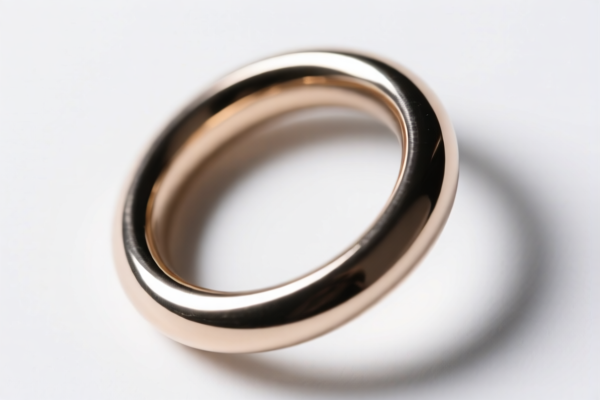
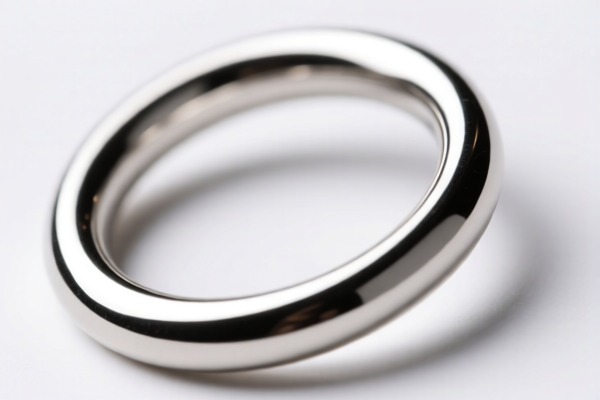
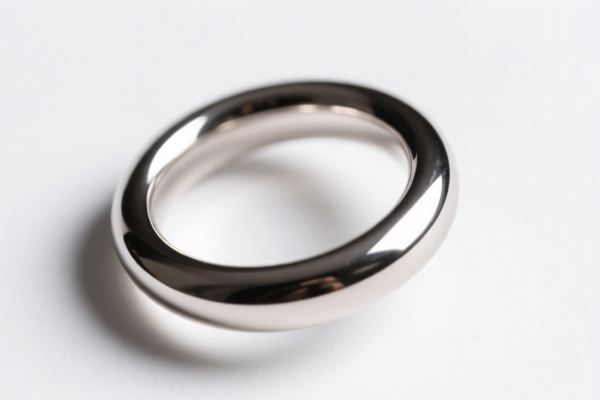
A "Rotating Ring" is a piece of jewelry or costume jewelry where a component (such as a central gem, band, or decorative element) can physically rotate relative to the main body of the ring. This mechanical feature does not change the fundamental nature of the item as a jewelry article.
In international trade, classification hinges on two critical factors: 1. Material Composition: Is it made of precious metals (gold, silver, platinum) or base metals/plastic? 2. Manufacturing Process: The mention of "Enamel" (inferred from similar products in this category) suggests a specific decorative technique often applied to metal bases.
⚠️ Key Distinction:
- If the base is Precious Metal + Enamel/Gemstones → Classified as Jewelry (Heading 7113).
- If the base is Base Metal/Plastic + Enamel/Decoration → Classified as Imitation Jewelry (Heading 7117).
- Note: A toy or model part (Heading 9503) is incorrect unless it is explicitly marketed as a toy component, which is rare for finished rings.
📦 II. HS Code Classification Details (2026 Latest Tariff Authority)
Based on the provided data, there are three potential HS Codes depending on the exact material composition. Below is the detailed breakdown.
| HS Code | Product Description | Basis for Classification | Total Tax Rate | Key Components |
|---|---|---|---|---|
7113.19.50.25 |
Jewelry of precious metal (non-gold) or clad precious metal | Matches the form (ring) and material (precious metal base inferred from enamel craftsmanship). Fits the "Jewelry" category. | 23.0% | Base: 5.5% Add-on: 7.5% Sec 301: 10% |
7117.90.90.00 |
Imitation Jewelry | Matches "Ring" form; "Enamel" is a decorative material. Fits the characteristics of "Imitation Jewelry" made from base metals/plastics. | 28.5% | Base: 11.0% Add-on: 7.5% Sec 301: 10% |
9503.00.00.90 |
Other Toys / Models / Accessories | Incorrect/High Risk. Inferred as jewelry but wrongly classified under the "Other" catch-all for toys/models due to the rotating feature. | 10.0% | Base: 0.0% Add-on: 0.0% Sec 301: 10% |
🔍 Critical Note on
9503.00.00.90:
While the tax rate appears low (10%), classifying a finished jewelry ring as a "toy/model accessory" is a major compliance risk. US Customs and Border Protection (CBP) will likely reject this if the item is worn as jewelry. This code is included in the data as a potential misclassification or a niche "collectible model" item, but for standard wearable rings, 7113 or 7117 is correct.
💰 III. 2026 US Tariff Rate Detailed Breakdown (China Origin)
✅ Applicable Country: United States (US)
✅ Origin: China (CN)
✅ Effective Date: Rates include Section 301 and IEEPA surcharges effective post-2025.
🎯 1. 7113.19.50.25 – Jewelry of Precious Metal (Non-Gold) / Clad Precious Metal
| Item | Content |
|---|---|
| Base Duty Rate | 5.5% (Ad Valorem) |
| Section 301 Duty | +7.5% (List 4B Add-on) |
| IEEPA Duty | +10.0% (China-specific surcharge) |
| Total Effective Rate | 23.0% |
| Tax Calculation | CIF Value × 23.0% |
| De Minimis Exemption | ❌ Not Eligible (Section 321 de minimis does not apply to goods subject to Section 301/IEEPA if value exceeds thresholds or if misclassified). |
| Legal Path | USITC:7113.19.50.25 → FOOTNOTE:301.01 → IEEPA:9903.01.25 |
📌 Explanation:
- This is the standard rate for high-value jewelry made from silver, platinum, or gold-clad metals.
- The 23% rate is significantly lower than imitation jewelry, reflecting the value of the precious metal content.
🎯 2. 7117.90.90.00 – Imitation Jewelry
| Item | Content |
|---|---|
| Base Duty Rate | 11.0% (Ad Valorem) |
| Section 301 Duty | +7.5% (List 4B Add-on) |
| IEEPA Duty | +10.0% (China-specific surcharge) |
| Total Effective Rate | 28.5% |
| Tax Calculation | CIF Value × 28.5% |
| De Minimis Exemption | ❌ Not Eligible |
| Legal Path | USITC:7117.90.90.00 → FOOTNOTE:301.01 → IEEPA:9903.01.24 |
📌 Explanation:
- This applies to rings made from brass, copper, zinc alloy, or plastic with enamel/gemstone decorations.
- The higher base rate (11% vs 5.5%) reflects the lower material value.
🎯 3. 9503.00.00.90 – Other Toys/Models (Risk of Misclassification)
| Item | Content |
|---|---|
| Base Duty Rate | 0.0% |
| Section 301 Duty | +0.0% |
| IEEPA Duty | +10.0% (China-specific) |
| Total Effective Rate | 10.0% |
| Tax Calculation | CIF Value × 10.0% |
| De Minimis Exemption | ⚠️ High Risk |
| Legal Path | USITC:9503.00.00.90 → IEEPA:9903.01.25 |
📌 Warning:
- While the rate is low, CBP frequently audits toys vs. jewelry. If the item is marketed as "jewelry" or worn by adults, this classification will be challenged.
- Penalty Risk: If reclassified to 7113 or 7117, you will owe the difference (13–18.5% more) plus potential duties on undervalued declarations.
🛠️ IV. Customs Clearance Practical Advice (Pitfall Avoidance Guide)
✅ 1. Preparation Checklist (Non-negotiable)
| Document | Required | Explanation |
|---|---|---|
| ✅ Product Composition Report | ✔️ | Must specify precious metal content (e.g., "Sterling Silver 925" vs. "Zinc Alloy"). This is the single most important factor for 7113 vs. 7117. |
| ✅ Technical Photos | ✔️ | Clear images of the ring, especially the rotating mechanism and any hallmark/stamp. |
| ✅ Commercial Invoice | ✔️ | Description must state: "Jewelry Ring, Rotating Feature, [Material], Enamel Decorated" |
| ✅ Enamel Process Description | ✔️ | Clarify if enamel is fired on precious metal (supports 7113) or painted/printed on base metal (supports 7117). |
| ✅ Labeling/Packaging | ✔️ | Must match invoice. Avoid terms like "Toy" or "Model" if it is jewelry. |
✅ 2. Declaration Tips (Key Mnemonic)
🔥 “Material First, Feature Second, Enamel Clarity Saves Money!”
| Scenario | Correct HS Code | Error |
|---|---|---|
| Silver/Gold base + Enamel | 7113.19.50.25 |
Misclassifying as 7117 → Overpaying ~5.5% |
| Base Metal/Plastic + Enamel | 7117.90.90.00 |
Misclassifying as 7113 → Risk of fraud/penalty |
| Marketing as "Wearable Toy" | 9503.00.00.90 |
High Risk of Audit/Rejection |
✅ 3. Special Situations
| Situation | Handling Advice |
|---|---|
| Mixed Materials | If the ring is gold-plated over brass, it is generally still classified under 7117 (Imitation) unless the gold layer meets specific weight/thickness thresholds for precious metal classification. |
| "Rotating" Feature | Do not use "Rotating" to justify 9503 unless it is a mechanical puzzle toy. For jewelry, the rotating feature is a design element, not a functional toy component. |
| Enamel Color/Quality | High-quality vitreous enamel on precious metal supports 7113. Low-quality paint on base metal supports 7117. |
🌍 V. Global Market Clearance Comparison (2026)
| Country/Region | Recommended HS Code | Tariff (China Origin) | Certification | Notes |
|---|---|---|---|---|
| 🇺🇸 USA | 7113.19.50.25 or 7117.90.90.00 |
23.0% or 28.5% | None specific | High scrutiny on material claims |
| 🇨🇳 China | 7113.19.50.25 or 7117.90.90.00 |
5.5% or 11.0% | CCC (if applicable) | No Section 301 for exports to China |
| 🇪🇺 EU | 7113.11.10 or 7117.19 |
0% - 16.5% | CE (if metal parts) | Enamel is common in EU jewelry |
| 🇬🇧 UK | 7113.19 or 7117.90 |
0% - 16.5% | UKCA | Post-Brexit rules apply |
| 🇦🇺 Australia | 7113.19 or 7117.90 |
5% | WETL (if precious metal) | No extra surcharges |
📌 Conclusion:
- USA is the most expensive market due to Section 301 and IEEPA surcharges.
- Material declaration accuracy is critical to avoid reclassification penalties.
📌 VI. Common Errors & Pitfalls (Lessons Learned)
❌ Error 1: Classifying a silver ring as "Imitation Jewelry" (7117)
👉 Consequence: You overpay 5.5% on every unit.
👉 Fix: Check hallmarks and material certs.
❌ Error 2: Classifying a brass ring as "Jewelry of Precious Metal" (7113)
👉 Consequence: CBP will seize goods for fraudulent misclassification. Fines can exceed 40% of value.
👉 Fix: Be honest about base metal content.
❌ Error 3: Using "Toy" (9503) to lower duties on a wearable ring
👉 Consequence: High audit rate. CBP looks at primary use. If worn on a finger, it’s jewelry.
👉 Fix: Do not use toy codes for wearable items.
❌ Error 4: Ignoring the "Enamel" detail
👉 Consequence: Ambiguity in material classification.
👉 Fix: Specify "Vitreous Enamel on Silver" vs. "Painted Alloy".
✅ Correct Declaration Example:
"Rotating Jewelry Ring, Sterling Silver Base with Vitreous Enamel Decorations, Model XYZ, Made in China"
HS Code:7113.19.50.25
Rate: 23.0%
🎯 VII. Conclusion: Precision Saves Cost!
🎯 Remember the Mnemonic:
🔹 "Precious Metal = 7113 (23%); Base Metal = 7117 (28.5%); Toy Code = Risk (10% but dangerous!)"
🔹 "Enamel confirms craftsmanship; Rotation is just design. Material dictates tax."
📌 Pro Tip:
If your rotating ring is made of precious metal, ensure you have a certified assay report or supplier declaration to justify the 23% rate vs. 28.5%. For bulk shipments, consider applying for a CBP Advance Ruling if your material composition is borderline (e.g., gold-plated base metal).
📣 Immediate Action:
📞 Verify material composition with your supplier.
📝 Draft invoice with precise material descriptors.
🚀 Clear customs with confidence!
✨ Professional Classification, Smooth Clearance, Maximized Profit!
💼 Every % of duty matters in the jewelry trade.
Customer Reviews
About HS Code Classification
The Harmonized System (HS) is an internationally standardized nomenclature developed by the World Customs Organization (WCO) to classify traded products. Over 200 countries use the HS system as the basis for customs tariffs, trade statistics, and import/export regulations.
Each HS code follows a hierarchical structure:
- Chapter (2 digits) — Broad category of goods (e.g., Chapter 84: Machinery and Mechanical Appliances)
- Heading (4 digits) — More specific grouping within the chapter
- Subheading (6 digits) — Internationally standardized breakdown, used by all WCO member countries
- National subdivisions (8-10 digits) — Country-specific extensions for further classification, such as US HTSUS 10-digit codes
Correct HS code classification is essential for smooth customs clearance, accurate duty payment, and compliance with trade regulations. Misclassification can lead to customs delays, overpayment of duties, or penalties.
When importing from CN to US, the applicable tariff rates may include:
- Most-Favored-Nation (MFN) rate — The standard duty rate applied to WTO members
- General rate — Applied to countries without trade agreements
- Trade remedy duties — Additional tariffs such as Section 301 (anti-dumping), Section 232 (national security), or countervailing duties
The information provided on this page is for reference purposes only. For official classification, please consult with your local customs authority or a licensed customs broker.