Round Belt
CN → US| HS Code | Tariff Rate | Origin | Destination | Doc |
|---|---|---|---|---|
| 8483901050 | 37.8% | CN | US | Official Doc |
| 8483908080 | 37.8% | CN | US | Official Doc |
| 4010359000 | 38.3% | CN | US | Official Doc |
| 4010369000 | 38.3% | CN | US | Official Doc |
| 5910001020 | 39.0% | CN | US | Official Doc |
Product Images

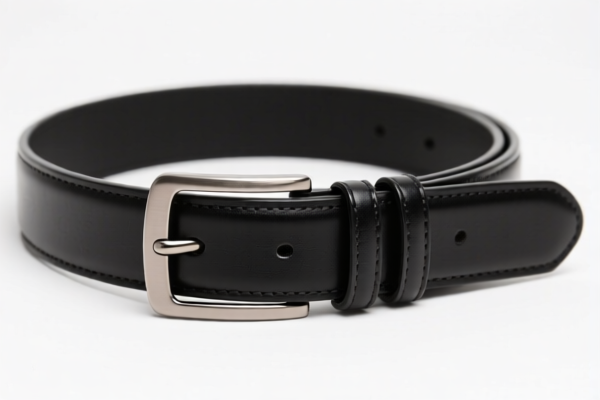


AI Analysis
🎡 Round Belt (Synchronous Drive Belts / V-Round Belts)
🌐 HS Code Reference & Customs Clearance Guide | 2026 Latest Tariff Analysis | Professional Clearance Strategy
📌 1. Product Definition & Classification: What Exactly Is a "Round Belt"?
In international trade, "Round Belt" is a generic term that can refer to different types of drive belts depending on material and application. They are primarily used for power transmission, synchronization, or conveying. Key distinctions include:
- Timing/Synchronous Belts: Often made with rubber cores and fabric/metal teeth for precise synchronization.
- Round V-Belts: Used in pulley systems for power transmission, often made of rubber or textile-reinforced materials.
- Material Variance: The critical factor for HS classification is the material composition (Rubber, Plastic, Textile/Fabric).
⚠️ Key Distinction Point:
- If the belt has teeth/cogs for synchronization and is rubber-based → Likely 4010 (Rubber) or 8483 (Transmission Parts).
- If it is a smooth round belt made of textile/fabric → Likely 5910 (Textile).
- If it is purely a mechanical transmission component (metal/plastic mix with specific machinery function) → Likely 8483.
📦 2. HS Code Classification Details (2026 Tariff Data)
Based on the provided data, here are the four possible HS Codes for Round Belts, categorized by material and function:
| HS Code | Summary Reasoning | Total Tax Rate | Tax Detail Breakdown |
|---|---|---|---|
| 8483.90.10.50 | Transmission Component: Classified under "Other Transmission Parts." Fits the functional definition of mechanical drive elements. | 37.8% | Base Tariff: 2.8% Additional Tariff: 25.0% Section 301 (122 Clause): 10% |
| 8483.90.80.80 | Transmission Assembly: Classified under "Components of Transmission Devices." Broad category for mechanical transmission accessories. | 37.8% | Base Tariff: 2.8% Additional Tariff: 25.0% Section 301 (122 Clause): 10% |
| 4010.35.90.00 | Rubber Synchronous Belt: Morphology and use match. Inferred as Rubber Material. Specifically for synchronous transmission belts. | 38.3% | Base Tariff: 3.3% Additional Tariff: 25.0% Section 301 (122 Clause): 10% |
| 4010.36.90.00 | Other Rubber Belts: Morphology consistent. Inferred as Rubber Material. Falls under "Other" categories for rubber transmission belts. | 38.3% | Base Tariff: 3.3% Additional Tariff: 25.0% Section 301 (122 Clause): 10% |
| 5910.00.10.20 | Textile/Fabric Belt: Use case fully matches. Inferred as Textile or Artificial Fiber Material. Suitable for fabric-reinforced round belts. | 39.0% | Base Tariff: 4.0% Additional Tariff: 25.0% Section 301 (122 Clause): 10% |
🔍 Critical Observation:
- The Base Tariff varies slightly (2.8% – 4.0%) based on material.
- The Additional Tariff (25%) and Section 301 (10%) are constant across all categories, indicating these are likely subject to US trade restrictions on Chinese goods.
- Total Tax Range: 37.8% – 39.0%.
💰 3. 2026 Detailed Tariff Rate Breakdown (Including Surcharges & Policy Add-ons)
✅ Applicable Country: United States (US)
✅ Origin: China (CN) (Implied by Section 301/122 Clause taxes)
✅ Effective Time: 2026 (Current Data)
🎯 Category A: Mechanical Transmission Parts (HS 8483)
1. 8483.90.10.50 & 8483.90.80.80
| Item | Content |
|------|---------|
| Base Tariff | 2.8% (ad valorem) |
| USITC Additional Tariff | +25% (Trade Act Section 301) |
| Section 301 (122 Clause) | +10% (Specific trade restriction) |
| Total Tax Rate | 37.8% |
| Tax Calculation | CIF Value × 37.8% |
| De Minimis Exemption | ❌ Not Eligible (High tariff category usually excluded from $800 de minimis benefits if flagged) |
| Legal Basis Path | HTSUS:8483.90 → USITC:301 → Trade Act:Section 301 |
📌 Explanation:
- These codes classify the belt as a mechanical part of a machine, not just a raw material.
- The 2.8% base is low, but the 35% surcharge makes it expensive.
🎯 Category B: Rubber Transmission Belts (HS 4010)
2. 4010.35.90.00 (Synchronous) & 4010.36.90.00 (Other)
| Item | Content |
|------|---------|
| Base Tariff | 3.3% (ad valorem) |
| USITC Additional Tariff | +25% |
| Section 301 (122 Clause) | +10% |
| Total Tax Rate | 38.3% |
| Tax Calculation | CIF Value × 38.3% |
| De Minimis Exemption | ❌ Not Eligible |
| Legal Basis Path | HTSUS:4010 → Rubber Articles → USITC:301 → Trade Act:Section 301 |
📌 Explanation:
- 4010.35 is for synchronous rubber belts (with teeth/cogs).
- 4010.36 is for other rubber belts (smooth or V-shape).
- Slightly higher total tax (38.3%) due to a higher base tariff (3.3% vs 2.8%).
🎯 Category C: Textile/Fabric Transmission Belts (HS 5910)
3. 5910.00.10.20
| Item | Content |
|------|---------|
| Base Tariff | 4.0% (ad valorem) |
| USITC Additional Tariff | +25% |
| Section 301 (122 Clause) | +10% |
| Total Tax Rate | 39.0% |
| Tax Calculation | CIF Value × 39.0% |
| De Minimis Exemption | ❌ Not Eligible |
| Legal Basis Path | HTSUS:5910 → Textile/Artificial Fiber → USITC:301 → Trade Act:Section 301 |
📌 Explanation:
- This applies to belts made primarily of fabric, cord, or textile reinforcement.
- Highest total tax (39.0%) due to the highest base tariff (4.0%).
- Common for household appliance drive belts or light industrial use.
🛠️ 4. Customs Clearance Practical Advice (Battle-Tested Guide)
✅ 1. Prepare Documentation Checklist (Non-Negotiable)
| Document | Required | Explanation |
|---|---|---|
| ✅ Product Spec Sheet | ✔️ | Must specify Material (Rubber, Textile, Metal-reinforced), Length, Cross-section, and Application. |
| ✅ Material Composition Statement | ✔️ | Crucial! Proves if it's Rubber (4010) vs. Textile (5910). Misclassification leads to penalties. |
| ✅ Product Photos | ✔️ | Clear images showing cross-section (to identify teeth/smoothness) and labeling. |
| ✅ Commercial Invoice | ✔️ | Must clearly state: "Round Drive Belt," Material, and HS Code. |
| ✅ Original Packaging Label | ✔️ | Shows manufacturer details, helping prove origin and brand. |
| ✅ Certificate of Origin (CO) | ✔️ | Required for tariff calculation and Section 301 verification. |
✅ 2. Declaration Tips (Key Mantras)
🔥 "Material First, Function Second! Don't Guess, Specify!"
| Scenario | Correct Declaration | Wrong Practice |
|---|---|---|
| Rubber Synchronous Belt | 4010.35.90.00 - "Rubber Synchronous Drive Belt" |
Declare as "Plastic Part" → Seizure |
| Smooth Round Rubber Belt | 4010.36.90.00 - "Rubber Round Drive Belt" |
Declare as "Textile Belt" → Fine |
| Fabric-Reinforced Belt | 5910.00.10.20 - "Textile Transmission Belt" |
Declare as "Rubber" → Misdeclaration |
| Metal-Core Mechanical Belt | 8483.90.10.50 - "Transmission Component" |
Declare as "Raw Rubber" → Tax Evasion |
✅ 3. Special Handling Cases
| Situation | Handling Advice |
|---|---|
| Mixed Material Belts | If rubber and textile are both significant, consult a customs broker. Usually, the principal material determines the code. |
| OEM Custom Belts | Provide customer design specs. If no standard code applies, use the "Other" subheadings (e.g., 4010.36.90.00). |
| Sample Shipments | Even for samples, declare accurately. De minimis ($800) may not apply if the item is flagged under Section 301. |
| Anti-Circumvention Checks | Ensure the belt is not being re-labeled from another country to avoid Section 301. Keep supply chain records. |
🌍 5. Global Market Customs Comparison (2026 Latest)
| Country/Region | Recommended HS Code | Est. Tariff (CN Origin) | Certification Req. | Notes |
|---|---|---|---|---|
| 🇺🇸 USA | 4010.35.90.00 / 8483.90.10.50 |
37.8% – 39.0% | FCC (if motorized), None for belt itself | High tariffs due to Section 301. |
| 🇨🇳 China | 4010.35.90.00 |
5% - 8% | CCC (if for electrical equipment) | Lower tariffs. |
| 🇪🇺 EU | 4010.35.90.00 |
0% - 4% | CE (if part of machinery) | No Section 301. |
| 🇯🇵 Japan | 4010.35.90.00 |
0% - 4% | PSE (if motorized) | No Section 301. |
| 🇲🇽 Mexico | 4010.35.90.00 |
0% - 5% | NOM (if applicable) | USMCA may apply if made in MX. |
📌 Conclusion:
- USA is the only market with heavy surcharges (35% total add-on).
- EU, Japan, and Mexico offer significantly lower tariff burdens.
- Supply Chain Strategy: Consider sourcing from non-China countries (Vietnam, Thailand, Mexico) to avoid the 35% US surcharge.
📌 6. Common Mistakes & Pitfalls (Lessons Learned)
❌ Mistake 1: Declaring a Rubber Belt as "Plastic Part" to lower base tariff.
👉 Consequence: Customs lab test confirms rubber → Penalty + Back Taxes.
❌ Mistake 2: Using vague terms like "Drive Belt" without specifying material.
👉 Consequence: Customs assigns highest default code → 39.0% Tax instead of 37.8%.
❌ Mistake 3: Ignoring Section 301 applicability.
👉 Consequence: Underpayment of 35% surcharge → Seizure & Lawsuit.
❌ Mistake 4: Confusing "Transmission Belt" (8483) with "Textile Belt" (5910).
👉 Consequence: If it's textile, 8483 is wrong → Rejection of Entry.
✅ Correct Practice:
"Round Drive Belt, 5mm Cross-section, Vulcanized Rubber with Nylon Cord Reinforcement, for Industrial Pump Transmission, Model XYZ."
🎯 7. Conclusion: Precision Classification, Cost Control, Risk Mitigation!
🎯 Remember the Mantra:
🔹 "Material Dictates Code! Rubber=4010, Textile=5910, Machine Part=8483!"
🔹 "35% Surcharge is Real! Check Origin, Check Tax!"
📌 Pro Tip:
If your Round Belt is made in Vietnam, Mexico, or Thailand, you may exempt the 25% + 10% US surcharge, reducing the effective tax to just the base rate (2.8% – 4.0%).
✅ Recommendation:
📞 Consult a Customs Broker + Provide Material Spec Sheet + Request Pre-Ruling if unsure.
🚀 Optimize Supply Chain to avoid US Section 301 tariffs.
✨ Professional Clearance Starts with Accurate Classification!
💼 Every Percent Saved is Pure Profit!
Customer Reviews
About HS Code Classification
The Harmonized System (HS) is an internationally standardized nomenclature developed by the World Customs Organization (WCO) to classify traded products. Over 200 countries use the HS system as the basis for customs tariffs, trade statistics, and import/export regulations.
Each HS code follows a hierarchical structure:
- Chapter (2 digits) — Broad category of goods (e.g., Chapter 84: Machinery and Mechanical Appliances)
- Heading (4 digits) — More specific grouping within the chapter
- Subheading (6 digits) — Internationally standardized breakdown, used by all WCO member countries
- National subdivisions (8-10 digits) — Country-specific extensions for further classification, such as US HTSUS 10-digit codes
Correct HS code classification is essential for smooth customs clearance, accurate duty payment, and compliance with trade regulations. Misclassification can lead to customs delays, overpayment of duties, or penalties.
When importing from CN to US, the applicable tariff rates may include:
- Most-Favored-Nation (MFN) rate — The standard duty rate applied to WTO members
- General rate — Applied to countries without trade agreements
- Trade remedy duties — Additional tariffs such as Section 301 (anti-dumping), Section 232 (national security), or countervailing duties
The information provided on this page is for reference purposes only. For official classification, please consult with your local customs authority or a licensed customs broker.