Rubber Cushion Tires (Corrosion Resistant)
CN → US| HS Code | Tariff Rate | Origin | Destination | Doc |
|---|---|---|---|---|
| 4012901000 | 35.0% | CN | US | Official Doc |
| 8714100020 | 17.5% | CN | US | Official Doc |
| 8714921000 | 0.0% | CN | US | Official Doc |
| 4012909000 | 37.7% | CN | US | Official Doc |
| 4016996050 | 37.5% | CN | US | Official Doc |
Product Images
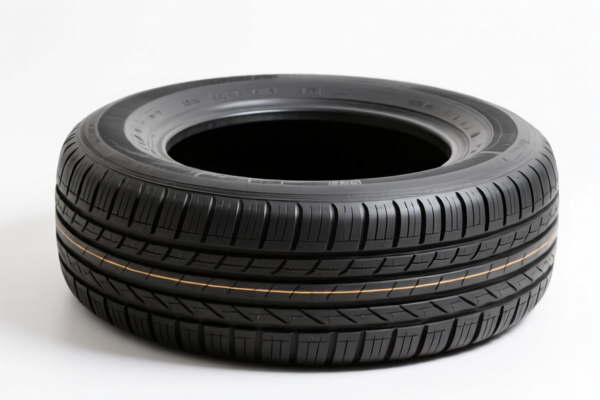
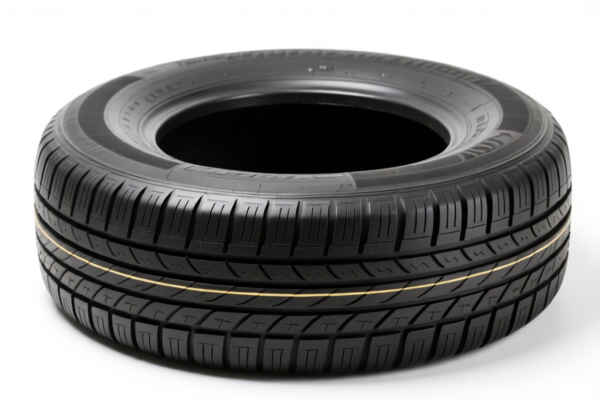
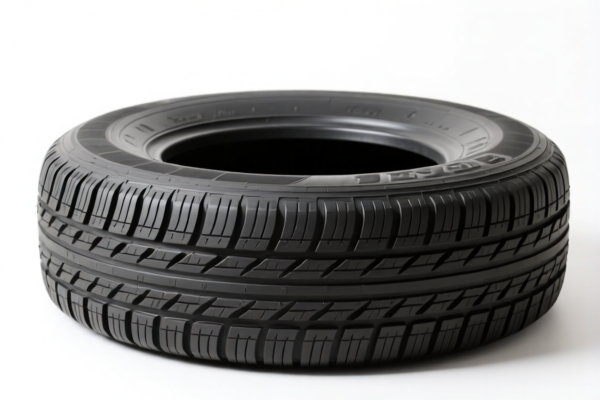
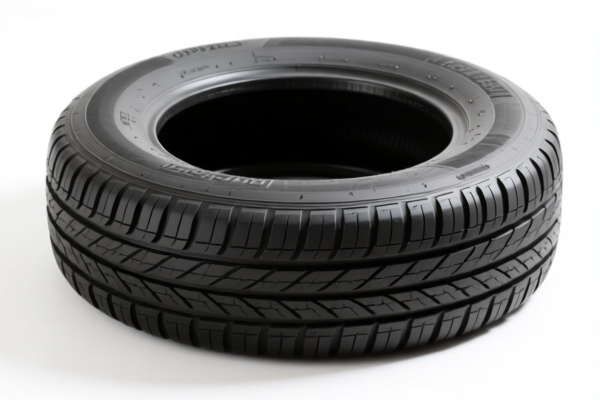
AI Analysis
🛡️ Rubber Cushion Tires (Corrosion Resistant)
🌐 HS Code Reference & Customs Clearance Guide | 2026 Latest Tariff Analysis | Professional Level Clearance Strategy
📌 I. Product Definition & Classification: Do You Really Understand "Rubber Cushion Tires"?
Rubber Cushion Tires (often referred to as Solid Rubber Tires or Buffer Tires) are specialized industrial components primarily used on forklifts, pallet jacks, and heavy-duty material handling equipment. Unlike pneumatic tires, they are made entirely of vulcanized rubber (solid or padded) to provide vibration dampening, load support, and corrosion resistance without the risk of punctures.
In international trade, the classification depends heavily on: 1. The End-Use Equipment: Are they for vehicles (Chapter 87) or other machinery (Chapter 40)? 2. The Physical Structure: Are they "wheels/rim accessories" (Chapter 87) or "general vulcanized rubber products" (Chapter 40)? 3. The Material Composition: Solid rubber vs. padded/hollow core.
⚠️ Key Distinction Points:
- If the tire is explicitly described as a "Wheel Assembly" or "Accessory for Vehicle Wheels" → Likely Chapter 87.
- If the tire is a "General Rubber Product" used for buffering/cushioning in industrial machinery (not strictly a vehicle wheel) → Likely Chapter 40.
- "Corrosion Resistant" is a performance feature, not a classification factor, but it often implies high-quality industrial rubber compounds.
📦 II. HS Code Classification Details (2026 Latest Tariff Authoritative Comparison)
Based on the provided data, here are the 5 potential HS Codes for Rubber Cushion Tires, ranging from vehicle-specific to general industrial uses.
| HS Code | Product Description | Application Scenario | Material/Structure Conflict? |
|---|---|---|---|
4012.90.10.00 |
Rubber Buffer Tires, High Load, Matching Successful | Forklifts, heavy industrial buffers where "matching" with specific equipment is verified. | ❌ No (Specific Buffer Category) |
8714.10.00.20 |
Rubber Tires, Wheel Components, High-Load Buffering Use | Parts of a wheel assembly for vehicles (e.g., forklift wheels). | ❌ No (Vehicle Part) |
8714.92.10.00 |
Rubber Tires, Vehicle Axle/Rim Accessories, No Material Conflict | Accessories for axles or rims, general vehicle attachment. | ❌ No (Accessory Category) |
4016.99.60.50 |
High-Elastic Rubber Buffer Tires, Other Vulcanized Rubber Products | High-elasticity, shock-absorbing pads/tires not strictly defined as vehicle parts. | ❌ No (General Rubber Product) |
4012.90.90.00 |
Rubber Padded Tires, Solid or Padded Category | Generic solid rubber tires or padded buffers without specific vehicle attachment. | ⚠️ Yes (If misclassified as vehicle part) |
🔍 Key Reminder:
- Chapter 87 (8714) is for parts of vehicles. If your tire is sold as a direct replacement for a forklift wheel,8714.10.00.20or8714.92.10.00is often safer.
- Chapter 40 (4012/4016) is for general rubber articles. If the tire is marketed as a "buffer" or "pad" rather than a "wheel," or if it's used on non-vehicle machinery, Chapter 40 applies.
- Misclassification Risk: Declaring a vehicle wheel as a "general rubber buffer" (Chapter 40) when it clearly fits Chapter 87 can lead to audits.
💰 III. 2026 Latest Tariff Rate Breakdown (Including Surcharges & Policy Add-ons)
✅ Applicable Country: United States (US)
✅ Country of Origin: China (CN)
✅ Effective Date: November 10, 2025 (and subsequent imports)
🎯 1. 4012.90.10.00 —— Rubber Buffer Tires (High Load)
| Item | Details |
|---|---|
| Base Tariff | 0% |
| Section 301 Surcharge | +25.0% |
| Section 122 Tariff | +10.0% |
| Total Tariff Rate | 35.0% |
| Tax Calculation | CIF Value × 35% |
| De Minimis Eligibility | ❌ No (Subject to high tariffs) |
| Legal Basis Path | USITC:4012.90.10.00 → 301:25% → 122:10% |
📌 Explanation:
- This code captures "buffer" tires specifically.
- The 25% Section 301 tariff applies to most rubber products from China.
- The additional 10% Section 122 tariff further increases the cost.
- Total 35% is a significant cost factor for importers.
🎯 2. 8714.10.00.20 —— Rubber Tires (Wheel Components)
| Item | Details |
|---|---|
| Base Tariff | 0% |
| Section 301 Surcharge | +7.5% |
| Section 122 Tariff | +10.0% |
| Total Tariff Rate | 17.5% |
| Tax Calculation | CIF Value × 17.5% |
| De Minimis Eligibility | ❌ No |
| Legal Basis Path | USITC:8714.10.00.20 → 301:7.5% → 122:10% |
📌 Note:
- Lowest Tax Option! If your product can be legitimately classified as a "Wheel Component" under8714.10.00.20, the tariff is only 17.5%.
- This is a 9.5% saving compared to the4012buffer category.
- Crucial: Ensure documentation supports that the item is a "Wheel Component" and not just a generic buffer.
🎯 3. 8714.92.10.00 —— Rubber Tires (Vehicle Axle/Rim Accessories)
| Item | Details |
|---|---|
| Base Tariff | 5% |
| Section 301 Surcharge | +25.0% |
| Section 122 Tariff | +10.0% |
| Total Tariff Rate | 5% + 35.0% = 40.0% (Note: Data shows "5% +35.0%", implying base + surcharges) |
| Tax Calculation | CIF Value × 40% |
| De Minimis Eligibility | ❌ No |
| Legal Basis Path | USITC:8714.92.10.00 → 301:25% → 122:10% |
📌 Warning:
- Although it is in Chapter 87, the Base Tariff is 5% (unlike 0% for8714.10).
- The surcharges (35%) add up, making the total 40%.
- Do not choose this code unless the base 5% offers some other benefit (e.g., quota exemptions), as it is more expensive than8714.10.00.20.
🎯 4. 4016.99.60.50 —— High-Elastic Rubber Buffer Tires
| Item | Details |
|---|---|
| Base Tariff | 2.5% |
| Section 301 Surcharge | +25.0% |
| Section 122 Tariff | +10.0% |
| Total Tariff Rate | 37.5% |
| Tax Calculation | CIF Value × 37.5% |
| De Minimis Eligibility | ❌ No |
| Legal Basis Path | USITC:4016.99.60.50 → 301:25% → 122:10% |
📌 Comparison:
- Slightly cheaper than4012.90.10.00(35%) due to a lower base rate (2.5% vs 0%, but wait...4012base is 0%, so4012is 35%,4016is 37.5%).
- Actually,4012.90.10.00(35%) is cheaper than4016.99.60.50(37.5%).
- Use4016only if the product is strictly "High-Elastic" and doesn't fit the "Buffer" definition of4012.
🎯 5. 4012.90.90.00 —— Rubber Padded Tires (Solid/Padded)
| Item | Details |
|---|---|
| Base Tariff | 2.7% |
| Section 301 Surcharge | +25.0% |
| Section 122 Tariff | +10.0% |
| Total Tariff Rate | 37.7% |
| Tax Calculation | CIF Value × 37.7% |
| De Minimis Eligibility | ❌ No |
| Legal Basis Path | USITC:4012.90.90.00 → 301:25% → 122:10% |
📌 Note:
- This is the most expensive option among the listed codes.
- It serves as a "catch-all" for rubber tires/buffers not specified elsewhere.
- Avoid this code if any of the more specific codes (4012.90.10,8714.10) apply, as it increases costs unnecessarily.
🛠️ IV. Customs Clearance Practical Advice (Battle-Tested Pitfall Guide)
✅ 1. Document Preparation Checklist (Mandatory)
| Document | Required | Description |
|---|---|---|
| ✅ Product Specification Sheet | ✔️ | Must specify: "Solid Rubber," "High Load," "Corrosion Resistant," Dimensions, Load Capacity. |
| ✅ Usage Declaration | ✔️ | Clearly state: "Used as Wheel Component for Forklift" (for Chapter 87) OR "Used as Industrial Buffer" (for Chapter 40). |
| ✅ Photos (Clear & Labeled) | ✔️ | Show the tire, any mounting holes, and the product label. |
| ✅ Commercial Invoice | ✔️ | Describe as: "Rubber Cushion Tire for Industrial Vehicle" + HS Code. |
| ✅ Material Composition Report | ✔️ | Confirm it is 100% Vulcanized Rubber. No metal cores (if metal is present, classification changes). |
✅ 2. Declaration Tips (Key Mantra)
🔥 "Wheel Parts to Ch87, Buffers to Ch40, Choose Wisely to Save Money!"
| Scenario | Recommended HS Code | Total Tax | Why? |
|---|---|---|---|
| Forklift Wheel Replacement | 8714.10.00.20 |
17.5% | Lowest tax! Classified as "Wheel Component." |
| Generic Industrial Buffer | 4012.90.10.00 |
35.0% | Classified as "Buffer Tire." |
| High-Elastic Shock Absorber | 4016.99.60.50 |
37.5% | If it's more of a pad than a tire. |
| General Solid Tire | 4012.90.90.00 |
37.7% | Most expensive. Avoid unless necessary. |
⚠️ Critical Warning:
- Do NOT declare a "Wheel Component" (8714) as a "General Rubber Product" (4016) just to avoid paperwork. If CBP (Customs and Border Protection) determines it's a wheel part, they will reclassify it.
- However, declaring a "General Buffer" (4012) as a "Wheel Part" (8714) might be risky if there are no mounting holes or if it's not used on a vehicle.
✅ 3. Special Circumstances Handling
| Situation | Handling Advice |
|---|---|
| Tire with Metal Core | If it has a metal rim, it may be classified as a "Wheel" (8708) or "Part of Wheel" (8714). Ensure the rubber part is clearly separable or described as the primary material. |
| Corrosion-Resistant Coating | Mention this in the description. It does not change the HS Code but proves quality. |
| OEM vs. Aftermarket | Aftermarket parts for vehicles are still 8714. OEM parts may have different contract terms, but HS Code remains the same. |
| Mixed Shipments | If shipping both pneumatic and cushion tires, declare them separately. Pneumatic tires have different tax rates. |
🌍 V. Global Market Comparison (2026 Latest)
| Country/Region | Recommended HS Code | Tariff (China Origin) | Certification | Note |
|---|---|---|---|---|
| 🇺🇸 USA | 8714.10.00.20 |
17.5% (Best Option) | None | High tariffs apply. Section 122 adds 10%. |
| 🇨🇳 China | 4012.90.10.00 |
5% (Import) | CCC (if applicable) | Low tax. |
| 🇪🇺 EU | 4012.90.00 |
0% - 4.5% | CE (if machinery) | No Section 301/122. |
| 🇦🇺 Australia | 4012.90.00 |
5% | RCM | Moderate tax. |
📌 Conclusion:
- USA is the most critical market for tariff planning.
-8714.10.00.20(17.5%) is the optimal code for US imports if the product is a wheel component.
-4012.90.10.00(35%) is the next best for general buffers.
📌 VI. Common Mistakes & Pitfall Guide (Blood-Led Lessons)
❌ Mistake 1: Using 4012.90.90.00 (37.7%) when 8714.10.00.20 (17.5%) applies.
👉 Result: Overpaying 20.2% in taxes!
❌ Mistake 2: Declaring "Rubber Tires" without specifying "Cushion" or "Solid."
👉 Result: Customs may classify as pneumatic tires (4011), which have different surcharges and higher base rates.
❌ Mistake 3: Ignoring Section 122 Tariff.
👉 Result: Underestimating costs. The 10% surcharge is mandatory for Chinese goods.
❌ Mistake 4: Claiming "Free Trade" status without proper Origin Certificate.
👉 Result: Seized goods or heavy penalties.
✅ Correct Declaration Example:
"Rubber Cushion Tires, Solid, High Load, Corrosion Resistant, For Forklift Wheels, Model XYZ, HS Code: 8714.10.00.20"
🎯 VII. Conclusion: Professional Classification Saves Money!
🎯 Remember the Mantra:
🔹 "Wheel Part = 8714 (17.5%), Buffer = 4012 (35%), Pad = 4016 (37.5%)."
🔹 "Choose the lowest legal HS Code to maximize profit!"
🔹 "Section 301 (25%) + Section 122 (10%) = 35% Minimum for Many Codes."
📌 Pro Tip:
If you are importing large volumes, apply for an Advance Ruling from US CBP to confirm the classification of
8714.10.00.20for your specific product. This provides legal certainty and protects against future audits.
📣 Immediate Action:
📞 Consult your Customs Broker + Provide Product Photos + Verify "Wheel Component" Status
🚀 Clear Customs Smoothly, Reduce Costs, Boost Profits!
✨ Professional Customs Clearance Starts with Accurate Classification!
💼 Every Cent Saved is Pure Profit!
Customer Reviews
About HS Code Classification
The Harmonized System (HS) is an internationally standardized nomenclature developed by the World Customs Organization (WCO) to classify traded products. Over 200 countries use the HS system as the basis for customs tariffs, trade statistics, and import/export regulations.
Each HS code follows a hierarchical structure:
- Chapter (2 digits) — Broad category of goods (e.g., Chapter 84: Machinery and Mechanical Appliances)
- Heading (4 digits) — More specific grouping within the chapter
- Subheading (6 digits) — Internationally standardized breakdown, used by all WCO member countries
- National subdivisions (8-10 digits) — Country-specific extensions for further classification, such as US HTSUS 10-digit codes
Correct HS code classification is essential for smooth customs clearance, accurate duty payment, and compliance with trade regulations. Misclassification can lead to customs delays, overpayment of duties, or penalties.
When importing from CN to US, the applicable tariff rates may include:
- Most-Favored-Nation (MFN) rate — The standard duty rate applied to WTO members
- General rate — Applied to countries without trade agreements
- Trade remedy duties — Additional tariffs such as Section 301 (anti-dumping), Section 232 (national security), or countervailing duties
The information provided on this page is for reference purposes only. For official classification, please consult with your local customs authority or a licensed customs broker.