Rubber Gloves for Machine Operation
CN → US| HS Code | Tariff Rate | Origin | Destination | Doc |
|---|---|---|---|---|
| 4015191150 | 38.0% | CN | US | Official Doc |
| 3926204050 | 16.5% | CN | US | Official Doc |
| 6116106500 | 24.5% | CN | US | Official Doc |
| 4015195100 | 49.0% | CN | US | Official Doc |
| 6116109500 | 24.5% | CN | US | Official Doc |
Product Images
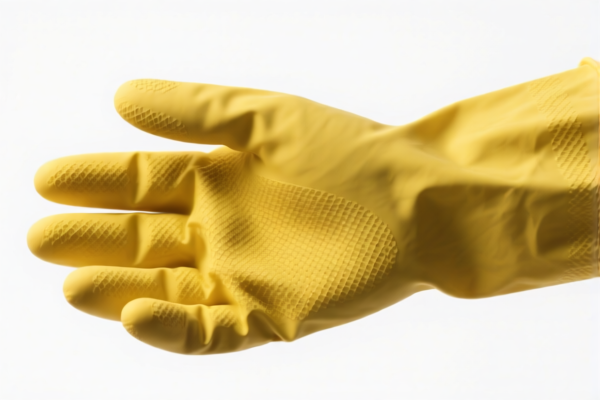



AI Analysis
🧤 Rubber Gloves for Machine Operation (Agricultural/Industrial Use)
🌐 HS Code Reference & Customs Clearance Guide | 2026 Latest Tariff Analysis | Professional Clearance Strategy
📌 I. Product Definition & Classification: What Are "Rubber Gloves"?
"Rubber Gloves" in international trade are versatile protective equipment used in agriculture, healthcare, and industrial processing. However, the HS Code classification depends heavily on three factors:
1. Material Composition (Sulfurized Rubber vs. Non-Sulfurized/Plastic-like)
2. Manufacturing Process (Knitted/Coated vs. Solid Molded)
3. Specific Use Case (Agricultural vs. General Protective)
⚠️ Key Classification Logic:
- If the gloves are solid rubber/molded (like heavy-duty agricultural gloves) → Typically classified under Chapter 40 (Rubber Articles).
- If the gloves are knitted/crocheted base with rubber coating/impregnation → Typically classified under Chapter 61 or 62 (Textile Articles).
- If the material is interpreted as plastic-like synthetic rubber in some specific contexts → May occasionally be misclassified under Chapter 39 (Plastics), though less common for true rubber.
📦 II. HS Code Classification Details (2026 Latest Tariff Reference)
Based on the provided data, here are the five possible classifications for "Rubber Gloves for Machine Operation/Agricultural Use":
| HS Code | Product Description | Logical Basis | Key Characteristics |
|---|---|---|---|
4015.19.11.50 |
Rubber Agricultural Gloves, Sulfurized | Classified under Chapter 40 (Rubber Articles), specifically sulfurized rubber garments/accessories. | Solid rubber, molded, high durability. |
3926.20.40.50 |
Rubber Agricultural Gloves, Plastic-Logic | Misclassification/Edge Case: Treated as plastic-like goods due to specific synthetic composition or regulatory interpretation. | Low durability, plastic-resin feel, often cheaper alternatives. |
6116.10.65.00 |
Rubber Coated/Knitted Gloves | Classified under Chapter 61 (Knitted/Crocheted Apparel). Logic: Rubber impregnation on a textile base. | Knitted cuff, rubber coating on palm/fingers. |
4015.19.51.00 |
Rubber Agricultural Gloves, Sulfurized (Premium) | Also Chapter 40, but different subheading possibly indicating higher grade or specific mold type. | Solid rubber, premium grade, specific agricultural use. |
6116.10.95.00 |
Rubber Knitted Gloves (General) | Chapter 61, general category for other rubber-impregnated knitted gloves. | Knitted base, rubber coating, general protective use. |
🔍 Critical Reminder:
- Chapter 40 (4015) items are Solid Rubber → Higher tax burden due to stricter "Sulfurized Rubber" classification.
- Chapter 61 (6116) items are Knitted + Rubber Coating → Often considered "Apparel/Accessories" → Moderate tax.
- Chapter 39 (3926) is an Outlier → Likely a specific trade interpretation or material variance. Treat with caution.
💰 III. 2026 Latest Tariff Rate Breakdown (Including Additional Duties)
✅ Applicable Country: United States (US)
✅ Origin: China (CN)
✅ Effective Date: Post-November 2025 (Including 122-Clause Tariffs)
🎯 1. 4015.19.11.50 & 4015.19.51.00 —— Solid Sulfurized Rubber Gloves
| Item | Content |
|---|---|
| Base Tariff | 3.0% (4015.19.11.50) / 14.0% (4015.19.51.00) |
| Section 301 Additional Duty | +25.0% (China-origin goods) |
| Section 122 Tariff | +10.0% (Specific to certain rubber/textile protective gear) |
| Total Tariff | 38.0% (4015.19.11.50) / 49.0% (4015.19.51.00) |
| Tax Calculation | CIF Value × Total Rate |
| De Minimis Eligibility | ❌ NO (Deny de minimis for Section 301/122 items) |
| Legal Path | USITC:4015.19.11.50 → FOOTNOTE:301 → SECTION:122 |
📌 Explanation:
- These are High-Risk Classifications.
- The 25% Section 301 tariff is the primary driver.
- The 10% Section 122 tariff adds significant cost for rubber protective goods.
- Total 38%-49% makes these very expensive for US importers.
🎯 2. 3926.20.40.50 —— Plastic-Logic Rubber Gloves (Chapter 39)
| Item | Content |
|---|---|
| Base Tariff | 6.5% |
| Section 301 Additional Duty | 0.0% (No Section 301 applied to this specific subheading logic) |
| Section 122 Tariff | +10.0% |
| Total Tariff | 16.5% |
| Tax Calculation | CIF Value × 16.5% |
| De Minimis Eligibility | ⚠️ Check Specifically (Section 122 may still block it) |
| Legal Path | USITC:3926.20.40.50 → SECTION:122 |
📌 Note:
- This is the Lowest Tax Scenario among the options.
- Zero Section 301 tariff is the key advantage.
- However, this classification is controversial. Customs may challenge it if the material is clearly "rubber" and not "plastic."
- Use only if the material science supports a "plastic" classification.
🎯 3. 6116.10.65.00 & 6116.10.95.00 —— Knitted/Rubber-Coated Gloves (Chapter 61)
| Item | Content |
|---|---|
| Base Tariff | 7.0% |
| Section 301 Additional Duty | +7.5% (Partial Section 301 application for certain textile/rubber mixes) |
| Section 122 Tariff | +10.0% |
| Total Tariff | 24.5% |
| Tax Calculation | CIF Value × 24.5% |
| De Minimis Eligibility | ❌ NO (Section 122 blocks de minimis) |
| Legal Path | USITC:6116.10.65.00 → FOOTNOTE:301 → SECTION:122 |
📌 Explanation:
- Moderate Tax Burden.
- The 7.5% Section 301 tariff is lower than the 25% for solid rubber.
- This classification is safer if the gloves have a knitted cuff and fabric backing.
- Ideal for gloves that are not fully molded solid rubber.
🛠️ IV. Customs Clearance Practical Advice (Avoid Pitfalls)
✅ 1. Required Documentation Checklist
| Document | Mandatory | Notes |
|---|---|---|
| ✅ Product Specification Sheet | ✔️ | Must specify: Material (Natural/Synthetic Rubber vs. Plastic), Base (Knitted vs. Solid), Thickness. |
| ✅ Material Certificate | ✔️ | Prove if it's "Sulfurized Rubber" (Ch 40) or "Plastic/Synthetic" (Ch 39). |
| ✅ Photos of Gloves | ✔️ | Show the cross-section: Is there a fabric layer? Is it solid rubber? |
| ✅ Commercial Invoice | ✔️ | Clearly state "Agricultural Gloves" or "Protective Gloves," avoid vague terms like "Rubber Items." |
| ✅ Packing List | ✔️ | Indicate weight per pair, material composition %. |
| ✅ Section 301 Exclusion Request | ⚠️ | If applicable, check if your specific product was excluded from Section 301 in previous years (unlikely now). |
✅ 2. Classification Strategy (Key Rules)
🔥 “Solid Rubber = High Tax, Knitted Base = Moderate Tax, Plastic Logic = Lowest Tax (But Risky)”
| Scenario | Recommended HS Code | Tariff Risk |
|---|---|---|
| Solid Molded Rubber Gloves (No fabric lining) | 4015.19.11.50 or 4015.19.51.00 |
HIGH (38%-49%) |
| Knitted Cuff + Rubber Coated Palm | 6116.10.65.00 or 6116.10.95.00 |
MEDIUM (24.5%) |
| Plastic-like Synthetic Rubber (Soft, non-sulfurized) | 3926.20.40.50 |
LOW (16.5%) ⚠️ Risk of Audit |
📌 Critical Tip:
- If your gloves have a knitted or woven fabric base with rubber coating, always choose Chapter 61 (6116). It is the most defensible and cost-effective for most agricultural gloves.
- If they are 100% solid rubber (like deep-cup agricultural gloves), you must use Chapter 40 (4015) and accept the higher tax.
- Do not try to force Chapter 39 (3926) unless you have strong lab evidence that the material is not "rubber" under legal definition.
✅ 3. Special Situations
| Situation | Handling Advice |
|---|---|
| OEM Custom Gloves | Provide design specs showing the exact layer structure (e.g., "100% Cotton Knit + Natural Rubber Coating"). |
| Mixed Packaging (Gloves + Tools) | Declare gloves separately. Do not bundle with machinery tools to avoid misclassification. |
| Anti-Dumping/Countervailing Duties | Check if specific rubber manufacturers are subject to CVD/AD. Most agricultural gloves are not, but verify. |
| De Minimis (Section 321) | NOT AVAILABLE. Section 122 and Section 301 taxes block the $800 de minimis exemption. All duties must be paid at entry. |
🌍 V. Global Market Comparison (2026)
| Country/Region | Recommended HS Code | Estimated Tariff (China Origin) | Key Certification | Notes |
|---|---|---|---|---|
| 🇺🇸 USA | 6116.10.65.00 |
24.5% | ASTM D6319 (Safety) | Highest protection for knitted gloves. |
| 🇺🇸 USA | 4015.19.11.50 |
38.0% | ASTM D6319 | Only for solid rubber. |
| 🇨🇳 China | 4015.19.11.50 |
3.0% | CCC (if applicable) | Low export tax. |
| 🇪🇺 EU | 4015.19.11.50 |
2.4% | CE Mark (PPE Regulation) | No Section 301/122 equivalents. |
| 🇬🇧 UK | 4015.19.11.50 |
2.4% | UKCA Mark | Post-Brexit rules apply. |
| 🇯🇵 Japan | 4015.19.11.50 |
3.7% | JIS Standard | Low tariff environment. |
📌 Conclusion:
- USA is the highest-cost market due to Section 301 and Section 122 tariffs.
- Knitted Gloves (6116) are the most cost-efficient for US import compared to Solid Rubber (4015).
- China, EU, UK, Japan have significantly lower tariffs, making them preferred markets for high-margin rubber goods.
📌 VI. Common Mistakes & Pitfalls (Lessons Learned)
❌ Mistake 1: Classifying Knitted Rubber Gloves as Solid Rubber (4015)
👉 Consequence: Unnecessary 13.5%+ higher tax (38% vs 24.5%).
✅ Fix: Provide photos showing the knitted cuff and fabric lining.
❌ Mistake 2: Assuming De Minimis ($800 exemption) applies
👉 Consequence: Customs Seizure or Delay. Section 122/301 items do not qualify.
✅ Fix: Plan for full duty payment at entry. Do not use de minimis channels.
❌ Mistake 3: Using vague descriptions like "Rubber Gloves"
👉 Consequence: Customs Examination. No clarity on material composition.
✅ Fix: Use precise descriptions: "Knitted Cotton Gloves with Natural Rubber Coating, Agricultural Use."
❌ Mistake 4: Trying to classify Solid Rubber as Plastic (3926)
👉 Consequence: Audit Risk, Penalties, Back-tariffs. Customs will test material.
✅ Fix: Only use 3926 if you have a technical justification that the material is non-rubber.
🎯 VII. Conclusion: Smart Classification, Save Money!
🎯 Remember the Mantra:
🔹 “Knitted Base = 24.5%, Solid Rubber = 38-49%, Plastic Logic = 16.5% (Risky).”
🔹 “No De Minimis for Section 122! Pay duties upfront.”
📌 Pro Tip:
If you are importing large volumes, consider pre-classification ruling (Pre-Ruling) from US Customs to confirm if your specific glove design qualifies for the lower 24.5% (6116) rate instead of the 38%+ (4015) rate. This can save hundreds of thousands in duties annually.
📣 Immediate Action:
📞 Contact your Customs Broker with detailed product photos and material specs.
🚀 Optimize your HS Code to save up to 24.5% in tariffs.
💼 Don’t let classification errors eat your margins!
✨ Professional Clearance, Start with Accurate Classification!
💼 Every Dollar Saved in Tariffs is Pure Profit!
Customer Reviews
About HS Code Classification
The Harmonized System (HS) is an internationally standardized nomenclature developed by the World Customs Organization (WCO) to classify traded products. Over 200 countries use the HS system as the basis for customs tariffs, trade statistics, and import/export regulations.
Each HS code follows a hierarchical structure:
- Chapter (2 digits) — Broad category of goods (e.g., Chapter 84: Machinery and Mechanical Appliances)
- Heading (4 digits) — More specific grouping within the chapter
- Subheading (6 digits) — Internationally standardized breakdown, used by all WCO member countries
- National subdivisions (8-10 digits) — Country-specific extensions for further classification, such as US HTSUS 10-digit codes
Correct HS code classification is essential for smooth customs clearance, accurate duty payment, and compliance with trade regulations. Misclassification can lead to customs delays, overpayment of duties, or penalties.
When importing from CN to US, the applicable tariff rates may include:
- Most-Favored-Nation (MFN) rate — The standard duty rate applied to WTO members
- General rate — Applied to countries without trade agreements
- Trade remedy duties — Additional tariffs such as Section 301 (anti-dumping), Section 232 (national security), or countervailing duties
The information provided on this page is for reference purposes only. For official classification, please consult with your local customs authority or a licensed customs broker.