Rubber Impregnated/Coated Cotton/Man Made Fiber Work Gloves (Without Fourchettes)
CN → US| HS Code | Tariff Rate | Origin | Destination | Doc |
|---|---|---|---|---|
| 4015191110 | 38.0% | CN | US | Official Doc |
| 6216002410 | 30.7% | CN | US | Official Doc |
| 6216002425 | 30.7% | CN | US | Official Doc |
| 4015195100 | 49.0% | CN | US | Official Doc |
| 6116105520 | 30.7% | CN | US | Official Doc |
Product Images
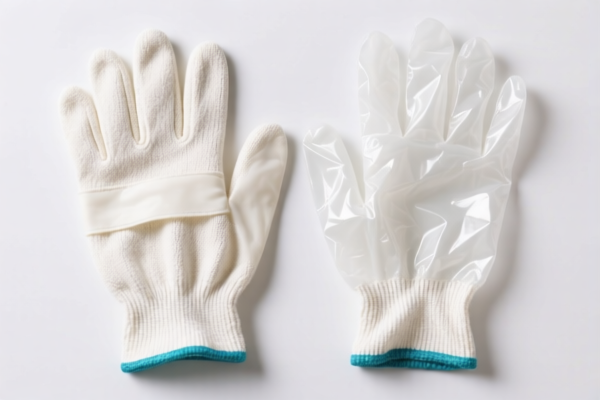

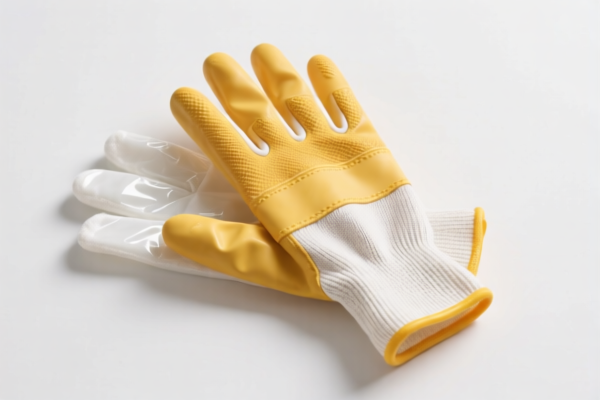
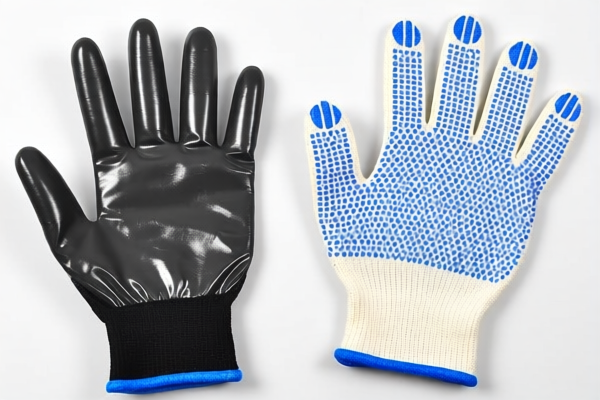
AI Analysis
🧤 Work Gloves: Rubber-impregnated/Coated Cotton/Man-Made Fiber (Without Fourchettes)
🌐 HS Code Reference & Customs Clearance Guide | 2026 Latest Tariff Analysis | Professional-Level Clearance Strategy
📌 I. Product Definition & Classification: Do You Really Understand "Work Gloves"?
Work gloves impregnated or coated with rubber are protective gear designed to offer chemical resistance, waterproofing, and enhanced grip. In international trade, they are primarily categorized based on their base material (Knitted vs. Non-knitted/Cotton) and construction features (specifically the presence of "fourchettes").
- Knitted Gloves (
6116): Made from knitted fabric (cotton or man-made fiber) before coating. These are flexible, form-fitting, and breathable. - Non-Knitted/Garment Gloves (
6216): Made from woven fabrics or other textile materials, often stitched into shape. This category specifically includes gloves without fourchettes (gussets between fingers). - Solid Rubber Gloves (
4015): Made entirely of vulcanized rubber, not just coated. These are heavier, more chemical-resistant, and lack textile reinforcement.
⚠️ Key Distinction Points: - If the glove is knitted (looped fabric structure) before coating →归入
6116- If the glove is woven/stitched and lacks fourchettes (no fabric gusset between fingers) → 归入6216- If the glove is solid rubber (no textile base visible, fully vulcanized) → 归入4015
📦 II. HS Code Classification Details (2026 Latest Tariff Authority Comparison)
| HS Code | Product Description | Application Scenario | Key Classification Feature |
|---|---|---|---|
6116.10.55.20 |
Knitted gloves, impregnated/coated with rubber, of cotton or man-made fiber | Industrial maintenance, light assembly, general labor | ✅ Knitted structure before coating |
6216.00.24.10 |
Gloves impregnated/coated with rubber, of cotton or man-made fiber, without fourchettes | Heavy-duty warehousing, construction, handling rough materials | ✅ Non-knitted (Woven/Stitched) + No Fourchettes |
6216.00.24.25 |
Gloves without crotch (fourchettes), impregnated/coated with rubber, containing cotton or man-made fiber | General work gloves, chemical handling (light), logistics | ✅ Non-knitted + No Fourchettes (Specific sub-item nuance) |
4015.19.11.10 |
Rubber impregnated/coated work gloves, without fourchettes, conforming to vulcanized rubber characteristics | Heavy chemical protection, wet environments, oil field work | ❌ Solid Rubber/Vulcanized (Highly specific definition) |
4015.19.51.00 |
Work gloves, coated/impregnated with vulcanized rubber, falling under the category of gloves/accessories | General purpose, heavy duty, non-specific textile base | ❌ Solid Rubber/Vulcanized (General glove category) |
🔍 Key Reminder: - "Fourchette" refers to the triangular or diamond-shaped piece of fabric inserted between fingers to allow dexterity. - "Without Fourchettes" means the fingers are separate panels stitched together without a gusset, making the glove stiffer and more durable but less flexible. - Misclassification Risk: Declaring a knitted glove (
6116) as a woven glove (6216) or vice versa can lead to audits. The base fabric structure (knit vs. woven) is the primary differentiator for6116vs6216. The material composition (100% rubber vs. coated textile) differentiates4015from6116/6216.
💰 III. 2026 Latest Tariff Rate Breakdown (Including Surcharges & Policy Additions)
✅ Applicable Country: United States (US) ✅ Country of Origin: China (CN) ✅ Effective Time: 2025 November 10 onwards (Including subsequent imports)
🎯 1. 6116.10.55.20 – Knitted Rubber-Coated Gloves (Cotton/Man-Made Fiber)
| Item | Content |
|---|---|
| Basic Tariff Rate | 13.2% |
| Section 301 Surcharge | +7.5% |
| 122 Provision Surcharge | +10% |
| Total Tariff Rate | 30.7% |
| Tax Calculation | CIF Value × 30.7% |
| De Minimis Eligibility | ❌ Not Eligible (Deny De Minimis) |
| Legal Basis Path | USITC:6116.10.55.20 → Section 301: 7.5% → 122 Provision: 10% |
📌 Explanation: - These gloves fall under Chapter 61 (Knitted). While the basic duty is moderate, the Section 301 and 122 Provision surcharges apply. - Note: The 122 Provision typically targets specific textile categories. Ensure the product description explicitly mentions "knitted" and "rubber coated" to match this subheading.
🎯 2. 6216.00.24.10 – Woven/Non-Knitted Gloves Without Fourchettes (Cotton/Man-Made Fiber)
| Item | Content |
|---|---|
| Basic Tariff Rate | 13.2% |
| Section 301 Surcharge | +7.5% |
| 122 Provision Surcharge | +10% |
| Total Tariff Rate | 30.7% |
| Tax Calculation | CIF Value × 30.7% |
| De Minimis Eligibility | ❌ Not Eligible (Deny De Minimis) |
| Legal Basis Path | USITC:6216.00.24.10 → Section 301: 7.5% → 122 Provision: 10% |
📌 Note: - This code is for non-knitted gloves without fourchettes. - The rate is identical to the knitted version above because both are subject to the same textile-related surcharges. - Critical: If the glove HAS fourchettes, it may fall under a different subheading (e.g.,
6216.00.90), which could have different rates. Double-check the construction!
🎯 3. 6216.00.24.25 – Gloves Without Crotch (Fourchettes), Rubber-Coated (Cotton/Man-Made)
| Item | Content |
|---|---|
| Basic Tariff Rate | 13.2% |
| Section 301 Surcharge | +7.5% |
| 122 Provision Surcharge | +10% |
| Total Tariff Rate | 30.7% |
| Tax Calculation | CIF Value × 30.7% |
| De Minimis Eligibility | ❌ Not Eligible (Deny De Minimis) |
| Legal Basis Path | USITC:6216.00.24.25 → Section 301: 7.5% → 122 Provision: 10% |
📌 Note: - Very similar to
6216.00.24.10. The distinction often lies in specific customs definitions of "cotton" vs. "man-made fiber" proportions or specific manufacturing methods. - Both24.10and24.25carry the same effective tax rate of 30.7%.
🎯 4. 4015.19.11.10 – Vulcanized Rubber Gloves (Without Fourchettes, Specific Definition)
| Item | Content |
|---|---|
| Basic Tariff Rate | 3.0% |
| Section 301 Surcharge | +25.0% |
| 122 Provision Surcharge | +10% |
| Total Tariff Rate | 38.0% |
| Tax Calculation | CIF Value × 38.0% |
| De Minimis Eligibility | ❌ Not Eligible (Deny De Minimis) |
| Legal Basis Path | USITC:4015.19.11.10 → Section 301: 25.0% → 122 Provision: 10% |
📌 Explanation: - This code is for solid rubber or heavily vulcanized gloves. - The Section 301 rate is significantly higher (25%) compared to textile gloves (7.5%). This reflects the classification of rubber products as industrial/manufacturing goods rather than simple textiles. - Warning: Do not confuse "rubber-coated cotton" (
6216) with "vulcanized rubber gloves" (4015). If the glove is flexible and fabric-like, it is6216. If it is stiff, smooth, and 100% rubber, it is4015.
🎯 5. 4015.19.51.00 – Vulcanized Rubber Gloves (General Category)
| Item | Content |
|---|---|
| Basic Tariff Rate | 14.0% |
| Section 301 Surcharge | +25.0% |
| 122 Provision Surcharge | +10% |
| Total Tariff Rate | 49.0% |
| Tax Calculation | CIF Value × 49.0% |
| De Minimis Eligibility | ❌ Not Eligible (Deny De Minimis) |
| Legal Basis Path | USITC:4015.19.51.00 → Section 301: 25.0% → 122 Provision: 10% |
📌 Note: - This is the highest tariff rate in this dataset. - It applies to rubber gloves that do not fit the more specific "without fourchettes/vulcanized" definition of
4015.19.11.10. - Avoid this code unless the product genuinely does not meet the criteria for4015.19.11.10.
🛠️ IV. Customs Clearance Practical Advice (Real-World Pitfall Guide)
✅ 1. Required Documentation Checklist (All Mandatory)
| Document | Mandatory? | Explanation |
|---|---|---|
| ✅ Product Specifications | ✔️ | Must specify: Knitted vs. Woven, Base Material (Cotton/MMF), Coating Type (Rubber/Nitrile/Latex), Presence/Absence of Fourchettes. |
| ✅ Product Photos | ✔️ | Clear images of the inside of the glove to show knitted structure vs. woven stitching. Photos of the fingers to prove absence of fourchettes. |
| ✅ Commercial Invoice | ✔️ | Must clearly state "Rubber Coated Gloves" and HS Code. |
| ✅ Packing List | ✔️ | Weight and dimensions must match. |
| ✅ Certificate of Origin | ✔️ | To prove China origin for surcharge calculation. |
| ✅ Test Report | ✔️ | Optional but recommended to prove "Vulcanized" status if claiming 4015. |
✅ 2. Declaration Tips (Key Mantra)
🔥 "Check the Stitch, Check the Gusset, Know the Rubber Content!"
| Scenario | Correct Declaration | Wrong Practice |
|---|---|---|
| Knitted Cotton Glove, Rubber Coated | 6116.10.55.20 (30.7%) |
Declare as 6216 → Risk of Rejection/Audit |
| Woven Glove, NO Fourchettes, Rubber Coated | 6216.00.24.10 (30.7%) |
Declare as 4015 → Overpay by 7-18% |
| Solid Rubber Glove, No Fourchettes | 4015.19.11.10 (38.0%) |
Declare as 6216 → Underpay + Penalty |
| Solid Rubber Glove, General | 4015.19.51.00 (49.0%) |
Declare as 4015.19.11.10 → Risk of Audit if it doesn't fit "specific" criteria |
✅ 3. Special Situations Handling
| Situation | Handling Advice |
|---|---|
| OEM Custom Gloves | Provide design blueprints showing finger construction (with/without fourchettes). |
| Mixed Shipments | Do not mix 6116, 6216, and 4015 in one BL unless clearly separated. Each HS code has different documentation needs. |
| Material Composition | If the glove is 50% Cotton/50% Man-Made, ensure the description matches the HS code's specific material requirement (some codes specify "Of Cotton", others "Of Man-Made Fiber"). |
| "Without Fourchettes" Proof | Customs may require a diagram or photo showing the finger panels are separate and stitched without a gusset. |
🌍 V. Global Market Comparison (2026 Latest)
| Country/Region | Recommended HS Code | Tariff (China Origin) | Certification | Notes |
|---|---|---|---|---|
| 🇺🇸 USA | 6216.00.24.10 or 6116.10.55.20 |
30.7% | None Specific | High surcharges apply. 4015 codes are 38-49%. |
| 🇨🇳 China | 6216.00.24.10 |
5-13% | CCC (if applicable) | No Section 301 or 122 provisions. |
| 🇪🇺 EU | 6216.00.24 |
0-4% | CE (if PPE) | No additional surcharges. |
| 🇬🇧 UK | 6216.00.24 |
0-4% | UKCA | Post-Brexit rules apply. |
| 🇦🇺 Australia | 6216.00.24 |
5% | RCM | No additional surcharges. |
📌 Conclusion: - The USA is the most expensive market for these gloves due to Section 301 and 122 provisions. - Textile-based gloves (
6116/6216) are cheaper than Solid Rubber gloves (4015) in the US because the surcharge is 7.5% vs 25%. - Strategy: If your product is genuinely solid rubber, you cannot avoid the 25% surcharge. If it is coated textile, ensure it is classified correctly as6116or6216to benefit from the lower 7.5% surcharge.
📌 VI. Common Errors & Pitfall Guide (Lessons Learned)
❌ Error 1: Declaring "Rubber Gloves" generically without specifying "Coated" vs. "Vulcanized"
👉 Consequence: Customs may assign the higher 4015.19.51.00 (49%) or hold the shipment for classification review.
❌ Error 2: Confusing "Without Fourchettes" (6216.24) with "With Fourchettes" (6216.90)
👉 Consequence: If the glove actually HAS a gusset, declaring "Without Fourchettes" is fraud. If it DOESN'T, declaring the wrong code might miss the specific 30.7% rate.
❌ Error 3: Ignoring the "Knitted" vs. "Woven" distinction
👉 Consequence: Mixing up 6116 (Knitted) and 6216 (Woven) can lead to duty underpayment or overpayment. The physical structure is key.
✅ Correct Practice:
"Work Gloves, Cotton Knitted, Rubber Coated, Size 10, Model XYZ, No Fourchettes" ->
6116.10.55.20"Work Gloves, Cotton Woven, Rubber Coated, Size 10, Model XYZ, NO Fourchettes" ->6216.00.24.10
🎯 VII. Conclusion: Precision Classification Saves Money!
🎯 Remember the Mantra:
🔹 "Knitted = 6116, Woven = 6216, Solid = 4015." 🔹 "No Fourchettes = 6216.24, Watch the 7.5% vs 25% Surcharge." 🔹 "Textile is Cheaper than Rubber in the US!"
📌 Pro Tip:
If your gloves are knitted, stick to 6116.10.55.20. If they are woven and lack fourchettes, use 6216.00.24.10. Avoid 4015 unless they are genuinely solid rubber, as the 25% Section 301 surcharge will hurt your margin.
📣 Take Action:
📞 Consult with a licensed customs broker + Provide detailed product photos + Apply for an Advance Ruling if unsure. 🚀 Clear your goods smoothly, maximize profits, and avoid customs delays!
✨ Professional Clearance Starts with Accurate Classification! 💼 Every cent of duty is worth saving!
Customer Reviews
About HS Code Classification
The Harmonized System (HS) is an internationally standardized nomenclature developed by the World Customs Organization (WCO) to classify traded products. Over 200 countries use the HS system as the basis for customs tariffs, trade statistics, and import/export regulations.
Each HS code follows a hierarchical structure:
- Chapter (2 digits) — Broad category of goods (e.g., Chapter 84: Machinery and Mechanical Appliances)
- Heading (4 digits) — More specific grouping within the chapter
- Subheading (6 digits) — Internationally standardized breakdown, used by all WCO member countries
- National subdivisions (8-10 digits) — Country-specific extensions for further classification, such as US HTSUS 10-digit codes
Correct HS code classification is essential for smooth customs clearance, accurate duty payment, and compliance with trade regulations. Misclassification can lead to customs delays, overpayment of duties, or penalties.
When importing from CN to US, the applicable tariff rates may include:
- Most-Favored-Nation (MFN) rate — The standard duty rate applied to WTO members
- General rate — Applied to countries without trade agreements
- Trade remedy duties — Additional tariffs such as Section 301 (anti-dumping), Section 232 (national security), or countervailing duties
The information provided on this page is for reference purposes only. For official classification, please consult with your local customs authority or a licensed customs broker.