Rubber Plasticizer Mixture
CN → US| HS Code | Tariff Rate | Origin | Destination | Doc |
|---|---|---|---|---|
| 3824994900 | 41.5% | CN | US | Official Doc |
| 3403112000 | 35.2% | CN | US | Official Doc |
| 3403115000 | 36.4% | CN | US | Official Doc |
| 3824992900 | 41.5% | CN | US | Official Doc |
| 4005100000 | 35.0% | CN | US | Official Doc |
Product Images
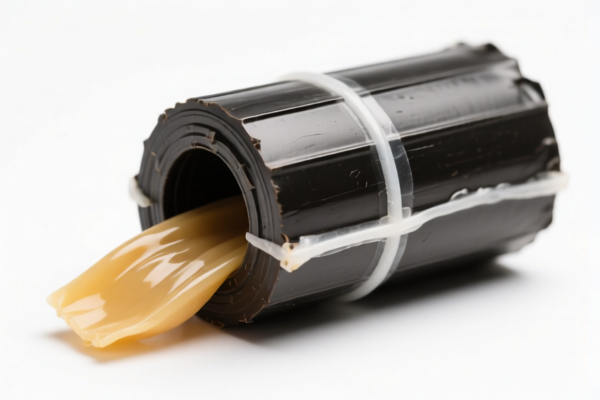



AI Analysis
🧪 Rubber Plasticizer Mixture (Chemical Intermediates)
🌐 HS Code Reference & Customs Clearance Guide | 2026 Latest Tariff Analysis | Professional Clearance Strategy
📌 Part I: Product Definition & Classification: Do You Know "Rubber Plasticizer Mixture"?
A Rubber Plasticizer Mixture is a specialized chemical formulation used in the rubber industry to increase flexibility, workability, and volume. In international trade, the classification hinges on its chemical nature (is it a chemical product or a rubber preparation?) and its physical form (solution, emulsion, or solid).
Key Distinction: * Chemical Preparations (Headings 3824/3403): If the mixture is primarily defined by its chemical function as a processing aid, solvent, or stabilizer, it often falls under chemical headings. * Rubber Preparations (Heading 4005): If the mixture is specifically designed for processing rubber (unvulcanized) and meets the criteria of "mixtures of rubber with other substances," it falls under Heading 4005.
⚠️ Critical Classification Point:
- If the product is a chemical mixture used for treating rubber surfaces or as a chemical additive → 3824 or 3403.
- If the product is a rubber blend (rubber + plasticizer) for direct manufacturing → 4005.
- Material Conflict Check: None. All listed HS codes are compatible with rubber/chemical materials.
📦 Part II: HS Code Classification Details (2026 Latest Tariff Authority Comparison)
| HS Code | Product Description | Application Scenario | Material/State Conflict? |
|---|---|---|---|
3824.99.49.00 |
Rubber chemical mixture, belongs to chemical industry preparations. | General chemical additives, processing aids. | ✅ No |
3403.11.20.00 |
Rubber chemical mixture, belongs to preparation form. | Lubricants, release agents, or processing compounds for rubber. | ✅ No |
3403.11.50.00 |
Rubber chemical mixture, fits preparation form, used for material treatment. | Surface treatment or specific material processing chemicals. | ✅ No |
3824.99.29.00 |
Rubber chemical mixture, belongs to chemical products and preparations. | Broad chemical category for unlisted rubber chemicals. | ✅ No |
4005.10.00.00 |
Rubber chemical mixture, matches rubber material and unvulcanized characteristics. | Direct rubber processing mixtures, unvulcanized rubber blends. | ✅ No |
🔍 Key Reminder:
- Headings 3824 and 3403 are for chemical preparations used on or with rubber, but not necessarily containing rubber as a primary ingredient.
- Heading 4005 is for mixtures of rubber (e.g., compounded rubber) before vulcanization.
- Misclassification Risk: Declaring a pure chemical plasticizer as a rubber mixture (4005) or vice versa can lead to significant duty differences and customs audits.
💰 Part III: 2026 Latest Tariff Rate Details (Including Additional Taxes & Policy Surcharges)
✅ Applicable Country: United States (US)
✅ Country of Origin: China (CN)
✅ Effective Date: From November 10, 2025 (and subsequent imports)
🎯 1. 3824.99.49.00 & 3824.99.29.00 — Chemical Preparations (Rubber Chemicals)
| Item | Content |
|---|---|
| Base Duty Rate | 6.5% (Ad Valorem) |
| Section 301 Duty | +25.0% (From USITC Footnote 9903.88.01) |
| IEEPA Surcharge | +10.0% (Targeting China/HK products, effective Nov 10, 2025) |
| Total Duty Rate | 41.5% |
| Tax Calculation | CIF Value × 41.5% |
| De Minimis Exemption | ❌ Not Eligible (deny_de_minimis) |
| Legal Basis Path | IEEPA:9903.01.25 → IEEPA:9903.01.24 → USITC:3824.99.49.00 / 3824.99.29.00 → FOOTNOTE:9903.88.01 |
📌 Explanation:
- These codes fall under "Chemical Products and Preparations."
- The 25% Section 301 tariff applies to most chemical products from China.
- The 10% IEEPA tariff is an additional layer for Chinese origin.
- Total 41.5% is a high-duty category. Accurate chemical composition description is crucial to avoid being classified under a higher-rate "chemical weapon precursor" or similar restricted category.
🎯 2. 3403.11.20.00 & 3403.11.50.00 — Lubricating/Processing Preparations
| Item | Content |
|---|---|
| Base Duty Rate | 0.2% (for .20) or 1.4% (for .50) (Ad Valorem) |
| Section 301 Duty | +25.0% |
| IEEPA Surcharge | +10.0% |
| Total Duty Rate | 35.2% (for .20) or 36.4% (for .50) |
| Tax Calculation | CIF Value × Total Rate |
| De Minimis Exemption | ❌ Not Eligible (deny_de_minimis) |
| Legal Basis Path | IEEPA:9903.01.25 → IEEPA:9903.01.24 → USITC:3403.11.20.00 / 3403.11.50.00 → FOOTNOTE:9903.88.01 |
📌 Note:
- Heading 3403 covers "Lubricating preparations containing other additives." If your plasticizer mixture acts as a lubricant or processing aid, this code may apply.
- The base rate is significantly lower (0.2%-1.4%), but the 35.2%-36.4% total is still substantial due to the 35% combined surcharge.
- Distinction from 3824: 3403 is for lubricants/preparations of a specific type; 3824 is a residual category for other chemical preparations. Choose based on the primary function (lubrication vs. general chemical aid).
🎯 3. 4005.10.00.00 — Rubber Mixtures/Compounds
| Item | Content |
|---|---|
| Base Duty Rate | 0.0% (Ad Valorem) |
| Section 301 Duty | +25.0% |
| IEEPA Surcharge | +10.0% |
| Total Duty Rate | 35.0% |
| Tax Calculation | CIF Value × 35.0% |
| De Minimis Exemption | ❌ Not Eligible (deny_de_minimis) |
| Legal Basis Path | IEEPA:9903.01.25 → IEEPA:9903.01.24 → USITC:4005.10.00.00 → FOOTNOTE:9903.88.01 |
📌 Explanation:
- This is the lowest total duty rate (35.0%) among the options.
- It applies if the product is truly a mixture of rubber (unvulcanized) with plasticizers or other substances.
- Crucial: If the product does not contain raw rubber as a significant ingredient (e.g., it's a pure chemical solvent/mixture), using this code is illegal misclassification and carries high risk of penalties. It must be a rubber compound.
🛠️ Part IV: Customs Clearance Practical Advice (Combat Pitfall Guide)
✅ 1. Document Preparation Checklist (All Required)
| Document | Mandatory? | Description |
|---|---|---|
| ✅ Product Specification Sheet | ✔️ | Must detail chemical composition, CAS numbers, and physical state (liquid/solid). |
| ✅ Formula/Composition List | ✔️ | Critical for distinguishing between 3824 (chemical) and 4005 (rubber mix). |
| ✅ Product Photos | ✔️ | Clear images of packaging, labels, and product appearance. |
| ✅ Commercial Invoice | ✔️ | Must state "Rubber Plasticizer Mixture" and specify HS Code accurately. |
| ✅ Certificate of Origin (CO) | ✔️ | Mandatory for US import to determine origin-based surcharges. |
| ✅ Packing List | ✔️ | Detail net/gross weight and dimensions. |
| ✅ Safety Data Sheet (SDS) | ✔️ | Required for chemical customs clearance. |
✅ 2. Declaration Tips (Key Mantra)
🔥 "Chemical vs. Rubber, Composition is Key; Base Rate Varies, Surcharges Stay Steady!"
| Scenario | Correct Declaration | Wrong Approach |
|---|---|---|
| Pure Chemical Plasticizer (No Rubber) | 3824.99.49.00 or 3824.99.29.00 |
Misdeclare as 4005.10.00.00 → Penalty for Misclassification |
| Rubber Compounded with Plasticizer | 4005.10.00.00 |
Misdeclare as 3824 → Pay Higher Base Rate (6.5% vs 0%) |
| Lubricating/Processing Aid | 3403.11.20.00 |
Vague description "Plasticizer" → Customs Review Delay |
| Any of the Above | Total Rate ~35-41.5% | Expect "De Minimis" exemption → ❌ Not Eligible for Shipments from China |
✅ 3. Special Situation Handling
| Situation | Handling Advice |
|---|---|
| Unclear Composition | Provide detailed COA (Certificate of Analysis) and chemical structure. If rubber content >10%, lean towards 4005 (but consult broker). |
| Dual-Use Chemicals | Ensure no restricted chemicals (e.g., azo dyes, specific amines) are present. SDS must be clean. |
| Packaging | If shipped in large drums, declare as industrial chemical. Small bottles may raise questions about retail vs. industrial use. |
| Pre-Commitment (Ruling) | Highly recommended. Apply for an Advance Ruling from CBP to fix the HS Code and duty rate before shipment. |
🌍 Part V: Global Market Clearance Comparison (2026 Latest)
| Country/Region | Recommended HS Code | Tariff Rate | Certification Requirements | Remarks |
|---|---|---|---|---|
| 🇺🇸 USA | 4005.10.00.00 (Best Rate) |
35.0% | SDS, ISPM 15 (if wood pallet) | High scrutiny on rubber vs. chemical distinction. |
| 🇨🇳 China | 3824.99.99 or 4005.10.00 |
5-6% | None specific | Lower base rates, no Section 301. |
| 🇪🇺 EU | 3824.72 or 4005.10 |
0-3% | REACH Compliance | REACH registration is critical for chemicals in EU. |
| 🇬🇧 UK | 3824.72 or 4005.10 |
0-3% | UK REACH | Post-Brexit UK REACH applies. |
| 🇯🇵 Japan | 3824.99 or 4005.10 |
3-5% | JIS/SEMIC | No significant surcharges for China origin generally. |
📌 Conclusion:
- USA is the most challenging market due to Section 301 + IEEPA surcharges.
- EU/UK require REACH/UK REACH compliance, which is a significant non-tariff barrier.
- Japan offers stable tariffs with minimal political surcharges.
📌 Part VI: Common Errors & Pitfall Guide (Blood & Tears Lessons)
❌ Error 1: Declaring a pure chemical plasticizer as 4005.10.00.00 to save duty.
👉 Consequence: Customs inspection reveals no rubber content. Back taxes + 25% penalty + seizure.
❌ Error 2: Assuming "Plasticizer" is always 3824.
👉 Consequence: If it is a rubber compound, you paid an extra 6.5% base duty unnecessarily. 4005 base is 0%.
❌ Error 3: Ignoring IEEPA 10% Surcharge.
👉 Consequence: Budgeting for only 25% (Section 301). Unexpected 10% extra cost leads to cash flow issues or rejected payment.
❌ Error 4: Using vague descriptions like "Chemical Mix" on Invoice.
👉 Consequence: CBP holds shipment for missing information. Requires broker intervention, causing demurrage fees.
✅ Correct Practice:
"Rubber Plasticizer Mixture, UN1993 (or specific UN Class), CAS No. XXXX-XX-X, Chemical/Industrial Grade, HS Code: 4005.10.00.00 (or 3824.99.49.00)"
🎯 Part VII: Conclusion: Professional Declaration, Cost Saving & Efficiency!
🎯 Remember the Mantra:
🔹 "Chemical or Rubber? Composition decides.
🔹 Base Rate: 0% (4005), 6.5% (3824), 1% (3403).
🔹 Surcharges: 35% Flat (301+IEEPA).
🔹 Total: 35% vs 41.5%. Choose Wisely!"
📌 Pro Tip:
If your product is not made in China (e.g., from Vietnam or Germany), you may avoid the 35% surcharges (depending on trade agreements).
For US imports from China, Apply for a Pre-Ruling (CBP Ruling Letter) to secure the HS Code and avoid post-clearance audits.
📣 Immediate Action:
📞 Contact a licensed customs broker + Provide SDS + Apply for CBP Pre-Ruling
🚀 Ensure your Rubber Plasticizer Mixture clears smoothly, minimizes duty, and protects your supply chain!
✨ Professional Clearance Starts with Accurate Classification!
💼 Every percent of duty matters in your profit margin!
Customer Reviews
About HS Code Classification
The Harmonized System (HS) is an internationally standardized nomenclature developed by the World Customs Organization (WCO) to classify traded products. Over 200 countries use the HS system as the basis for customs tariffs, trade statistics, and import/export regulations.
Each HS code follows a hierarchical structure:
- Chapter (2 digits) — Broad category of goods (e.g., Chapter 84: Machinery and Mechanical Appliances)
- Heading (4 digits) — More specific grouping within the chapter
- Subheading (6 digits) — Internationally standardized breakdown, used by all WCO member countries
- National subdivisions (8-10 digits) — Country-specific extensions for further classification, such as US HTSUS 10-digit codes
Correct HS code classification is essential for smooth customs clearance, accurate duty payment, and compliance with trade regulations. Misclassification can lead to customs delays, overpayment of duties, or penalties.
When importing from CN to US, the applicable tariff rates may include:
- Most-Favored-Nation (MFN) rate — The standard duty rate applied to WTO members
- General rate — Applied to countries without trade agreements
- Trade remedy duties — Additional tariffs such as Section 301 (anti-dumping), Section 232 (national security), or countervailing duties
The information provided on this page is for reference purposes only. For official classification, please consult with your local customs authority or a licensed customs broker.