Rubber Protective Pad
CN → US| HS Code | Tariff Rate | Origin | Destination | Doc |
|---|---|---|---|---|
| 4008111000 | 35.0% | CN | US | Official Doc |
| 4016996050 | 37.5% | CN | US | Official Doc |
| 4016990500 | 20.9% | CN | US | Official Doc |
| 3926904510 | 38.5% | CN | US | Official Doc |
| 4008210000 | 35.0% | CN | US | Official Doc |
Product Images
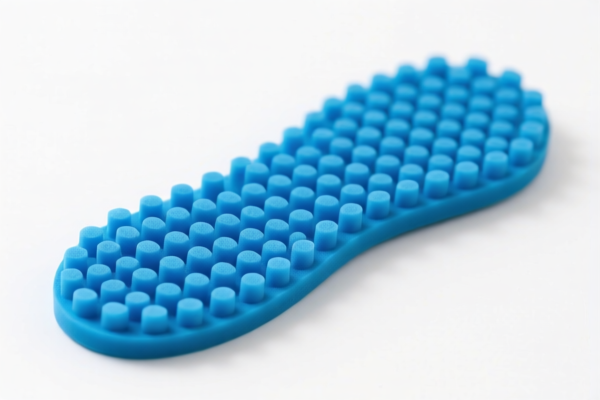
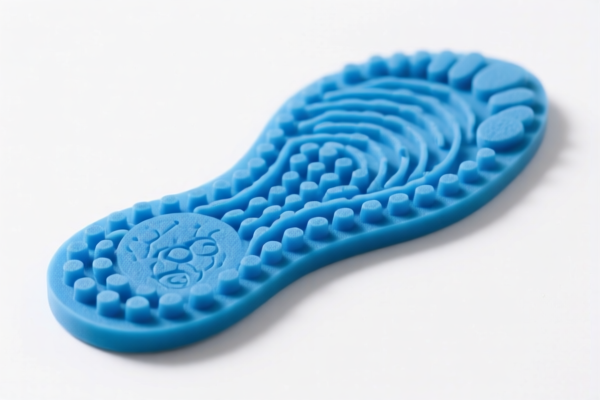
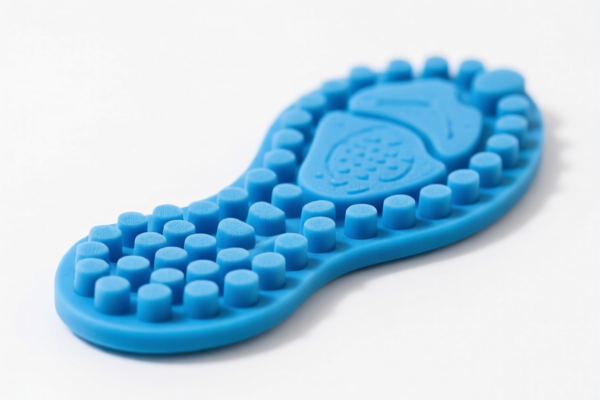
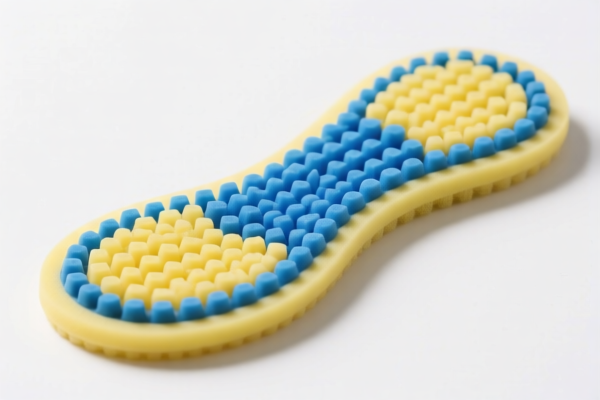
AI Analysis
🛡️ Rubber Protective Pad (橡胶保护垫)
🌐 HS Code Reference & Customs Clearance Guide | 2026 Latest Tariff Analysis | Strategic Entry Strategy for US Imports
📌 I. Product Definition & Classification: What Exactly is a "Rubber Protective Pad"?
A Rubber Protective Pad is a versatile industrial and consumer good designed to cushion, dampen vibration, prevent slipping, or protect surfaces from impact. In international trade, it is not a single HS code but a generic term that falls under multiple categories depending on its material composition (natural vs. synthetic/vulcanized) and physical form (solid sheet, pre-cut mat, gasket, etc.).
⚠️ Critical Distinction:
- If it is made of Natural Rubber in simple shapes (like mats/pads), it often falls under Chapter 40 (Section 01/02).
- If it is Vulcanized Rubber or Synthetic Rubber in specific non-industrial forms (mats, gaskets), it may fall under Chapter 40 (Section 03) or Chapter 39 (Plastics/Composite).
- Misclassification Risk: Declaring everything as "Rubber Mat" without specifying vulcanization state or material type leads to customs holds and penalties.
📦 II. HS Code Classification Matrix (2026 Tariff Authority)
| HS Code | Product Description | Material/State | Application Scenario |
|---|---|---|---|
4008.11.10.00 |
Rubber articles, plates, sheets, strip, rod, and profile, of natural rubber | Natural Rubber (Non-foam) | Industrial vibration pads, heavy-duty mats, natural rubber flooring components |
4016.99.60.50 |
Other articles of vulcanized rubber other than hard rubber | Vulcanized Rubber (Specific Sub-category) | Specialized vulcanized protective pads, non-industrial specialized rubber goods |
4016.99.05.00 |
Other articles of vulcanized rubber, not elsewhere specified | Vulcanized Rubber (General/Unspecified) | General-purpose rubber mats, household/office protective pads, generic rubber gaskets |
3926.90.45.10 |
Other articles of plastics and articles of other materials of heading 3901–3914 | Plastic/Synthetic Rubber Composite | Rubber-plastic composite pads, seals, gaskets, or items classified under "Plastic Articles" due to composition |
4008.21.00.00 |
Rubber articles, plates, sheets, strip, rod, and profile, of natural rubber | Natural Rubber (Non-foam, Other) | Natural rubber sheets/strip used as protective liners or basic padding |
🔍 Key Insight:
- Natural Rubber (4008) generally has 0% Base Tariff, but high附加 taxes.
- Vulcanized Rubber (4016) has varying base tariffs (2.5%–3.4%) depending on the specific sub-heading.
- Plastic/Composite (3926) is often treated as a "catch-all" for rubber-like products if the chemical composition leans towards synthetic polymers defined in Chapter 39.
💰 III. 2026 Detailed Tariff Breakdown (US Import from China)
✅ Destination: United States (US)
✅ Origin: China (CN)
✅ Effective Date: November 10, 2025 (and onwards)
✅ Applicable Regimes: Section 301 (USITC 25%) + IEEPA (10%) + Base Tariff
🎯 1. 4008.11.10.00 & 4008.21.00.00 — Natural Rubber Articles
Best for: Pure natural rubber mats, pads, and sheets.
| Item | Detail |
|---|---|
| Base Tariff | 0.0% (Ad Valorem) |
| Section 301 (USITC) | +25.0% |
| IEEPA Surcharge | +10.0% (China-origin specific) |
| Total Effective Rate | 35.0% |
| Calculation | CIF Value × 35% |
| De Minimis Exemption | ❌ Not Applicable (High value, commercial shipment) |
| Legal Path | USITC:4008.11.10.00 → FOOTNOTE:301 → IEEPA:9903.01.25 |
📌 Why this rate?
Although natural rubber often enjoys preferential base rates (0%), the Section 301 and IEEPA surcharges are applied on top of the base. The combination results in a significant 35% landed cost increase.
🎯 2. 4016.99.60.50 — Other Vulcanized Rubber Articles
Best for: Specialty vulcanized rubber products not specified elsewhere.
| Item | Detail |
|---|---|
| Base Tariff | 2.5% |
| Section 301 (USITC) | +25.0% |
| IEEPA Surcharge | +10.0% |
| Total Effective Rate | 37.5% |
| Calculation | CIF Value × 37.5% |
| De Minimis Exemption | ❌ Not Applicable |
| Legal Path | USITC:4016.99.60.50 → FOOTNOTE:301 → IEEPA:9903.01.25 |
📌 Why this rate?
This is the highest tax bracket among the options due to the 2.5% base tariff added to the surcharges. Use only if the product strictly fits the "vulcanized rubber, not elsewhere specified" definition.
🎯 3. 4016.99.05.00 — Other Vulcanized Rubber Articles (General)
Best for: Generic rubber mats, household pads, non-specific rubber goods.
| Item | Detail |
|---|---|
| Base Tariff | 3.4% |
| Section 301 (USITC) | +7.5% (Note: Lowered from 25% for certain categories under specific trade agreements or adjustments, verify latest footnotes) |
| IEEPA Surcharge | +10.0% |
| Total Effective Rate | 20.9% |
| Calculation | CIF Value × 20.9% |
| De Minimis Exemption | ❌ Not Applicable |
| Legal Path | USITC:4016.99.05.00 → FOOTNOTE:301 → IEEPA:9903.01.25 |
📌 Strategic Advantage:
This HS code offers the lowest total tax burden (20.9%). It is ideal for general-purpose rubber protective pads (e.g., yoga mats, furniture pads, generic anti-slip mats) that are vulcanized but do not have a highly specific industrial function.
⚠️ Caution: Ensure the product does not qualify for4008(Natural) or3926(Plastic) to avoid misclassification audits.
🎯 4. 3926.90.45.10 — Other Plastic Articles
Best for: Rubber-plastic composites or synthetic rubber classified as plastic.
| Item | Detail |
|---|---|
| Base Tariff | 3.5% |
| Section 301 (USITC) | +25.0% |
| IEEPA Surcharge | +10.0% |
| Total Effective Rate | 38.5% |
| Calculation | CIF Value × 38.5% |
| De Minimis Exemption | ❌ Not Applicable |
| Legal Path | USITC:3926.90.45.10 → FOOTNOTE:301 → IEEPA:9903.01.25 |
📌 Why this rate?
If the "rubber" pad contains significant synthetic polymer content (SBR, EPDM, etc.) that falls under Chapter 39, it is taxed as a plastic article. This has the highest total rate (38.5%) due to the 3.5% base plus full 301 tariffs. Only use if the material composition is legally classified as plastic/composite.
🛠️ IV. Customs Clearance Operational Advice (Avoiding Pitfalls)
✅ 1. Documentation Checklist (Mandatory)
| Document | Requirement | Purpose |
|---|---|---|
| Product Spec Sheet | Must state: Material (Natural/Vulcanized/Synthetic), Shape, Dimensions, Hardness (Shore A) | Determines Chapter 40 vs. 39 |
| Material Safety Data Sheet (MSDS) | Required for chemical composition verification | Prevents "Unknown Material" holds |
| Commercial Invoice | Clearly describe as "Rubber Protective Pad, Vulcanized/Natural" | Avoids ambiguity with "Mat" or "Flooring" |
| Photo of Product | Show texture, cross-section (if composite), and packaging | Proves form factor (Pad vs. Sheet) |
| Certificate of Origin | Verify China origin for tariff accuracy | Triggers Section 301/IEEPA correctly |
✅ 2. Declaration Strategy (Golden Rules)
🔥 "Material First, Form Second, Function Third!"
| Scenario | Recommended HS Code | Reason |
|---|---|---|
| Pure Natural Rubber Pad | 4008.11.10.00 |
Base tax 0% → Total 35%. Cheapest if material is 100% natural. |
| Generic Vulcanized Rubber Mat | 4016.99.05.00 |
Base tax 3.4% + 7.5% 301 → Total 20.9%. Lowest Total Rate for vulcanized. |
| Specialty Vulcanized Component | 4016.99.60.50 |
Only if no other 4016 sub-heading fits. Total 37.5%. |
| Synthetic/Plastic Composite Pad | 3926.90.45.10 |
Only if chemical analysis proves it falls under Chapter 39. Total 38.5%. |
📌 Warning: Do not declare a Vulcanized Rubber Pad as
4008(Natural) if it contains synthetic blends. Customs labs will test the material, and misdeclaration leads to penalties + back taxes.
✅ 3. Special Cases & Mitigation
| Case | Strategy |
|---|---|
| Mixed Shipment (Rubber + Plastic) | Separate shipments or declare separately. Mixing may force the entire shipment into the higher plastic category. |
| Private Label (OEM) | Provide client authorization letters. Ensure the brand name does not imply a different origin. |
| Small Value Samples | If value < $800, may qualify for De Minimis (Section 321) tax exemption, BUT check if IEEPA/301 exclusions apply to samples (usually yes for non-commercial, but verify with broker). |
| Pre-Cut vs. Roll | Pre-cut pads are often 4016. Rubber rolls are 4008 or 4009. Classification can shift based on processing level. |
🌍 V. Global Market Comparison (2026)
| Market | Recommended HS Code | Estimated Total Tax (China Origin) | Notes |
|---|---|---|---|
| 🇺🇸 USA | 4016.99.05.00 |
20.9% | Best balance of cost and compliance for generic pads. |
| 🇺🇸 USA | 4008.11.10.00 |
35.0% | Only if 100% Natural Rubber. High base but no 301 on base? No, 301 adds on top. |
| 🇨🇳 China | 4016.99.05.00 |
~3.4% - 4.5% | Low import tariff into China. No Section 301. |
| 🇪🇺 EU | 4016.99.90 |
0% - 3% | No IEEPA. Standard MFN rate. Verify EPR compliance. |
| 🇨🇦 Canada | 4016.93.00 |
0% - 3.5% | Similar to US but no IEEPA. Check USMCA rules if made in Mexico/Canada. |
📌 Conclusion:
For US imports,4016.99.05.00(20.9%) is often the most cost-effective for standard vulcanized rubber pads.
For natural rubber,4008.11.10.00(35%) is unavoidable due to surcharges, but still lower than plastic classifications.
📌 VI. Common Errors & Pitfalls (Lessons Learned)
❌ Error 1: Declaring Vulcanized Rubber as Natural Rubber (4008)
👉 Result: Customs lab tests reveal synthetic content. Penalty + Back Taxes (35% vs 20.9% or 38.5%).
✅ Fix: Provide MSDS and material breakdown.
❌ Error 2: Using "Rubber Mat" without specifying Vulcanization
👉 Result: Customs may default to the highest tax category or detain for clarification.
✅ Fix: Explicitly state "Vulcanized" or "Natural, Non-Vulcanized" in the invoice.
❌ Error 3: Classifying Composite Pads (Rubber + Plastic) as pure Rubber
👉 Result: If plastic content > significant threshold, reclassified under 3926 (38.5%).
✅ Fix: Analyze material composition. If plastic dominant, use 3926.90.45.10.
❌ Error 4: Ignoring IEEPA 10% Surcharge in cost calculations
👉 Result: Underpricing the landed cost, leading to margin erosion.
✅ Fix: Always include IEEPA + 301 in your DDP pricing model.
🎯 VII. Conclusion: Strategic Sourcing & Compliance
🎯 Key Takeaway:
🔹 Natural Rubber (
4008) = 35% Total Tax.
🔹 Vulcanized Rubber (4016.99.05.00) = 20.9% Total Tax (BEST OPTION) for generic pads.
🔹 Plastic/Composite (3926) = 38.5% Total Tax (Avoid if possible).
📌 Pro Tip:
If your product is generic (e.g., furniture pad, yoga mat base, appliance bumper), strive to classify under 4016.99.05.00 to save 14–17% in duties compared to natural or plastic classifications. Ensure your supplier provides documentation proving vulcanization and non-natural composition to support this classification.
📣 Immediate Action Plan:
1. Test Material: Confirm if the pad is Natural, Vulcanized, or Composite.
2. Select HS Code: Match material to the table above.
3. Prepare Docs: MSDS, Invoice, Photo.
4. Calculate Cost: Apply the specific tax rate to your CIF value.
5. File Pre-Ruling: If shipment is large, consider an HTSUS Advance Ruling from CBP to lock in the classification.
✨ Smart Classification Saves Money!
💼 Your Duty Rate is a Variable You Can Control with Data!
Customer Reviews
About HS Code Classification
The Harmonized System (HS) is an internationally standardized nomenclature developed by the World Customs Organization (WCO) to classify traded products. Over 200 countries use the HS system as the basis for customs tariffs, trade statistics, and import/export regulations.
Each HS code follows a hierarchical structure:
- Chapter (2 digits) — Broad category of goods (e.g., Chapter 84: Machinery and Mechanical Appliances)
- Heading (4 digits) — More specific grouping within the chapter
- Subheading (6 digits) — Internationally standardized breakdown, used by all WCO member countries
- National subdivisions (8-10 digits) — Country-specific extensions for further classification, such as US HTSUS 10-digit codes
Correct HS code classification is essential for smooth customs clearance, accurate duty payment, and compliance with trade regulations. Misclassification can lead to customs delays, overpayment of duties, or penalties.
When importing from CN to US, the applicable tariff rates may include:
- Most-Favored-Nation (MFN) rate — The standard duty rate applied to WTO members
- General rate — Applied to countries without trade agreements
- Trade remedy duties — Additional tariffs such as Section 301 (anti-dumping), Section 232 (national security), or countervailing duties
The information provided on this page is for reference purposes only. For official classification, please consult with your local customs authority or a licensed customs broker.