Rubber Radial Tires (Eco Friendly)
CN → US| HS Code | Tariff Rate | Origin | Destination | Doc |
|---|---|---|---|---|
| 8431499038 | 85.0% | CN | US | Official Doc |
| 4016996010 | 37.5% | CN | US | Official Doc |
| 4016996050 | 37.5% | CN | US | Official Doc |
| 4012909000 | 37.7% | CN | US | Official Doc |
| 8431499090 | 85.0% | CN | US | Official Doc |
Product Images
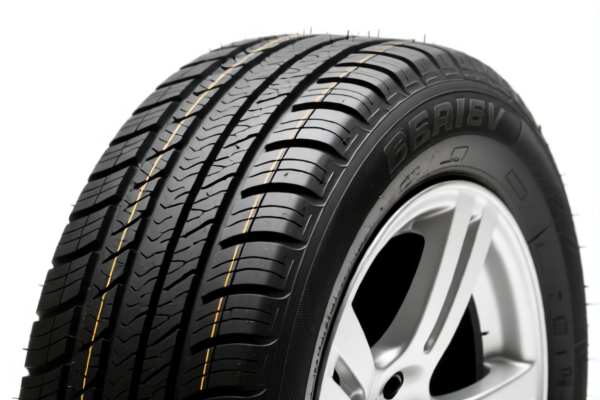
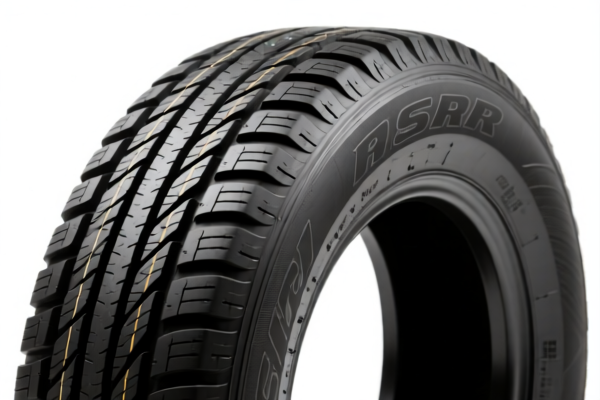
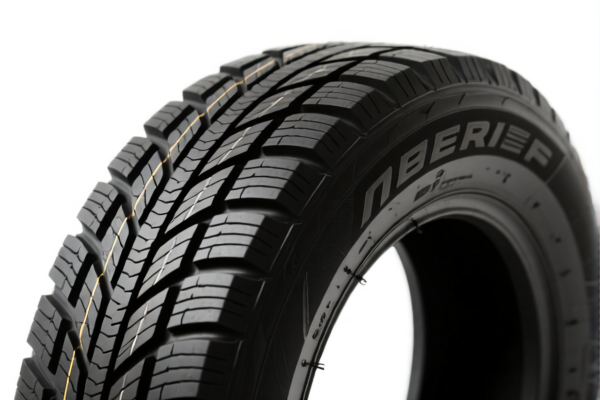
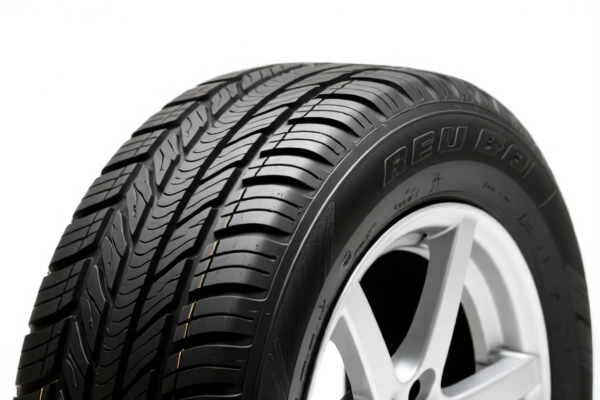
AI Analysis
🛞 Rubber Radial Tires (Eco Friendly) – HS Code & Tax Analysis (2026)
🌐 HS Code Reference & Customs Clearance Guide | 2026 Latest Tariff Breakdown | Strategic Clearance Strategy
📌 I. Product Definition & Classification: Do You Really Understand "Tires"?
"Rubber Radial Tires (Eco Friendly)" are critical automotive components designed for improved fuel efficiency, lower rolling resistance, and reduced environmental impact. In international trade, tire classification is strict:
- Radial vs. Bias-Ply: "Radial" indicates the internal ply structure. Most modern vehicle tires are radial.
- Eco-Friendly: This is a marketing or performance descriptor. It does not change the HS Code. Customs classify based on material, construction, and use, not sustainability claims.
- Key Distinction: Are they for passenger cars, trucks, aircraft, or industrial machinery? The
<DATA>provided highlights two main pathways: Chapter 40 (Rubber Articles) and Chapter 84 (Machinery Parts).
⚠️ Critical Classification Note:
- If the tires are finished products for vehicles (cars, trucks, etc.), they typically fall under Chapter 40.
- If they are spare parts for specific machinery (like tractors or forklifts) and not general vehicle tires, they might be argued as Chapter 84 parts, but this is risky and often rejected by CBP unless explicitly linked to specific machinery not covered by Chapter 40.
📦 II. HS Code Classification Details (2026 Latest Tariff Authority对照)
Based on the provided <DATA>, here are the matched HS Codes, their logic, and tax implications:
| HS Code | Product Description | Matching Logic from Data | Key Risk/Note |
|---|---|---|---|
4012.90.90.00 |
Other rubber tires, incl. solid tires, pneumatic tires, and inner tires | Best Match: "Rubber" material + "Solid/Radial Tires" form. The data confirms this matches "rubber solid or cushion tires." | Recommended: Most standard tires fall here. |
4016.99.60.10 |
Other vulcanized rubber articles | "Rubber" material + "Solid Tires" as general rubber articles. Used if not strictly a "tire" under 4012. | Alternative: May apply if specific tire definition fails, but less common for standard tires. |
4016.99.60.50 |
Other vulcanized rubber articles (non-specific use) | Similar to above; matches material (Rubber) and form (Solid Tires) as general vulcanized articles. | Alternative: Same as above. |
8431.49.90.38 |
Parts of machinery (Other) | "Rubber" + "Solid Tires" considered under "other" fallback for machinery parts. | High Risk: Only applicable if tires are clearly identified as parts of specific machinery (e.g., forklifts) AND not covered by Chapter 40. |
8431.49.90.90 |
Parts of machinery (Other) | "Tires" match "Wheel and tire assemblies"; "Rubber" is acceptable material. | High Risk: Same as above. CBP often redirects to Chapter 40. |
🔍 Key Insight:
-4012.90.90.00is the most legally defensible classification for standard radial/solid tires under GRI 1 and Chapter 40 Note 2.
-8431codes are often contested for tires. If you are importing tires for cars/trucks, do not use Chapter 84. Use Chapter 40.
- "Eco Friendly" is not a classification factor. It may help with marketing or sustainability reporting but does not lower tariffs.
💰 III. 2026 Latest Tariff Rate Breakdown (Including Add-ons & Policy Surcharges)
✅ Applicable Country: United States (US)
✅ Origin: China (CN)
✅ Effective Date: Post-2025/2026 (Current Enforcement)
🎯 1. 4012.90.90.00 – Rubber Tires (Including Solid/Radial)
| Item | Content |
|---|---|
| Base Duty Rate | 2.7% (Ad Valorem) |
| USITC Surcharge (Section 301) | +25.0% |
| IEEPA Surcharge (China-specific) | +10.0% |
| Total Effective Duty Rate | 37.7% |
| Tax Calculation | CIF Value × 37.7% |
| De Minimis Eligibility | ❌ No (Not eligible for $800 de minimis) |
| Legal Basis Path | USITC:4012.90.90.00 → FOOTNOTE:9903.88.01 (301) → IEEPA:9903.01.24 |
📌 Explanation:
- 2.7% Base: Standard Most Favored Nation (MFN) rate for tires.
- 25% Section 301: Added by USITC due to China's trade practices.
- 10% IEEPA: Additional surcharge on Chinese goods under the International Emergency Economic Powers Act.
- Total 37.7%: This is a high tariff. Importers must factor this into landed cost.
🎯 2. 4016.99.60.10 & 4016.99.60.50 – Other Vulcanized Rubber Articles
| Item | Content |
|---|---|
| Base Duty Rate | 2.5% (Ad Valorem) |
| USITC Surcharge (Section 301) | +25.0% |
| IEEPA Surcharge (China-specific) | +10.0% |
| Total Effective Duty Rate | 37.5% |
| Tax Calculation | CIF Value × 37.5% |
| De Minimis Eligibility | ❌ No |
| Legal Basis Path | USITC:4016.99.60.xx → FOOTNOTE:9903.88.01 → IEEPA:9903.01.24 |
📌 Note:
- Very similar to4012but slightly lower base rate (2.5% vs 2.7%).
- Only use if4012is deemed incorrect by CBP, which is rare for tires.
🎯 3. 8431.49.90.38 & 8431.49.90.90 – Machinery Parts (High Risk)
| Item | Content |
|---|---|
| Base Duty Rate | 0.0% (Ad Valorem) |
| USITC Surcharge (Section 301) | +25.0% |
| IEEPA Surcharge (China-specific) | +10.0% |
| Steel/Aluminum/Copper Surcharge | +50.0% (Note: Data mentions "122条款关税10%钢,铝铜制品加征关税: 50%") |
| Total Effective Duty Rate | 85.0% |
| Tax Calculation | CIF Value × 85.0% |
| De Minimis Eligibility | ❌ No |
| Legal Basis Path | USITC:8431.49.90.xx → FOOTNOTE:9903.88.01 → IEEPA:9903.01.24 → Steel/Al/Cu Surcharge |
📌 Warning:
- 85% Duty: This is extremely high.
- These codes are often misused by importers trying to avoid Chapter 40 tire duties. CBP frequently reclassifies tires from 8431 to 4012, leading to back duties, penalties, and delays.
- Only use if you have a strong legal basis that these are not "tires" as defined in Chapter 40 (e.g., specialized industrial tracks or non-vehicle wheels).
🛠️ IV. Customs Clearance Practical Advice (Avoiding Pitfalls)
✅ 1. Required Documentation Checklist
| Document | Required? | Explanation |
|---|---|---|
| ✅ Commercial Invoice | ✔️ | Must clearly state "Rubber Radial Tires" or "Solid Rubber Tires." Avoid vague terms like "Eco Friendly Parts." |
| ✅ Packing List | ✔️ | Detail quantity, weight, and dimensions. |
| ✅ Product Specifications | ✔️ | Include size, tread pattern, load index, speed rating, and construction type (Radial/Bias). |
| ✅ Certificate of Origin | ✔️ | Critical for verifying origin (China) and applying correct surcharges. |
| ✅ Material Composition Statement | ✔️ | Confirm rubber content and any additives. |
| ✅ FCC/DOE Certifications | (If applicable) | Tires generally do not need FCC, but if sold with electronic monitoring systems, ensure compliance. |
✅ 2. Declaration Tips (Key Mantras)
🔥 "Tires are Rubber, Not Machine Parts! Don't Use 8431 Unless You Are Sure!"
| Scenario | Correct Declaration | Wrong Declaration |
|---|---|---|
| Standard Car/Truck Tires | 4012.90.90.00 |
8431.49.90.90 → Penalty Risk |
| Solid Rubber Tires (Forklifts) | 4012.90.90.00 |
8431.49.90.38 → Rejection Risk |
| Tire as Part of a Machine | 8401/8429 (if integrated) |
Isolate tire as 8431 → Reclassification |
| "Eco Friendly" Tires | 4012.90.90.00 |
Create new HS Code → Impossible |
✅ 3. Special Case Handling
| Situation | Recommendation |
|---|---|
| OEM Tires for Cars | Always use 4012.90.90.00. CBP will not accept 8431. |
| Industrial/Solid Tires | Still 4012.90.90.00 unless they are integral to a machine's operation (e.g., tracked vehicles). |
| Samples for Evaluation | If value <$800, may qualify for de minimis, but ensure proper labeling. |
| Transshipment via Vietnam/Mexico | If re-exported, ensure origin remains China to avoid evasion claims. |
🌍 V. Global Market Comparison (2026 Latest)
| Country/Region | Recommended HS Code | Duty Rate (China Origin) | Certification | Notes |
|---|---|---|---|---|
| 🇺🇸 USA | 4012.90.90.00 |
37.7% | DOT, FDA (if food contact) | Highest duty due to 301 + IEEPA |
| 🇨🇳 China | 4012.90.90.00 |
10% (Import) | CCC (if for domestic sales) | No 301/IEEPA |
| 🇪🇺 EU | 4012.90.90.00 |
0% (if compliant) | E-Mark, REACH | Free trade for many origins |
| 🇯🇵 Japan | 4012.90.90.00 |
0-5% | JIS, Safety Standards | Low duty, strict safety |
| 🇦🇺 Australia | 4012.90.90.00 |
5% | SAA/RCM | Moderate duty |
📌 Conclusion:
- USA is the most expensive market for Chinese rubber tires due to multiple surcharges.
- No tariff advantage for "Eco Friendly" claims in the US.
- Misclassification to Chapter 84 is a high-risk strategy that can lead to severe penalties.
📌 VI. Common Mistakes & Pitfalls (Lessons Learned)
❌ Mistake 1: Declaring tires as "Machinery Parts" (8431) to avoid 37.7% duty.
👉 Consequence: CBP reclassifies to 4012, back-charges 37.7%, adds penalties (~20-30%), and delays cargo.
Total Cost Increase: Up to 50%+ extra.
❌ Mistake 2: Ignoring the "Radial" specification.
👉 Consequence: If not specified, CBP may assume bias-ply, which could have different sub-classifications, though duty rate may be similar. Clarity avoids delays.
❌ Mistake 3: Using "Eco Friendly" as the product name.
👉 Consequence: CBP may reject the description as vague. Use "Rubber Radial Tire, Model XYZ, Size 205/55R16".
❌ Mistake 4: Assuming de minimis applies.
👉 Consequence: Tires are never eligible for $800 de minimis if shipped individually or as part of a larger shipment from China due to trade remedies.
✅ Correct Approach:
"Rubber Radial Tire, 205/55R16 91H, for Passenger Cars, HS Code 4012.90.90.00, Origin: China"
🎯 VII. Conclusion: Professional Clearance for Cost Savings
🎯 Remember the Mantra:
🔹 "Tires are Rubber (4012), Not Machine Parts (8431)!"
🔹 "Eco-Friendly is Marketing, Not a Tariff Code!"
🔹 "37.7% Duty in USA is Non-Negotiable for Chinese Tires!"
📌 Pro Tip:
If your tires are original equipment manufacturer (OEM) parts for vehicles assembled in the US, explore Section 321 or FTA benefits if assembled in Mexico/Canada.
For aftermarket tires, the 37.7% duty is unavoidable. Consider supplier negotiations to absorb some costs or price adjustments.
📣 Immediate Action:
📞 Consult a licensed customs broker for Pre-Ruling if unsure.
📄 Prepare detailed technical specifications to support4012.90.90.00.
🚀 Ensure your commercial invoice reflects accurate HS Codes to avoid audits.
✨ Professional clearance starts with accurate classification!
💼 Every dollar saved on duty is pure profit!
Customer Reviews
About HS Code Classification
The Harmonized System (HS) is an internationally standardized nomenclature developed by the World Customs Organization (WCO) to classify traded products. Over 200 countries use the HS system as the basis for customs tariffs, trade statistics, and import/export regulations.
Each HS code follows a hierarchical structure:
- Chapter (2 digits) — Broad category of goods (e.g., Chapter 84: Machinery and Mechanical Appliances)
- Heading (4 digits) — More specific grouping within the chapter
- Subheading (6 digits) — Internationally standardized breakdown, used by all WCO member countries
- National subdivisions (8-10 digits) — Country-specific extensions for further classification, such as US HTSUS 10-digit codes
Correct HS code classification is essential for smooth customs clearance, accurate duty payment, and compliance with trade regulations. Misclassification can lead to customs delays, overpayment of duties, or penalties.
When importing from CN to US, the applicable tariff rates may include:
- Most-Favored-Nation (MFN) rate — The standard duty rate applied to WTO members
- General rate — Applied to countries without trade agreements
- Trade remedy duties — Additional tariffs such as Section 301 (anti-dumping), Section 232 (national security), or countervailing duties
The information provided on this page is for reference purposes only. For official classification, please consult with your local customs authority or a licensed customs broker.