Rubber Solid Tires (Low Rolling Resistance)
CN → US| HS Code | Tariff Rate | Origin | Destination | Doc |
|---|---|---|---|---|
| 4012901000 | 35.0% | CN | US | Official Doc |
| 4016996050 | 37.5% | CN | US | Official Doc |
| 4016996010 | 37.5% | CN | US | Official Doc |
| 8431499038 | 85.0% | CN | US | Official Doc |
| 8431499090 | 85.0% | CN | US | Official Doc |
Product Images
AI Analysis
🚜 Rubber Solid Tires (Low Rolling Resistance)
🌐 HS Code Reference & Customs Clearance Guide | 2026 Latest Tariff Analysis | Professional Entry Strategy
📌 I. Product Definition & Classification: Do You Really Understand "Solid Tires"?
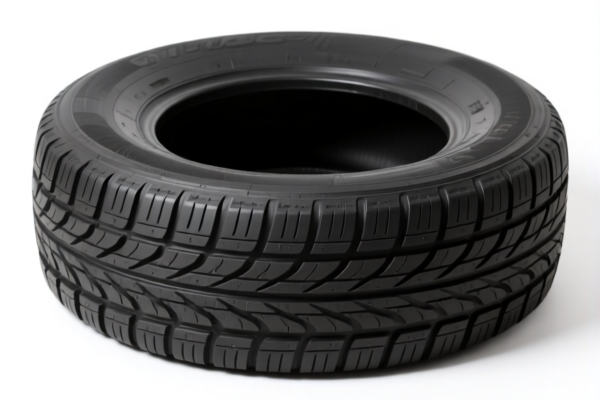
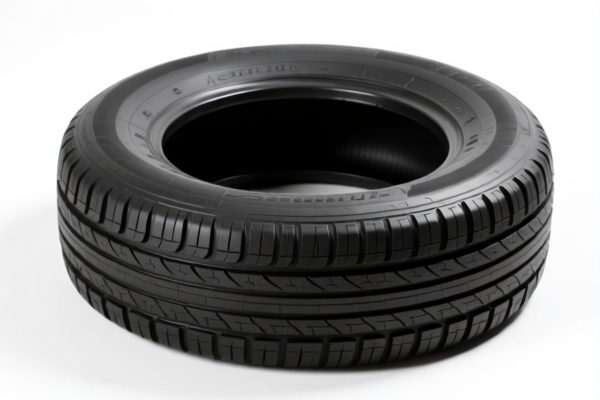
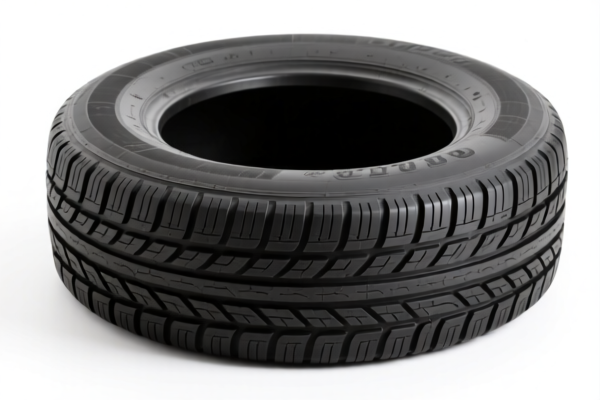
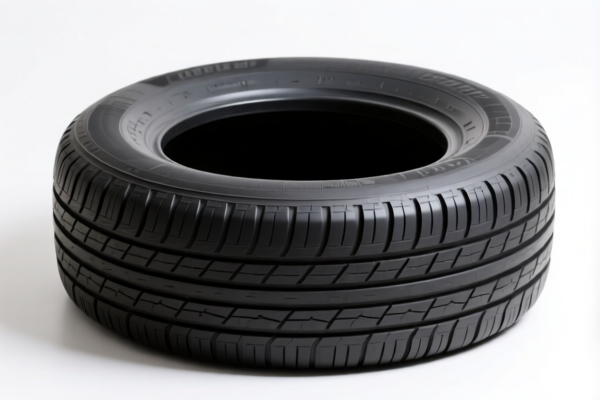
Rubber Solid Tires (Low Rolling Resistance) are specialized non-pneumatic tires made from vulcanized rubber, designed primarily for industrial machinery, forklifts, pallet jacks, and heavy-duty vehicles. Unlike pneumatic tires, they offer puncture-proof performance, load-bearing stability, and reduced maintenance.
In international trade, they are categorized based on material composition (Rubber) and specific application (Tires vs. Machinery Parts). The key distinction lies in whether they are classified as "Tires" under Chapter 40 or as "Parts" under Chapter 84.
⚠️ Key Distinction Point:
- If classified as "Tires" (Chapter 40), they benefit from lower base tariffs but may face specific duty rates.
- If classified as "Parts of Machinery" (Chapter 84), they are often treated as accessories, potentially leading to higher combined tax liabilities due to additional surcharges.
📦 II. HS Code Classification Details (2026 Latest Tariff Authority Comparison)
| HS Code | Product Description | Application Scenario | Material Conflict? |
|---|---|---|---|
4012.90.10.00 |
Other used pneumatic tires, or solid tires, of rubber | Direct Match: Explicitly includes "Solid Tires" made of Rubber. No conflict. | ❌ No |
4016.99.60.50 |
Other vulcanized rubber articles, n.e.c. | Match Basis: Rubber material matches; "Solid Tires" fit "other vulcanized rubber articles." No material conflict. | ❌ No |
4016.99.60.10 |
Other vulcanized rubber articles, n.e.c. | Match Basis: "Rubber" matches material; "Solid Tires" fit "other vulcanized rubber articles." Tendency to match due to no conflict. | ❌ No |
8431.49.90.38 |
Parts of machinery for lifting, handling, etc. | Match Basis: "Rubber" fits material; "Solid Tires" are "Wheel and tire assemblies." No material conflict. | ❌ No |
8431.49.90.90 |
Other parts of machinery for lifting, handling, etc. | Match Basis: "Tires" match "Wheel and tire assemblies"; "Rubber" is standard material for mechanical parts. | ❌ No |
🔍 Key Reminder:
-4012.90.10.00is the most precise classification because it explicitly mentions "Solid Tires."
-8431codes carry significantly higher tax burdens due to additional surcharges on steel/aluminum components (if applicable) and higher base duties.
- Misclassifying solid tires as general rubber parts (4016) or machinery parts (8431) can lead to overpayment of duties.
💰 III. 2026 Latest Tariff Rate Details (Including Additional Taxes, Policy Add-ons)
✅ Applicable Country: United States (US)
✅ Country of Origin: China (CN)
✅ Effective Date: From November 10, 2025 (and subsequent imports)
🎯 1. 4012.90.10.00 — Rubber Solid Tires (Best Match)
| Item | Content |
|---|---|
| Base Tariff Rate | 0% (ad valorem) |
| USITC Surcharge | +25% (From USITC Footnote 9903.88.01) |
| IEEPA Surcharge | +10% (For China/HK products, from Nov 10, 2025) |
| Total Tariff Rate | 35.0% |
| Tax Calculation | CIF Value × 35% |
| De Minimis Eligibility | ❌ Not Allowed (deny_de_minimis) |
| Legal Authority Path | IEEPA:9903.01.25 → IEEPA:9903.01.24 → USITC:4012.90.10.00 → FOOTNOTE:9903.88.01 |
📌 Explanation:
- The 0% base rate makes this code the most cost-effective option.
- The 25% USITC surcharge applies due to Section 301 tariffs.
- The 10% IEEPA surcharge is the additional tax for Chinese-origin goods.
- Total 35% is significantly lower than the 85% rate for machinery parts.
🎯 2. 4016.99.60.50 — Other Vulcanized Rubber Articles
| Item | Content |
|---|---|
| Base Tariff Rate | 2.5% |
| USITC Surcharge | +25% |
| IEEPA Surcharge | +10% |
| Total Tariff Rate | 37.5% |
| Tax Calculation | CIF Value × 37.5% |
| De Minimis Eligibility | ❌ Not Allowed |
| Legal Authority Path | IEEPA:9901.25 → IEEPA:9903.01.24 → USITC:4016.99.60.50 → FOOTNOTE:9903.88.01 |
📌 Note:
- Slightly higher than4012.90.10.00due to the 2.5% base tariff.
- Still a valid classification if "Solid Tires" are not explicitly listed in customs databases, but less optimal.
🎯 3. 4016.99.60.10 — Other Vulcanized Rubber Articles
| Item | Content |
|---|---|
| Base Tariff Rate | 2.5% |
| USITC Surcharge | +25% |
| IEEPA Surcharge | +10% |
| Total Tariff Rate | 37.5% |
| Tax Calculation | CIF Value × 37.5% |
| De Minimis Eligibility | ❌ Not Allowed |
| Legal Authority Path | IEEPA:9901.25 → IEEPA:9903.01.24 → USITC:4016.99.60.10 → FOOTNOTE:9903.88.01 |
📌 Note:
- Identical tax rate to4016.99.60.50.
- Used when the specific description "other articles" is preferred over specific sub-codes.
🎯 4. 8431.49.90.38 — Parts of Machinery (Lifting/Handling)
| Item | Content |
|---|---|
| Base Tariff Rate | 0% |
| USITC Surcharge | +25% |
| IEEPA Surcharge | +10% |
| Steel/Aluminum/Copper Surcharge | +50% (If applicable) |
| Total Tariff Rate | 85.0% |
| Tax Calculation | CIF Value × 85% (or higher if metallic components trigger the 50% surcharge) |
| De Minimis Eligibility | ❌ Not Allowed |
| Legal Authority Path | IEEPA:9903.01.25 → IEEPA:9903.01.24 → USITC:8431.49.90.38 → FOOTNOTE:9903.88.01 |
📌 Warning:
- Extremely High Tax Burden: Even with a 0% base rate, the 85% total rate makes this code prohibitively expensive.
- The 50% surcharge applies if the tire assembly contains steel/aluminum/copper parts (common in solid tires with metal hubs).
- Avoid this classification unless absolutely necessary.
🎯 5. 8431.49.90.90 — Other Parts of Machinery
| Item | Content |
|---|---|
| Base Tariff Rate | 0% |
| USITC Surcharge | +25% |
| IEEPA Surcharge | +10% |
| Steel/Aluminum/Copper Surcharge | +50% (If applicable) |
| Total Tariff Rate | 85.0% |
| Tax Calculation | CIF Value × 85% |
| De Minimis Eligibility | ❌ Not Allowed |
| Legal Authority Path | IEEPA:9903.01.25 → IEEPA:9903.01.24 → USITC:8431.49.90.90 → FOOTNOTE:9903.88.01 |
📌 Warning:
- Same high tax rate as8431.49.90.38.
- Do not classify solid tires as machinery parts to avoid massive cost increases.
🛠️ IV. Customs Clearance Practical Advice (Battle-Tested Pitfall Avoidance)
✅ 1. Preparation Checklist (Mandatory)
| Document | Required | Explanation |
|---|---|---|
| ✅ Product Specification Sheet | ✔️ | Must specify "Solid Tire," material "Vulcanized Rubber," and "Low Rolling Resistance." |
| ✅ Product Photos (with Label) | ✔️ | Clear images showing the tire structure, lack of air chamber, and any metal hub. |
| ✅ Commercial Invoice | ✔️ | Clearly state "Rubber Solid Tires, Low Rolling Resistance." |
| ✅ Packing List | ✔️ | Detail quantity, weight, and dimensions. |
| ✅ Certificate of Origin (CO) | ✔️ | Essential for proving Chinese origin and applying surcharges. |
| ✅ Third-Party Test Report | ✔️ | If available, include load-bearing and rolling resistance test data. |
✅ 2. Declaration Tips (Key Mantra)
🔥 "Declare as Tires, Not Parts; Save 50% in Duty!"
| Scenario | Correct Declaration | Wrong Practice |
|---|---|---|
| Rubber Solid Tire for Forklift | 4012.90.10.00 |
Misdeclare as 8431.49.90.38 → 85% Tax |
| Tire with Metal Hub | Still 4012.90.10.00 (if rubber is main material) |
Declare as "Machinery Part" → 85% Tax |
| Used Solid Tire | 4012.90.10.00 |
Declare as new tire → Potential misclassification |
| Low Rolling Resistance Feature | Mention in description | Ignore feature → May miss optimization opportunities |
✅ 3. Special Case Handling
| Scenario | Handling Advice |
|---|---|
| Tire with Metal Hub | If the metal hub is integral, ensure it doesn't trigger the "Steel/Aluminum/Copper" surcharge. Focus on the rubber nature. |
| OEM Custom Tires | Provide customer order + design specs. Ensure description aligns with "Solid Tires." |
| Used vs. New | 4012.90.10.00 often covers "used" or "new" solid tires. Clarify in invoice. |
| Low Rolling Resistance | Highlight this in marketing documents, but for customs, the physical structure (solid rubber) is key. |
🌍 V. Global Market Customs Comparison (2026 Latest)
| Country/Region | Recommended HS Code | Tariff | Certification | Notes |
|---|---|---|---|---|
| 🇺🇸 USA | 4012.90.10.00 |
35% (CN) | No specific cert required for rubber | Avoid 8431 (85% tax) |
| 🇨🇳 China | 4012.90.10.00 |
5% | CCC (if for motor vehicles) | No surcharges |
| 🇪🇺 EU | 4012.90.10.00 |
0% (if duty-free) | CE/REACH | No additional taxes |
| 🇯🇵 Japan | 4012.90.10.00 |
0% | JIS | No surcharges |
| 🇦🇺 Australia | 4012.90.10.00 |
5% | RCM | No surcharges |
📌 Conclusion:
- USA is the only major market with high surcharges for Chinese goods.
- Choosing4012.90.10.00saves you 50% in taxes compared to8431codes.
- Never classify solid tires as machinery parts unless you are prepared to pay 85% tax.
📌 VI. Common Errors & Pitfalls (Lessons Learned)
❌ Error 1: Declaring "Solid Tires" as "Machinery Parts" (8431)
👉 Consequence: 85% tax instead of 35% → Massive cost increase!
❌ Error 2: Ignoring the "Solid" nature and declaring as "Pneumatic Tires"
👉 Consequence: Misclassification, potential penalties, and delays.
❌ Error 3: Not specifying "Rubber" in the description
👉 Consequence: Customs may question the material, leading to detention.
❌ Error 4: Assuming "Low Rolling Resistance" changes the HS Code
👉 Consequence: No change. The physical structure (solid rubber) dictates the code.
✅ Correct Practice:
"Rubber Solid Tires, Low Rolling Resistance, for Industrial Forklifts, Vulcanized, Model XYZ, Made in China"
🎯 VII. Conclusion: Professional Declaration, Save Money, Ensure Smooth Clearance!
🎯 Remember the Mantra:
🔹 "Declare as Tires, Not Parts; 35% vs. 85%—Choose Wisely!"
🔹 "HS Code Defines Your Cost; A Mistake Costs You Half!"
📌 Pro Tip:
If your solid tires are originally from Vietnam, Mexico, or Thailand, you may qualify for IEEPA exemptions, reducing the tax to 0%~5%.
Recommend Applying for Advance Ruling to confirm the 4012.90.10.00 classification and avoid disputes.
📣 Take Action Now:
📞 Contact a professional customs broker + Provide product photos + Apply for HS Code Advance Ruling
🚀 Let your solid tires clear smoothly, reduce costs, and maximize profits!
✨ Professional Customs Clearance Starts with Accurate Classification!
💼 Every Cent of Your Cost Deserves Precise Calculation!
Customer Reviews
About HS Code Classification
The Harmonized System (HS) is an internationally standardized nomenclature developed by the World Customs Organization (WCO) to classify traded products. Over 200 countries use the HS system as the basis for customs tariffs, trade statistics, and import/export regulations.
Each HS code follows a hierarchical structure:
- Chapter (2 digits) — Broad category of goods (e.g., Chapter 84: Machinery and Mechanical Appliances)
- Heading (4 digits) — More specific grouping within the chapter
- Subheading (6 digits) — Internationally standardized breakdown, used by all WCO member countries
- National subdivisions (8-10 digits) — Country-specific extensions for further classification, such as US HTSUS 10-digit codes
Correct HS code classification is essential for smooth customs clearance, accurate duty payment, and compliance with trade regulations. Misclassification can lead to customs delays, overpayment of duties, or penalties.
When importing from CN to US, the applicable tariff rates may include:
- Most-Favored-Nation (MFN) rate — The standard duty rate applied to WTO members
- General rate — Applied to countries without trade agreements
- Trade remedy duties — Additional tariffs such as Section 301 (anti-dumping), Section 232 (national security), or countervailing duties
The information provided on this page is for reference purposes only. For official classification, please consult with your local customs authority or a licensed customs broker.