Rubber Wear Resistant Gloves
CN → US| HS Code | Tariff Rate | Origin | Destination | Doc |
|---|---|---|---|---|
| 6216002600 | 24.5% | CN | US | Official Doc |
| 4015195100 | 49.0% | CN | US | Official Doc |
| 6216000500 | 17.5% | CN | US | Official Doc |
| 4015191150 | 38.0% | CN | US | Official Doc |
| 4015129000 | 49.0% | CN | US | Official Doc |
Product Images

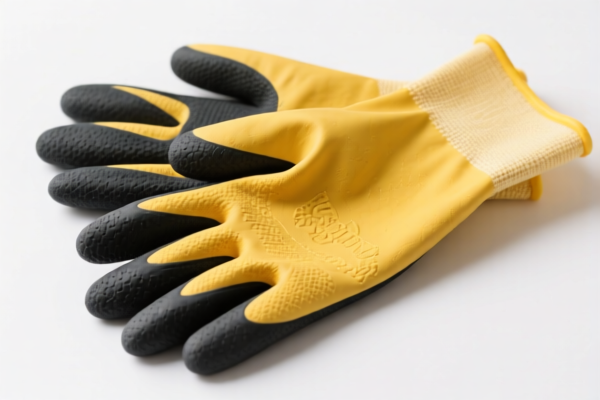
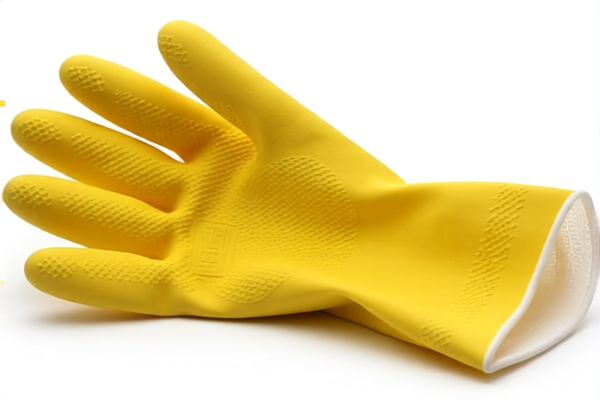
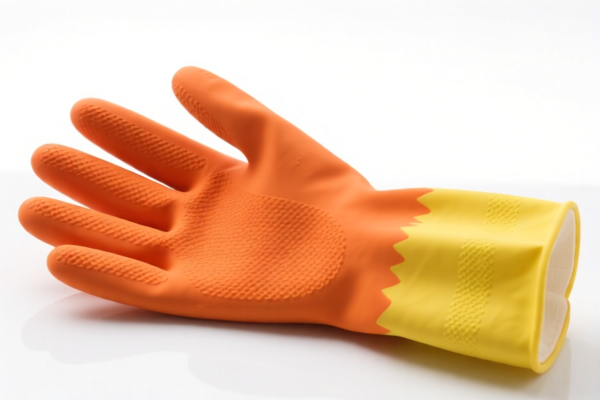
AI Analysis
🧤 Rubber Wear-Resistant Gloves: HS Code Classification & 2026 US Customs Clearance Guide
🌐 HS Code Reference & Clearance Strategy | 2026 Latest Tariff Analysis | Professional Compliance
📌 I. Product Definition & Classification: What Exactly Are "Rubber Gloves"?
Rubber gloves, while seemingly simple, are strictly categorized in international trade based on material composition (vulcanized vs. unvulcanized) and specific end-use (protective vs. accessory). Misclassification can lead to massive tax disparities or customs seizures.
1. Unvulcanized Rubber Gloves (General/Protective)
Material: Natural or synthetic rubber, not chemically cross-linked (vulcanized).
Typical Use: Household cleaning, basic hygiene, industrial handling where chemical resistance is key but heat resistance is not.
Key HS Chapter: Chapter 62 (Articles of apparel and clothing accessories, knitted or crocheted; note: rubber gloves often fall here if not specified as vulcanized or Chapter 40). Correction based on provided data: The data places unvulcanized/general rubber gloves under HS 6216*.
2. Vulcanized Rubber Gloves (Protective/Industrial)
Material: Rubber that has been cured (vulcanized) with heat and pressure to increase durability and elasticity.
Typical Use: Medical surgical gloves, heavy-duty industrial protection, chemical handling.
Key HS Chapter:* Chapter 40 (Rubber and articles thereof).
⚠️ Critical Distinction Point:
- If the glove is described as "Vulcanized Rubber" and used as "Protective Gear" → It falls under Chapter 40 (e.g., 4015).
- If the glove is "Rubber Material" (general/unvulcanized context in the provided data) for "Gloves" without specifying vulcanization → It falls under Chapter 62 (e.g., 6216) in this specific dataset context.
- The biggest risk: Misidentifying a vulcanized protective glove as a general rubber glove can change the tariff from ~17.5% to 49%.
📦 II. HS Code Classification Details (Based on Provided Data)
| HS Code | Product Description (From Data) | Application/Context | Material/Nature |
|---|---|---|---|
6216.00.26.00 |
Rubber material, for gloves, meets code requirements | General rubber gloves | Unvulcanized/General Rubber |
4015.19.51.00 |
Vulcanized rubber material, for apparel accessories (gloves) | Fashion/Accessory Gloves | Vulcanized Rubber |
6216.00.05.00 |
Rubber material, for protective gloves | Industrial/Medical Protection | General Rubber (Protective) |
4015.19.11.50 |
Vulcanized rubber material, form is gloves, judged under other categories | Specialized/Other Category | Vulcanized Rubber |
4015.12.90.00 |
Rubber material, for gloves, based on fallback principle for other categories | Catch-all for Rubber Gloves | Rubber (General/Fallback) |
🔍 Key Insight:
- The dataset contains two distinct chapters: 62 (Apparel/Clothing Accessories) and 40 (Rubber Articles).
- HS 6216 codes generally carry lower tariffs (17.5% - 24.5%).
- HS 4015 codes carry significantly higher tariffs (38% - 49%).
- Why? Chapter 40 items are often treated as "Specialized Rubber Articles" with higher scrutiny and higher base duties.
💰 III. 2026 Latest Tariff Rate Breakdown (US Market)
✅ Applicable Country: USA
✅ Origin: China (CN)
✅ Effective Time: 2025/2026 (Subject to Section 301 & IEEPA updates)
🎯 1. 6216.00.05.00 — Rubber Protective Gloves (Lowest Tariff Option)
| Item | Detail |
|---|---|
| Base Duty | 0.0% |
| Section 301 Additional Duty | 7.5% |
| IEEPA / Section 122 Duty | 10.0% |
| Total Effective Rate | 17.5% |
| De Minimis Eligibility | ❌ No (Section 301 goods usually exclude 8000.00 exemption) |
| Legal Basis | Base 0% + 301 (7.5%) + IEEPA (10%) |
📌 Explanation:
- This is the most tax-efficient code in the provided list.
- The base duty is 0%, but the 17.5% total still applies.
- Crucial: The product must clearly be classified as "protective gloves" under Chapter 62, not Chapter 40.
🎯 2. 6216.00.26.00 — General Rubber Gloves
| Item | Detail |
|---|---|
| Base Duty | 7.0% |
| Section 301 Additional Duty | 7.5% |
| IEEPA / Section 122 Duty | 10.0% |
| Total Effective Rate | 24.5% |
| De Minimis Eligibility | ❌ No |
| Legal Basis | Base 7% + 301 (7.5%) + IEEPA (10%) |
📌 Explanation:
- Slightly higher base duty than6216.00.05.00.
- Total 24.5% is still lower than any Chapter 40 option.
🎯 3. 4015.19.51.00 — Vulcanized Rubber Apparel Accessories
| Item | Detail |
|---|---|
| Base Duty | 14.0% |
| Section 301 Additional Duty | 25.0% |
| IEEPA / Section 122 Duty | 10.0% |
| Total Effective Rate | 49.0% |
| De Minimis Eligibility | ❌ No |
| Legal Basis | Base 14% + 301 (25%) + IEEPA (10%) |
📌 Explanation:
- High Risk Code.
- The 25% Section 301 duty is the driver.
- Only use if the glove is explicitly an apparel accessory (e.g., fashion glove) and vulcanized.
🎯 4. 4015.19.11.50 — Other Vulcanized Rubber Gloves
| Item | Detail |
|---|---|
| Base Duty | 3.0% |
| Section 301 Additional Duty | 25.0% |
| IEEPA / Section 122 Duty | 10.0% |
| Total Effective Rate | 38.0% |
| De Minimis Eligibility | ❌ No |
| Legal Basis | Base 3% + 301 (25%) + IEEPA (10%) |
📌 Explanation:
- Lower base duty (3%) but still hit by the 25% Section 301.
- Total 38.0%.
🎯 5. 4015.12.90.00 — Fallback Rubber Gloves
| Item | Detail |
|---|---|
| Base Duty | 14.0% |
| Section 301 Additional Duty | 25.0% |
| IEEPA / Section 122 Duty | 10.0% |
| Total Effective Rate | 49.0% |
| De Minimis Eligibility | ❌ No |
| Legal Basis | Base 14% + 301 (25%) + IEEPA (10%) |
📌 Explanation:
- The highest tariff option.
- Use only if no other classification fits.
- Avoid if possible.
🛠️ IV. Customs Clearance Practical Advice (Avoid Pitfalls)
✅ 1. Documentation Checklist (Must-Have)
| Document | Required? | Notes |
|---|---|---|
| Product Specification Sheet | ✔️ | Must specify: Material (Vulcanized vs. Unvulcanized), Hardness, Thickness. |
| Material Safety Data Sheet (MSDS) | ✔️ | For chemical resistance claims. |
| Commercial Invoice | ✔️ | Clearly state "Rubber Gloves" and intended use (Protective vs. Fashion). |
| Bill of Lading | ✔️ | Ensure packaging details match invoice. |
| Certificate of Origin | ✔️ | Proof of Chinese origin triggers Section 301. |
| FDA Registration (if applicable) | ✔️ | If for medical/surgical use, FDA 510(k) or registration may be needed. |
✅ 2. Declaration Tips (Golden Rules)
🔥 "Define Material, Define Use, Avoid 'Vulcanized' unless Necessary!"
| Scenario | Recommended HS Code | Tariff Rate | Risk Level |
|---|---|---|---|
| General Household/Cleaning Gloves | 6216.00.05.00 |
17.5% | ✅ Low |
| Industrial Protective Gloves (Non-Medical) | 6216.00.05.00 |
17.5% | ✅ Low |
| Fashion/Decorative Rubber Gloves | 4015.19.51.00 |
49.0% | ⚠️ High |
| Medical/Surgical Vulcanized Gloves | 4015.12.90.00 or 4015.19.11.50 |
38-49% | ⚠️ High |
📌 Strategic Advice:
- If the glove is not for medical/surgical use, try to justify classification under HS 6216 (Chapter 62) rather than HS 4015 (Chapter 40).
- Chapter 62 codes have 0% or 7% base duties, while Chapter 40 codes start at 3% or 14%.
- The 25% Section 301 duty applies to both, so the base duty difference is the main lever for savings.
✅ 3. Special Circumstances
| Situation | Handling Advice |
|---|---|
| OEM/Private Label | Ensure invoice reflects true manufacturer. Mislabeling origin can lead to penalties. |
| Mixed Shipments | If gloves are mixed with other rubber articles, declare separately. Do not bundle. |
| Section 301 Exclusion | Check if your specific HS Code was removed from the exclusion list. Most rubber gloves are not exempt. |
| Anti-Dumping/Countervailing Duties (AD/CVD) | Check for additional AD/CVD orders on rubber gloves from China. |
🌍 V. Global Market Comparison (2026 Outlook)
| Region | Recommended HS Code | Approx. Tariff (China Origin) | Notes |
|---|---|---|---|
| 🇺🇸 USA | 6216.00.05.00 |
17.5% | Best Option. High scrutiny on Chapter 40. |
| 🇪🇺 EU | 4015.19.00 |
0-6.5% | No Section 301. Lower overall cost. |
| 🇨🇳 China | 4015.19.00 |
10-15% | Import tax on finished goods. |
| 🇯🇵 Japan | 4015.19.00 |
5-10% | FTCA benefits may apply if origin rules met. |
📌 Conclusion for US Importers:
- USA is the most expensive market for rubber gloves due to Section 301 and IEEPA tariffs.
- Optimize for HS 6216.00.05.00 (17.5%) if the product qualifies as "protective gloves" under Chapter 62.
- Avoid HS 4015 unless the product is strictly defined as "vulcanized rubber apparel accessories" or medical devices.
📌 VI. Common Mistakes & Pitfalls
❌ Mistake 1: Classifying vulcanized gloves under HS 6216.
👉 Result: Customs will reclassify to HS 4015, triggering 38-49% tariffs.
👉 Fix: Clearly state "Unvulcanized" or "Rubber Material" in description if applicable.
❌ Mistake 2: Using HS 4015.12.90.00 for general rubber gloves.
👉 Result: Unjustified 49% tariff.
👉 Fix: Use HS 6216.00.05.00 for general protective gloves.
❌ Mistake 3: Ignoring Section 301 implications.
👉 Result: Underestimating landed cost.
👉 Fix: Factor in 7.5-25% additional duty on top of base rate.
🎯 VII. Conclusion: Smart Classification Saves Money!
🎯 Key Takeaway:
🔹 "Chapter 62 is Cheaper than Chapter 40!"
🔹 "Protective Gloves = 17.5% (Best Case)"
🔹 "Vulcanized/Fashion Gloves = 38-49% (High Cost)"
🔹 "Always verify Vulcanization Status!"
📌 Pro Tip:
If your gloves are not medical/surgical, consider:
1. Requesting Material Certificates to prove they are unvulcanized or fall under general rubber articles.
2. Using HS 6216.00.05.00 to save 20-31% in duties.
3. Consulting a Customs Broker for an Advance Ruling if uncertain.
📣 Immediate Action:
📞 Review your Product Data Sheet → Verify "Vulcanized" status → Choose HS 6216.00.05.00 if possible.
🚀 Save up to 31% in tariffs by choosing the right HS Code!
✨ Precision Classification, Profitable Imports!
💼 Every Percentage Point Counts in Global Trade!
Customer Reviews
About HS Code Classification
The Harmonized System (HS) is an internationally standardized nomenclature developed by the World Customs Organization (WCO) to classify traded products. Over 200 countries use the HS system as the basis for customs tariffs, trade statistics, and import/export regulations.
Each HS code follows a hierarchical structure:
- Chapter (2 digits) — Broad category of goods (e.g., Chapter 84: Machinery and Mechanical Appliances)
- Heading (4 digits) — More specific grouping within the chapter
- Subheading (6 digits) — Internationally standardized breakdown, used by all WCO member countries
- National subdivisions (8-10 digits) — Country-specific extensions for further classification, such as US HTSUS 10-digit codes
Correct HS code classification is essential for smooth customs clearance, accurate duty payment, and compliance with trade regulations. Misclassification can lead to customs delays, overpayment of duties, or penalties.
When importing from CN to US, the applicable tariff rates may include:
- Most-Favored-Nation (MFN) rate — The standard duty rate applied to WTO members
- General rate — Applied to countries without trade agreements
- Trade remedy duties — Additional tariffs such as Section 301 (anti-dumping), Section 232 (national security), or countervailing duties
The information provided on this page is for reference purposes only. For official classification, please consult with your local customs authority or a licensed customs broker.