Safety Shoes with Plastic Outsole and Metal Toe Cap
CN → US| HS Code | Tariff Rate | Origin | Destination | Doc |
|---|---|---|---|---|
| 6403406000 | 18.5% | CN | US | Official Doc |
| 6403403090 | 15.0% | CN | US | Official Doc |
| 6401929030 | 55.0% | CN | US | Official Doc |
| 6402910500 | 16.0% | CN | US | Official Doc |
Product Images
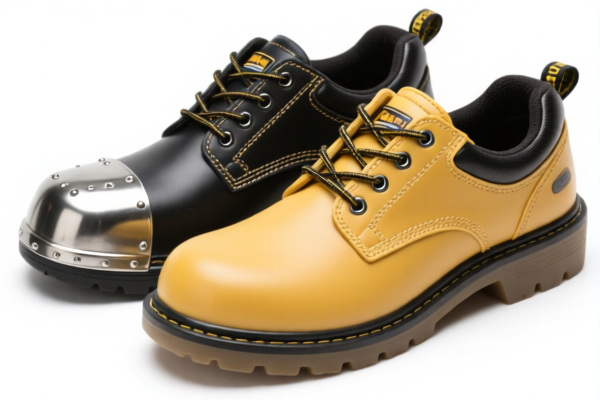
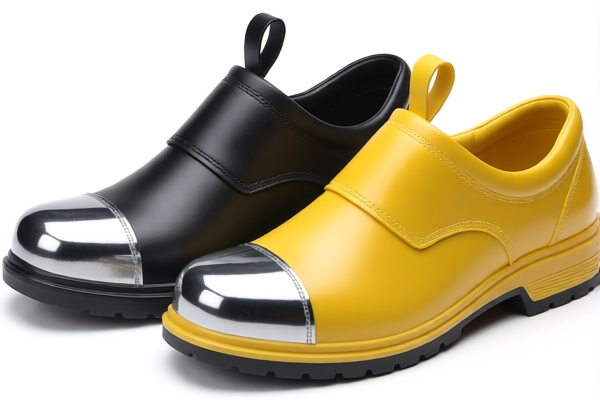
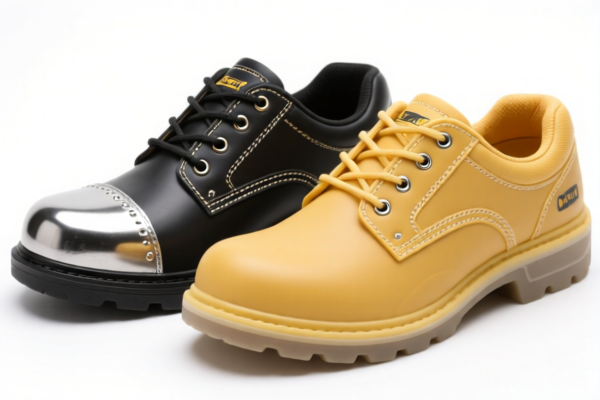
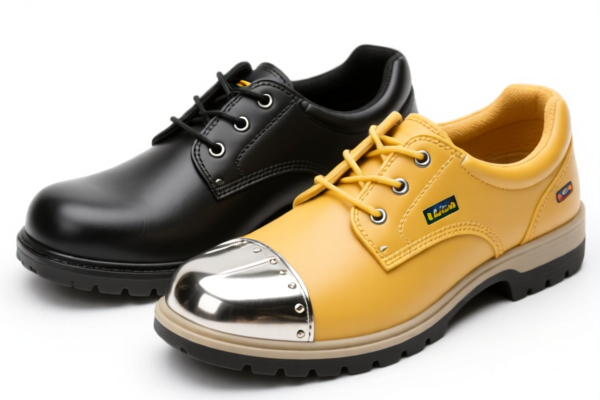
AI Analysis
👞 Safety Shoes with Plastic Outsole and Metal Toe Cap
🌐 HS Code Reference & Customs Clearance Guide | 2026 Latest Tariff Analysis | Professional Entry Strategy
📌 I. Product Definition & Classification: What Defines "Safety Shoes"?
Safety shoes with a plastic outsole and metal toe cap are protective footwear designed to prevent foot injuries in industrial, construction, and manufacturing environments. The key components driving classification are: 1. Outer Sole: Plastic (Rubber or Plastic are grouped together in Chapter 64). 2. Upper Material: Not explicitly stated as leather, implying plastic, rubber, or synthetic materials. 3. Protective Feature: Steel/Metal Toe Cap (This triggers specific subheadings for "Protective Footwear").
⚠️ Key Distinction Point:
- If the upper is Leather → Different HS codes (Chapter 64.01/64.03).
- If the upper is Plastic/Rubber/Synthetic → Different HS codes (Chapter 64.01/64.02/64.05).
- Critical Factor: The presence of a metal toe cap often requires specific classification under "Safety Footwear" or "Protective Footwear," impacting tax rates significantly due to US-China trade tensions.
📦 II. HS Code Classification Details (2026 Latest Tariff Authority Mapping)
| HS Code | Product Description | Key Features | Total Tax Rate |
|---|---|---|---|
6401.92.90.30 |
Safety shoes with plastic outsole & metal toe cap; inferred plastic upper | Plastic/Rubber Upper + Metal Toe | 55.0% |
6402.91.05.00 |
Rubber or plastic soles & uppers; with protective metal toe cap | Rubber/Plastic Upper + Metal Toe | 16.0% |
6403.40.60.00 |
Plastic safety shoes with steel toe cap; matches metal toe feature | Leather Upper (Inferred) + Metal Toe | 18.5% |
6403.40.30.90 |
Plastic safety shoes with steel toe cap; conforms to metal protective toe cap | Leather Upper (Inferred) + Metal Toe | 15.0% |
🔍 Important Note:
- Chapter 64 covers footwear with outer soles of rubber, plastics, leather, or composition leather.
- Subheading 6403 typically applies to footwear with leather uppers.
- Subheading 6402 applies to footwear with rubber or plastic uppers.
- Subheading 6401 applies to waterproof footwear (often rubber/plastic) with protective features.
- The Metal Toe Cap is a critical classifier that may trigger additional scrutiny under Section 301 tariffs (122 Clause).
💰 III. 2026 Latest Tariff Rate Breakdown (Including Additional Taxes & Policy Surcharges)
✅ Applicable Country: United States (US)
✅ Origin: China (CN)
✅ Effective Date: 2025+ (Subject to current trade policies)
🎯 1. 6401.92.90.30 —— Waterproof Rubber/Plastic Footwear, Plastic Upper, Metal Toe Cap
| Item | Content |
|---|---|
| Base Tariff | 37.5% (Ad Valorem) |
| Section 301 Tariff | +7.5% (USITC Footnote related to China) |
| 122 Clause Tariff | +10.0% (Specific to safety footwear/components from China) |
| Total Tax Rate | 55.0% |
| Tax Calculation | CIF Value × 55.0% |
| De Minimis Eligibility | ❌ No (Deny De Minimis for footwear >$800, or specific exclusions) |
| Legal Basis Path | HTSUS:6401.92.90 → USITC:301 Footnote → 122 Clause: Safety Footwear |
📌 Explanation:
- This is the highest tax bracket among the options.
- It applies if the shoe is classified as waterproof (6401) with a plastic upper.
- The 122 Clause specifically targets safety footwear from China to protect domestic producers.
- Risk: High compliance scrutiny; ensure materials are correctly declared.
🎯 2. 6402.91.05.00 —— Rubber/Plastic Soles & Uppers, Protective Metal Toe Cap
| Item | Content |
|---|---|
| Base Tariff | 6.0% (Ad Valorem) |
| Section 301 Tariff | 0.0% (No additional 301 rate applied in this data) |
| 122 Clause Tariff | +10.0% |
| Total Tax Rate | 16.0% |
| Tax Calculation | CIF Value × 16.0% |
| De Minimis Eligibility | ❌ No |
| Legal Basis Path | HTSUS:6402.91.05 → 122 Clause: Safety Footwear |
📌 Explanation:
- This is the most favorable rate among the options provided.
- It applies if the shoe has rubber or plastic uppers and a metal toe cap.
- The base tariff is low, but the 122 Clause adds a fixed 10% surcharge.
- Recommendation: If the upper is indeed rubber/plastic, this is the optimal classification.
🎯 3. 6403.40.60.00 —— Safety Shoes, Leather Upper, Steel Toe Cap
| Item | Content |
|---|---|
| Base Tariff | 8.5% (Ad Valorem) |
| Section 301 Tariff | 0.0% |
| 122 Clause Tariff | +10.0% |
| Total Tax Rate | 18.5% |
| Tax Calculation | CIF Value × 18.5% |
| De Minimis Eligibility | ❌ No |
| Legal Basis Path | HTSUS:6403.40.60 → 122 Clause: Safety Footwear |
📌 Explanation:
- Applies if the upper material is Leather.
- Base tariff is higher than6402.91, but still lower than6401.92.
- Critical: If the upper is NOT leather, this classification is incorrect and will lead to penalties.
🎯 4. 6403.40.30.90 —— Safety Shoes, Leather Upper, Steel Toe Cap (Other)
| Item | Content |
|---|---|
| Base Tariff | 5.0% (Ad Valorem) |
| Section 301 Tariff | 0.0% |
| 122 Clause Tariff | +10.0% |
| Total Tax Rate | 15.0% |
| Tax Calculation | CIF Value × 15.0% |
| De Minimis Eligibility | ❌ No |
| Legal Basis Path | HTSUS:6403.40.30 → 122 Clause: Safety Footwear |
📌 Explanation:
- Also applies to Leather Upper shoes.
- This is the lowest base tariff (5.0%) among all options, resulting in a 15.0% total rate.
- However, it is only valid if the upper is confirmed to be leather.
- Risk: Misclassification of upper material (e.g., calling synthetic leather "leather") can lead to severe audits.
🛠️ IV. Customs Clearance Practical Advice (Combat-Ready Pitfall Avoidance)
✅ 1. Essential Documentation Checklist (Non-Negotiable)
| Document | Required | Explanation |
|---|---|---|
| ✅ Product Specification Sheet | ✔️ | Must clearly state: Upper Material (Leather vs. Plastic/Rubber), Sole Material, Toe Cap Type (Steel/Metal), and Safety Standards (ASTM F2413, EN ISO 20345). |
| ✅ Material Composition Report | ✔️ | Lab test results proving the upper is Leather, Plastic, or Rubber. Critical for HS Code selection. |
| ✅ Product Photos | ✔️ | Clear images of the toe cap, sole, and upper material. |
| ✅ Safety Certification | ✔️ | ASTM F2413-18 (USA) or EN ISO 20345 (EU) certificates. |
| ✅ Commercial Invoice | ✔️ | Must describe item as "Safety Shoes with Plastic Outsole and Metal Toe Cap" and specify HS Code. |
| ✅ Packing List | ✔️ | Detail number of pairs, weight, and dimensions. |
✅ 2. Declaration Strategy (Key Mantra)
🔥 "Material Defines Code, Toe Cap Defines Tax, Declare Precisely to Save Costs!"
| Scenario | Correct Declaration | Incorrect Action |
|---|---|---|
| Upper is Plastic/Rubber | 6402.91.05.00 (16.0%) |
Declare as Leather → 6403.40.30.90 (15.0%) but penalized for misdeclaration |
| Upper is Leather | 6403.40.30.90 (15.0%) |
Declare as Plastic → 6402.91.05.00 → Audit & Penalty |
| Waterproof Plastic Upper | 6401.92.90.30 (55.0%) |
Try to classify as 6402 → High risk of rejection |
| OEM Safety Shoes | Include OEM Label & Design Specs | Generic description "Shoes" → Customs hold |
✅ 3. Special Cases Handling
| Scenario | Handling Advice |
|---|---|
| Mixed Materials | If upper is 51% leather, it’s still "Leather" under HTSUS rules. Be precise. |
| Composite Soles | If sole is mostly plastic, use 6402. If mostly rubber, use 6402. If waterproof, consider 6401. |
| 122 Clause Exemptions | Check if your specific product type has an exclusion. Generally, safety footwear from China is not exempt. |
| De Minimis (Section 321) | Footwear is generally EXCLUDED from the $800 de minimis threshold for China-origin goods. Plan for full duty payment. |
🌍 V. Global Market Clearance Comparison (2026 Latest)
| Country/Region | Recommended HS Code | Estimated Duty | Certification | Note |
|---|---|---|---|---|
| 🇺🇸 USA | 6402.91.05.00 (Plastic/Rubber Upper) |
16.0% | ASTM F2413 | High scrutiny on material accuracy |
| 🇺🇸 USA | 6403.40.30.90 (Leather Upper) |
15.0% | ASTM F2413 | Lowest duty but strict leather proof |
| 🇨🇳 China | 6402.91.05.00 |
20% | CCC | No 122 Clause |
| 🇪🇺 EU | 6402.99 |
4.2% | CE / EN ISO 20345 | No 122 Clause |
| 🇯🇵 Japan | 6402.91 |
15% | PSE | Varies by exact material |
📌 Conclusion:
- US Market: 122 Clause adds 10% to all footwear from China.
- Cost Optimization: If upper is Plastic/Rubber,6402.91.05.00(16%) is better than6401(55%).
- Material Accuracy: If upper is Leather,6403.40.30.90(15%) is the best rate.
- Avoid6401unless the shoe is explicitly waterproof and made of plastic/rubber, as the 55% rate is prohibitive.
📌 VI. Common Mistakes & Pitfalls (Lessons Learned)
❌ Mistake 1: Assuming "Plastic Outsole" means "Plastic Upper"
👉 Consequence: Misclassifying a Leather-upper shoe as 6402 → Penalty + Back Duties.
❌ Mistake 2: Ignoring the 122 Clause
👉 Consequence: Underestimating cost by 10% → Margin Erosion.
❌ Mistake 3: Claiming De Minimis for China-Origin Footwear
👉 Consequence: Shipment held or rejected. Footwear from China is excluded from $800 de minimis.
❌ Mistake 4: Using Generic Terms "Safety Shoes" without Material Spec
👉 Consequence: Customs requires clarification → Delay in Clearance.
✅ Correct Practice:
"Safety Shoes, ASTM F2413-18 Compliant, Rubber Upper, Rubber Sole, Steel Toe Cap, Model XYZ, Origin: China"
🎯 VII. Conclusion: Precise Classification Saves Money!
🎯 Remember the Mantra:
🔹 "Upper Material Dictates Chapter 64 Subheading; Toe Cap Triggers 122 Clause; China Origin Means No De Minimis!"
🔹 "Plastic/Rubber Upper = 16%, Leather Upper = 15%, Waterproof Plastic = 55%. Choose Wisely!"
📌 Pro Tip:
If your supply chain can shift to Vietnam, Thailand, or Indonesia, you may exempt the 122 Clause and Section 301 tariffs, reducing duties to 0%-6%.
Recommend Pre-Ruling (Advance Ruling) with US CBP for high-volume shipments to ensure HS Code accuracy.
📣 Take Action Now:
📞 Contact a Licensed Customs Broker + Provide Material Test Reports + Apply for CBP Pre-Ruling
🚀 Ensure Compliant Clearance, Cost Efficiency, and Supply Chain Resilience!
✨ Professional Customs Clearance Starts with Accurate Classification!
💼 Every Percent of Duty Saved is Pure Profit!
Customer Reviews
About HS Code Classification
The Harmonized System (HS) is an internationally standardized nomenclature developed by the World Customs Organization (WCO) to classify traded products. Over 200 countries use the HS system as the basis for customs tariffs, trade statistics, and import/export regulations.
Each HS code follows a hierarchical structure:
- Chapter (2 digits) — Broad category of goods (e.g., Chapter 84: Machinery and Mechanical Appliances)
- Heading (4 digits) — More specific grouping within the chapter
- Subheading (6 digits) — Internationally standardized breakdown, used by all WCO member countries
- National subdivisions (8-10 digits) — Country-specific extensions for further classification, such as US HTSUS 10-digit codes
Correct HS code classification is essential for smooth customs clearance, accurate duty payment, and compliance with trade regulations. Misclassification can lead to customs delays, overpayment of duties, or penalties.
When importing from CN to US, the applicable tariff rates may include:
- Most-Favored-Nation (MFN) rate — The standard duty rate applied to WTO members
- General rate — Applied to countries without trade agreements
- Trade remedy duties — Additional tariffs such as Section 301 (anti-dumping), Section 232 (national security), or countervailing duties
The information provided on this page is for reference purposes only. For official classification, please consult with your local customs authority or a licensed customs broker.