Satin Woven Lining, Printed Discharge
CN → US| HS Code | Tariff Rate | Origin | Destination | Doc |
|---|---|---|---|---|
| 5007903040 | 35.8% | CN | US | Official Doc |
| 5408329050 | 50.0% | CN | US | Official Doc |
| 5407922050 | 49.9% | CN | US | Official Doc |
| 5007200095 | 35.0% | CN | US | Official Doc |
| 5408349050 | 47.0% | CN | US | Official Doc |
Product Images
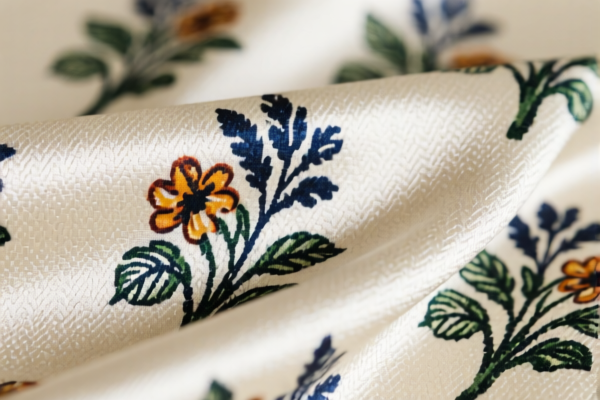
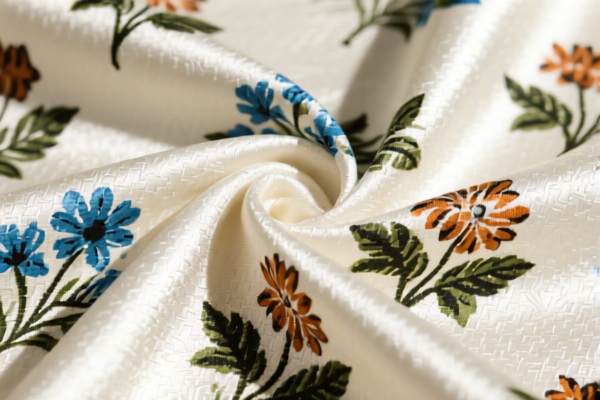
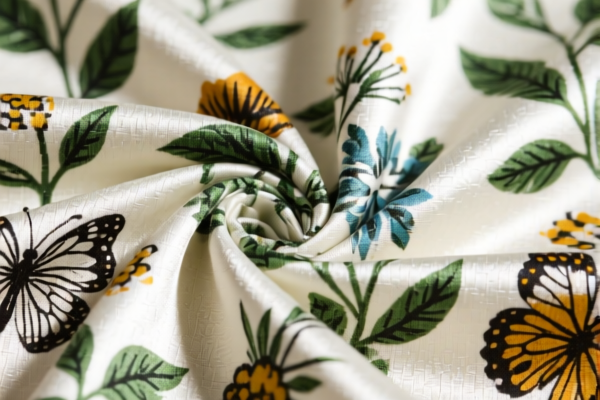
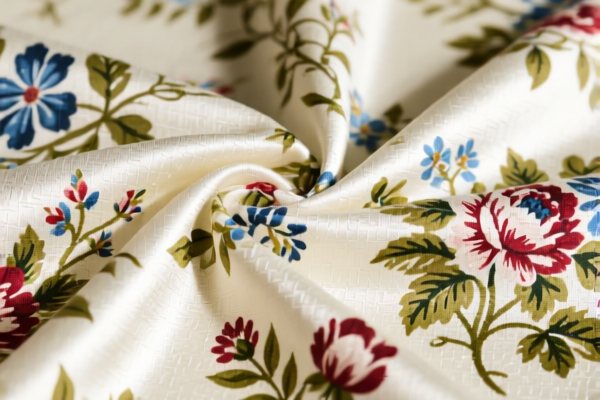
AI Analysis
🧵 Satin Woven Lining, Printed Discharge (Satin Lining with Discharge Printing)
🌐 HS Code Reference & Customs Clearance Guide | 2026 Latest Tariff Analysis | Professional Clearance Strategy for Silk & Synthetic Linings
📌 I. Product Definition & Classification: What is "Discharge Printed Satin Lining"?
Satin Woven Lining, Printed Discharge refers to fabric lining materials characterized by a satin weave structure (smooth surface, dull back) that undergoes discharge printing. Discharge printing is a specific dyeing process where a bleaching agent (discharge paste) is applied to printed patterns on dyed or white fabric, removing the color to create white or multi-colored designs.
In international trade, the classification depends strictly on the fiber content (Silk vs. Synthetic/Artificial). The prompt implies a generic "Satin Lining," which often falls into two main categories in the data provided: Silk/Silk-like or Synthetic/Artificial Long Filaments.
⚠️ Key Distinction Point:
- If the fabric is made from natural silk or silk waste → It falls under Chapter 50.
- If the fabric is made from man-made fibers (Polyester, Nylon, Rayon, etc.) → It falls under Chapter 54.
- Crucial Note: Discharge printing does not change the fundamental HS code chapter; it only affects the "dyeing" status (Charged/Dyed/Discharged). All items in the data are marked as "Dyed" (染色), which includes discharge printing in customs terminology.
📦 II. HS Code Classification Details (Based on Provided Data)
The provided data lists 5 specific HS Codes for "Satin Woven Lining, Dyed/Discharged." Here is the breakdown by material type:
1. Silk & Silk Waste Linings (Chapter 50)
| HS Code | Product Description | Fiber Content | Tax Rate |
|---|---|---|---|
5007.90.30.40 |
Silk Satin Lining | Natural Silk (Non-jacquard, Dyed/Discharged) | 35.8% |
5007.20.00.95 |
Silk Waste Lining | Silk Waste/Reeled Silk (Other, Dyed/Discharged) | 35.0% |
🔍 Analysis:
-5007.90.30.40: This is the most common code for high-quality natural silk satin linings.
-5007.20.00.95: Used for linings made from silk waste or lower-grade silk.
2. Artificial & Synthetic Fiber Linings (Chapter 54)
| HS Code | Product Description | Fiber Content | Tax Rate |
|---|---|---|---|
5408.32.90.50 |
Artificial Fiber Satin | Artificial Long Filaments (Dyed) | 50.0% |
5407.92.20.50 |
Synthetic Fiber Satin | Synthetic Long Filaments (Dyed) | 49.9% |
5408.34.90.50 |
Artificial Fiber Satin | Artificial Long Filaments (Dyed, Mechanically Woven) | 47.0% |
🔍 Analysis:
-5408.32.90.50: High tax bracket for Artificial fibers (e.g., Viscose/Rayon) in satin weave.
-5407.92.20.50: Standard for Synthetic fibers (e.g., Polyester, Nylon) in satin weave.
-5408.34.90.50: Specific to certain types of artificial fiber woven fabrics, potentially with different weight or construction specifications.
💰 III. 2026 Latest Tariff Rate Breakdown (Including Surcharges & Policy Add-ons)
✅ Applicable Market: USA (US)
✅ Origin: China (CN)
✅ Effective Time: Post-November 2025 (Current Enforcement)
✅ Product Category: Textiles/Apparel Linings
All the HS codes listed above are subject to a three-tier tariff structure:
1. Base Tariff (Most Favored Nation)
2. Section 301 Surcharge (Trade War Tariff)
3. Section 122 Surcharge (Billionaire Tariff / China-specific)
🎯 1. 5007.90.30.40 – Natural Silk Satin Lining
| Item | Content |
|---|---|
| Base Tariff | 0.8% |
| Section 301 Surcharge | +25.0% |
| Section 122 Surcharge | +10.0% |
| Total Effective Tax Rate | 35.8% |
| Calculation Basis | CIF Value × 35.8% |
| De Minimis Exemption? | ❌ No (Not eligible for $800 de minimis) |
| Legal Basis Path | HTSUS:5007.90.30.40 → Section 301: Footnote 9903.88.01 → Section 122: IEEPA Authority |
📌 Explanation:
- Silk linings have a very low base tariff (0.8%), but the add-on tariffs (35% total) make them expensive.
- Total Cost Impact: For every $100 of silk lining, you pay ~$35.8 in duties.
🎯 2. 5408.32.90.50 – Artificial Fiber (Rayon/Viscose) Satin Lining
| Item | Content |
|---|---|
| Base Tariff | 15.0% |
| Section 301 Surcharge | +25.0% |
| Section 122 Surcharge | +10.0% |
| Total Effective Tax Rate | 50.0% |
| Calculation Basis | CIF Value × 50.0% |
| De Minimis Exemption? | ❌ No |
| Legal Basis Path | HTSUS:5408.32.90.50 → Section 301: Footnote 9903.88.01 → Section 122 |
📌 Explanation:
- This is the highest tax bracket in the provided data.
- Artificial fibers (like Viscose) are taxed heavily at the base level (15%) plus the 35% surcharges.
- Total Cost Impact: For every $100 of artificial satin lining, you pay $50 in duties.
🎯 3. 5407.92.20.50 – Synthetic Fiber (Polyester/Nylon) Satin Lining
| Item | Content |
|---|---|
| Base Tariff | 14.9% |
| Section 301 Surcharge | +25.0% |
| Section 122 Surcharge | +10.0% |
| Total Effective Tax Rate | 49.9% |
| Calculation Basis | CIF Value × 49.9% |
| De Minimis Exemption? | ❌ No |
| Legal Basis Path | HTSUS:5407.92.20.50 → Section 301 → Section 122 |
📌 Explanation:
- Nearly identical to the artificial fiber rate.
- Synthetic satin is the most common lining for mass-market apparel. The high tax rate significantly impacts margin.
🎯 4. 5408.34.90.50 – Other Artificial Fiber Satin Lining
| Item | Content |
|---|---|
| Base Tariff | 12.0% |
| Section 301 Surcharge | +25.0% |
| Section 122 Surcharge | +10.0% |
| Total Effective Tax Rate | 47.0% |
| Calculation Basis | CIF Value × 47.0% |
| De Minimis Exemption? | ❌ No |
| Legal Basis Path | HTSUS:5408.34.90.50 → Section 301 → Section 122 |
📌 Explanation:
- Slightly lower base tariff (12%) compared to other artificial fibers, resulting in a 47.0% total rate.
🎯 5. 5007.20.00.95 – Silk Waste Lining
| Item | Content |
|---|---|
| Base Tariff | 0.0% |
| Section 301 Surcharge | +25.0% |
| Section 122 Surcharge | +10.0% |
| Total Effective Tax Rate | 35.0% |
| Calculation Basis | CIF Value × 35.0% |
| De Minimis Exemption? | ❌ No |
| Legal Basis Path | HTSUS:5007.20.00.95 → Section 301 → Section 122 |
📌 Explanation:
- Lowest total tax rate among all options (35.0%) because the base tariff is 0%.
- Suitable for lower-cost silk waste linings.
🛠️ IV. Customs Clearance Practical Advice (Pitfall Avoidance Guide)
✅ 1. Preparation Checklist (Non-Negotiable)
| Document | Required | Note |
|---|---|---|
| ✅ Product Composition Label | ✔️ | Must clearly state: "100% Polyester" or "100% Silk" etc. Vague terms like "Lining" are rejected. |
| ✅ Fabric Test Report | ✔️ | ASTM D123 or ISO standard test confirming fiber content. |
| ✅ Dyeing Method Description | ✔️ | Specify "Discharge Printed" or "Reactive Dyed" to prove it's a "Dyed Fabric" (not piece-dyed or printed separately if required). |
| ✅ Commercial Invoice | ✔️ | Must include: HS Code, Unit Price, Total Value, Country of Origin. |
| ✅ Packing List | ✔️ | Show gross/net weight, package count. |
| ✅ Certificate of Origin (CO) | ❌ | Not useful for duty reduction (China has no FTAs with US for these codes), but may be required for customs entry. |
✅ 2. Declaration Tips (Key Mnemonics)
🔥 "Fiber First, Weave Second, Dyeing Third, Code Last!"
| Scenario | Correct Declaration | Wrong Practice |
|---|---|---|
| Silk Satin | 5007.90.30.40 - "Silk Satin Lining, Dyed" |
Declaring as "Synthetic" → Customs Audit & Penalty |
| Polyester Satin | 5407.92.20.50 - "Polyester Satin Lining, Dyed" |
Declaring as "Silk" → Huge Duty Overpayment or Fraud |
| Discharge Printing | Describe as "Discharge Printed" in description | Omitting printing method → Classification Dispute |
| Lining vs. Outer Fabric | Explicitly state "Lining Fabric" | Stating just "Fabric" → Unclear Use, Potential Delay |
✅ 3. Special Cases & Mitigation
| Situation | Recommendation |
|---|---|
| High Duty Cost (50%) | Consider Tariff Engineering: Check if the fabric weight or thread count allows classification under a different, lower-rate subheading (consult a customs broker). |
| Mixed Shipments | Do NOT bundle silk and polyester in one line item. Split lines on the invoice. |
| De Minimis ($800) | Do NOT rely on it. Textiles are explicitly excluded from the de minimis exemption for Chinese goods. All shipments require full customs entry. |
| Section 122 (10%) | This is a China-specific tariff. If you re-export from a third country (e.g., Vietnam) but the fabric is grown/spun in China, you may still be liable. Check Rules of Origin carefully. |
🌍 V. Global Market Comparison (2026)
| Country/Region | Recommended HS Code (Example) | Approx. Duty Rate (China Origin) | Notes |
|---|---|---|---|
| 🇺🇸 USA | 5007.90.30.40 (Silk) / 5407.92.20.50 (Synthetic) |
35.0% – 50.0% | Includes 25% (Sec 301) + 10% (Sec 122). Highest barrier. |
| 🇨🇳 China | 5007.90.30.40 / 5407.92.20.50 |
~10% – 15% | Import tax applies, but no Section 301/122. |
| 🇪🇺 EU | 5007.90.30 / 5407.92.20 |
~12% – 15% | No Section 301/122. Standard MFN rates apply. |
| 🇬🇧 UK | 5007.90.30 / 5407.92.20 |
~12% – 15% | Post-Brexit, similar to EU rates. |
| 🇦🇺 Australia | 5007.90.30 / 5407.92.20 |
~5% – 10% | Low base tariff, no major surcharges. |
📌 Conclusion:
- The US market is the most expensive for Chinese-made satin linings due to the 35% additive surcharges.
- European, UK, and Australian markets are significantly more competitive for duty purposes.
- Strategy: If exporting to the US, consider supply chain diversification (fabric production outside China) or value-added processing to potentially qualify for different classification (though difficult for simple lining fabrics).
📌 VI. Common Errors & Pitfall Guide (Lessons Learned)
❌ Error 1: Declaring "Satin Lining" without specifying Fiber Content.
👉 Consequence: Customs will classify it under the highest possible duty rate (often synthetic) or hold the shipment for inspection.
❌ Error 2: Ignoring Section 122 (10%).
👉 Consequence: Unexpected cost increase of 10% on top of the 25% Sec 301 tariff. Many importers forget this China-specific surcharge.
❌ Error 3: Using "Discharge Printing" as a reason for lower duty.
👉 Consequence: Discharge printing is still considered "Dyed" fabric. It does not qualify for lower "Printed" or "Un-dyed" rates.
❌ Error 4: Bundling Silk and Polyester in one HS Code.
👉 Consequence: False Declaration. If the shipment contains 50% silk and 50% polyester by value, but only one HS code is declared, it can lead to fraud allegations or seizure.
✅ Correct Practice:
"100% Polyester Satin Lining, Discharge Printed, 50 inches wide, Weight: 80 GSM. HS: 5407.92.20.50. Origin: China."
🎯 VII. Conclusion: Professional Declaration Saves Money!
🎯 Remember the Mnemonic:
🔹 "Fiber Defines, Dyeing Confirms, Surcharges Multiply!"
🔹 "Silk is 35%, Synthetic is 50%, Don't Forget the 10% Section 122!"
🔹 "HS Code Accuracy = Duty Savings + Fast Clearance"
📌 Pro Tip:
- Pre-Ruling: If you are importing large volumes, consider applying for a Binding Tariff Information (BTI) or Pre-Ruling from CBP to confirm the HS Code and duty rate before shipment.
- Cost Calculation: Always budget for CIF Value × (Base + 25% + 10%). Do not estimate based on base tariff alone.
📣 Immediate Action:
📞 Consult your Customs Broker: Provide the fiber content test report and fabric specification sheet.
🚀 Optimize Your Supply Chain: Evaluate if switching to European or Asian non-China origin fabric can save you 35-50% in duties for the US market.
✨ Professional Customs Clearance Starts with Precise Classification!
💼 Your Margin is Protected by Accurate Data!
Customer Reviews
About HS Code Classification
The Harmonized System (HS) is an internationally standardized nomenclature developed by the World Customs Organization (WCO) to classify traded products. Over 200 countries use the HS system as the basis for customs tariffs, trade statistics, and import/export regulations.
Each HS code follows a hierarchical structure:
- Chapter (2 digits) — Broad category of goods (e.g., Chapter 84: Machinery and Mechanical Appliances)
- Heading (4 digits) — More specific grouping within the chapter
- Subheading (6 digits) — Internationally standardized breakdown, used by all WCO member countries
- National subdivisions (8-10 digits) — Country-specific extensions for further classification, such as US HTSUS 10-digit codes
Correct HS code classification is essential for smooth customs clearance, accurate duty payment, and compliance with trade regulations. Misclassification can lead to customs delays, overpayment of duties, or penalties.
When importing from CN to US, the applicable tariff rates may include:
- Most-Favored-Nation (MFN) rate — The standard duty rate applied to WTO members
- General rate — Applied to countries without trade agreements
- Trade remedy duties — Additional tariffs such as Section 301 (anti-dumping), Section 232 (national security), or countervailing duties
The information provided on this page is for reference purposes only. For official classification, please consult with your local customs authority or a licensed customs broker.