Semi Diesel Hybrid Luxury Sedan
CN → US| HS Code | Tariff Rate | Origin | Destination | Doc |
|---|---|---|---|---|
| 8707100020 | 37.5% | CN | US | Official Doc |
| 8703400030 | 37.5% | CN | US | Official Doc |
| 8703600030 | 112.5% | CN | US | Official Doc |
Product Images
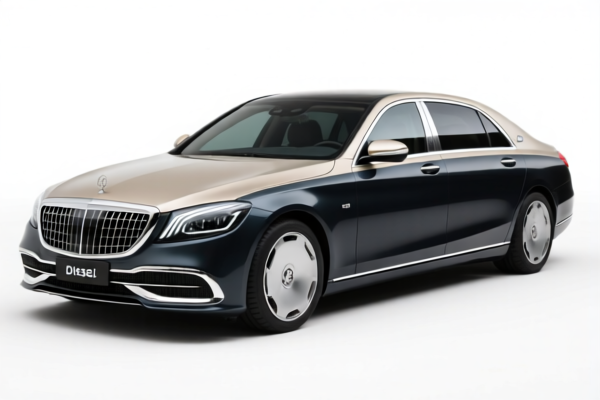
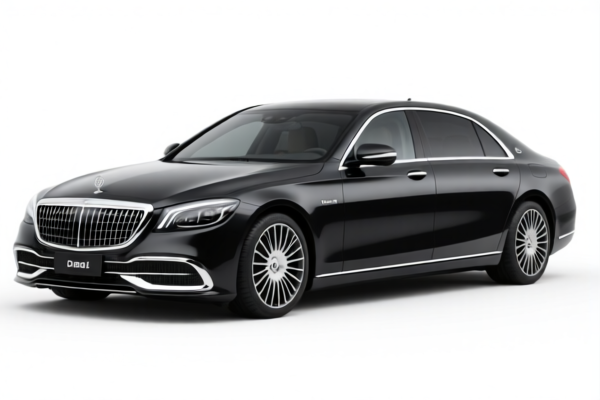
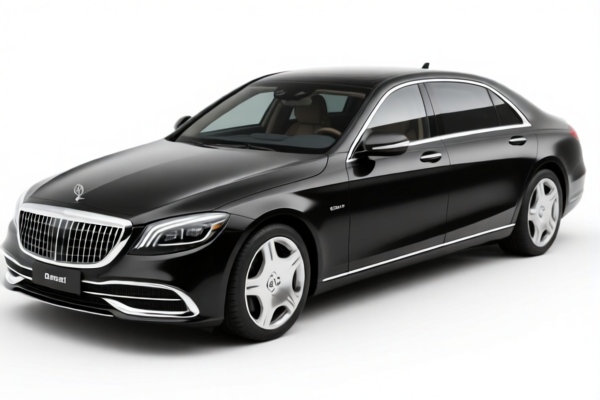
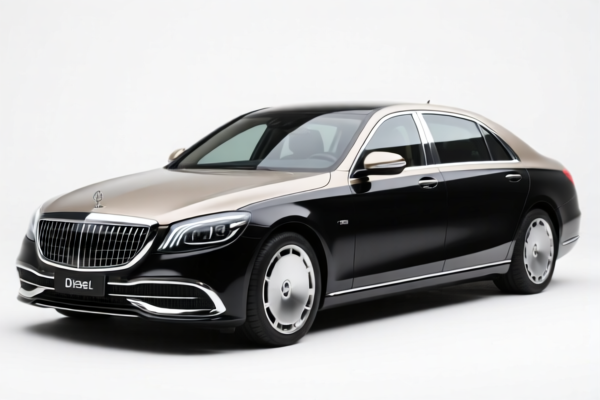
AI Analysis
🚗 Semi-Diesel Hybrid Luxury Sedan
🌐 HS Code Reference & Customs Clearance Guide | 2026 Latest Tariff Analysis | Professional Clearance Strategy
📌 I. Product Definition & Classification: Do You Truly Understand "Semi-Diesel Hybrid Luxury Sedan"?
A Semi-Diesel Hybrid Luxury Sedan is a high-end passenger vehicle that combines an internal combustion engine (specifically a diesel engine) with an electric propulsion system. In international trade, its classification hinges on two critical factors:
1. Hybridization Status: Is it a "Self-Charging Hybrid" (HEV) or a "Plug-in Hybrid" (PHEV)?
2. Body Type vs. Propulsion: Does the hybrid nature conflict with the body classification rules?
⚠️ Key Distinction Point:
- If it is a standard hybrid (not plug-in) used for passenger transport, it may fall under specific "Other Motor Vehicles" categories or conflict with body classifications.
- If it is a Plug-in Hybrid Electric Vehicle (PHEV), it is strictly classified based on its electric charging capability, triggering significantly higher tariffs due to trade policies.
📦 II. HS Code Classification Details (2026 Latest Tariff Authority Comparison)
| HS Code | Product Description | Application Scenario | Tax Rate (China Origin to US) |
|---|---|---|---|
8707.10.00.20 |
Hybrid Luxury Sedan, matched with passenger car use; hybridization does not conflict with body classification. | Standard HEV luxury sedan; classified primarily by body type. | 37.5% |
8703.40.00.30 |
Hybrid Luxury Sedan, consistent power type, used for载人 (carrying persons) and classified as a finished consumer good. | Conventional hybrid vehicles for passenger transport. | 37.5% |
8703.60.00.30 |
Hybrid Luxury Sedan, meets characteristics of Plug-in Hybrid (PHEV), used for transporting personnel. | PHEV Luxury Sedan (can be charged externally). | 112.5% |
🔍 Important Reminder:
- Non-Plug-in Hybrids (8707/8703.40) are taxed at 37.5%.
- Plug-in Hybrids (8703.60) are taxed at a punitive rate of 112.5%.
- Misclassifying a PHEV as a standard hybrid can lead to severe penalties and back-taxes.
💰 III. 2026 Latest Tariff Rate Detailed Explanation (Including Surtaxes & Policy Add-ons)
✅ Applicable Country: United States (US)
✅ Country of Origin: China (CN)
✅ Effective Date: Ongoing (including subsequent imports)
🎯 1. 8707.10.00.20 —— Hybrid Luxury Sedan (Non-Plug-in, Body Classification Focus)
| Item | Content |
|---|---|
| Base Tariff | 2.5% (ad valorem) |
| Section 301 Surcharge | 25.0% |
| Section 122 Tariff | 10.0% (Specific provision for certain hybrid/passenger vehicles under specific conditions) |
| Total Tariff | 37.5% |
| Tax Calculation | CIF Value × 37.5% |
| De Minimis Eligibility | ❌ No (Dealership/Commercial Import) |
| Legal Basis Path | USITC:8707.10.00.20 → Section 301: Footnote 9903.88.01 → Section 122: Specific Provision |
📌 Explanation:
- The 2.5% base rate applies to general passenger vehicles.
- The 25% Section 301 surcharge is applied to all Chinese-origin passenger vehicles.
- The 10% Section 122 tariff is a specific add-on for certain hybrid configurations that do not fall under the strict PHEV definition but are still subject to specific trade restrictions.
- Total 37.5% is significant but substantially lower than PHEV rates.
🎯 2. 8703.40.00.30 —— Hybrid Luxury Sedan (Passenger Use, Finished Consumer Good)
| Item | Content |
|---|---|
| Base Tariff | 2.5% |
| Section 301 Surcharge | 25.0% |
| Section 122 Tariff | 10.0% |
| Total Tariff | 37.5% |
| Tax Calculation | CIF Value × 37.5% |
| De Minimis Eligibility | ❌ No |
| Legal Basis Path | USITC:8703.40.00.30 → Section 301: Footnote 9903.88.01 → Section 122: Specific Provision |
📌 Note:
- This code applies to hybrids that are clearly defined as finished consumer goods for passenger use.
- The tariff structure is identical to8707.10.00.20.
- Key is ensuring the vehicle is not classified as "Plug-in" under8703.60.
🎯 3. 8703.60.00.30 —— Plug-in Hybrid Luxury Sedan (PHEV)
| Item | Content |
|---|---|
| Base Tariff | 2.5% |
| Section 301 Surcharge | 100.0% (Aggressive punitive rate for PHEVs) |
| Section 122 Tariff | 10.0% |
| Total Tariff | 112.5% |
| Tax Calculation | CIF Value × 112.5% |
| De Minimis Eligibility | ❌ No |
| Legal Basis Path | USITC:8703.60.00.30 → Section 301: Footnote 9903.88.01 (High Tier) → Section 122: Specific Provision |
📌 Critical Warning:
- The 100% Section 301 surcharge is specifically targeted at Plug-in Hybrid Electric Vehicles (PHEVs) from China.
- This rate is extremely prohibitive. Importers must verify if the vehicle can be charged via an external source. If yes, it is a PHEV.
- Total 112.5% makes this category virtually unprofitable for standard imports without exemption strategies.
🛠️ IV. Customs Clearance Practical Advice (Battle-Tested Pitfall Avoidance)
✅ 1. Documentation Checklist (All Mandatory)
| Document | Required | Explanation |
|---|---|---|
| ✅ Vehicle Specification Sheet | ✔️ | Must clearly state: Engine Type (Diesel Hybrid), Power Source, and Charging Method (Internal Only vs. External Plug). |
| ✅ Battery & Motor Diagram | ✔️ | To prove whether it is a "Self-Charging Hybrid" (HEV) or "Plug-in" (PHEV). |
| ✅ Product Photos (Including VIN Plate) | ✔️ | Clear view of model, brand, and charging port (if any). |
| ✅ Third-Party Test Report | ✔️ | EPA Certification, CAFE Compliance, or equivalent emissions/efficiency data. |
| ✅ Commercial Invoice | ✔️ | Must specify "Luxury Sedan, Diesel Hybrid, Non-Plug-in" or "Plug-in" as applicable. |
| ✅ Certificate of Origin (CO) | ✔️ | Essential for verifying China origin to apply surcharges. |
| ✅ Packing List | ✔️ | Detailing parts vs. whole vehicle status. |
✅ 2. Declaration Techniques (Key Mantra)
🔥 "HEV 37.5%, PHEV 112.5%! Define Charging, Avoid Disaster!"
| Scenario | Correct Declaration | Wrong Practice |
|---|---|---|
| Standard Hybrid (No External Plug) | 8707.10.00.20 or 8703.40.00.30 |
Misclassifying as PHEV → 112.5% |
| Plug-in Hybrid (Has External Port) | 8703.60.00.30 |
Misclassifying as Standard Hybrid → 37.5% (Penalty Risk) |
| Diesel Engine Specifics | Clearly state "Diesel Hybrid" in description | Vague "Hybrid Car" → Classification Dispute |
| Luxury Classification | Ensure VIN and Model match Luxury Tier | Under-declaring value → Fraud Risk |
✅ 3. Special Case Handling
| Situation | Handling Advice |
|---|---|
| Semi-Diesel Ambiguity | If the engine is diesel but hybridized, ensure it doesn't fall under "Diesel Passenger Vehicles" with higher base rates. The hybrid classification usually takes precedence if it meets HEV/PHEV definitions. |
| Dual-Mode Vehicles | If the car can operate purely on electricity for >50km, it is likely a PHEV → 8703.60. |
| OEM Customization | Provide client contracts and design specs to prove intended use (Passenger vs. Commercial). |
| Value-Added Components | If imported with aftermarket charging kits, declare as PHEV if the kit enables external charging. |
🌍 V. Global Main Market Clearance Comparison (2026 Latest)
| Country/Region | Recommended HS Code | Tariff (China Origin) | Certification Requirements | Notes |
|---|---|---|---|---|
| 🇺🇸 USA | 8703.60.00.30 (PHEV) |
112.5% | EPA + DOT + CARB (if CA) | Highest Tariff Market |
| 🇺🇸 USA | 8707.10.00.20 (HEV) |
37.5% | EPA + DOT | More Favorable for Non-PHEV |
| 🇨🇳 China | 8703.60.00.30 |
15% (Import) + VAT 13% | CCC + NEV Credit | Domestic production preferred |
| 🇪🇺 EU | 8703.60.00.30 |
10% (Base) | CE + WVTA | No Section 301-style surcharge |
| 🇦🇺 Australia | 8703.60.00.30 |
5% (Base) + GST 10% | RCM + ADR | Competitive but high GST |
📌 Conclusion:
- The US is the most punitive market for Chinese PHEVs.
- Non-Plug-in Hybrids (HEVs) face a moderate 37.5% rate, which is manageable but still costly.
- Strategic Recommendation: If exporting to the US, avoid PHEV classification unless necessary. Ensure technical specifications strictly prevent external charging if claiming HEV status.
📌 VI. Common Errors & Pitfall Avoidance Guide (Lessons Learned)
❌ Error 1: Mislabeling a PHEV as an HEV to save 75% in taxes
👉 Consequence: Customs audit reveals charging port → Back taxes + 25% penalty + seizure risk!
❌ Error 2: Confusing "Diesel Engine" with "Diesel Passenger Vehicle" base rates
👉 Consequence: Incorrect base rate application → Reclassification & delays
❌ Error 3: Ignoring Section 122 Tariff
👉 Consequence: Underpaying by 10% → Interest & fines
❌ Error 4: Using vague descriptions like "Hybrid Car"
👉 Consequence: CBP (Customs and Border Protection) has discretion to assign 8703.60 → 112.5% tax bill
✅ Correct Approach:
"Luxury Sedan, Diesel-Electric Hybrid, Non-Plug-in, Model XYZ, EPA Certified, For Passenger Use Only"
🎯 VII. Conclusion: Precision Classification Saves Millions!
🎯 Remember the Mantra:
🔹 "HEV 37.5%, PHEV 112.5%! Check the Plug, Save the Profit!"
🔹 "HS Code is Destiny, Tax Rate Differs 75%, One Mistake, Bankruptcy!"
📌 Pro Tip:
If your hybrid sedan originates from Vietnam, Mexico, or Thailand, you may qualify for USMCA or other FTA exemptions, reducing the 301 surcharge.
Recommend Advance Ruling (Pre-Ruling) from CBP to confirm HS Code and tax liability before shipment.
📣 Immediate Action:
📞 Contact a Licensed Customs Broker + Provide Technical Specs + Apply for HS Code Advance Ruling
🚀 Ensure your Semi-Diesel Hybrid Luxury Sedan clears US customs efficiently, legally, and profitably!
✨ Professional Clearance Starts with Accurate Classification!
💼 Every cent of your cost deserves precise calculation!
Customer Reviews
About HS Code Classification
The Harmonized System (HS) is an internationally standardized nomenclature developed by the World Customs Organization (WCO) to classify traded products. Over 200 countries use the HS system as the basis for customs tariffs, trade statistics, and import/export regulations.
Each HS code follows a hierarchical structure:
- Chapter (2 digits) — Broad category of goods (e.g., Chapter 84: Machinery and Mechanical Appliances)
- Heading (4 digits) — More specific grouping within the chapter
- Subheading (6 digits) — Internationally standardized breakdown, used by all WCO member countries
- National subdivisions (8-10 digits) — Country-specific extensions for further classification, such as US HTSUS 10-digit codes
Correct HS code classification is essential for smooth customs clearance, accurate duty payment, and compliance with trade regulations. Misclassification can lead to customs delays, overpayment of duties, or penalties.
When importing from CN to US, the applicable tariff rates may include:
- Most-Favored-Nation (MFN) rate — The standard duty rate applied to WTO members
- General rate — Applied to countries without trade agreements
- Trade remedy duties — Additional tariffs such as Section 301 (anti-dumping), Section 232 (national security), or countervailing duties
The information provided on this page is for reference purposes only. For official classification, please consult with your local customs authority or a licensed customs broker.