Semibleached coniferous wood pulp (pulp grade)
CN → US| HS Code | Tariff Rate | Origin | Destination | Doc |
|---|---|---|---|---|
| 4704210000 | 35.0% | CN | US | Official Doc |
| 4705000000 | 35.0% | CN | US | Official Doc |
| 4703210020 | 35.0% | CN | US | Official Doc |
| 4704110000 | 35.0% | CN | US | Official Doc |
| 4703110000 | 35.0% | CN | US | Official Doc |
Product Images
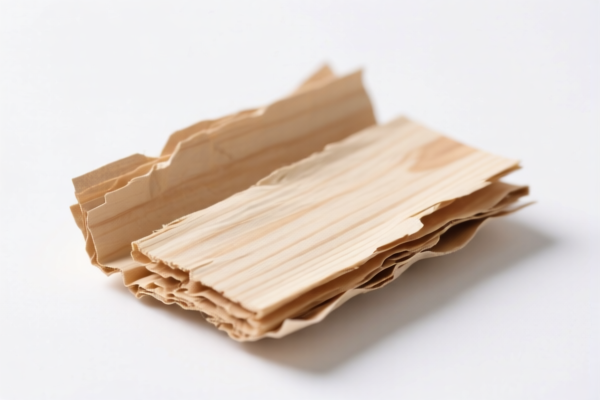

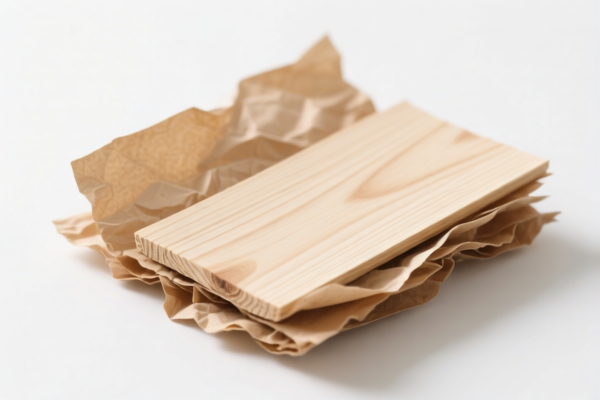
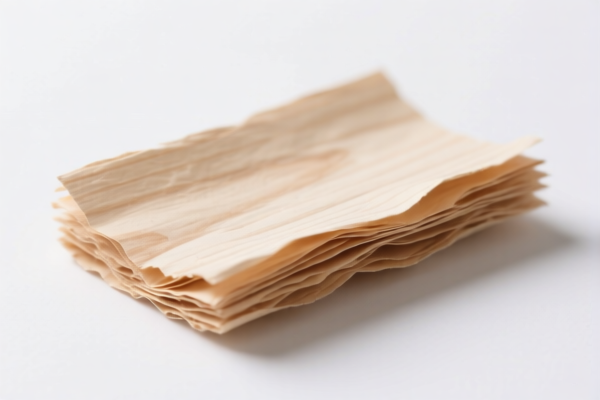
AI Analysis
🌲 Semibleached Coniferous Wood Pulp (Pulp Grade)
🌐 HS Code Reference & Customs Clearance Guide | 2026 Latest Tariff Analysis | Professional Compliance Strategy
📌 I. Product Definition & Classification: What is "Semibleached Coniferous Wood Pulp"?
Semibleached Coniferous Wood Pulp is a key raw material in the paper and packaging industry. It is derived from coniferous trees (softwoods like pine, spruce, fir), which provide long fibers essential for paper strength and durability. The term "Semibleached" indicates a chemical pulping process where the lignin is partially removed, resulting in a pulp with higher yield and lower brightness compared to fully bleached pulp, but better quality than unbleached kraft pulp.
In international trade, classification hinges on two main factors: 1. Chemical Process: Sulfite vs. Sulfate (Kraft). The data specifies Sulfite chemical pulp. 2. Fiber Type: Coniferous (Softwood) vs. Deciduous (Hardwood). The data specifies Coniferous.
⚠️ Key Distinction:
- If the product is pure Sulfite pulp from Coniferous trees → Refer to codes under 4703.21 or 4704.21.
- If the product is a mix of mechanical and chemical processes → Refer to code 4705.00.
- Note: The provided data strictly focuses on Sulfite and Sulfite-blended profiles. Kraft (Sulfate) pulp is not included in this specific dataset.
📦 II. HS Code Classification Details (Based on Provided Data)
| HS Code | Product Description | Key Characteristics | Applicable Scenario |
|---|---|---|---|
4704.21.00.00 |
Semibleached Coniferous Sulfite Wood Pulp | Material: Coniferous; Process: Semibleached; Type: Sulfite | Standard semibleached softwood sulfite pulp |
4705.00.00.00 |
Semibleached Coniferous Wood Pulp (Wood Pulp) | Material: Wood Pulp; Process: Semibleached; Features: Combination of Mechanical & Chemical Pulping | Pulp produced via hybrid mechanical-chemical methods |
4703.21.00.20 |
Semibleached Coniferous Sulfite Wood Pulp | Material: Coniferous; Form & Bleaching Level: Exact Match for Sulfite | High-precision classification for pure sulfite coniferous pulp |
🔍 Critical Note:
- All three codes in the data share the same tariff structure (35% total tax).
- The difference lies in the production method detail:
- 4704/4703.21: Pure or primarily Chemical Sulfite process.
- 4705.00: Involves a combination of mechanical and chemical pulping.
- Do not confuse with Kraft Pulp: Kraft pulp (Sulfate) usually falls under 4703.11/4703.21 depending on bleach level, but the data provided explicitly mentions Sulfite (亚硫酸盐). Ensure your product specification matches "Sulfite" for these codes.
💰 III. 2026 Latest Tariff Rate Details (Including Surcharges & Policy Add-ons)
✅ Applicable Country: United States (US)
✅ Country of Origin: China (CN)
✅ Effective Date: From November 10, 2025 (and subsequent imports)
🎯 1. General Tariff Breakdown for All Listed HS Codes
| Item | Content |
|---|---|
| Base Tariff | 0.0% (Ad Valorem) |
| Section 301 Surcharge | +25.0% (From USITC Footnote 9903.88.01 or similar 301 list) |
| Section 122 Tariff | +10.0% (Specific trade policy surcharge) |
| Total Tax Rate | 35.0% |
| Tax Calculation | CIF Value × 35% |
| De Minimis Exemption? | ❌ No (Denied for this category) |
| Legal Basis Path | USITC:301-Surcharge → Section-122-Policy → HS-Code-4704/4705/4703 |
📌 Explanation:
- "Base Tariff 0%": Wood pulp from many sources enters with a low base duty.
- "Section 301 Surcharge 25%": This is the primary trade war tariff on Chinese wood products.
- "Section 122 Tariff 10%": An additional specific tariff applied under recent trade provisions.
- Total 35%: This is a high-cost entry. For every $10,000 CIF value, the duty is $3,500.
🛠️ IV. Customs Clearance Practical Advice (Real-World Pitfall Avoidance)
✅ 1. Required Documentation Checklist (Must-Haves)
| Document | Must Provide? | Explanation |
|---|---|---|
| ✅ Product Specification Sheet | ✔️ | Must explicitly state: "Coniferous," "Sulfite," "Semibleached." |
| ✅ Process Flowchart | ✔️ | Crucial to prove if it's pure chemical (4703/4704) or hybrid (4705). |
| ✅ Certificate of Origin (CO) | ✔️ | Essential for determining origin-based tariffs. |
| ✅ Commercial Invoice | ✔️ | Must clearly describe the pulp type and origin. |
| ✅ Packing List | ✔️ | Include weight, volume, and packaging details. |
| ✅ Lab Report (Optional but Recommended) | ✔️ | To verify lignin content and fiber type if customs disputes classification. |
✅ 2. Declaration Tips (Key Mantra)
🔥 "Specify Process, Define Fiber, Avoid Ambiguity!"
| Scenario | Correct Declaration | Wrong Action |
|---|---|---|
| Pure Sulfite Pulp from Pine/Spruce | 4704.21.00.00 or 4703.21.00.20 |
Vague description like "Wood Pulp" → Risk of audit |
| Hybrid Mechanical-Chemical Pulp | 4705.00.00.00 |
Claiming it's 100% chemical → Misclassification penalty |
| Kraft Pulp (Sulfate) | Not in this data set | Trying to force Kraft pulp into Sulfite codes → Rejection |
| Mixed Origins | Declare split clearly | Mixed shipment without proper breakdown → Delay |
✅ 3. Special Circumstances Handling
| Situation | Handling Advice |
|---|---|
| OEM/Custom Specification | Provide detailed chemical composition (e.g., kappa number, viscosity) to justify "Semibleached" status. |
| Dispute over "Sulfite" vs. "Kraft" | If the product is actually Kraft (Sulfate), this data is not applicable. Seek separate classification (likely 4703.11/4703.12). |
| Mixed Batches | If a shipment contains both Sulfite and other types, separate HS codes must be declared. |
| Pre-Ruling | Strongly recommend applying for an Advance Ruling from US CBP if the product is complex or hybrid. |
🌍 V. Global Market Comparison (2026 Update)
| Country/Region | Recommended HS Code | Tariff (China Origin) | Certification/Notes |
|---|---|---|---|
| 🇺🇸 United States | 4704.21.00.00 / 4705.00.00.00 / 4703.21.00.20 |
35% (0% Base + 25% 301 + 10% 122) | High barrier due to trade policies. |
| 🇨🇳 China (Import) | 4704.21.00.00 |
Varies (Check MOFCOM) | No Section 301/122. Generally lower. |
| 🇪🇺 European Union | 4704.21.00 |
0-4% (Usually 0) | Check for deforestation regulations (EUDR). |
| 🇯🇵 Japan | 4704.21.00 |
0-2.8% | FTA benefits may apply if origin certified. |
| 🇰🇷 South Korea | 4704.21.00 |
0% (Under KORUS FTA) | Zero tariff if Korean FTA conditions met. |
📌 Conclusion:
- The US market is the most expensive for Chinese-origin wood pulp due to layered surcharges.
- EUDR (EU Deforestation Regulation) compliance is critical for European shipments, though tariffs remain low.
- Consider origin diversification (e.g., importing from Southeast Asia or South America) to mitigate US tariffs.
📌 VI. Common Errors & Pitfall Guide (Lessons Learned)
❌ Error 1: Confusing Sulfite with Kraft (Sulfate) Pulp
👉 Consequence: Wrong HS Code → 35% vs. different rate → Back taxes + fines.
✅ Fix: Verify the chemical process in the production contract. Sulfite uses acid salts; Kraft uses soda/anthraquinone.
❌ Error 2: Ignoring the "Mechanical + Chemical" Hybrid Nature
👉 Consequence: Declaring hybrid pulp as pure chemical (4703/4704) → Misclassification.
✅ Fix: Use 4705.00.00.00 if the process involves refining mechanical wood pulp blended with chemical pulp.
❌ Error 3: Vague Description "Wood Pulp"
👉 Consequence: Customs may assign the highest default duty or hold cargo for inspection.
✅ Fix: Use precise descriptions: "Semibleached Coniferous Sulfite Wood Pulp, 4704.21.00.00, Origin: China."
❌ Error 4: Assuming De Minimis Exemption Applies
👉 Consequence: Small shipments still face 35% tax.
✅ Fix: Budget for 35% duty regardless of shipment size.
🎯 VII. Conclusion: Precise Classification, Cost Control, Compliance
🎯 Remember the Mantra:
🔹 "Sulfite vs. Kraft, Coniferous vs. Hardwood, Process Defines Code!"
🔹 "US Tariff 35%: 0 Base + 25 301 + 10 122. Plan Ahead!"
🔹 "Hybrid Process? Use 4705. Pure Sulfite? Use 4704/4703."
📌 Pro Tip:
- If your pulp is Kraft (not Sulfite), this data does not apply. You must consult separate HS codes (e.g., 4703.11/4703.12).
- For US Imports, consider Bonded Warehouses or Foreign Trade Zones (FTZ) to defer duty payment if not immediately released to commerce.
- Pre-Ruling: If in doubt, request a CBP Binding Ruling before shipment to lock in the HS Code and avoid surprises.
📣 Immediate Action:
📞 Engage a licensed customs broker + Provide Process Specifications + Verify Sulfite Composition
🚀 Clear Customs Smoothly, Manage Costs, Ensure Compliance!
✨ Professional Classification Starts with Precision!
💼 Every Percent of Tax Matters in Global Trade!
Customer Reviews
About HS Code Classification
The Harmonized System (HS) is an internationally standardized nomenclature developed by the World Customs Organization (WCO) to classify traded products. Over 200 countries use the HS system as the basis for customs tariffs, trade statistics, and import/export regulations.
Each HS code follows a hierarchical structure:
- Chapter (2 digits) — Broad category of goods (e.g., Chapter 84: Machinery and Mechanical Appliances)
- Heading (4 digits) — More specific grouping within the chapter
- Subheading (6 digits) — Internationally standardized breakdown, used by all WCO member countries
- National subdivisions (8-10 digits) — Country-specific extensions for further classification, such as US HTSUS 10-digit codes
Correct HS code classification is essential for smooth customs clearance, accurate duty payment, and compliance with trade regulations. Misclassification can lead to customs delays, overpayment of duties, or penalties.
When importing from CN to US, the applicable tariff rates may include:
- Most-Favored-Nation (MFN) rate — The standard duty rate applied to WTO members
- General rate — Applied to countries without trade agreements
- Trade remedy duties — Additional tariffs such as Section 301 (anti-dumping), Section 232 (national security), or countervailing duties
The information provided on this page is for reference purposes only. For official classification, please consult with your local customs authority or a licensed customs broker.