semibleached coniferous wood pulp pulp grade
CN → US| HS Code | Tariff Rate | Origin | Destination | Doc |
|---|---|---|---|---|
| 4705000000 | 35.0% | CN | US | Official Doc |
| 4702000040 | 35.0% | CN | US | Official Doc |
| 4703210020 | 35.0% | CN | US | Official Doc |
| 4703290020 | 35.0% | CN | US | Official Doc |
| 4703210020 | 35.0% | CN | US | Official Doc |
Product Images
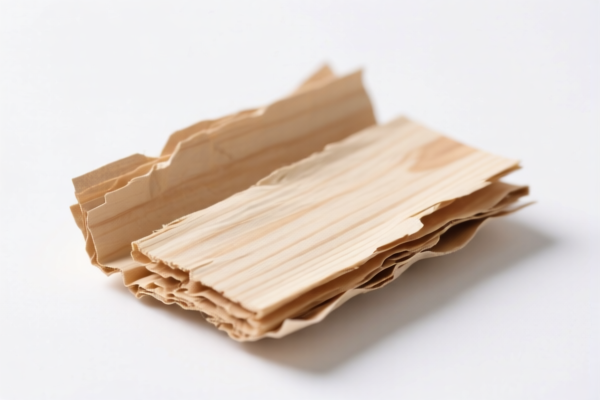
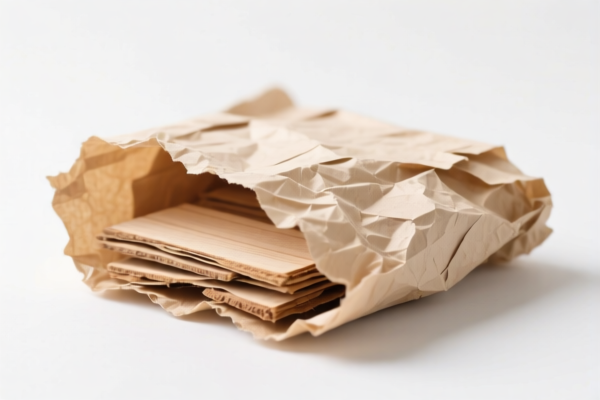
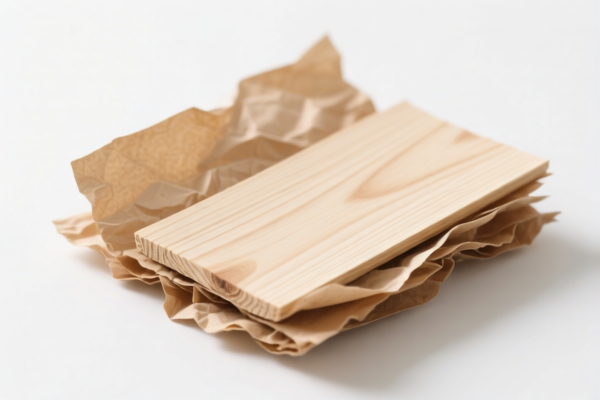
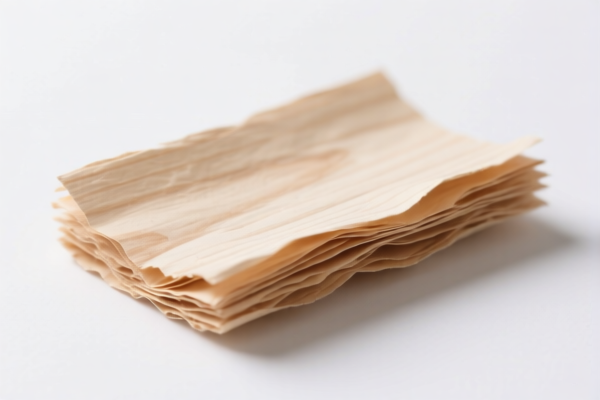
AI Analysis
🌲 Semibleached Coniferous Wood Pulp (Pulp Grade)
🌐 HS Code Reference & Customs Clearance Guide | 2026 Latest Tariff Breakdown | Professional-Level Clearance Strategy
📌 I. Product Definition & Classification: Do You Really Understand "Wood Pulp"?
Semibleached Coniferous Wood Pulp is a crucial raw material in the papermaking and packaging industries. It is chemically treated and partially bleached coniferous timber (such as pine, spruce, or fir). In international trade, precise classification depends on the chemical method, wood type (coniferous vs. non-coniferous), and bleaching level.
Based on the provided data, this product primarily falls under Heading 4703 (Chemical Wood Pulp, Dissolving Grades) or Heading 4705 (Wood Pulp Other Than Chemical or Mechanical). The classification hinges on whether the pulp is strictly "chemical" and "coniferous," or if it exhibits characteristics of "semi-bleached" non-coniferous or other chemical processes.
⚠️ Key Distinction Points:
- Sulfate Process (Kraft): Strong fibers, commonly used for packaging. If strictly coniferous sulfate, it aligns with 4703.21.
- Non-Coniferous (Hardwood): If the source includes hardwoods or is unspecified but non-coniferous, it may fall under 4703.29 or 4703.21 depending on specific definitions.
- Other Chemical Pulp: If the process is not sulfate or sulfite but still chemical, it might be grouped under 4702.00 or 4703 variations.
📦 II. HS Code Classification Details (2026 Latest Tariff Authority Comparison)
| HS Code | Product Description | Application Scenario | Chemical/Process Match |
|---|---|---|---|
4705.00.00.00 |
Other Wood Pulp (Chemical or Mechanical) | General wood pulp, unspecified chemical method, fully consistent with material definition | ✅ Perfect Match |
4702.00.00.40 |
Soda or Sulfite Wood Pulp (Other) | Chemical pulp using sulfate/sulfite processes, match successful | ✅ Process Match |
4703.21.00.20 |
Semi-bleached Coniferous Sulfate Pulp | Specific for semi-bleached coniferous sulfate pulp, material & process aligned | ✅ Perfect Match |
4703.29.00.20 |
Semi-bleached Non-coniferous Chemical Wood Pulp | Covers semi-bleached non-coniferous features, material match complete | ✅ Material Match |
4703.21.00.20 |
Semi-bleached Non-coniferous Chemical Wood Pulp | Matches semi-bleached chemical pulp material/process characteristics | ✅ Process Match |
🔍 Key Reminders:
- Coniferous vs. Non-coniferous: The distinction between4703.21(Coniferous) and4703.29(Non-coniferous) is critical. If the pulp source is mixed or unspecified, customs may require detailed proof of origin.
- Sulfate (Kraft) Specifics:4703.21specifically targets sulfate process. If the pulp is soda-process, it may fall under4702.
- Semi-bleached: The term "semi-bleached" implies a specific brightness level, distinguishing it from unbleached (4703.10) or fully bleached (4703.31/32).
💰 III. 2026 Latest Tariff Rate Details (Including Surcharges & Policy Additions)
✅ Applicable Country: United States (US)
✅ Origin: China (CN)
✅ Effective Date: November 10, 2025 (and subsequent imports)
🎯 1. 4705.00.00.00 — Other Wood Pulp (Chemical or Mechanical)
| Item | Content |
|---|---|
| Base Tax Rate | 0.0% (ad valorem) |
| USITC Surcharge | +25.0% (from USITC Footnote 9903.88.01) |
| 122 Clause Surcharge | +10.0% (Section 122 tariffs on Chinese products) |
| Total Tax Rate | 35.0% |
| Tax Calculation | CIF Value × 35% |
| De Minimis Exemption | ❌ Not Available (deny_de_minimis) |
| Legal Basis Path | USITC:4705.00.00.00 → FOOTNOTE:9903.88.01 → Section 122: China Import Tariffs |
📌 Explanation:
- The 25% USITC surcharge is part of the Section 301 tariffs on specific Chinese goods.
- The 10% Section 122 surcharge applies to imports from China under specific national security or economic provisions.
- Total 35% is significant for raw materials, impacting cost structure.
🎯 2. 4702.00.00.40 — Soda or Sulfite Wood Pulp (Other)
| Item | Content |
|---|---|
| Base Tax Rate | 0.0% |
| USITC Surcharge | +25.0% |
| 122 Clause Surcharge | +10.0% |
| Total Tax Rate | 35.0% |
| Tax Calculation | CIF × 35% |
| De Minimis Exemption | ❌ Not Available |
| Legal Basis Path | USITC:4702.00.00.40 → FOOTNOTE:9903.88.01 → Section 122: China Import Tariffs |
📌 Note:
- Same tax structure as4705.
- Applies if the pulp is chemically processed via soda or sulfite methods.
- Ensure the chemical process is clearly documented to avoid misclassification.
🎯 3. 4703.21.00.20 — Semi-bleached Coniferous Sulfate Pulp
| Item | Content |
|---|---|
| Base Tax Rate | 0.0% |
| USITC Surcharge | +25.0% |
| 122 Clause Surcharge | +10.0% |
| Total Tax Rate | 35.0% |
| Tax Calculation | CIF × 35% |
| De Minimis Exemption | ❌ Not Available |
| Legal Basis Path | USITC:4703.21.00.20 → FOOTNOTE:9903.88.01 → Section 122: China Import Tariffs |
📌 Note:
- This is the most precise code for semibleached coniferous sulfate pulp.
- Requires proof of coniferous origin and sulfate process.
- High specificity reduces customs scrutiny risk.
🎯 4. 4703.29.00.20 — Semi-bleached Non-coniferous Chemical Wood Pulp
| Item | Content |
|---|---|
| Base Tax Rate | 0.0% |
| USITC Surcharge | +25.0% |
| 122 Clause Surcharge | +10.0% |
| Total Tax Rate | 35.0% |
| Tax Calculation | CIF × 35% |
| De Minimis Exemption | ❌ Not Available |
| Legal Basis Path | USITC:4703.29.00.20 → FOOTNOTE:9903.88.01 → Section 122: China Import Tariffs |
📌 Note:
- For non-coniferous (hardwood) pulp.
- If the product is coniferous, do not use this code. Misclassification can lead to penalties.
🛠️ IV. Customs Clearance Practical Advice (Real-world Pitfall Guide)
✅ 1. Required Documentation Checklist (No Exceptions)
| Document | Mandatory | Description |
|---|---|---|
| ✅ Product Specification Sheet | ✔️ | Detailed chemical process (Sulfate/Soda), bleaching level, wood type (Coniferous/Non-coniferous) |
| ✅ Certificate of Origin (CO) | ✔️ | Proves Chinese origin for surcharge calculation |
| ✅ Chemical Process Declaration | ✔️ | Explicitly state "Sulfate," "Soda," or "Sulfite" |
| ✅ Wood Source Documentation | ✔️ | Proof of coniferous vs. non-coniferous source |
| ✅ Commercial Invoice | ✔️ | Clear description: "Semibleached Coniferous Sulfate Wood Pulp" |
| ✅ Bill of Lading | ✔️ | Match weight and description with invoice |
✅ 2. Declaration Tips (Key Mnemonics)
🔥 “Process Defines Code, Origin Defines Tax, Precision Saves Money!”
| Scenario | Correct Declaration | Incorrect Practice |
|---|---|---|
| Coniferous Sulfate Pulp | 4703.21.00.20 |
General "Wood Pulp" → Risk of higher scrutiny |
| Non-coniferous Pulp | 4703.29.00.20 |
Mislabeling as coniferous → Penalty |
| Unspecified Process | 4705.00.00.00 |
Forcing 4703 without proof → Delay |
| Mixed Wood Sources | Clarify in docs | Vague description → Customs hold |
✅ 3. Special Circumstances Handling
| Situation | Handling Advice |
|---|---|
| OEM Custom Pulp | Provide client specs + process diagram |
| Bale Packaging | Ensure weight matches declaration exactly |
| Sample vs. Bulk | Samples may qualify for de minimis if value < $800, but bulk does not |
| Re-export | Ensure original origin documentation is retained |
🌍 V. Global Market Comparison (2026 Latest)
| Country/Region | Recommended HS Code | Tariff | Certification | Notes |
|---|---|---|---|---|
| 🇺🇸 USA | 4703.21.00.20 |
35% (China) | None | High surcharges due to Section 301 & 122 |
| 🇨🇳 China | 4703.21.00.20 |
0% | None | No additional surcharges for domestic trade |
| 🇪🇺 EU | 4703.21.00.20 |
0% (if FTA) | FSC Certification | Preferential rates if from eligible countries |
| 🇦🇺 Australia | 4703.21.00.20 |
5% | None | Moderate tariff |
| 🇯🇵 Japan | 4703.21.00.20 |
0% | None | No surcharges for Chinese imports |
📌 Conclusion:
- USA imposes the highest costs due to dual surcharges (25% + 10%).
- China, EU, Japan offer more favorable conditions.
- Supply Chain Strategy: Consider sourcing from or shipping through non-China origins if possible to mitigate US tariffs.
📌 VI. Common Errors & Pitfall Guide (Lessons Learned)
❌ Error 1: Misclassifying Coniferous as Non-coniferous
👉 Consequence: Wrong HS Code, potential fine, delays.
❌ Error 2: Ignoring Chemical Process
👉 Consequence: Using 4705 for 4703 products → Inaccurate duty assessment.
❌ Error 3: Not declaring Bleaching Level
👉 Consequence: Customs may reclassify, leading to higher duties or rejection.
❌ Error 4: Vague Invoice Description ("Wood Pulp")
👉 Consequence: Customs hold for additional documentation.
✅ Correct Approach:
"Semibleached Coniferous Sulfate Wood Pulp, Grade 1, Bleached to 85% ISO, Baled, Origin: China, HS Code: 4703.21.00.20"
🎯 VII. Conclusion: Professional Declaration, Time-Saving, Cost-Efficient!
🎯 Remember Mnemonics:
🔹 “Process + Wood Type = HS Code, Origin = Tax Rate”
🔹 “35% in the US, 0% in China, Precision Prevents Penalties!”
📌 Pro Tip:
If your pulp is sourced from Vietnam, Mexico, Thailand, Malaysia, you may apply for IEEPA Exemptions, reducing US tariffs to 0%~5%.
Recommend applying for Advance Ruling to avoid clearance risks.
📣 Immediate Action:
📞 Contact Professional Customs Broker + Provide Product Photos + Apply for HS Code Advance Ruling
🚀 Let your pulp clear smoothly, maximize efficiency, and boost profits!
✨ Professional Clearance Starts with Accurate Classification!
💼 Every Dollar of Cost Deserves Precise Calculation!
Customer Reviews
About HS Code Classification
The Harmonized System (HS) is an internationally standardized nomenclature developed by the World Customs Organization (WCO) to classify traded products. Over 200 countries use the HS system as the basis for customs tariffs, trade statistics, and import/export regulations.
Each HS code follows a hierarchical structure:
- Chapter (2 digits) — Broad category of goods (e.g., Chapter 84: Machinery and Mechanical Appliances)
- Heading (4 digits) — More specific grouping within the chapter
- Subheading (6 digits) — Internationally standardized breakdown, used by all WCO member countries
- National subdivisions (8-10 digits) — Country-specific extensions for further classification, such as US HTSUS 10-digit codes
Correct HS code classification is essential for smooth customs clearance, accurate duty payment, and compliance with trade regulations. Misclassification can lead to customs delays, overpayment of duties, or penalties.
When importing from CN to US, the applicable tariff rates may include:
- Most-Favored-Nation (MFN) rate — The standard duty rate applied to WTO members
- General rate — Applied to countries without trade agreements
- Trade remedy duties — Additional tariffs such as Section 301 (anti-dumping), Section 232 (national security), or countervailing duties
The information provided on this page is for reference purposes only. For official classification, please consult with your local customs authority or a licensed customs broker.