Silicon Wafer (Doped, for Power Devices)
CN → US| HS Code | Tariff Rate | Origin | Destination | Doc |
|---|---|---|---|---|
| 8541590040 | 10.0% | CN | US | Official Doc |
| 3818000020 | 60.0% | CN | US | Official Doc |
| 8541100040 | 10.0% | CN | US | Official Doc |
| 3824993990 | 35.0% | CN | US | Official Doc |
| 3824991900 | 41.5% | CN | US | Official Doc |
Product Images
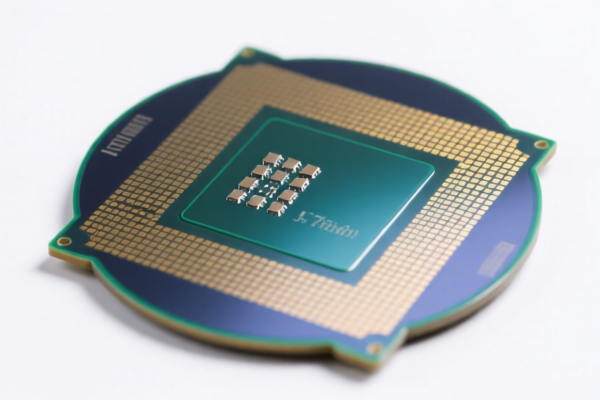
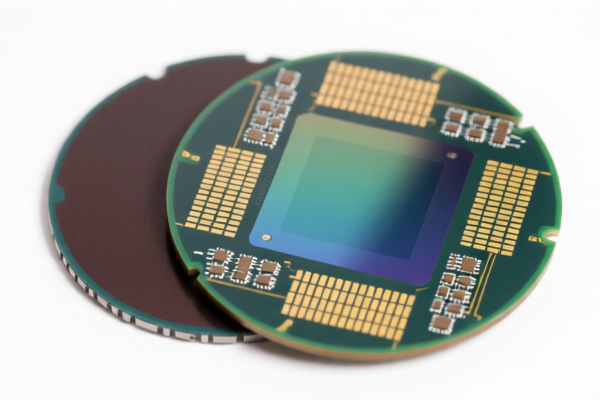
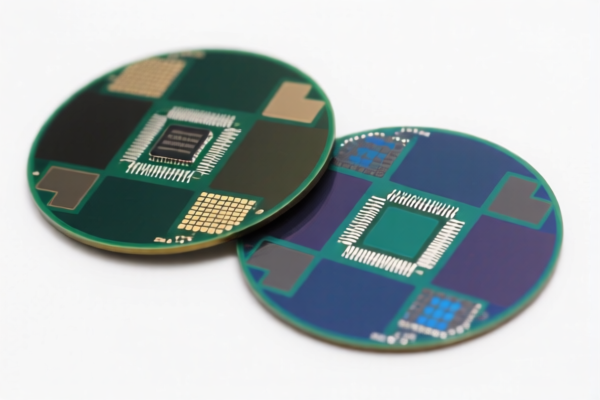
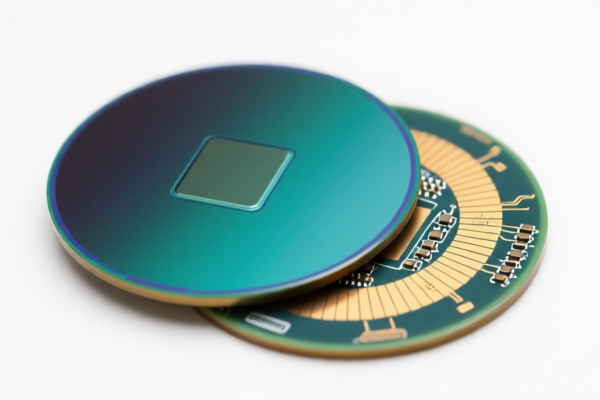
AI Analysis
🧪 Silicon Wafer (Doped, for Power Devices)
🌐 HS Code Reference & Customs Clearance Guide | 2026 Latest Tariff Analysis | Professional Clearance Strategy
📌 I. Product Definition & Classification: What exactly is a "Doped Silicon Wafer"?
A Silicon Wafer is the fundamental substrate for semiconductor devices. When specified as "Doped" (e.g., with Boron, Phosphorus, or Nitrogen), it implies the silicon has been chemically altered to change its electrical properties, making it suitable for specific applications like Power Devices (IGBTs, MOSFets, Diodes).
In international trade, the classification depends heavily on: 1. The Degree of Processing: Is it just raw silicon, or is it a finished semiconductor component? 2. The Doping Type: Is it a standard p/n-type wafer (semiconductor category) or a specialized chemical mixture/compound? 3. The Final Use: "For Power Devices" indicates it is a raw material for manufacturing, not the device itself.
⚠️ Critical Distinction:
- If it is a standard semiconductor wafer (Silicon base, doped for conductivity) → It generally falls under Chapter 85 (Electrical Machinery/Equipment).
- If it is considered a specialized chemical mixture or preparation that doesn't fit the strict definition of a "semiconductor device" yet → It may fall under Chapter 38 (Miscellaneous Chemical Products).
- Note: Customs authorities often scrutinize "Doped" wafers closely. The presence of high-level doping or specific chemical profiles can shift the classification from Chapter 85 to Chapter 38, significantly impacting tariffs.
📦 II. HS Code Classification Details (2026 Latest Tariff Authority Comparison)
Based on the provided data, there are 5 potential classifications. The correct one depends on the precise chemical formulation and customs interpretation of "Doping."
| HS Code | Product Description | Application Scenario | Classification Logic |
|---|---|---|---|
| 8541.59.00.40 | Silicon Wafers (General) | General semiconductor manufacturing, standard doping levels. | Matches "Wafers" in form and "Silicon" in material. Considered a semiconductor device component. |
| 3818.00.00.20 | Doped Silicon Wafers (Specific) | High-purity, intentionally doped for specific electronic properties. | Explicitly matches "Doped Silicon Wafers" in the explanatory notes. Highest Risk/High Tariff. |
| 8541.10.00.40 | Uninstalled Chips/Wafers | Wafers treated as "uninstalled chips" or "dies" ready for assembly. | Focuses on the "Wafer" form factor belonging to semiconductor articles. |
| 3824.99.39.90 | Nitrogen-Doped Silicon Mixtures | Specialized chemical mixtures of Silicon and dopants (e.g., Nitrogen). | Treated as a "mixture of inorganic compounds" rather than a pure semiconductor article. |
| 3824.99.19.00 | Specific Chemical Preparations | Silicon-based chemical preparations not elsewhere specified. | Used for specific semiconductor materials that don't fit standard semiconductor chapters but are chemically specific. |
🔍 Key Insight:
- Chapter 85 (8541.xxxx) is the ideal classification for standard semiconductor wafers.
- Chapter 38 (3818/3824) is often applied if the doping process is considered a chemical manufacturing step that creates a "preparation" rather than a standard semiconductor device.
- 3818.00.00.20 is the most direct match for "Doped Silicon Wafer" but carries a high tariff burden.
💰 III. 2026 Latest Tariff Rate Breakdown (Including Surtaxes & Policy Surcharges)
✅ Applicable Country: United States (US)
✅ Origin: China (CN)
✅ Effective Date: November 10, 2025 (and subsequent imports)
🎯 1. 8541.59.00.40 —— Silicon Wafers (General Semiconductor)
| Item | Content |
|---|---|
| Base Tariff | 0.0% (ad valorem) |
| USITC Surtax | 0.0% |
| Section 301 / 122 Surtax | +10% (Specific to this subheading) |
| Total Rate | 10.0% |
| Tax Calculation | CIF Value × 10% |
| De Minimis Exemption? | ❌ No (High tariff item) |
| Legal Basis Path | USITC:8541.59.00.40 → Section 122: 10% |
📌 Explanation:
- This is the most favorable rate for standard silicon wafers if classified under this code.
- The 10% surtax is specific to "Section 122" (often related to specific trade remedies).
- Strategy: Argue that the wafer is a standard semiconductor article under Chapter 85, not a chemical preparation.
🎯 2. 3818.00.00.20 —— Doped Silicon Wafers (Chemical/Semiconductor Hybrid)
| Item | Content |
|---|---|
| Base Tariff | 0.0% |
| USITC Surtax | +50.0% (Section 301 High Rate) |
| Section 122 Surtax | +10% |
| Total Rate | 60.0% |
| Tax Calculation | CIF Value × 60% |
| De Minimis Exemption? | ❌ No |
| Legal Basis Path | USITC:3818.00.00.20 → Section 301: 50% + Section 122: 10% |
📌 Warning:
- This is the highest tariff in the list.
- Customs may apply this if they view the "doping" as a chemical process creating a "miscellaneous chemical product."
- Risk: If your product is simply a standard semiconductor wafer, fighting for 8541.59.00.40 is crucial to save 50% in tariffs.
🎯 3. 8541.10.00.40 —— Uninstalled Chips/Wafers
| Item | Content |
|---|---|
| Base Tariff | 0.0% |
| USITC Surtax | 0.0% |
| Section 122 Surtax | +10% |
| Total Rate | 10.0% |
| Tax Calculation | CIF Value × 10% |
| De Minimis Exemption? | ❌ No |
| Legal Basis Path | USITC:8541.10.00.40 → Section 122: 10% |
📌 Note:
- Similar to 8541.59.00.40, this offers a 10% total rate.
- Use this if the wafer is considered "uninstalled" semiconductor material.
🎯 4. 3824.99.39.90 —— Nitrogen-Doped Silicon Mixtures
| Item | Content |
|---|---|
| Base Tariff | 0.0% |
| USITC Surtax | +25.0% |
| Section 122 Surtax | +10% |
| Total Rate | 35.0% |
| Tax Calculation | CIF Value × 35% |
| De Minimis Exemption? | ❌ No |
| Legal Basis Path | USITC:3824.99.39.90 → Section 301: 25% + Section 122: 10% |
📌 Specific Case:
- Only applies if the product is specifically Nitrogen-Doped and classified as a "mixture of inorganic compounds."
- Lower than 60%, but higher than 10%.
🎯 5. 3824.99.19.00 —— Specific Chemical Preparations
| Item | Content |
|---|---|
| Base Tariff | 6.5% |
| USITC Surtax | +25.0% |
| Section 122 Surtax | +10% |
| Total Rate | 41.5% |
| Tax Calculation | CIF Value × 41.5% |
| De Minimis Exemption? | ❌ No |
| Legal Basis Path | USITC:3824.99.19.00 → Section 301: 25% + Section 122: 10% |
📌 Note:
- Applies to specific silicon-based chemical preparations.
- Includes a 6.5% base tariff, making it more expensive than the 0% base tariffs.
🛠️ IV. Customs Clearance Practical Advice (Pitfall Avoidance Guide)
✅ 1. Documentation Checklist (Essential)
| Document | Mandatory? | Description |
|---|---|---|
| ✅ Product Specification Sheet | ✔️ | Must detail: Doping type (P-type/N-type), Doping concentration, Resistivity, Crystal Orientation (e.g., <100>). |
| ✅ Certificate of Analysis (CoA) | ✔️ | Proves chemical composition and doping levels. |
| ✅ Usage Statement | ✔️ | Clearly state: "Used as substrate for manufacturing power semiconductor devices (IGBT/MOSFET)." |
| ✅ Technical Diagrams | ✔️ | Show wafer structure, lack of complex circuitry (to argue against "installed chip"). |
| ✅ Commercial Invoice | ✔️ | Accurate description: "Silicon Wafer, Doped, Uninstalled." Avoid vague terms like "Chemical Silicon." |
| ✅ Bill of Lading/Packing List | ✔️ | Ensure quantity matches invoice. |
✅ 2. Declaration Strategy (Key Tips)
🔥 “Define the Form, Not the Chemistry!”
| Scenario | Correct Declaration | Incorrect Declaration |
|---|---|---|
| Standard Doped Wafer | 8541.59.00.40 - "Silicon Wafer for Semiconductor Use" |
3818.00.00.20 - "Doped Silicon Chemical" |
| Nitrogen-Doped | 3824.99.39.90 (If mixed) or 8541.59.00.40 (If still semiconductor) |
3824.99.19.00 - "Chemical Preparation" |
| Highly Doped/Compound | 3818.00.00.20 (If deemed chemical) |
8541.10.00.40 (If not a semiconductor article) |
📌 Key Argument:
- Emphasize that the wafer is a semiconductor article (Chapter 85) because its primary function is electrical conduction/control in devices.
- Only concede to Chapter 38 if the doping creates a chemical mixture that loses its semiconductor character (e.g., high-concentration impurity mixtures).
✅ 3. Special Cases
| Case | Handling Advice |
|---|---|
| OEM Custom Wafers | Provide customer specs showing it’s a standard semiconductor material. |
| Mixed Shipments | Separate invoices for "Raw Silicon" vs. "Doped Wafers" if applicable. |
| Low-Value Shipments | High tariffs (10-60%) mean De Minimis (Section 321) usually does not apply or is risky. |
🌍 V. Global Market Comparison (2026 Latest)
| Country/Region | Recommended HS Code | Tariff Rate | Certification | Notes |
|---|---|---|---|---|
| 🇺🇸 USA | 8541.59.00.40 |
10% | No specific | Best rate. Avoid 3818 (60%). |
| 🇨🇳 China | 8541.59.00.00 |
~0-5% | N/A | Export incentives may apply. |
| 🇪🇺 EU | 8541.59.00.00 |
0% | CE (if device) | Semiconductor wafers generally duty-free. |
| 🇯🇵 Japan | 8541.59.00.00 |
0% | PSE (if device) | Duty-free for semiconductor materials. |
| 🇰🇷 Korea | 8541.59.00.00 |
0% | KC (if device) | Free Trade Agreement benefits possible. |
📌 Conclusion:
- USA is the most expensive market due to Section 301/122 surcharges.
- Target Rate: Strive for 10% (8541.59.00.40or8541.10.00.40).
- Avoid: 60% (3818.00.00.20) by clearly defining the product as a semiconductor article, not a chemical.
📌 VI. Common Mistakes & Pitfalls (Lessons Learned)
❌ Mistake 1: Declaring "Doped Silicon" as a chemical product (3818.00.00.20).
👉 Consequence: 60% tariff.
💡 Fix: Argue it is a semiconductor device component under Chapter 85.
❌ Mistake 2: Using vague terms like "Silicon Material" without specifying "Wafer" or "Doped".
👉 Consequence: Customs may classify under higher-tariff chemical codes or demand additional review.
💡 Fix: Be specific: "Silicon Wafer, Doped, Uninstalled."
❌ Mistake 3: Ignoring the "Doping" aspect in documentation.
👉 Consequence: Customs may assume it’s raw silicon (3818) or a mixture (3824).
💡 Fix: Provide a Certificate of Analysis showing doping concentration is within semiconductor parameters.
✅ Correct Declaration Example:
"Silicon Wafer, Doped with Phosphorus, Uninstalled, for Power Semiconductor Device Manufacturing, Crystal Orientation <100>, Resistivity 0.001-0.01 Ohm-cm"
🎯 VII. Conclusion: Professional Declaration, Cost Savings!
🎯 Remember the Golden Rule:
🔹 "Semiconductor Article (Ch 85) = 10% Tax"
🔹 "Chemical Preparation (Ch 38) = 35-60% Tax"
🔹 "Define it as a Semiconductor, Not a Chemical!"
📌 Pro Tip:
If your wafer is doped with Nitrogen specifically, it might fall into the 35% bracket (3824.99.39.90). Ensure your technical specs support the semiconductor argument. If not, consider Advance Rulings from US Customs to lock in the 10% rate.
📣 Immediate Action:
📞 Consult with a customs broker specializing in semiconductors.
📄 Prepare Technical Data Sheets highlighting semiconductor properties.
🚀 Save up to 50% in tariffs by choosing the correct HS Code!
✨ Professional Clearance, Precise Classification!
💼 Your Bottom Line Depends on This 10 Digits!
Customer Reviews
About HS Code Classification
The Harmonized System (HS) is an internationally standardized nomenclature developed by the World Customs Organization (WCO) to classify traded products. Over 200 countries use the HS system as the basis for customs tariffs, trade statistics, and import/export regulations.
Each HS code follows a hierarchical structure:
- Chapter (2 digits) — Broad category of goods (e.g., Chapter 84: Machinery and Mechanical Appliances)
- Heading (4 digits) — More specific grouping within the chapter
- Subheading (6 digits) — Internationally standardized breakdown, used by all WCO member countries
- National subdivisions (8-10 digits) — Country-specific extensions for further classification, such as US HTSUS 10-digit codes
Correct HS code classification is essential for smooth customs clearance, accurate duty payment, and compliance with trade regulations. Misclassification can lead to customs delays, overpayment of duties, or penalties.
When importing from CN to US, the applicable tariff rates may include:
- Most-Favored-Nation (MFN) rate — The standard duty rate applied to WTO members
- General rate — Applied to countries without trade agreements
- Trade remedy duties — Additional tariffs such as Section 301 (anti-dumping), Section 232 (national security), or countervailing duties
The information provided on this page is for reference purposes only. For official classification, please consult with your local customs authority or a licensed customs broker.