Silk Fabric Handbags (Customized)
CN → US| HS Code | Tariff Rate | Origin | Destination | Doc |
|---|---|---|---|---|
| 4202227000 | 42.0% | CN | US | Official Doc |
| 4202224010 | 42.4% | CN | US | Official Doc |
| 5007906090 | 38.9% | CN | US | Official Doc |
| 4202227000 | 42.0% | CN | US | Official Doc |
| 4202224010 | 42.4% | CN | US | Official Doc |
Product Images
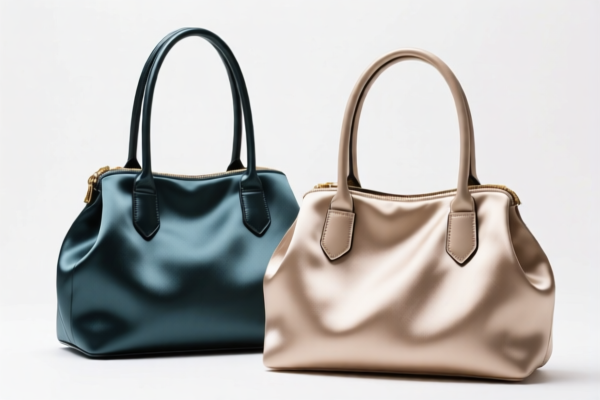
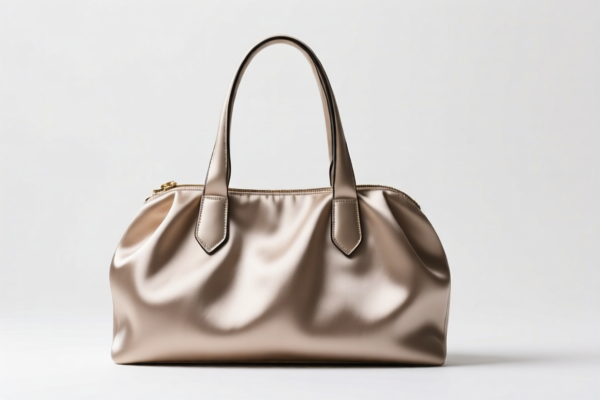
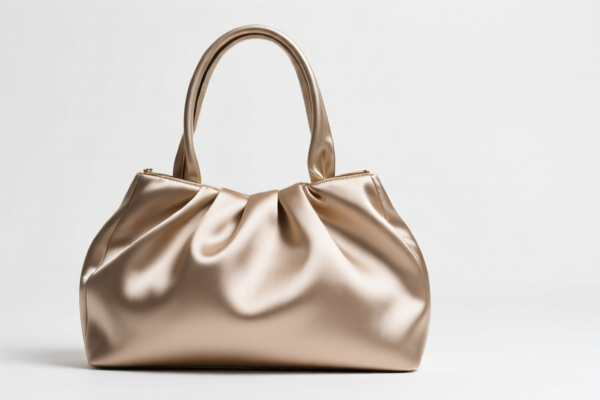

AI Analysis
🛍️ Silk Fabric Handbags (Customized) – The Ultimate HS Code & Customs Clearance Guide (2026 Edition)
🌐 Global Trade Compliance & Duty Optimization | Silk Handbag Classification Decoded | Smart Import Strategy
📌 I. Product Definition & Classification: Is It a Bag or Just Fabric?
Silk Fabric Handbags (Customized) are luxury or fashion accessories made primarily from silk materials, designed in personalized shapes and structures to hold personal items. In international trade, they fall into two main categories:
- Finished Handbags: Structured bags with zippers, handles, linings, and Silk-based outer fabric → Classified under Chapter 42.
- Silk Fabrics/Textiles: Unconstructed silk material sold by meter or bolt → Classified under Chapter 50.
⚠️ Critical Classification Point:
- If the product is a completed bag (even if customized) →归入 4202.22.70.00 or 4202.22.40.10
- If sold as loose silk fabric with no bag structure →归入 5007.90.60.90
📦 II. HS Code Breakdown (2026 Official Tariff Schedule)
| HS Code | Product Description | Silk Content | Tax Rate (US) | Customs Category |
|---|---|---|---|---|
4202.22.70.00 |
Silk-fabric handbags, general shape, ≥85% silk content | ≥85% silk | 42.0% | Finished Bag |
4202.22.40.10 |
Silk-fabric handbags, specific textile composition rules met | ≥85% silk | 42.4% | Finished Bag |
5007.90.60.90 |
Silk textiles, unstructured fabric | Any silk | 38.9% | Fabric Only |
🔍 Note:
- Both 4202.22.70.00 and 4202.22.40.10 apply to finished handbags, but differ slightly in textile composition documentation requirements.
- 5007.90.60.90 is only for silk fabric sold without bag structure.
💰 III. 2026 Duty Rate Breakdown (USA Import from China)
✅ Country of Origin: China (CN)
✅ Applicable Tariff Year: 2026
✅ Effective Since: November 10, 2025
🎯 1. HS Code: 4202.22.70.00 – Silk Handbags (General)
| Component | Rate | Explanation |
|---|---|---|
| Base Duty | 7.0% | Standard MFN tariff |
| Section 301 (Add-on) | 25.0% | Trump-era Section 301 retaliation |
| 122 Section (New) | 10.0% | Biden-era 122% tariff on luxury Chinese goods |
| Total Duty | 42.0% | Applied on CIF value |
📌 Legal Path:
Section 301: 4202.22.70.00→Section 122: Luxury Goods
⚠️ No De Minimis Exemption: Even under $800, this item is not eligible for tax-free entry.
🎯 2. HS Code: 4202.22.40.10 – Silk Handbags (Specific Composition)
| Component | Rate | Explanation |
|---|---|---|
| Base Duty | 7.4% | Slightly higher due to stricter silk content verification |
| Section 301 (Add-on) | 25.0% | Section 301 retaliation |
| 122 Section (New) | 10.0% | Luxury goods surcharge |
| Total Duty | 42.4% | Applied on CIF value |
📌 Key Difference: This code requires proven textile composition documents, hence slightly higher base duty.
🎯 3. HS Code: 5007.90.60.90 – Silk Fabric (Unstructured)
| Component | Rate | Explanation |
|---|---|---|
| Base Duty | 3.9% | Lowest base rate for silk textiles |
| Section 301 (Add-on) | 25.0% | Section 301 retaliation |
| 122 Section (New) | 10.0% | Luxury goods surcharge |
| Total Duty | 38.9% | Applied on CIF value |
📌 Note: Only applies if the item is fabric, not a bag. Do not use for finished products.
🛠️ IV. Customs Clearance Practical Guide (Avoid Costly Mistakes!)
✅ 1. Required Documentation (Must-Haves)
| Document | Required | Purpose |
|---|---|---|
| ✅ Product Photos | ✔️ | Show bag structure, handles, lining, and silk material |
| ✅ Composition Report | ✔️ | Confirm % silk content (≥85% for 4202 codes) |
| ✅ Design Sketches | ✔️ | For customized bags to prove it's a finished product |
| ✅ Commercial Invoice | ✔️ | Clearly state “Silk Handbag, Customized” |
| ✅ Packing List | ✔️ | Avoid splitting bag + accessories separately |
| ✅ Certificate of Origin | ✔️ | If not China, may reduce tariffs |
✅ 2. Declaration Tips (Golden Rules)
🔥 Mantra:
“Bag + Silk = 4202,
Fabric = 5007,
Wrong Code = 38–42% Tax Bomb!”
| Scenario | Correct Declaration | ❌ Wrong Declaration |
|---|---|---|
| Customized silk handbag | 4202.22.70.00 or 4202.22.40.10 |
Declare as “Fabric” → 38.9% but rejected |
| Silk fabric (unstructured) | 5007.90.60.90 |
Declare as “Handbag” → 42.0% + penalty |
| Bag + Silk lining + Handle | Declare as Bag | Split into “Fabric + Hardware” → Higher tax |
✅ 3. Special Cases Handling
| Situation | Recommendation |
|---|---|
| Custom Design Bags | Submit design files + silk composition report to avoid misclassification |
| Silk Blend (e.g., 80% silk + 20% polyester) | Use 4202.22.40.10 if ≥85% silk; else may qualify for different HS |
| Sample Bags (Under $100) | Still subject to full duty – no de minimis exemption |
| OEM Orders | Provide customer PO + brand name to clarify final use |
🌍 V. Global Market Comparison (2026)
| Country | Recommended HS Code | Duty Rate | Notes |
|---|---|---|---|
| 🇺🇸 USA | 4202.22.70.00 or 4202.22.40.10 |
42.0–42.4% | Highest duty due to 301 + 122 |
| 🇪🇺 EU | 4202.22.70.00 |
~12% | No Section 301/122 |
| 🇯🇵 Japan | 4202.22.70.00 |
~6% | Low duty, but strict material docs |
| 🇦🇺 Australia | 4202.22.70.00 |
~5% | No Section 301 |
| 🇨🇳 China | 4202.22.70.00 |
~7% | No Section 301/122 |
📌 Conclusion:
- USA is the most expensive market for silk handbags due to Section 301 + 122 tariffs.
- Consider third-country manufacturing (e.g., Vietnam, Thailand) to reduce duties significantly.
📌 VI. Common Mistakes & How to Avoid Them
❌ Mistake 1: Declaring finished handbags as “Silk Fabric”
👉 Consequence: 42.0% duty + customs penalty
❌ Mistake 2: Not providing silk content proof
👉 Consequence: Delayed clearance or reclassification
❌ Mistake 3: Splitting bag into “Fabric + Handle + Zipper”
👉 Consequence: Each item taxed separately → Total duty >50%
✅ Best Practice:
“Custom Silk Handbag, 100% Silk, With Zipper & Handles, HS 4202.22.70.00, China Origin”
🎯 VII. Final Takeaways: Smart Customs, Big Savings!
🎯 Remember:
🔹 “Silk Bag = 4202, Fabric = 5007”
🔹 “301 + 122 = 35% Extra Tax”
🔹 “Custom Bags? Prove It!”
📌 Pro Tip:
If you're importing from Vietnam, Thailand, or India, apply for IEEPA Exemption or Regional Trade Agreement benefits to reduce or eliminate 301/122 tariffs.
📣 Act Now:
📞 Contact Customs Broker + Submit Silk Composition Report + Request HS Ruling
🚀 Avoid 42.4% tax traps – ship smarter, save more!
✨ Precision Classification = Maximum Profit
💼 Every dollar saved in duty is a dollar earned in profit!
Customer Reviews
About HS Code Classification
The Harmonized System (HS) is an internationally standardized nomenclature developed by the World Customs Organization (WCO) to classify traded products. Over 200 countries use the HS system as the basis for customs tariffs, trade statistics, and import/export regulations.
Each HS code follows a hierarchical structure:
- Chapter (2 digits) — Broad category of goods (e.g., Chapter 84: Machinery and Mechanical Appliances)
- Heading (4 digits) — More specific grouping within the chapter
- Subheading (6 digits) — Internationally standardized breakdown, used by all WCO member countries
- National subdivisions (8-10 digits) — Country-specific extensions for further classification, such as US HTSUS 10-digit codes
Correct HS code classification is essential for smooth customs clearance, accurate duty payment, and compliance with trade regulations. Misclassification can lead to customs delays, overpayment of duties, or penalties.
When importing from CN to US, the applicable tariff rates may include:
- Most-Favored-Nation (MFN) rate — The standard duty rate applied to WTO members
- General rate — Applied to countries without trade agreements
- Trade remedy duties — Additional tariffs such as Section 301 (anti-dumping), Section 232 (national security), or countervailing duties
The information provided on this page is for reference purposes only. For official classification, please consult with your local customs authority or a licensed customs broker.