Silk Fabric Handbags (Lace)
CN → US| HS Code | Tariff Rate | Origin | Destination | Doc |
|---|---|---|---|---|
| 5007906090 | 38.9% | CN | US | Official Doc |
| 4202227000 | 42.0% | CN | US | Official Doc |
| 4202224010 | 42.4% | CN | US | Official Doc |
| 4202227000 | 42.0% | CN | US | Official Doc |
Product Images
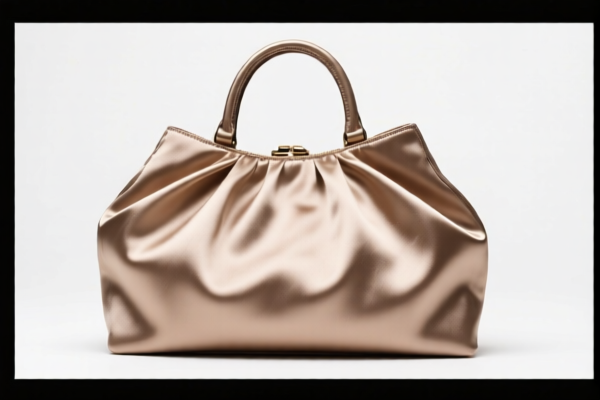
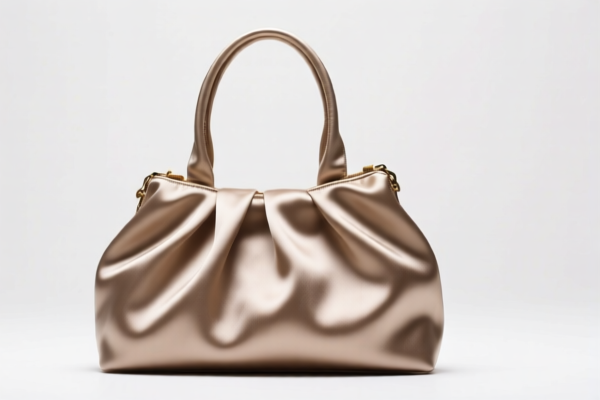
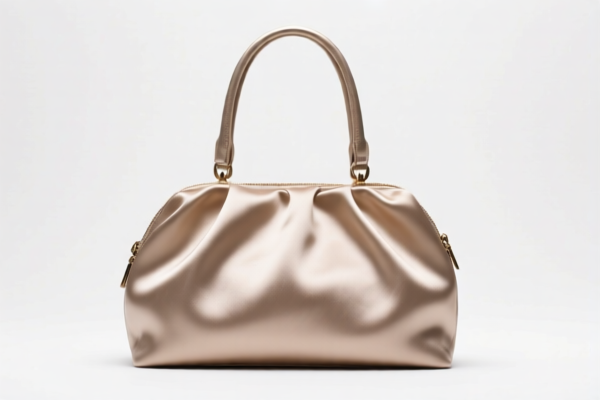
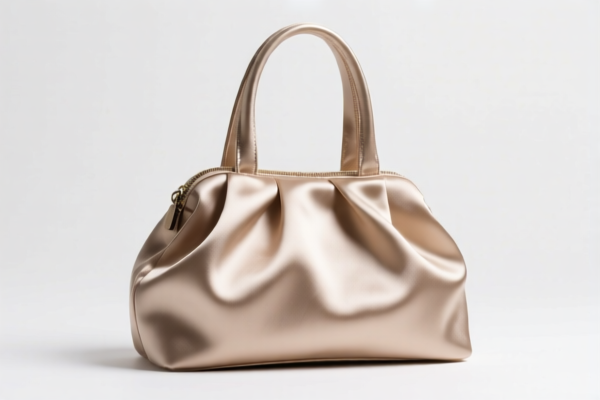
AI Analysis
👜 Silk Fabric Handbags with Lace Details (Textile Accessories)
🌐 HS Code Reference & Customs Clearance Guide | 2026 Latest Tariff Analysis | Professional-Level Clearance Strategy
📌 I. Product Definition & Classification: What Exactly Are "Silk Lace Handbags"?
Silk Fabric Handbags with Lace are high-end fashion accessories made primarily from textile materials (silk) and often featuring intricate lace embellishments. In international trade, the classification hinges on two key factors: 1. Form Factor: Is it a structured handbag, a pouch, or a loose fabric bag? 2. Material Composition: What is the primary material? Silk? Synthetic fibers blended with silk?
⚠️ Critical Distinction:
- If the bag is primarily silk and meets the definition of a handbag with an outer surface of textile material → It generally falls under Chapter 42 (Articles of Leather; articles of travel goods, handbags...).
- If the item is considered merely a piece of silk fabric or a generic textile article without the specific "handbag" form → It may fall under Chapter 50 (Silk).
- Note: Customs authorities often scrutinize whether the "lace" adds significant value or changes the fundamental nature of the goods.
📦 II. HS Code Classification Details (2026 Latest Tariff Authority Comparison)
Based on the provided data, here are the potential HS Codes for Silk Fabric Handbags (Lace), ordered by likelihood and tariff implication:
| HS Code | Product Description | Application Scenario | Primary Material | Total Tax Rate* |
|---|---|---|---|---|
4202.22.70.00 |
Handbags with outer surface of textile materials, other than those of heading 4202.21 (plastic sheeting) or 4202.22 (leather) | Most common classification for structured silk handbags | Silk/Textile | 42.0% |
4202.22.40.10 |
Handbags with outer surface of textile materials, containing silk | Specific sub-category for silk-content handbags | Silk | 42.4% |
5007.90.60.90 |
Woven fabrics of silk or silk waste, other | Less Likely: Applied if the item is deemed "fabric" rather than a manufactured handbag | Silk | 38.9% |
🔍 Key Insight:
-4202.22.70.00is the most standard classification for general textile handbags (including silk). It has a lower base tariff (7.0%) compared to4202.22.40.10(7.4%).
-4202.22.40.10is specifically for silk-containing handbags but carries a slightly higher base rate.
-5007.90.60.90is a high-risk classification. While it has the lowest total tax (38.9%), it is only appropriate if the item is NOT considered a finished handbag but rather a textile good. Misclassifying a handbag as fabric can lead to penalties.
💰 III. 2026 Latest Tariff Rate Breakdown (Including Surcharges, Policy Add-ons)
✅ Applicable Country: United States (US)
✅ Origin: China (CN)
✅ Effective Date: From November 10, 2025 (including subsequent imports)
🎯 1. 5007.90.60.90 —— Woven Silk Fabrics (Lowest Risk of Misclassification, Lowest Tax)
| Item | Content |
|---|---|
| Base Tariff | 3.9% (ad valorem) |
| USITC Surcharge (Section 301) | +25.0% |
| IEEPA Surcharge (122 Clause) | +10.0% |
| Total Tariff | 38.9% |
| Tax Calculation | CIF Value × 38.9% |
| De Minimis Eligibility | ❌ Not Applicable (This code is for fabric, not consumer goods under de minimis thresholds usually, but check specific rules) |
| Legal Basis Path | IEEPA:9903.01.25 → USITC:5007.90.60.90 → FOOTNOTE:9903.88.01 |
📌 Explanation:
- This classification assumes the item is treated as textile fabric, not a finished handbag.
- Risk: High risk of reclassification by customs if the item is clearly a handbag.
- Benefit: 3.5% lower total tax than the standard handbag codes.
🎯 2. 4202.22.70.00 —— Handbags, Textile Outer Surface (Most Common Classification)
| Item | Content |
|---|---|
| Base Tariff | 7.0% (ad valorem) |
| USITC Surcharge (Section 301) | +25.0% |
| IEEPA Surcharge (122 Clause) | +10.0% |
| Total Tariff | 42.0% |
| Tax Calculation | CIF Value × 42.0% |
| De Minimis Eligibility | ❌ Not Applicable |
| Legal Basis Path | IEEPA:9903.01.25 → USITC:4202.22.70.00 → FOOTNOTE:9903.88.01 |
📌 Explanation:
- This is the standard classification for most textile handbags not made of plastic sheeting or leather.
- Advantage: Broadly accepted by customs for silk, cotton, polyester, etc.
- Cons: 3.1% higher than the fabric classification.
🎯 3. 4202.22.40.10 —— Handbags, Silk Content (Specific Silk Category)
| Item | Content |
|---|---|
| Base Tariff | 7.4% (ad valorem) |
| USITC Surcharge (Section 301) | +25.0% |
| IEEPA Surcharge (122 Clause) | +10.0% |
| Total Tariff | 42.4% |
| Tax Calculation | CIF Value × 42.4% |
| De Minimis Eligibility | ❌ Not Applicable |
| Legal Basis Path | IEEPA:9903.01.25 → USITC:4202.22.40.10 → FOOTNOTE:9903.88.01 |
📌 Explanation:
- This code is for handbags specifically identified as silk.
- Cons: Highest total tariff (42.4%) among the options.
- When to Use: Only if you must declare the high silk content explicitly and cannot use the broader4202.22.70.00.
🛠️ IV. Customs Clearance Practical Advice (Avoid Pitfalls)
✅ 1. Essential Documentation Checklist
| Document | Required | Description |
|---|---|---|
| ✅ Product Specification Sheet | ✔️ | Must detail: Material (e.g., 100% Silk, Silk-Lace Blend), Dimensions, Closure Type |
| ✅ Product Photos | ✔️ | Clear images of the handbag, including interior lining, hardware, and lace details |
| ✅ Commercial Invoice | ✔️ | Must clearly state: "Silk Fabric Handbag with Lace Details," HS Code, Value, Country of Origin |
| ✅ Bill of Lading/Air Waybill | ✔️ | Standard shipping documents |
| ✅ Certificate of Origin | ✔️ | Required for US import to verify origin (China) |
| ✅ Material Declaration | ✔️ | Specify if lace is silk, polyester, or cotton. This affects classification under 4202.22.40.10 vs 4202.22.70.00 |
✅ 2. Declaration Strategy (Key Mantras)
🔥 "Shape defines Chapter 42, Material defines Subheading!"
| Scenario | Correct Declaration | Incorrect Declaration | Consequence |
|---|---|---|---|
| Structured Silk Handbag | 4202.22.70.00 |
5007.90.60.90 |
Risk of penalty for misclassification (Fabric vs. Handbag) |
| Silk Pouch/Clutch (Soft) | 4202.22.70.00 |
6307.90.98.98 (Other textile articles) |
Handbags have specific headings; other textile articles have different rates |
| Handbag with Silk Lining Only | 4202.22.70.00 |
4202.22.40.10 |
Only use 4202.22.40.10 if the outer surface is silk |
| OEM Custom Silk Bag | 4202.22.70.00 |
Generic "Textile Bag" | Lack of specific description can lead to delays |
✅ 3. Special Case Handling
| Situation | Handling Advice |
|---|---|
| Silk Content > 85% | Use 4202.22.40.10 if you want to emphasize silk, but expect 42.4% tax. Otherwise, 4202.22.70.00 is safer and cheaper. |
| Lace as Main Feature | If lace is the dominant material, ensure it is still classified as a "handbag" not a "lace fabric." |
| Set with Box/Pouch | If handbag is packed in a silk pouch, declare the handbag as the primary item. The pouch is an accessory. |
| Mixed Materials (Silk + Leather) | If leather parts are significant, it may fall under 4202.21 (Leather). Check leather content percentage. |
🌍 V. Global Market Comparison (2026 Latest)
| Country/Region | Recommended HS Code | Tariff (China Origin) | Certification | Notes |
|---|---|---|---|---|
| 🇺🇸 USA | 4202.22.70.00 |
42.0% | None specific | High tariff due to Section 301 + IEEPA |
| 🇨🇳 China | 4202.22.70.00 |
~8-10% | N/A | Domestic trade has lower rates |
| 🇪🇺 EU | 4202.29 |
4% - 6% | CE (if applicable) | No Section 301 equivalent |
| 🇬🇧 UK | 4202.22 |
4% - 6% | N/A | Post-Brexit rules apply |
| 🇯🇵 Japan | 4202.22 |
10% - 15% | PSE (if electronic parts) | No extra surcharges |
📌 Conclusion:
- The US market is the most expensive due to additional surcharges (35% total added to base tariff).
- EU and UK offer significantly lower tariffs for the same goods.
- Consider supply chain diversification if targeting the US market with high-volume silk handbags.
📌 VI. Common Mistakes & Pitfalls (Lessons Learned)
❌ Mistake 1: Classifying Silk Handbags as 5007.90.60.90 (Fabric) to save tax.
👉 Consequence: Customs may reclassify as handbags, leading to back taxes + penalties. Only use this if the item is truly "fabric" (e.g., bolts of silk).
❌ Mistake 2: Ignoring the "Outer Surface" material.
👉 Consequence: If the outer surface is leather, but you declare it as textile (4202.22), you will be penalized.
❌ Mistake 3: Not specifying "Silk" in the description.
👉 Consequence: Customs may assign a default higher rate or request additional documentation.
✅ Correct Approach:
"Silk Handbag with Lace Trim, Outer Surface 100% Silk, Lining Polyester, Model XYZ, Country of Origin: China"
🎯 VII. Conclusion: Professional Declaration, Cost Control, and Efficiency!
🎯 Remember the Mantra:
🔹 "Handbag shape = Chapter 42, Fabric fabric = Chapter 50."
🔹 "USA Tariff: Base + 25% + 10% = Total ~42%."
🔹 "Silk-specific code (4202.22.40.10) is more expensive than general textile (4202.22.70.00)."
📌 Pro Tip:
If your silk handbags are originating from Vietnam, Thailand, or India, you may avoid the Section 301 (25%) surcharge, reducing the total tariff to ~17% (Base + 10% IEEPA).
Recommend pre-booking HS Code rulings with US Customs (CBP) for high-value shipments.
📣 Immediate Action:
📞 Contact a licensed customs broker + Provide product photos + Request HS Code pre-ruling
🚀 Ensure your silk handbags clear customs smoothly, maximize profit, and comply with US regulations!
✨ Professional clearance starts with accurate classification!
💼 Every dollar of tariff saved is pure profit!
Customer Reviews
About HS Code Classification
The Harmonized System (HS) is an internationally standardized nomenclature developed by the World Customs Organization (WCO) to classify traded products. Over 200 countries use the HS system as the basis for customs tariffs, trade statistics, and import/export regulations.
Each HS code follows a hierarchical structure:
- Chapter (2 digits) — Broad category of goods (e.g., Chapter 84: Machinery and Mechanical Appliances)
- Heading (4 digits) — More specific grouping within the chapter
- Subheading (6 digits) — Internationally standardized breakdown, used by all WCO member countries
- National subdivisions (8-10 digits) — Country-specific extensions for further classification, such as US HTSUS 10-digit codes
Correct HS code classification is essential for smooth customs clearance, accurate duty payment, and compliance with trade regulations. Misclassification can lead to customs delays, overpayment of duties, or penalties.
When importing from CN to US, the applicable tariff rates may include:
- Most-Favored-Nation (MFN) rate — The standard duty rate applied to WTO members
- General rate — Applied to countries without trade agreements
- Trade remedy duties — Additional tariffs such as Section 301 (anti-dumping), Section 232 (national security), or countervailing duties
The information provided on this page is for reference purposes only. For official classification, please consult with your local customs authority or a licensed customs broker.