Small Shopping Bag
CN → US| HS Code | Tariff Rate | Origin | Destination | Doc |
|---|---|---|---|---|
| 3923210080 | 38.0% | CN | US | Official Doc |
| 3923210085 | 38.0% | CN | US | Official Doc |
| 4819400040 | 35.0% | CN | US | Official Doc |
| 4202923131 | 52.6% | CN | US | Official Doc |
| 3923290000 | 38.0% | CN | US | Official Doc |
Product Images
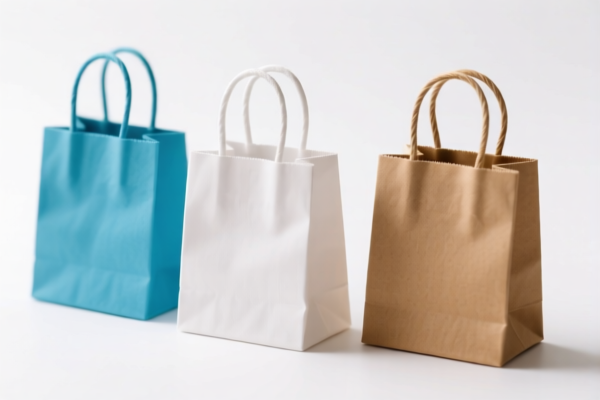
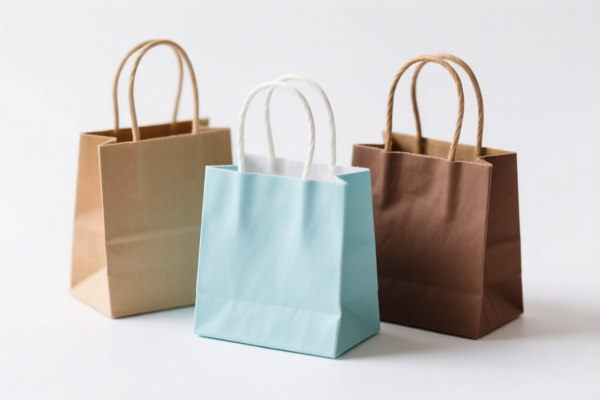
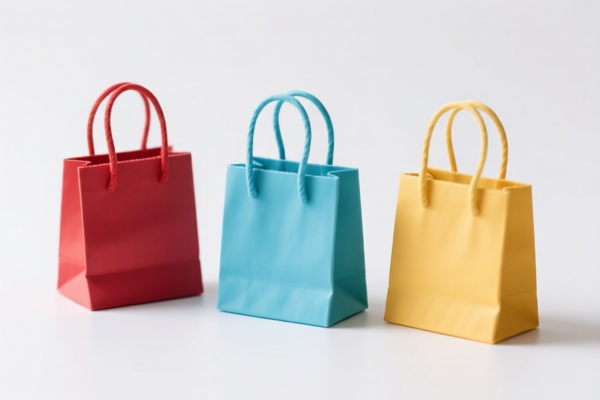
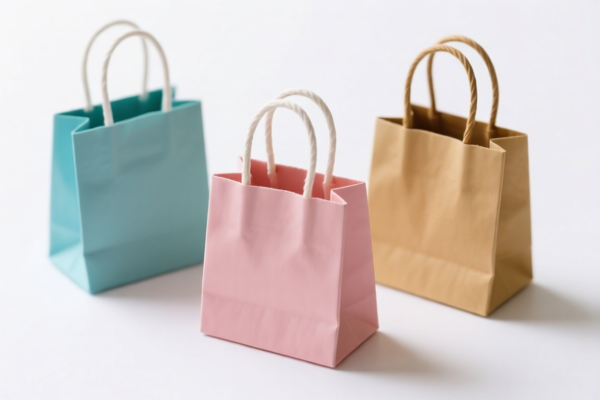
AI Analysis
🛍️ Small Shopping Bag (Shopping Bags)
🌐 HS Code Reference & Customs Clearance Guide | 2026 Latest Tariff Analysis | Professional Clearance Strategy
📌 I. Product Definition & Classification: What exactly is a "Small Shopping Bag"?
In international trade, a "Small Shopping Bag" is a generic term that covers various packaging and carrying items. Its HS Code classification depends heavily on two key factors: Material and Form/Purpose.
1. Plastic Shopping Bags (Polyethylene):
Typically used for retail, grocery, or promotional purposes. These are rigid or flexible containers made from polymers.
2. Paper Shopping Bags:
Commonly used for retail, gift-giving, or eco-friendly branding. Made from paper or paperboard.
3. Textile/Non-Woven Bags:
Often used for travel, storage, or reusable shopping. Made from fabrics or non-woven materials.
⚠️ Key Distinction Point:
- If it is Plastic: Likely falls under Chapter 39 (Plastics and Articles Thereof).
- If it is Paper: Likely falls under Chapter 48 (Paper and Paperboard).
- If it is Textile/Other: Likely falls under Chapter 42 (Articles of Leather; Saddle Harness; or Other Articles).
📦 II. HS Code Classification Details (2026 Latest Tariff Authority Comparison)
Based on the provided data, here are the four potential HS Codes for "Small Shopping Bag" depending on material and specific form:
| HS Code | Product Description | Matching Logic (Summary from Data) | Estimated Total Tax |
|---|---|---|---|
3923.21.00.80 |
Plastic Sacks and Bags | Material: Polyethylene (Plastic). Form: Bag. Use: Shopping Bag. Inferred material matches "Other" category logic. |
38.0% |
3923.21.00.85 |
Plastic Sacks and Bags (Retail Shopping Bags) | Form: Retail Shopping Bag. Material: Polyethylene (PE) inferred from common sense; no conflict with description. Specifically targets small retail bags. |
38.0% |
4819.40.00.40 |
Paper Sacks and Bags | Material: Paper or Paperboard (inferred). Form: Bag/Package. Use: Shopping Bag. Matches "Other sacks and bags" logic; no material conflict. |
35.0% |
4202.92.31.31 |
Textile/Other Travel & Sport Bags | Material: Textile (inferred for storage bags). Form: Bag/Pouch. Use: Storage/Shopping. No obvious material conflict with "Other travel/sport bags". |
52.6% |
3923.29.00.00 |
Other Plastic Containers & Pouches | Form: Pouch/Sack. Use: Packaging. Material: Plastic (inferred). Falls under "Other" categories for plastic packaging; no material conflict. |
38.0% |
🔍 Critical Reminder:
- Plastic Bags (3923.21/3923.29) are the most common for single-use shopping bags.
- Paper Bags (4819.40) are increasingly popular for eco-conscious brands.
- Textile Bags (4202.92) usually imply reusable, higher-value bags (e.g., canvas, non-woven) rather than simple disposable shopping bags. Misclassifying a plastic bag as textile can lead to severe penalties.
💰 III. 2026 Latest Tariff Rate Breakdown (Including Surcharges & Policy Add-ons)
✅ Applicable Country: United States (US)
✅ Origin: China (CN)
✅ Effective Date: 2025/2026 (Current Trade Environment)
The tax structure for Chinese-origin shopping bags includes Base Tariff + Section 301 Tariff + Section 122 Tariff.
🎯 1. Plastic Shopping Bags (3923.21.00.80 / 3923.21.00.85 / 3923.29.00.00)
| Item | Details |
|---|---|
| Base Tariff | 3.0% (Ad Valorem) |
| Section 301 Surcharge | +25.0% (USITC Footnote regarding Chinese imports) |
| Section 122 Surcharge | +10.0% (Specific tariff on certain goods from China) |
| Total Tax Rate | 38.0% |
| Tax Calculation | CIF Value × 38% |
| De Minimis Exemption | ❌ Not Eligible (Denied for these HS codes under current rules) |
| Legal Basis Path | Base: 3923.21/29 → Section 301: +25% → Section 122: +10% |
📌 Explanation:
- 3.0% is the standard Most Favored Nation (MFN) rate for plastic packaging.
- 25% is the standard Section 301 tariff on Chinese plastic articles.
- 10% is an additional punitive tariff (Section 122) often applied to specific consumer goods.
- Total 38% is a high barrier. Profit margins must account for this.
🎯 2. Paper Shopping Bags (4819.40.00.40)
| Item | Details |
|---|---|
| Base Tariff | 0.0% (Often duty-free for basic paper bags) |
| Section 301 Surcharge | +25.0% |
| Section 122 Surcharge | +10.0% |
| Total Tax Rate | 35.0% |
| Tax Calculation | CIF Value × 35% |
| De Minimis Exemption | ❌ Not Eligible |
| Legal Basis Path | Base: 4819.40 → Section 301: +25% → Section 122: +10% |
📌 Note:
- Even though the base rate is 0%, the 35% total is still very high due to the surcharges.
- Paper bags are slightly cheaper than plastic bags by 3% in total tax.
🎯 3. Textile/Other Bags (4202.92.31.31)
| Item | Details |
|---|---|
| Base Tariff | 17.6% |
| Section 301 Surcharge | +25.0% |
| Section 122 Surcharge | +10.0% |
| Total Tax Rate | 52.6% |
| Tax Calculation | CIF Value × 52.6% |
| De Minimis Exemption | ❌ Not Eligible |
| Legal Basis Path | Base: 4202.92 → Section 301: +25% → Section 122: +10% |
📌 Warning:
- This is the most expensive category.
- Only use this code if the bag is explicitly made of textile material (e.g., canvas, polyester) and used for travel/sports/storage, not simple shopping.
- Do not misclassify a plastic shopping bag as a textile bag to avoid "wrong declaration" penalties.
🛠️ IV. Customs Clearance Practical Advice (Real-World Pitfall Guide)
✅ 1. Required Documentation Checklist (Mandatory)
| Document | Must Provide | Explanation |
|---|---|---|
| ✅ Product Specifications | ✔️ | Material composition (e.g., 100% PE, 100% Paper), thickness, handle type. |
| ✅ Photos of Product | ✔️ | Clear images showing the bag, handles, and any branding. Crucial for material verification. |
| ✅ Commercial Invoice | ✔️ | Must clearly state "Shopping Bag" and specify material (e.g., "Polyethylene Shopping Bag"). |
| ✅ Packing List | ✔️ | Details quantity, weight, and dimensions. |
| ✅ Material Declaration | ✔️ | Explicitly state if plastic, paper, or textile. |
| ✅ FCC/CE Certs (if applicable) | ⚠️ | Rarely needed for bags, but required if the bag contains electronic components (e.g., LED lights). |
✅ 2. Declaration Tips (Critical Mnemonics)
🔥 "Material First, Form Second, Name Precise, Tax Drop!"
| Scenario | Correct Declaration | Wrong Declaration | Consequence |
|---|---|---|---|
| Plastic Retail Bag | 3923.21.00.80 - "Polyethylene Shopping Bag" |
4202.92 - "Fabric Bag" |
❌ Penalty: Wrong HS Code, 38% vs 52.6% + fines |
| Paper Gift Bag | 4819.40.00.40 - "Paper Shopping Bag" |
3923.21 - "Plastic Bag" |
❌ Risk: Seizure for misrepresentation |
| Reusable Canvas Bag | 4202.92.31.31 - "Textile Travel Bag" |
3923.21 - "Plastic Bag" |
❌ Error: Material mismatch |
| Plastic Pouch/Packaging | 3923.29.00.00 - "Plastic Pouch" |
3923.21 - "Shopping Bag" |
⚠️ Minor Risk: Slight classification difference, but same tax |
✅ 3. Special Circumstances Handling
| Situation | Handling Advice |
|---|---|
| OEM/Custom Printed Bags | Provide print files and brand authorization. Ensure the description matches the printed content (e.g., "Branded Retail Bag"). |
| Mixed Material Bags | If a bag has plastic handles but paper body, declare based on principal material. Usually, if >50% paper by weight/value, 4819.40 may apply, but consult a customs broker. |
| Eco-Friendly Claims | Avoid vague terms like "Biodegradable" without certification. If it's PLA (polylactic acid), it may still fall under 3923.21 (Plastics). |
| Small Quantity Samples | Still subject to 38-52% tax. De Minimis ($800) is NOT exempted for these goods from China. |
🌍 V. Global Market Comparison (2026 Latest)
| Country/Region | Recommended HS Code | Total Tariff (China Origin) | Certification Requirements | Notes |
|---|---|---|---|---|
| 🇺🇸 USA | 3923.21.00.80 (Plastic) |
38.0% | None | High tax due to Section 301 + 122 |
| 🇺🇸 USA | 4819.40.00.40 (Paper) |
35.0% | None | Slightly cheaper than plastic |
| 🇪🇺 EU | 3923.21 (Plastic) |
0% - 2.5% | EPR (Extended Producer Responsibility) | No Section 301. VAT applies separately. |
| 🇨🇳 China | 3923.21 (Plastic) |
3.0% | None | Export duty may apply. |
| 🇬🇧 UK | 3923.21 (Plastic) |
0% - 2.5% | UKCA Mark (if relevant) | Similar to EU post-Brexit. |
📌 Conclusion:
- USA is the most expensive market for Chinese shopping bags due to 38-52% total taxes.
- EU/UK has much lower tariffs (0-2.5%) but strict environmental regulations (EPR, plastic bans).
- Diversification Strategy: Consider sourcing from Vietnam or Mexico for US market to avoid Section 301 tariffs (though origin rules are strict).
📌 VI. Common Errors & Pitfall Guide (Lessons Learned)
❌ Error 1: Declaring plastic bags as "Textile Bags" to avoid high taxes
👉 Consequence: Customs audit reveals plastic material → Back taxes + 25% penalty.
❌ Error 2: Using vague names like "Bag" or "Package"
👉 Consequence: Customs assigns arbitrary HS Code → Delay + 52.6% tax (highest bracket).
❌ Error 3: Ignoring Section 122 Tariff
👉 Consequence: Underestimating total landed cost by 10% → Profit margin collapse.
❌ Error 4: Assuming De Minimis ($800) applies
👉 Consequence: Full tax on all shipments from China, even small samples.
✅ Correct Approach:
"Plastic Shopping Bag, HDPE, 15 Micron, Handle Type: Die-Cut, For Retail Use, HS Code: 3923.21.00.80"
🎯 VII. Conclusion: Professional Declaration, Save Costs!
🎯 Remember the Mnemonic:
🔹 "Plastic 38%, Paper 35%, Textile 52%!"
🔹 "Material determines Code, Code determines Tax, Tax determines Profit!"
📌 Pro Tip:
- If you are shipping Paper Bags, consider 4819.40.00.40 as it saves 3% compared to plastic.
- For Plastic Bags, 3923.21.00.85 is often preferred for "Retail Shopping Bags" due to its specific description, reducing audit risk.
- Pre-Ruling: Request an Advance Ruling from CBP if your bag has mixed materials or unique features.
📣 Immediate Action:
📞 Contact a licensed customs broker + Provide product photos + Verify material composition
🚀 Ensure your Commercial Invoice matches the HS Code exactly to avoid delays!
✨ Professional clearance starts with accurate classification!
💼 Your every cent of profit is worth precise calculation!
Customer Reviews
About HS Code Classification
The Harmonized System (HS) is an internationally standardized nomenclature developed by the World Customs Organization (WCO) to classify traded products. Over 200 countries use the HS system as the basis for customs tariffs, trade statistics, and import/export regulations.
Each HS code follows a hierarchical structure:
- Chapter (2 digits) — Broad category of goods (e.g., Chapter 84: Machinery and Mechanical Appliances)
- Heading (4 digits) — More specific grouping within the chapter
- Subheading (6 digits) — Internationally standardized breakdown, used by all WCO member countries
- National subdivisions (8-10 digits) — Country-specific extensions for further classification, such as US HTSUS 10-digit codes
Correct HS code classification is essential for smooth customs clearance, accurate duty payment, and compliance with trade regulations. Misclassification can lead to customs delays, overpayment of duties, or penalties.
When importing from CN to US, the applicable tariff rates may include:
- Most-Favored-Nation (MFN) rate — The standard duty rate applied to WTO members
- General rate — Applied to countries without trade agreements
- Trade remedy duties — Additional tariffs such as Section 301 (anti-dumping), Section 232 (national security), or countervailing duties
The information provided on this page is for reference purposes only. For official classification, please consult with your local customs authority or a licensed customs broker.