Soldering Iron Pen
CN → US| HS Code | Tariff Rate | Origin | Destination | Doc |
|---|---|---|---|---|
| 8515110000 | 37.5% | CN | US | Official Doc |
| 8467290090 | 17.5% | CN | US | Official Doc |
| 8467290035 | 17.5% | CN | US | Official Doc |
| 8515190000 | 35.0% | CN | US | Official Doc |
| 8479896500 | 20.3% | CN | US | Official Doc |
Product Images
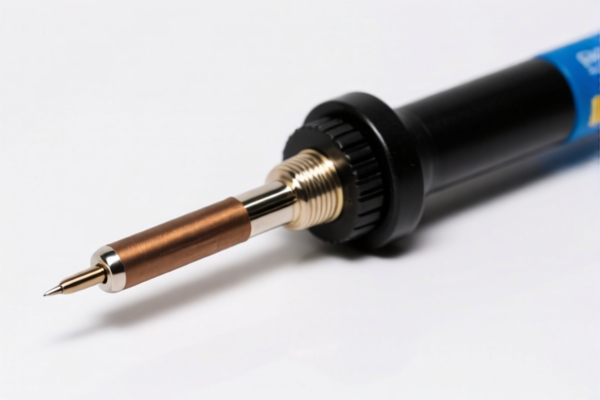
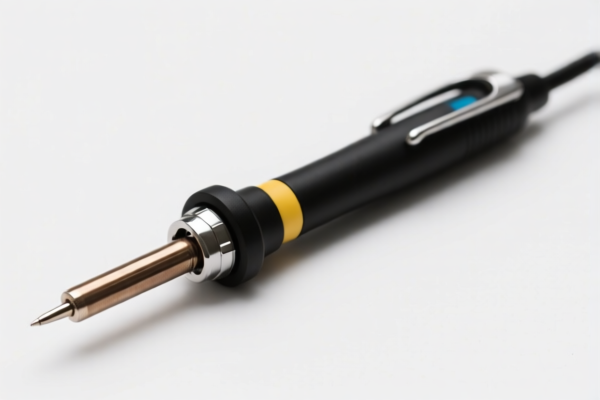
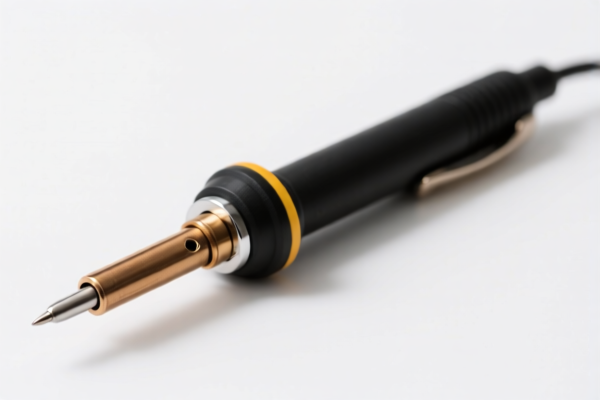
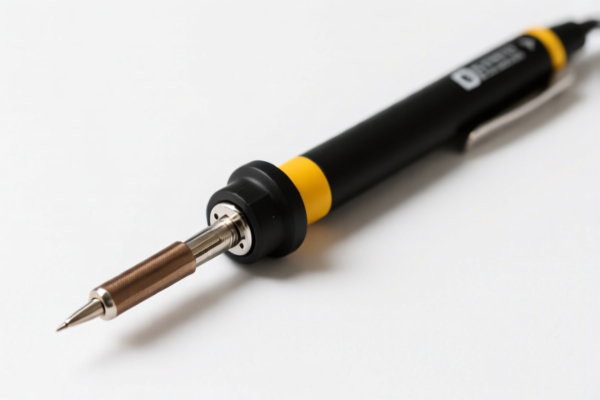
AI Analysis
🖋️ Soldering Iron Pen (Hand Tools & Electrical Heating Equipment)
🌐 HS Code Reference & Customs Clearance Guide | 2026 Latest Tariff Analysis | Professional Strategy for "Soldering Iron Pen"
📌 I. Product Definition & Classification: What is a "Soldering Iron Pen"?
A "Soldering Iron Pen" typically refers to a handheld device used for heating, soldering, or electrically heated art/decoration tools (such as "electric烙画" or Pyrography pens). In international trade, its classification depends on whether it is viewed primarily as a tool for joining metals or as a general-purpose electrically heated appliance/tool.
Key Distinctions: - Welding/Soldering Tool: If used strictly for electronics/metalwork → Falls under Chapter 85 (Electrical machinery & equipment). - Handheld Power Tool: If viewed as a motor-driven or general utility tool → Falls under Chapter 84 (Machinery & mechanical appliances).
⚠️ Critical Note:
- If the product is explicitly marketed for electronics soldering, customs often lean toward HS 8515.
- If it is a multi-purpose electric pen (e.g., for crafting, wood burning, or general heating) without specific "soldering" functionality, it may be classified under HS 8467 or HS 8479.
📦 II. HS Code Classification Details (2026 Latest Tariff Alignment)
| HS Code | Product Description | Applicable Scenario | Key Feature |
|---|---|---|---|
8515.11.00.00 |
Electrical soldering irons and guns | Electronics assembly, PCB repair, metal joining | Core function is soldering/welding |
8467.29.00.90 |
Other tools for working materials by welding, brazing, or soldering | Handheld tools with self-contained motor, not exclusively for soldering | Motor-driven handheld tool |
8467.29.00.35 |
Other hand-held tools with self-contained electric motor | General-purpose electric pens, crafting tools | Hand-held, motor-driven, general use |
8515.19.00.00 |
Other electrical soldering/welding machines & apparatus | Industrial or specialized soldering devices | Electrical heating device for welding |
8479.89.65.00 |
Other machines and mechanical appliances with individual functions | Multi-function electric pens, non-specific heating tools | Independent machine/electrical appliance |
🔍 Key Insight:
- HS 8515 codes are for dedicated soldering equipment.
- HS 8467 codes are for handheld tools (whether motor-driven or not).
- HS 8479 is a residual category for machines not covered elsewhere.
💰 III. 2026 Latest Tariff Rate Breakdown (Including Additional Duties & Policy Surcharges)
✅ Applicable Country: United States (US)
✅ Origin: China (CN)
✅ Effective Date: November 10, 2025 (and onwards)
🎯 1. 8515.11.00.00 — Electrical Soldering Irons (Dedicated Soldering Tool)
| Item | Details |
|---|---|
| Base Tariff | 2.5% (ad valorem) |
| Section 301 Additional Tariff | +25.0% |
| IEEPA Additional Tariff | +10.0% (China-origin goods) |
| Total Tariff Rate | 37.5% |
| Tax Calculation | CIF Value × 37.5% |
| De Minimis Exemption | ❌ Not Eligible (deny_de_minimis) |
| Legal Basis Path | IEEPA:9903.01.25 → USITC:8515.11.00.00 → FOOTNOTE:9903.88.01 |
📌 Explanation:
- This is the highest tariff among the options, as dedicated soldering tools are subject to both Section 301 (25%) and IEEPA (10%) surcharges.
- High cost implication: Requires careful cost-benefit analysis for electronics manufacturers.
🎯 2. 8467.29.00.90 — Other Tools for Working Materials by Welding/Brazing/Soldering
| Item | Details |
|---|---|
| Base Tariff | 0.0% |
| Section 301 Additional Tariff | +7.5% |
| IEEPA Additional Tariff | +10.0% |
| Total Tariff Rate | 17.5% |
| Tax Calculation | CIF Value × 17.5% |
| De Minimis Exemption | ❌ Not Eligible |
| Legal Basis Path | IEEPA:9903.01.24 → USITC:8467.29.00.90 → FOOTNOTE:9903.88.01 |
📌 Note:
- This classification applies if the tool is considered a handheld power tool rather than a dedicated soldering iron.
- Significant savings: 17.5% vs. 37.5% for HS 8515.11.00.00.
🎯 3. 8467.29.00.35 — Other Hand-Held Tools with Self-Contained Electric Motor
| Item | Details |
|---|---|
| Base Tariff | 0.0% |
| Section 301 Additional Tariff | +7.5% |
| IEEPA Additional Tariff | +10.0% |
| Total Tariff Rate | 17.5% |
| Tax Calculation | CIF Value × 17.5% |
| De Minimis Exemption | ❌ Not Eligible |
| Legal Basis Path | IEEPA:9903.01.24 → USITC:8467.29.00.35 → FOOTNOTE:9903.88.01 |
📌 Note:
- Similar to HS 8467.29.00.90, this code captures general handheld electric tools.
- Suitable for multi-purpose electric pens (e.g., crafting, wood burning) that are not exclusively for soldering.
🎯 4. 8515.19.00.00 — Other Electrical Soldering/Welding Machines
| Item | Details |
|---|---|
| Base Tariff | 0.0% |
| Section 301 Additional Tariff | +25.0% |
| IEEPA Additional Tariff | +10.0% |
| Total Tariff Rate | 35.0% |
| Tax Calculation | CIF Value × 35.0% |
| De Minimis Exemption | ❌ Not Eligible |
| Legal Basis Path | IEEPA:9903.01.25 → USITC:8515.19.00.00 → FOOTNOTE:9903.88.01 |
📌 Note:
- This is for non-standard or industrial soldering/welding equipment not covered by 8515.11.00.00.
- Still subject to high surcharges (25% + 10%).
🎯 5. 8479.89.65.00 — Other Machines & Mechanical Appliances (Residual Category)
| Item | Details |
|---|---|
| Base Tariff | 2.8% |
| Section 301 Additional Tariff | +7.5% |
| IEEPA Additional Tariff | +10.0% |
| Total Tariff Rate | 20.3% |
| Tax Calculation | CIF Value × 20.3% |
| De Minimis Exemption | ❌ Not Eligible |
| Legal Basis Path | IEEPA:9903.01.24 → USITC:8479.89.65.00 → FOOTNOTE:9903.88.01 |
📌 Note:
- This is a catch-all category for machines not specifically classified elsewhere.
- Moderate tariff: 20.3% is lower than dedicated soldering tools but higher than some handheld tools.
🛠️ IV. Customs Clearance Practical Advice (Avoiding Pitfalls)
✅ 1. Required Documentation Checklist
| Document | Mandatory? | Purpose |
|---|---|---|
| ✅ Product Specification Sheet | ✔️ | Define function: Soldering? Crafting? General heating? |
| ✅ Circuit/Structure Diagram | ✔️ | Prove if it has a motor, heating element, or control board |
| ✅ Product Photos (with Label) | ✔️ | Show model, brand, input/output, power rating |
| ✅ Third-Party Test Reports | ✔️ | FCC, CE, RoHS, UL (if applicable) |
| ✅ Commercial Invoice | ✔️ | Clearly state intended use (e.g., "Soldering Pen for Electronics" vs. "Electric Crafting Pen") |
| ✅ Certificate of Origin (CO) | ✔️ | For potential FTO benefits (if applicable) |
| ✅ Packing List | ✔️ | Detail components to avoid "split shipment" accusations |
✅ 2. Declaration Strategy (Key Tips)
🔥 "Function Dictates Code, Description Must Match!"
| Scenario | Recommended HS Code | Declaration Example |
|---|---|---|
| Dedicated Electronics Soldering Iron | 8515.11.00.00 |
"Electrical Soldering Iron for PCB Assembly" |
| Multi-Purpose Electric Pen (Crafting/Wood Burning) | 8467.29.00.90 / 8467.29.00.35 |
"Handheld Electric Tool for Wood Burning & Crafting" |
| Industrial Soldering Station | 8515.19.00.00 |
"Electrical Soldering/Welding Apparatus" |
| General Utility Electric Pen | 8479.89.65.00 |
"Electric Heating Tool for General Industrial Use" |
⚠️ Warning:
- Do not misdeclare a soldering iron as a "crafting tool" to save taxes. Customs may reject or penalize if evidence shows electronic soldering function.
- Conversely, do not declare a general electric pen as a "soldering iron" if it lacks soldering-specific features, as this may lead to higher duties unnecessarily.
✅ 3. Special Cases
| Case | Handling Advice |
|---|---|
| OEM Custom Pens | Provide design drawings & client specs to justify classification |
| Pen with Multiple Tips (Soldering + Carving) | Declare based on primary intended use; provide manual showing both functions |
| Pen for Medical Device Assembly | If exclusively for medical electronics, still 8515.11.00.00 but may qualify for exemptions if certified |
| Pen for Military/Aerospace | May require special licenses; consult customs broker early |
🌍 V. Global Market Comparison (2026 Update)
| Country/Region | Recommended HS Code | Total Tariff (China Origin) | Certification | Notes |
|---|---|---|---|---|
| 🇺🇸 USA | 8515.11.00.00 or 8467.29.00.90 |
37.5% (Soldering) 17.5% (Handheld Tool) |
FCC + RoHS | US has highest surcharges |
| 🇨🇳 China | 8515.11.00.00 |
5% | CCC + RoHS | No additional surcharges |
| 🇪🇺 EU | 8515.11.00.00 |
0% (if CE compliant) | CE + ErP | No surcharges |
| 🇦🇺 Australia | 8515.11.00.00 |
5% | RCM | No surcharges |
| 🇯🇵 Japan | 8515.11.00.00 |
0% | PSE | No surcharges |
📌 Conclusion:
- USA is the only major market with significant additional tariffs for Chinese-origin soldering tools.
- HS 8467 codes offer substantial savings (17.5% vs. 37.5%) if the tool can be legally classified as a general handheld tool.
📌 VI. Common Mistakes & Pitfalls (Learn from Errors)
❌ Mistake 1: Declaring a dedicated soldering iron as a "crafting pen" to avoid 37.5% tariff
👉 Consequence: Customs audit → Penalty + Back Taxes if function proves otherwise.
❌ Mistake 2: Declaring a general electric pen as a "soldering iron"
👉 Consequence: Unnecessary 37.5% tariff → Lost profit.
❌ Mistake 3: Incomplete documentation (no circuit diagram)
👉 Consequence: Customs delays → Storage fees + Demurrage.
✅ Best Practice:
"Declare based on primary function, provide full documentation, and consult a customs broker for pre-ruling."
🎯 VII. Final Advice: Optimize Costs & Ensure Compliance
🎯 Remember:
🔹 "Soldering Iron = 37.5% (USA)"
🔹 "Handheld Electric Tool = 17.5% (USA)"
🔹 "Accurate Declaration Saves Money!"
📌 Pro Tip:
- If your product is not exclusively for soldering, consider declaring it under HS 8467 to benefit from lower tariffs.
- For US imports, apply for a Pre-Ruling (Advance Ruling) from CBP to confirm the correct HS code and avoid surprises at customs.
📣 Action Required:
📞 Contact a licensed customs broker
📄 Provide full product specs & photos
🚀 Apply for an Advance Ruling for US imports
✨ Professional Customs Clearance Starts with Accurate Classification!
💼 Every Percentage Point Matters in International Trade!
Customer Reviews
About HS Code Classification
The Harmonized System (HS) is an internationally standardized nomenclature developed by the World Customs Organization (WCO) to classify traded products. Over 200 countries use the HS system as the basis for customs tariffs, trade statistics, and import/export regulations.
Each HS code follows a hierarchical structure:
- Chapter (2 digits) — Broad category of goods (e.g., Chapter 84: Machinery and Mechanical Appliances)
- Heading (4 digits) — More specific grouping within the chapter
- Subheading (6 digits) — Internationally standardized breakdown, used by all WCO member countries
- National subdivisions (8-10 digits) — Country-specific extensions for further classification, such as US HTSUS 10-digit codes
Correct HS code classification is essential for smooth customs clearance, accurate duty payment, and compliance with trade regulations. Misclassification can lead to customs delays, overpayment of duties, or penalties.
When importing from CN to US, the applicable tariff rates may include:
- Most-Favored-Nation (MFN) rate — The standard duty rate applied to WTO members
- General rate — Applied to countries without trade agreements
- Trade remedy duties — Additional tariffs such as Section 301 (anti-dumping), Section 232 (national security), or countervailing duties
The information provided on this page is for reference purposes only. For official classification, please consult with your local customs authority or a licensed customs broker.