Special Additives for Fire Extinguishing Agents
CN → US| HS Code | Tariff Rate | Origin | Destination | Doc |
|---|---|---|---|---|
| 3813001000 | 35.0% | CN | US | Official Doc |
| 3813005000 | 38.7% | CN | US | Official Doc |
| 4016935020 | 37.5% | CN | US | Official Doc |
| 3926904590 | 38.5% | CN | US | Official Doc |
| 8414909180 | 35.0% | CN | US | Official Doc |
Product Images
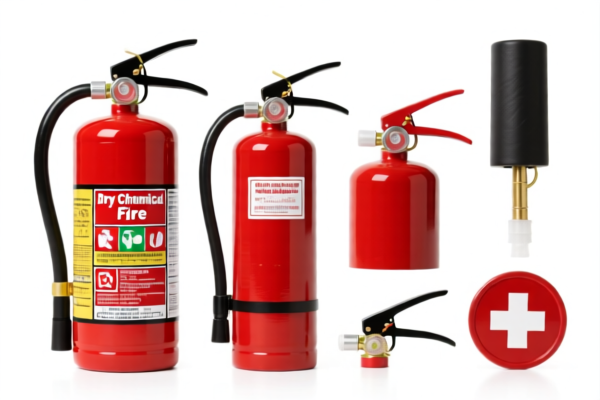
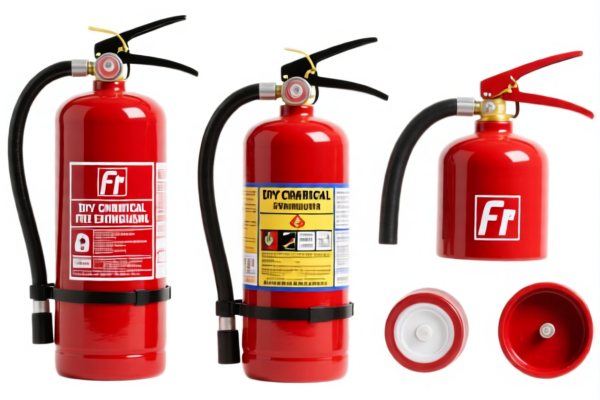
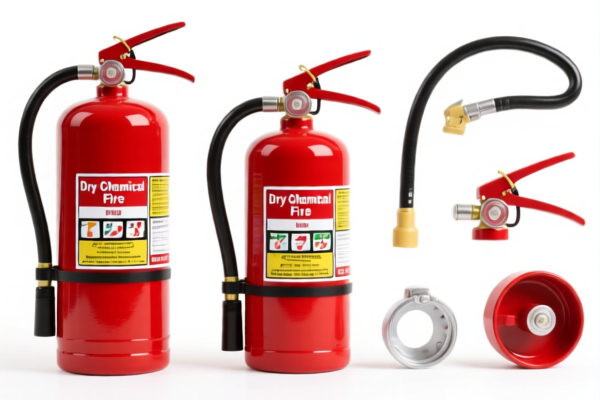
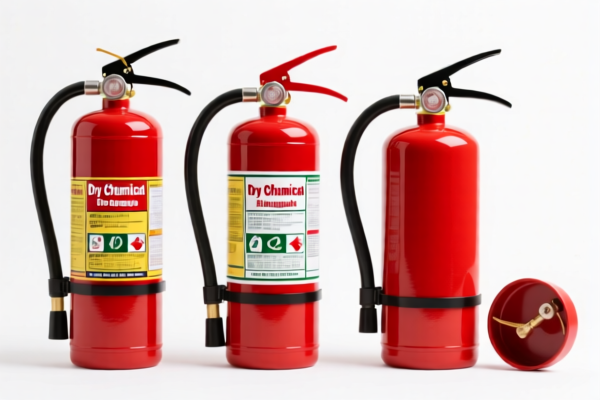
AI Analysis
🧯 Special Additives for Fire Extinguishing Agents (灭火剂添加剂)
🌐 HS Code Reference & Customs Clearance Guide | 2026 Latest Tariff Analysis | Professional-Level Entry Strategy
📌 I. Product Definition & Classification: What Exactly Are You Importing?
"Special Additives for Fire Extinguishing Agents" are chemical compounds or mixtures added to fire extinguishing agents (such as aqueous film-forming foams, dry powders, or clean agent systems) to enhance their performance, stability, corrosion resistance, or fire-suppression efficiency.
In international trade, these additives are strictly classified based on their chemical composition and functional role within the extinguishing system. Misclassification is a high-risk area because customs authorities closely scrutinize chemical imports due to safety and environmental regulations.
⚠️ Key Distinction Points:
- Pure Chemical Additives: If the product is primarily a chemical agent designed only to modify the properties of an extinguishing agent, it generally falls under Chapter 38 (Miscellaneous Chemical Products).
- Mechanical Sealing Components: If the "additive" refers to physical parts like seals, gaskets, or O-rings used in the extinguisher housing or piping (often confused due to translation errors or bundled shipments), these fall under Chapter 40 (Rubber) or Chapter 39/84 (Plastics/Machinery Parts).
- The "Purpose" Test: Customs will look at the primary use. If it's a liquid/powder chemical, it's likely 3813. If it's a physical seal, it's 4016 or 3926.
📦 II. HS Code Classification Details (2026 Latest Tariff Authority Cross-Reference)
Based on the specific nature of the import, here are the four most likely HS Codes. Note: The distinction between "Chemical Additive" and "Physical Seal" is critical.
| HS Code | Product Description | Applicable Scenario | Key Characteristics |
|---|---|---|---|
3813.00.10.00 |
Fire Extinguishing Agent Additives | Pure chemical additives (liquids/powders) used in extinguishing agents. | ✅ Chemical: Base tariff 0% + Section 301 + 122 |
3813.00.50.00 |
Other Fire Extinguishing Agents & Charges | Other chemical formulations for extinguishing, not specifically "additives" but part of the charge. | ✅ Chemical: Base tariff 3.7% + Section 301 + 122 |
4016.93.50.20 |
Other Rubber Articles: Seals for Extinguishers | Rubber seals/gaskets specifically for fire extinguishing equipment. | ✅ Rubber Part: Base tariff 2.5% + Section 301 + 122 |
3926.90.45.90 |
Other Plastic/Rubber Articles: Seals | Plastic or non-specific rubber seals/components for extinguishers. | ✅ Plastic Part: Base tariff 3.5% + Section 301 + 122 |
8414.90.91.80 |
Parts of Air Pumps/Compressors: Corrosion-Resistant | Specialized corrosion-resistant mechanical parts (if the additive is a mechanical component for the system). | ✅ Mechanical Part: Base tariff 0% + Section 301 + 122 |
🔍 Critical Reminder:
- If you are importing liquid/powder chemicals to mix into fire extinguishers, you MUST use3813.00.10.00or3813.00.50.00. Using a plastics code (3926) for a chemical will result in seizure and penalties.
- If you are importing O-rings, gaskets, or seals for the extinguisher body, use4016or3926. Do not use3813.
💰 III. 2026 Latest Tariff Rate Breakdown (Including Additional Taxes & Policy Surcharges)
✅ Applicable Country: United States (US)
✅ Origin: China (CN)
✅ Effective Date: November 10, 2025 (and subsequent imports)
🎯 1. 3813.00.10.00 —— Fire Extinguishing Agent Additives (Chemical)
| Item | Content |
|---|---|
| Base Tariff | 0.0% (ad valorem) |
| Section 301 Surcharge | +25.0% (From USITC Footnote 9903.88.01) |
| Section 122 / IEEPA Surcharge | +10.0% (For China/HK products, effective Nov 10, 2025) |
| Total Tariff Rate | 35.0% |
| Tax Calculation | CIF Value × 35% |
| De Minimis Eligibility | ❌ NO (deny_de_minimis) |
| Legal Basis Path | IEEPA:9903.01.25 → USITC:3813.00.10.00 → FOOTNOTE:9903.88.01 |
📌 Explanation:
- Base 0%: Standard MFN rate for chemical additives.
- 25% Section 301: Standard US-China trade war tariff.
- 10% IEEPA/Section 122: New surcharge for specific Chinese-origin chemicals/goods.
- Total 35%: High cost of entry. Ensure your CIF value is accurate.
🎯 2. 3813.00.50.00 —— Other Fire Extinguishing Agents & Charges
| Item | Content |
|---|---|
| Base Tariff | 3.7% |
| Section 301 Surcharge | +25.0% |
| Section 122 / IEEPA Surcharge | +10.0% |
| Total Tariff Rate | 38.7% |
| Tax Calculation | CIF Value × 38.7% |
| De Minimis Eligibility | ❌ NO |
| Legal Basis Path | IEEPA:9901.25 → USITC:3813.00.50.00 → FOOTNOTE:9903.88.01 |
📌 Note:
- If your product is classified here (e.g., as a "complete fire charge" rather than just an "additive"), the cost is 3.7% higher than code 1.
- Verify with the manufacturer if the product is a "raw additive" or a "pre-mixed agent."
🎯 3. 4016.93.50.20 —— Rubber Seals for Fire Extinguishers
| Item | Content |
|---|---|
| Base Tariff | 2.5% |
| Section 301 Surcharge | +25.0% |
| Section 122 / IEEPA Surcharge | +10.0% |
| Total Tariff Rate | 37.5% |
| Tax Calculation | CIF Value × 37.5% |
| De Minimis Eligibility | ❌ NO |
| Legal Basis Path | IEEPA:9903.01.24 → USITC:4016.93.50.20 |
📌 Note:
- If you are importing rubber O-rings for extinguishers, this is the correct code.
- Total 37.5%: Slightly cheaper than chemical additives but still very high.
🎯 4. 3926.90.45.90 —— Plastic/Rubber Seals (Other)
| Item | Content |
|---|---|
| Base Tariff | 3.5% |
| Section 301 Surcharge | +25.0% |
| Section 122 / IEEPA Surcharge | +10.0% |
| Total Tariff Rate | 38.5% |
| Tax Calculation | CIF Value × 38.5% |
| De Minimis Eligibility | ❌ NO |
| Legal Basis Path | IEEPA:9901.25 → USITC:3926.90.45.90 |
📌 Note:
- Use this if the seals are plastic or non-specific rubber.
- Total 38.5%: The most expensive among the "seal" options.
🎯 5. 8414.90.91.80 —— Corrosion-Resistant Mechanical Parts
| Item | Content |
|---|---|
| Base Tariff | 0.0% |
| Section 301 Surcharge | +25.0% |
| Section 122 / IEEPA Surcharge | +10.0% |
| Total Tariff Rate | 35.0% |
| Tax Calculation | CIF Value × 35.0% |
| De Minimis Eligibility | ❌ NO |
| Legal Basis Path | IEEPA:9903.01.24 → USITC:8414.90.91.80 |
📌 Note:
- Only applicable if the "additive" is a mechanical part (like a valve or pump component) made of corrosion-resistant material.
- Total 35%: Same as chemical additives but classified under machinery parts.
🛠️ IV. Customs Clearance Practical Advice (Real-World Pitfall Avoidance Guide)
✅ 1. Document Checklist (Non-Negotiable)
| Document | Required | Explanation |
|---|---|---|
| ✅ Product Specification Sheet | ✔️ | Must clearly state: "Chemical Additive" OR "Rubber Seal" – not ambiguous terms like "Part X". |
| ✅ Ingredient List (MSDS/SDS) | ✔️ | For chemical codes (3813), a Safety Data Sheet is mandatory. Must list all chemical components. |
| ✅ Product Photos (Label & Bulk) | ✔️ | Show packaging, labels, and the product itself. Seals must show material type (e.g., "NBR Rubber"). |
| ✅ Commercial Invoice | ✔️ | Description must match HS Code. Use exact terms: "Fire Extinguishing Agent Additive" or "Rubber Gasket for Fire Extinguisher". |
| ✅ Certificate of Origin (CO) | ✔️ | Essential for verifying China origin to apply/add correct tariffs. |
| ✅ Packing List | ✔️ | Must distinguish between chemicals and mechanical parts if shipped together. |
✅ 2. Declaration Tips (Key Mnemonic)
🔥 "Chemical is 38, Rubber is 40, Plastic is 39, Mechanical is 84! Wrong Code = Penalty!"
| Scenario | Correct Declaration | Error to Avoid |
|---|---|---|
| Liquid/Powder to mix with foam | 3813.00.10.00 |
Misreporting as 3926 (Plastic) → Seizure |
| Rubber O-rings for extinguisher body | 4016.93.50.20 |
Misreporting as 3813 (Chemical) → Delay/Inspection |
| Plastic seals/gaskets | 3926.90.45.90 |
Misreporting as 4016 (Rubber) → Higher Tax |
| Corrosion-resistant valve parts | 8414.90.91.80 |
Misreporting as general machinery → Incorrect Duty |
✅ 3. Special Handling
| Situation | Handling Advice |
|---|---|
| Mixed Shipment (Chemicals + Seals) | Separate Lines: Declare chemicals on one line (3813) and seals on another (4016). Do not bundle into one vague line item. |
| OEM Custom Additives | Provide the client’s order + chemical formula (if required) to prove it is an "additive" and not a standalone hazardous chemical. |
| Samples | Even for samples, if value > $800, declare correctly. If < $800, de minimis DOES NOT APPLY for China origin under current Section 301/122 rules. |
| Fire Extinguisher Systems | If importing complete extinguishers, they have different HS Codes (8424). Do not confuse "Additives" with "Complete Units". |
🌍 V. Global Market Clearance Comparison (2026 Latest)
| Country/Region | Recommended HS Code | Tariff (China Origin) | Certification Requirements | Notes |
|---|---|---|---|---|
| 🇺🇸 USA | 3813.00.10.00 |
35% (Chemical) | TSCA Compliance + SDS | 35% is high. Pre-clearance essential. |
| 🇨🇳 China | 3813.00.10.00 |
5-7% (Import Duty) | CCC (if applicable) | No Section 301. Lower cost. |
| 🇪🇺 EU | 3824.99 (General) |
4.5% (Standard) | REACH Registration | EU requires REACH registration for chemicals. |
| 🇦🇺 Australia | 3824.99 |
5% | AS/NZS Standards | No major surcharges, but strict safety checks. |
| 🇯🇵 Japan | 3824.99 |
4.0% | JIS Standards | No surcharges, but detailed technical docs needed. |
📌 Conclusion:
- USA is the highest cost market due to 25% + 10% surcharges.
- EU requires REACH compliance, which is a time-consuming and costly process for chemical additives.
- China origin goods face significantly higher barriers in the US compared to other regions.
📌 VI. Common Mistakes & Pitfall Guide (Blood & Tears Lessons)
❌ Mistake 1: Declaring "Chemical Additives" as "General Chemicals" under 3824
👉 Consequence: Wrong HS code. If misclassified, you might avoid the 25% Section 301, but Customs will catch it via chemical analysis. Penalty + Back Taxes + Fine.
❌ Mistake 2: Mixing "Rubber Seals" and "Chemical Additives" on one invoice line
👉 Consequence: Customs cannot determine the correct duty rate. Hold shipment for inspection, leading to storage fees and delays.
❌ Mistake 3: Omitting the "Section 122 / IEEPA 10%" surcharge in cost calculation
👉 Consequence: Underpayment of duties. CBP will demand payment + interest upon audit.
❌ Mistake 4: Using "Fire Extinguisher Parts" for Chemical Additives
👉 Consequence: Chemicals are not "parts." This is a clear misdeclaration. High risk of rejection.
✅ Correct Practice:
"Chemical Additive for Fire Extinguishing Agents, Liquid Form, Non-Hazardous, Contains [Specific Compound], Model XYZ, TSCA Compliant"
OR
"Rubber Gasket for Fire Extinguisher, NBR Material, USFM 120 Certified"
🎯 VII. Conclusion: Precise Classification Saves Money!
🎯 Remember the Mnemonic:
🔹 "Chemical is 38, Rubber is 40. Both have 25% + 10%. Total 35-38%. Don't Guess!"
🔹 "HS Code defines the tax. 3% difference changes your profit margin. One mistake costs 10x."
📌 Pro Tip:
If your additives are sourced from Vietnam, Mexico, or Malaysia, you may EXEMPT from Section 301 and 122 tariffs.
Action: Request Certificate of Origin from your supplier immediately.
Benefit: Tariff drops from 35% to 0-5%. Massive savings!
📣 Immediate Action Required:
📞 Contact Customs Broker + Provide SDS/Specs + Apply for Advance Ruling
🚀 Ensure Smooth Clearance, Avoid Delays, Protect Your Margins!
✨ Professional Clearance Starts with Accurate Classification!
💼 Your Every Dollar Is Worth Being Calculated Precisely!
Customer Reviews
About HS Code Classification
The Harmonized System (HS) is an internationally standardized nomenclature developed by the World Customs Organization (WCO) to classify traded products. Over 200 countries use the HS system as the basis for customs tariffs, trade statistics, and import/export regulations.
Each HS code follows a hierarchical structure:
- Chapter (2 digits) — Broad category of goods (e.g., Chapter 84: Machinery and Mechanical Appliances)
- Heading (4 digits) — More specific grouping within the chapter
- Subheading (6 digits) — Internationally standardized breakdown, used by all WCO member countries
- National subdivisions (8-10 digits) — Country-specific extensions for further classification, such as US HTSUS 10-digit codes
Correct HS code classification is essential for smooth customs clearance, accurate duty payment, and compliance with trade regulations. Misclassification can lead to customs delays, overpayment of duties, or penalties.
When importing from CN to US, the applicable tariff rates may include:
- Most-Favored-Nation (MFN) rate — The standard duty rate applied to WTO members
- General rate — Applied to countries without trade agreements
- Trade remedy duties — Additional tariffs such as Section 301 (anti-dumping), Section 232 (national security), or countervailing duties
The information provided on this page is for reference purposes only. For official classification, please consult with your local customs authority or a licensed customs broker.