Suitcase with outer layer of plastic or textile material
CN → US| HS Code | Tariff Rate | Origin | Destination | Doc |
|---|---|---|---|---|
| 6305390000 | 25.9% | CN | US | Official Doc |
| 4202923120 | 52.6% | CN | US | Official Doc |
| 6305330080 | 25.9% | CN | US | Official Doc |
| 4205006000 | 39.9% | CN | US | Official Doc |
| 3926903300 | 16.5% | CN | US | Official Doc |
Product Images
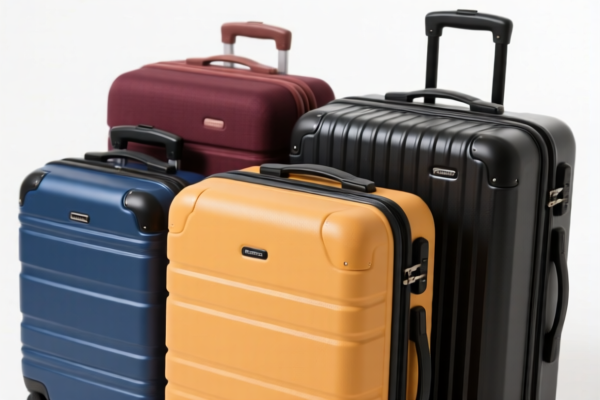
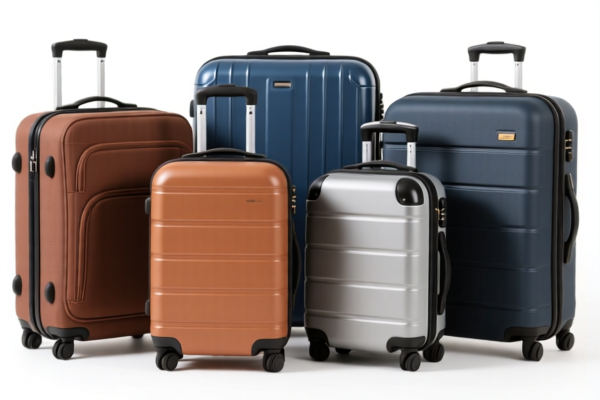
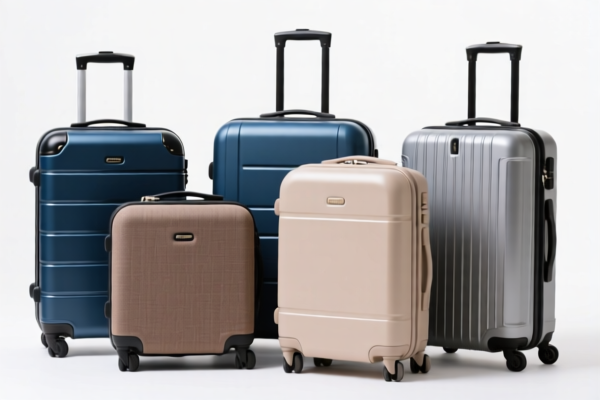
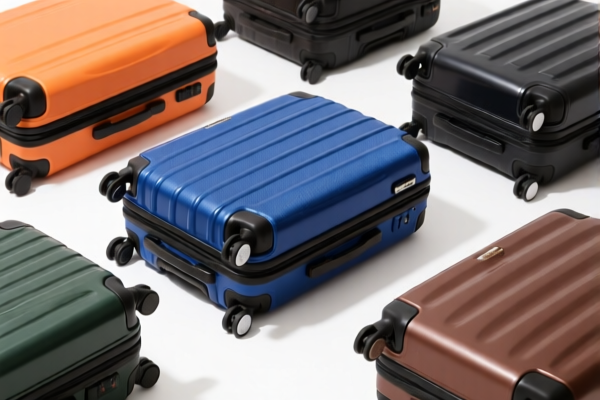
AI Analysis
🧳 Luggage: Suitcases & Bags with Outer Layer of Plastic or Textile Material
🌐 HS Code Reference & Clearance Guide | 2026 Latest Tariff Analysis | Professional Entry Strategy
📌 I. Product Definition & Classification: What Exactly Are We Shipping?
“Suitcases and Bags with Outer Layer of Plastic or Textile Material” is a broad category in international trade. The critical factor for classification is not just the material, but the specific shape, function, and lining. A “suitcase” is generally rigid or semi-rigid, while a “bag” (like a backpack or handbag) has different structural classifications under Chapter 42 or Chapter 63.
Key Distinction:
- Chapter 42 (Leather Goods): Includes backpacks, handbags, suitcases made of leather, composition leather, or sheeting of plastic (e.g., PVC).
- Chapter 63 (Other Made-Up Articles): Includes certain bags made of textile materials (e.g., canvas, nylon, polyester) that do not meet the specific definition of “articles of apparel” or specific leather goods.
⚠️ Critical Classification Point:
- If the bag is a backpack or handbag with a plastic/textile outer, it often falls under HS 4202 (if structured like leather goods) OR HS 6305 (if specifically textile sacks/bags, though 6305 is mostly for sacks, some bags fall here if not in 4202). Note: The provided data shows a split between 6305 and 4202 for bags, indicating specific material nuances.
- If it is a handbag with a fabric (cotton) outer and leather/synthetic leather interior/outer, it falls under 4205 or 3926.
📦 II. HS Code Classification Details (Based on Provided Data)
| HS Code | Product Description | Material Structure | Tax Category |
|---|---|---|---|
| 6305.39.00.00 | Backpacks, outer layer of plastic or textile material | Plastic/Textile outer | 25.9% |
| 4202.92.31.20 | Backpacks, outer layer of plastic or textile material | Plastic/Textile outer | 52.6% |
| 6305.33.00.80 | Bags (general), outer layer of plastic or textile material | Plastic/Textile outer | 25.9% |
| 4205.00.60.00 | Handbags, outer layer of leather/synthetic leather with cotton/plastic/ textile lining or inner layer | Leather/Synthetic Leather + Cotton/Plastic | 39.9% |
| 3926.90.33.00 | Handbags, outer layer of plastic/textile with leather/synthetic leather components | Plastic/Textile + Leather/Synthetic | 16.5% |
🔍 Note on Data Discrepancy:
- Both 6305.39.00.00 and 4202.92.31.20 describe “Backpacks” with similar material descriptions but have vastly different tax rates (25.9% vs. 52.6%). This highlights the importance of precise subheading classification based on specific material composition (e.g., type of textile vs. type of plastic) or country-specific tariff schedules. - Handbags are split between 4205 (Leather-focused) and 3926 (Plastic-focused), with significantly different tax implications.
💰 III. 2026 Tariff Rate Breakdown (Including Surtaxes)
✅ Applicable Country: United States (US)
✅ Origin: China (CN)
✅ Effective Date: From November 10, 2025 (including subsequent imports)
🎯 1. 6305.39.00.00 & 6305.33.00.80 —— Backpacks/Bags (Textile/Plastic Outer)
| Item | Details |
|---|---|
| Base Duty Rate | 8.4% (ad valorem) |
| Section 301 Surtax | +7.5% |
| Section 122 Surtax | +10% |
| Total Effective Rate | 25.9% |
| Tax Calculation | CIF Value × 25.9% |
| De Minimis Exemption | ❌ Not Eligible |
| Legal Basis | Standard China-US tariff structure + Surtaxes |
📌 Explanation:
- These codes benefit from a lower base duty (8.4%) compared to other bag categories. - The 7.5% is likely a Section 301 additional duty, and the 10% is the Section 122 duty (or similar bilateral tariff). - Total: 25.9%. This is a moderate-high tariff but significantly lower than the 52.6% bracket.
🎯 2. 4202.92.31.20 —— Backpacks (Higher Tax Bracket)
| Item | Details |
|---|---|
| Base Duty Rate | 17.6% (ad valorem) |
| Section 301 Surtax | +25.0% |
| Section 122 Surtax | +10% |
| Total Effective Rate | 52.6% |
| Tax Calculation | CIF Value × 52.6% |
| De Minimis Exemption | ❌ Not Eligible |
| Legal Basis | Higher base duty triggers higher surtaxes |
📌 Explanation:
- This is the most expensive category for backpacks in the provided data. - The 25% surtax is the maximum Section 301 rate, applied to higher-value or specific material classifications. - Total: 52.6%. This drastically impacts profit margins. Proper classification is critical to avoid landing here if another code applies.
🎯 3. 4205.00.60.00 —— Handbags (Leather/Synthetic Focus)
| Item | Details |
|---|---|
| Base Duty Rate | 4.9% (ad valorem) |
| Section 301 Surtax | +25.0% |
| Section 122 Surtax | +10% |
| Total Effective Rate | 39.9% |
| Tax Calculation | CIF Value × 39.9% |
| De Minimis Exemption | ❌ Not Eligible |
📌 Explanation:
- Lower base duty (4.9%) but high surtax (25%). - Total 39.9%. Suitable for higher-value leather goods where volume is lower.
🎯 4. 3926.90.33.00 —— Handbags (Plastic/Textile Focus)
| Item | Details |
|---|---|
| Base Duty Rate | 6.5% (ad valorem) |
| Section 301 Surtax | 0.0% |
| Section 122 Surtax | +10% |
| Total Effective Rate | 16.5% |
| Tax Calculation | CIF Value × 16.5% |
| De Minimis Exemption | ❌ Not Eligible |
📌 Explanation:
- Lowest total rate (16.5%) in the dataset. - Key advantage: 0% Section 301 surtax. This suggests these plastic/textile handbags may be exempt from certain trade war tariffs, possibly due to material composition or specific exclusion lists. - Highly recommended for cost optimization if product design allows.
🛠️ IV. Customs Clearance Practical Advice (Battle-Tested Pitfall Avoidance)
✅ 1. Essential Documentation Checklist (Non-Negotiable)
| Document | Required | Purpose |
|---|---|---|
| ✅ Detailed Product Spec Sheet | ✔️ | Must specify: Outer material (plastic type, textile type), Inner lining, Hardware (metal/plastic) |
| ✅ High-Res Photos | ✔️ | Clear view of labels, zippers, and overall structure |
| ✅ Commercial Invoice | ✔️ | Must explicitly state “Suitcase/Backpack/Handbag” and material composition |
| ✅ Packing List | ✔️ | Item-by-item breakdown |
| ✅ Material Declaration Letter | ✔️ | Crucial for distinguishing between 4202 (Leather-like plastic) and 6305/3926 (Textile/Plastic) |
✅ 2. Declaration Strategy (Key Rules)
🔥 “Material Defines Code, Structure Defines Chapter!”
| Scenario | Recommended HS Code | Reason |
|---|---|---|
| Backpack with Plastic Outer | 4202.92.31.20 or 6305.39.00.00 |
Check if plastic is “sheeting of plastic” (4202) or just plastic-coated textile (6305). Risk: 52.6% vs 25.9% |
| Backpack with Textile Outer | 6305.39.00.00 |
If not classified as leather-like under 4202. |
| Handbag with Leather/Synthetic Outer | 4205.00.60.00 |
“Leather-like” materials trigger Chapter 42. |
| Handbag with Plastic/Textile Outer | 3926.90.33.00 |
Best Rate (16.5%). Avoids 25% surtax. |
⚠️ Warning:
- Do NOT misdeclare a4202backpack as6305to save tax. Customs may audit the plastic composition. If it’s PVC sheeting, it must be4202. - Do NOT declare a leather handbag as3926plastic. Mismatched materials will lead to severe penalties.
✅ 3. Special Cases & Optimization
| Situation | Action |
|---|---|
| Mixed Materials | If a bag is 50% leather, 50% plastic, it likely falls under 4205 (39.9%). Analyze if you can adjust design to qualify for 3926 (16.5%) by reducing leather content. |
| “Plastic” Definition | Ensure the “plastic” is not “leather-like” PVC. Non-leather-like plastics (e.g., PE, PP) favor 3926. |
| Textile Type | Woven vs. Non-woven textiles may impact classification. Confirm with supplier. |
🌍 V. Market Comparison & Conclusion
| Market | Recommended Code | Est. Total Tax | Note |
|---|---|---|---|
| 🇺🇸 USA | 3926.90.33.00 |
16.5% | Best Option. Zero 301 surtax. |
| 🇺🇸 USA | 6305.39.00.00 |
25.9% | Moderate. For backpacks not in 4202. |
| 🇺🇸 USA | 4202.92.31.20 |
52.6% | Avoid if possible. High tax burden. |
📌 Strategic Recommendation:
- Prioritize3926.90.33.00for handbags by using plastic/textile exteriors without “leather-like” properties.
- For backpacks, carefully determine if the plastic component qualifies for6305(25.9%) rather than4202(52.6%). This is a 26.7% savings per unit!
- Always provide material test reports to prove the nature of the plastic/textile to support your HS code choice.
📌 VI. Common Mistakes & Pitfalls
❌ Mistake 1: Calling all bags “Backpacks” and picking 6305 when they are actually 4202.
👉 Result: 26.7% overpayment.
❌ Mistake 2: Calling leather handbags “Plastic Handbags” to get 3926 rates.
👉 Result: Severe penalty, seizure, or fraud charges.
❌ Mistake 3: Ignoring the Section 122 10% tax.
👉 Result: Underestimating total landed cost by 10%.
✅ Correct Approach:
“Handbag, outer layer of polyethylene plastic, inner lining of polyester, model XYZ, origin China.” →
3926.90.33.00(16.5%)
🎯 VII. Conclusion: Precision Saves Money!
🎯 Motto:
🔹 “Plastic vs. Leather-Like: The 36% Difference!”
🔹 “Backpacks: 25.9% vs 52.6% – Choose Wisely!”
📌 Tip:
If you have flexibility in product design, reduce leather content to qualify for 3926 (16.5%) or ensure backpacks are classified as 6305 (25.9%) rather than 4202 (52.6%).
📣 Call to Action:
📞 Consult a customs broker to verify material composition before shipment.
🚀 Optimize your HS Code to save up to 36% in duties!
✨ Professional Clearance Starts with Accurate Classification!
💼 Every dollar saved in tariffs is pure profit!
Customer Reviews
About HS Code Classification
The Harmonized System (HS) is an internationally standardized nomenclature developed by the World Customs Organization (WCO) to classify traded products. Over 200 countries use the HS system as the basis for customs tariffs, trade statistics, and import/export regulations.
Each HS code follows a hierarchical structure:
- Chapter (2 digits) — Broad category of goods (e.g., Chapter 84: Machinery and Mechanical Appliances)
- Heading (4 digits) — More specific grouping within the chapter
- Subheading (6 digits) — Internationally standardized breakdown, used by all WCO member countries
- National subdivisions (8-10 digits) — Country-specific extensions for further classification, such as US HTSUS 10-digit codes
Correct HS code classification is essential for smooth customs clearance, accurate duty payment, and compliance with trade regulations. Misclassification can lead to customs delays, overpayment of duties, or penalties.
When importing from CN to US, the applicable tariff rates may include:
- Most-Favored-Nation (MFN) rate — The standard duty rate applied to WTO members
- General rate — Applied to countries without trade agreements
- Trade remedy duties — Additional tariffs such as Section 301 (anti-dumping), Section 232 (national security), or countervailing duties
The information provided on this page is for reference purposes only. For official classification, please consult with your local customs authority or a licensed customs broker.