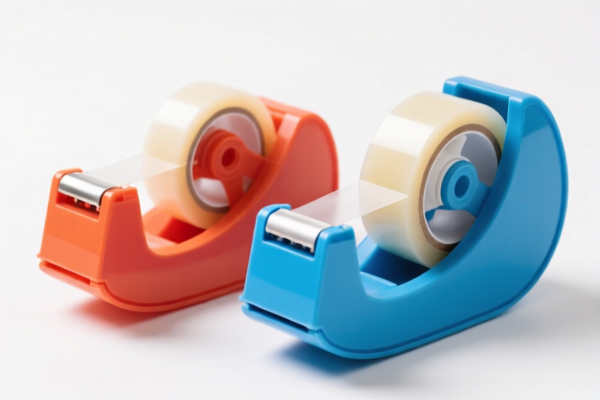
Tape Dispenser
CN → US| HS Code | Tariff Rate | Origin | Destination | Doc |
|---|---|---|---|---|
| 8205591000 | 42.2% | CN | US | Official Doc |
| 8466208040 | 38.7% | CN | US | Official Doc |
| 8205595510 | 40.3% | CN | US | Official Doc |
Product Images



AI Analysis
📦 Tape Dispensers (Hand Tools & Machinery Parts)
🌐 HS Code Reference & Customs Clearance Guide | 2026 Latest Tariff Analysis | Professional Strategy for Belt Cutters/Dispensers
⚠️ Note on Product Terminology:
The input "Tape Dispenser" in the context of the provided data refers to industrial equipment described as "Belt Cutters" (often used for cutting rubber belts, conveyor belts, or heavy-duty tape). The analysis below strictly follows the provided HS codes and tax details for these specific industrial cutting tools.
📦 一、HS Code Classification Matrix (Based on Provided Data)
| HS Code | Product Description & Classification Logic | Total Tax Rate | Tax Breakdown |
|---|---|---|---|
| 8205.59.10.00 | Hand Tool – Belt Cutter Classified as a hand tool for cutting. Material inferred as metal or hard plastic. Focuses on the "hand-operated cutting" function. |
42.2% | Base: 7.2% Retaliatory: 25.0% Section 122: 10% |
| 8466.20.80.40 | Machine Tool Accessory – Fixture/Holder Classified as a fixture and clamping device (tool/fixture). It is considered an auxiliary tool for machining, not a standalone hand tool. |
38.7% | Base: 3.7% Retaliatory: 25.0% Section 122: 10% |
| 8205.59.55.10 | Hand Tool – Sharp-edged Tool Classified as a sharp-edged hand tool. Material inferred as metal (iron/steel). Fits under "other" categories for sharp tools. |
40.3% | Base: 5.3% Retaliatory: 25.0% Section 122: 10% |
🧠 二、Classification Logic: Why These HS Codes?
1️⃣ HS Code 8205.59.10.00: The "Hand Tool" Perspective
- Logic: Customs views the device primarily as a hand-operated cutting instrument.
- Key Criterion: The user holds the device and applies manual force to cut the belt/tape.
- Material Assumption: Metal or hard plastic construction.
- Tax Impact: Highest base duty (7.2%) among the options, leading to the highest total tax (42.2%).
2️⃣ HS Code 8466.20.80.40: The "Machine Accessory" Perspective
- Logic: The device is viewed as a fixture or clamping aid for machining processes. It stabilizes or holds material during a cutting or machining operation.
- Key Criterion: It is an auxiliary tool for machinery, not a primary tool itself.
- Tax Impact: Lowest base duty (3.7%), resulting in the lowest total tax (38.7%). This is the most cost-effective classification IF it can be legally justified as a fixture.
3️⃣ HS Code 8205.59.55.10: The "Sharp-Edged Metal Tool" Perspective
- Logic: The device is categorized under sharp-edged hand tools made of metal (iron/steel).
- Key Criterion: Emphasis on the material (metal) and the sharp edge function.
- Tax Impact: Mid-range base duty (5.3%), leading to a moderate total tax (40.3%).
💰 三、Tariff Structure Explanation (Detailed Breakdown)
All three classifications are subject to a complex tariff structure, likely targeting specific industrial inputs. Here is the detailed breakdown:
| Tax Component | Rate | Description |
|---|---|---|
| Base Duty (MFN) | 3.7% - 7.2% | The standard Most Favored Nation duty rate for the specific HS code. Varies based on whether it's seen as a tool (8205) or a fixture (8466). |
| Retaliatory Duty | 25.0% | A significant additional tariff, likely under Section 301 or similar trade remedy measures against specific country origins (e.g., China). This is the dominant cost driver. |
| Section 122 Duty | 10.0% | A specific statutory duty (Section 122) applied to certain imports, often used for national security or emergency reasons. |
| TOTAL TAX | 38.7% - 42.2% | Sum of Base + Retaliatory + Section 122. |
📌 Critical Insight:
The 25% Retaliatory Duty is fixed across all categories. The only variable is the Base Duty.
- Saving Opportunity: Choosing HS Code 8466.20.80.40 saves 3.5% in total tax compared to the most expensive option (8205.59.10.00).
- Risk Warning: Misclassifying a hand tool as a machine fixture (8466) can lead to customs penalties if the device is clearly a handheld cutter.
🛠️ 四、Customs Clearance & Compliance Strategy
✅ 1. Declaration Best Practices
- Product Name: Use precise industrial terminology. Instead of just "Tape Dispenser," use:
- "Industrial Belt Cutter, Hand-Held, Metal Blade" (for 8205.59.10.00)
- "Cutting Fixture for Belt Processing Machinery" (for 8466.20.80.40)
- "Heavy-Duty Steel Belt Cutter with Sharp Edge" (for 8205.59.55.10)
- Function Description: Clearly state whether the tool is hand-held or mounted/used as a fixture.
✅ 2. Documentation Requirements
- Technical Specifications: Include material composition (e.g., "Stainless Steel Blade," "Hard Plastic Handle").
- Usage Statement: Provide a clear description of how the tool is used. Is it a standalone cutter, or part of a larger machine setup?
- Photos: High-resolution images showing the tool's structure, especially the cutting edge or clamping mechanism.
✅ 3. Risk Mitigation
- Pre-Ruling: Consider applying for an Advance Ruling from customs to confirm the correct HS code before shipment.
- Avoid "Tape Dispenser" for Consumer Goods: If this is a simple office tape dispenser, these industrial HS codes are incorrect. The provided data is for industrial belt/cutter tools. Using consumer classifications for industrial tools will result in delays and fines.
🌍 五、Global Market Comparison (2026 Context)
| Market | Classification Trend | Key Consideration |
|---|---|---|
| 🇺🇸 United States | Strict scrutiny on "Retaliatory Duties" | The 25% + 10% surcharge is critical. Ensure origin is correctly declared to avoid anti-dumping inquiries. |
| 🇪🇺 European Union | Focus on "Hand Tools" vs. "Machinery Parts" | EU may classify similar items under 8205 but with different base rates. Check if Section 122 equivalents exist. |
| 🇨🇳 China | Import Duty Structure | Different base rates apply. If exporting from the US, the 25% retaliatory duty may not apply to re-exports. |
🎯 六、Final Recommendation
- Best Cost-Efficiency: Aim for HS Code 8466.20.80.40 (38.7% total tax) IF the device can be legitimately described as a fixture or clamping device for machinery. This requires strong technical justification.
- Safest for Handheld Tools: Use HS Code 8205.59.10.00 (42.2%) if it is a standard handheld cutter. It is the most straightforward classification for "hand tools."
- Avoid Ambiguity: Do not use generic terms like "Tape Dispenser" in customs declarations. Use specific industrial terms like "Belt Cutter" or "Cutting Fixture."
🚀 Pro Tip:
"Classify by Function, Not Just Name.
If it holds the belt during cutting → 8466 (38.7%).
If it cuts manually → 8205 (40-42%).
Always verify with a licensed customs broker before shipping!"
✨ Precision in Classification Saves Millions.
💼 Don't let tariff ambiguity cut into your profits!
Customer Reviews
About HS Code Classification
The Harmonized System (HS) is an internationally standardized nomenclature developed by the World Customs Organization (WCO) to classify traded products. Over 200 countries use the HS system as the basis for customs tariffs, trade statistics, and import/export regulations.
Each HS code follows a hierarchical structure:
- Chapter (2 digits) — Broad category of goods (e.g., Chapter 84: Machinery and Mechanical Appliances)
- Heading (4 digits) — More specific grouping within the chapter
- Subheading (6 digits) — Internationally standardized breakdown, used by all WCO member countries
- National subdivisions (8-10 digits) — Country-specific extensions for further classification, such as US HTSUS 10-digit codes
Correct HS code classification is essential for smooth customs clearance, accurate duty payment, and compliance with trade regulations. Misclassification can lead to customs delays, overpayment of duties, or penalties.
When importing from CN to US, the applicable tariff rates may include:
- Most-Favored-Nation (MFN) rate — The standard duty rate applied to WTO members
- General rate — Applied to countries without trade agreements
- Trade remedy duties — Additional tariffs such as Section 301 (anti-dumping), Section 232 (national security), or countervailing duties
The information provided on this page is for reference purposes only. For official classification, please consult with your local customs authority or a licensed customs broker.