Textile Material Bags and Pouches
CN → US| HS Code | Tariff Rate | Origin | Destination | Doc |
|---|---|---|---|---|
| 4202929336 | 52.6% | CN | US | Official Doc |
| 6307908995 | 17.0% | CN | US | Official Doc |
| 4202929100 | 52.6% | CN | US | Official Doc |
| 6307909891 | 24.5% | CN | US | Official Doc |
| 4202929336 | 52.6% | CN | US | Official Doc |
Product Images
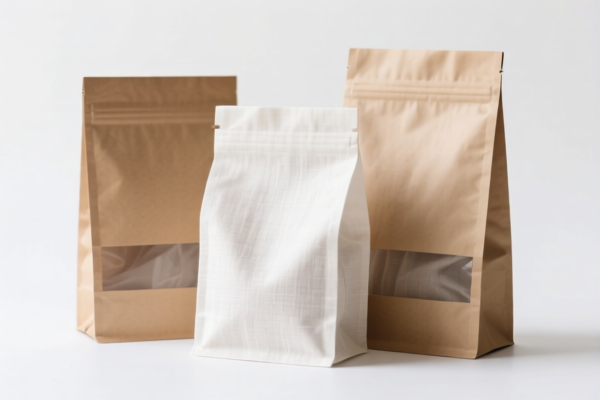
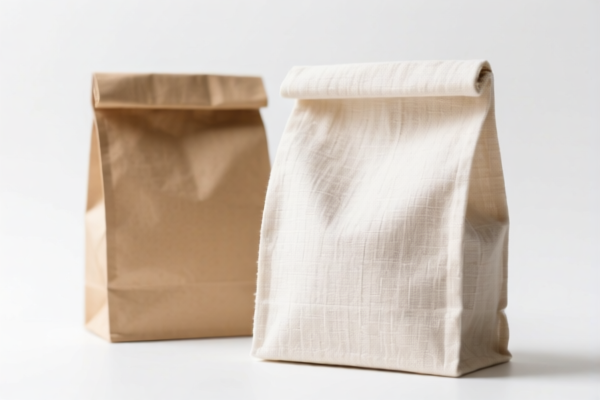
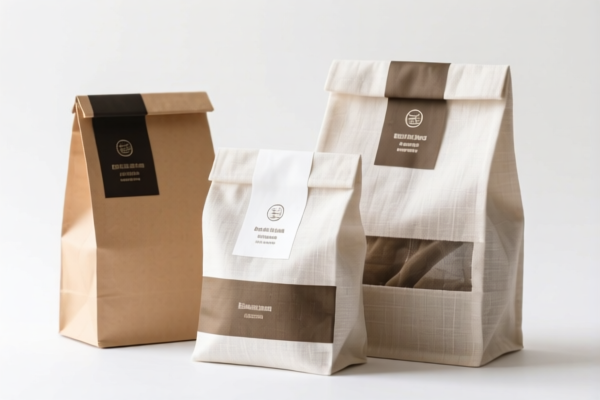
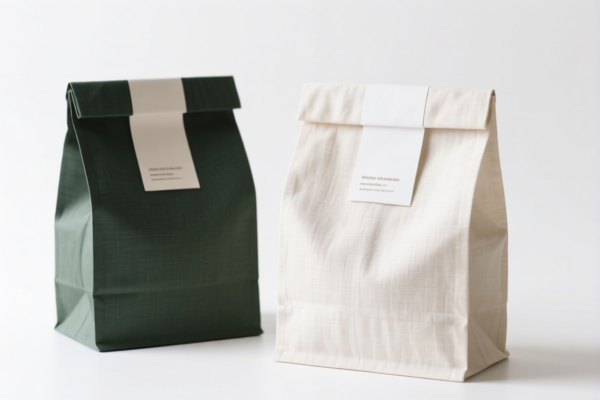
AI Analysis
👜 Textile Material Bags and Pouches
🌐 HS Code Reference & Customs Clearance Guide | 2026 Latest Tariff Analysis | Professional Classification Strategy
📌 1. Product Definition & Classification: Do You Truly Understand "Textile Bags"?
Textile bags and pouches are essential packaging solutions in global trade, ranging from shopping bags and backpacks to industrial sacks and cosmetic pouches. In international trade, they are primarily classified under two main headings depending on their function, outer material, and specific use:
Chapter 42 Articles: Luggage, handbags, and specific containers made of textile materials but treated as "articles of apparel or travel goods."
Chapter 63 Other Made-Up Textile Articles: General-purpose bags, sacks, and pouches that do not fit specific functional categories like luggage.
⚠️ Key Distinction Point:
- If the bag is designed as luggage, handbags, or specific containers with outer surface of textile material → Likely Chapter 42 (Higher Tariff).
- If the bag is a general-purpose sack, pouch, or industrial bag without specific luggage features → Likely Chapter 63 (Lower Tariff).
📦 2. HS Code Classification Details (2026 Latest Official Tariff Alignment)
Based on the provided data, here are the specific HS Codes, summaries, and tax implications for textile material bags and pouches:
| HS Code | Product Summary (Official) | Applicable Scenario | Total Tax Rate |
|---|---|---|---|
4202.92.93.36 |
Other containers, outer surface of textile material; matches bag/pouch form and textile material | Specific textile containers, structured bags | 52.6% |
6307.90.89.95 |
Other made-up textile articles; bags and pouches made of textile materials, fitting textile product category | General textile bags, reusable shopping bags, pouches | 17.0% |
4202.92.91.00 |
Bags and pouches, outer surface of textile material, fitting classification definition | Standard textile handbags, luggage-style bags | 52.6% |
6307.90.98.91 |
Other made-up textile articles; bags and pouches made of textile materials, fitting residual rules | General-use textile sacks, industrial bags, residual categories | 24.5% |
🔍 Critical Observation:
- Chapter 42 codes (4202.92.93.36,4202.92.91.00) carry a significantly higher total tax rate of 52.6% due to additional levies.
- Chapter 63 codes (6307.90.89.95,6307.90.98.91) offer lower total tax rates of 17.0% or 24.5%, making them preferable for general-purpose textile bags if classification allows.
💰 3. 2026 Latest Tariff Rate Breakdown (Including Surtaxes & Policy Surcharges)
✅ Applicable Country: United States (US)
✅ Origin: China (CN)
✅ Effective Time: Current policies apply (Section 301 + IEEPA)
🎯 1. 4202.92.93.36 & 4202.92.91.00 —— Chapter 42 Textile Bags/Containers
| Item | Detail |
|---|---|
| Base Tariff Rate | 17.6% |
| Section 301 Surcharge | 25.0% |
| 122 Provision Surcharge | 10.0% |
| Total Tax Rate | 52.6% |
| Tax Calculation | CIF Value × 52.6% |
| De Minimis Exemption | ❌ Not Applicable (High tax rate excludes small package exemption) |
| Legal Basis Path | Base: 4202 → Surcharge: Sec 301 (25%) → Surcharge: 122 Provision (10%) |
📌 Explanation:
- These codes fall under Chapter 42, which often targets specific consumer goods.
- The 25% Section 301 tariff is a heavy surcharge on Chinese-origin goods.
- The 10% additional 122 Provision tariff further increases the cost.
- Total burden: 52.6%. This is extremely high and significantly impacts profit margins.
🎯 2. 6307.90.89.95 —— Chapter 63 General Textile Bags/Pouches
| Item | Detail |
|---|---|
| Base Tariff Rate | 7.0% |
| Section 301 Surcharge | 0.0% |
| 122 Provision Surcharge | 10.0% |
| Total Tax Rate | 17.0% |
| Tax Calculation | CIF Value × 17.0% |
| De Minimis Exemption | ❌ Not Applicable (Though lower, high value shipments still taxed) |
| Legal Basis Path | Base: 6307 → Surcharge: 122 Provision (10%) |
📌 Note:
- This code has no Section 301 surcharge (0%), which is a huge advantage.
- Only the 10% 122 Provision applies.
- Total burden: 17.0%. This is the most cost-effective option for general textile bags.
🎯 3. 6307.90.98.91 —— Chapter 63 Residual Textile Bags
| Item | Detail |
|---|---|
| Base Tariff Rate | 7.0% |
| Section 301 Surcharge | 7.5% |
| 122 Provision Surcharge | 10.0% |
| Total Tax Rate | 24.5% |
| Tax Calculation | CIF Value × 24.5% |
| De Minimis Exemption | ❌ Not Applicable |
| Legal Basis Path | Base: 6307 → Surcharge: Sec 301 (7.5%) → Surcharge: 122 Provision (10%) |
📌 Note:
- This code is a middle ground. It has a low base rate (7.0%) but incurs a partial Section 301 surcharge (7.5%).
- Total burden: 24.5%. Better than Chapter 42, but worse than6307.90.89.95.
🛠️ 4. Customs Clearance Practical Advice (Real-World Pitfall Avoidance Guide)
✅ 1. Preparation Checklist (Essential Documents)
| Document | Required | Explanation |
|---|---|---|
| ✅ Product Specifications | ✔️ | Material composition (e.g., 100% Polyester, Cotton Blend), dimensions, weight |
| ✅ Photos of Bags | ✔️ | Must show outer material clearly (textile vs. plastic-coated vs. leather) |
| ✅ Commercial Invoice | ✔️ | Clearly state "Textile Bag" or "Pouch," avoid vague terms like "Accessory" |
| ✅ Packaging List | ✔️ | Detail quantity, weight, and whether bags are folded or assembled |
| ✅ Supply Chain Proof | ✔️ | Certificate of Origin (if applicable for any preferential treatment) |
✅ 2. Declaration Strategy (Key Mantra)
🔥 "Material Matters, Function Defines, Avoid Chapter 42 if Possible!"
| Scenario | Correct Declaration | Common Mistake |
|---|---|---|
| General Shopping Bag / Tote | 6307.90.89.95 (17.0%) |
Misdeclaring as 4202.92.91.00 → 52.6% |
| Luggage / Handbag Style | 4202.92.91.00 (52.6%) |
Trying to declare as general bag → Audit risk |
| Industrial Sack / Bulk Bag | 6307.90.98.91 (24.5%) |
Declaring as apparel accessory → 52.6% |
| Cosmetic Pouch (Textile) | 6307.90.89.95 (17.0%) |
If it resembles a toiletry bag, might be 4202 → 52.6% |
📌 Strategic Tip:
- If the bag does not have straps, zippers, or structured handles typical of handbags, argue for Chapter 63 to save 35.6% in taxes.
- If the bag is clearly fashion-oriented (designer style, specific handles, structured), Chapter 42 is unavoidable.
✅ 3. Special Cases & Handling
| Situation | Handling Advice |
|---|---|
| Mixed Material Bags (e.g., Textile + Plastic Lining) | If outer surface is textile, still likely Chapter 42/63. If plastic coating dominates, may shift to Chapter 39/40 → Check carefully! |
| OEM Custom Bags | Provide design sketches to prove intent (e.g., "promotional bag" vs. "luggage") |
| Small Quantity / Samples | Even if low value, ensure correct HS Code to avoid future audits |
| Bulk Industrial Bags | Use 6307.90.98.91 or 6307.90.89.95 to minimize Section 301 impact |
🌍 5. Global Market Comparison (2026 Latest)
| Country/Region | Recommended HS Code | Tariff (China Origin) | Certification Requirements | Notes |
|---|---|---|---|---|
| 🇺🇸 USA | 6307.90.89.95 |
17.0% | None Specific | Avoid Chapter 42 due to 52.6% rate |
| 🇨🇳 China | 6307.90.89.95 |
~5-10% | N/A | Low import tax, easy clearance |
| 🇪🇺 EU | 6307.90.98.91 |
0-4% | REACH (if textile treated) | No Section 301 equivalent |
| 🇬🇧 UK | 6307.90.98.91 |
0-4% | UKCA (if applicable) | Post-Brexit, no US-style surcharges |
| 🇯🇵 Japan | 6307.90.98.91 |
0-5% | PSE (if electronic accessories) | No major surcharges on bags |
📌 Conclusion:
- USA is the most challenging market due to Section 301 and 122 Provision tariffs.
- Strategic Classification under Chapter 63 can save ~35% in taxes compared to Chapter 42.
- For non-US markets, Chapter 63 codes generally have 0-5% tariffs, making them highly competitive.
📌 6. Common Errors & Pitfall Guide (Blood Lessons)
❌ Error 1: Declaring all textile bags as 6307.90.89.95
👉 Consequence: If the bag is clearly a handbag/luggage (structured, straps), customs will reclassify to 4202 → Back taxes + penalties at 52.6%.
❌ Error 2: Ignoring the 122 Provision 10% Surcharge
👉 Consequence: Even Chapter 63 bags incur 10% extra. Total is NOT just base rate. Plan for 17% or 24.5%, not 7%.
❌ Error 3: Misdeclaring "Plastic Coated" bags as "Textile"
👉 Consequence: If outer surface is plastic, it may fall under Chapter 39/40 → Different tariffs + misdeclaration fines.
❌ Error 4: Using vague descriptions like "Bag"
👉 Consequence: Customs may choose the highest applicable tariff or request additional info → Delays.
✅ Correct Practice:
"100% Polyester Reusable Shopping Bag, Foldable, No Structural Handles, Model XYZ" →
6307.90.89.95
"Leather-Trimmed Textile Handbag, Structured, Zippered, Model ABC" →4202.92.91.00
🎯 7. Conclusion: Precision Classification, Cost Savings, Efficiency!
🎯 Remember This Mantra:
🔹 "Chapter 63 is your friend, Chapter 42 is your enemy (in the US)."
🔹 "17% vs. 52.6% is a 35% difference — declare correctly, save thousands."
🔹 "Always prove the 'General Use' nature of the bag to avoid Chapter 42."
📌 Pro Tip:
- For high-volume exporters to the US, consider Advance Rulings from CBP to confirm HS Code classification.
- If possible, design bags without luggage-like features (e.g., no stiff handles, no structured frames) to stay in Chapter 63.
- Monitor 122 Provision updates — surcharges can change, affecting the 17.0% and 24.5% rates.
📣 Immediate Action:
📞 Consult with a licensed customs broker + Provide product photos + Verify outer material composition
🚀 Optimize your supply chain to minimize tariff burden, ensure smooth clearance, and maximize profitability!
✨ Professional Customs Clearance Starts with Precise Classification!
💼 Your profit margin depends on the right HS Code!
Customer Reviews
About HS Code Classification
The Harmonized System (HS) is an internationally standardized nomenclature developed by the World Customs Organization (WCO) to classify traded products. Over 200 countries use the HS system as the basis for customs tariffs, trade statistics, and import/export regulations.
Each HS code follows a hierarchical structure:
- Chapter (2 digits) — Broad category of goods (e.g., Chapter 84: Machinery and Mechanical Appliances)
- Heading (4 digits) — More specific grouping within the chapter
- Subheading (6 digits) — Internationally standardized breakdown, used by all WCO member countries
- National subdivisions (8-10 digits) — Country-specific extensions for further classification, such as US HTSUS 10-digit codes
Correct HS code classification is essential for smooth customs clearance, accurate duty payment, and compliance with trade regulations. Misclassification can lead to customs delays, overpayment of duties, or penalties.
When importing from CN to US, the applicable tariff rates may include:
- Most-Favored-Nation (MFN) rate — The standard duty rate applied to WTO members
- General rate — Applied to countries without trade agreements
- Trade remedy duties — Additional tariffs such as Section 301 (anti-dumping), Section 232 (national security), or countervailing duties
The information provided on this page is for reference purposes only. For official classification, please consult with your local customs authority or a licensed customs broker.