Textile Reinforced Plastic Film
CN → US| HS Code | Tariff Rate | Origin | Destination | Doc |
|---|---|---|---|---|
| 3926905900 | 37.4% | CN | US | Official Doc |
| 3926909989 | 22.8% | CN | US | Official Doc |
| 3921902510 | 41.5% | CN | US | Official Doc |
| 3921904010 | 39.2% | CN | US | Official Doc |
| 3921902510 | 41.5% | CN | US | Official Doc |
Product Images
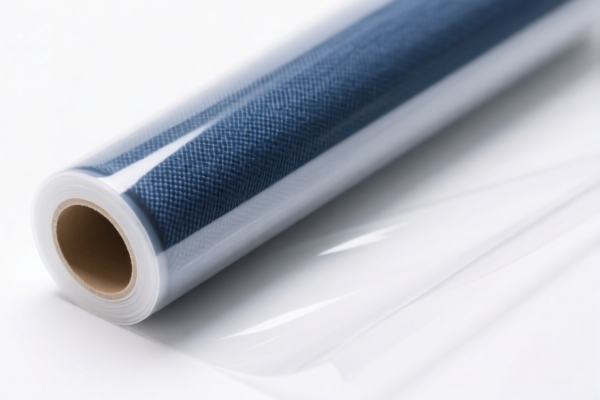


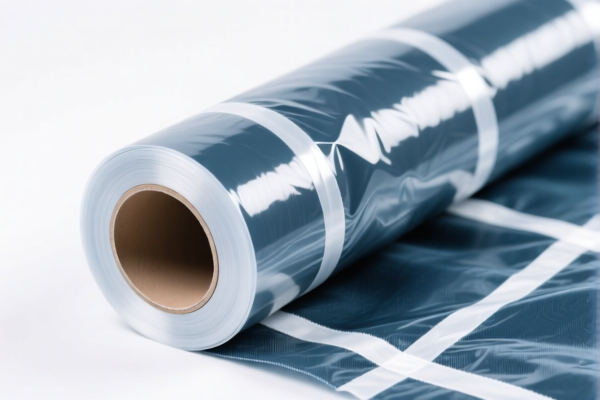
AI Analysis
🧵 Textile Reinforced Plastic Film (Textile-Reinforced Plastics)
🌐 HS Code Reference & Customs Clearance Guide | 2026 Latest Tariff Analysis | Professional Compliance Strategy
📌 1. Product Definition & Classification: What Exactly Is It?
"Textile Reinforced Plastic Film" refers to composite materials where textile fibers (such as glass, carbon, aramid, or polyester) are embedded within or coated by a plastic matrix (such as polyethylene, PVC, PET, or epoxy). In international trade, these products are often classified based on their form (film/sheet/plate) and primary material composition.
Key Distinction Points: * Form Factor: Is it a flexible film (thin, pliable), a sheet (flat but thicker), or a plate (rigid, structural)? * Composition: Is the textile component significant enough to define the product as a "textile composite" or is the plastic the dominant characterizing feature? * End Use: Is it for decorative/lamination purposes (often falling under "other articles") or for structural/industrial lamination (falling under sheets/plates/films)?
⚠️ Critical Classification Logic: - If classified as "Other Articles of Plastics" (e.g., display panels, decorative elements) → HS 3926.90 - If classified as "Plastics in Primary Forms/Sheets/Plates" → HS 3921.90
📦 2. HS Code Classification Details (Based on Provided Data)
| HS Code | Product Description Summary | Key Characteristic | Total Tax Rate |
|---|---|---|---|
3926.90.59.00 |
Textile-reinforced plastic display panel, containing textile fibers, classified under "Other articles of plastics" | Display/Decorative Application Specifically noted as "display panel" |
37.4% |
3926.90.99.89 |
Textile-reinforced plastic display panel, plastic material, classified under "Other articles not specified elsewhere" | General Plastic Article Less specific than 3926.90.59, broader "unlisted" category |
22.8% |
3921.90.25.10 |
Textile-reinforced plastic film/plate/sheet, containing textile components, classified under "Other plates, sheets, film, foil, and strip" | Material Form: Sheet/Plate/Film Classified as a basic plastic material form, not a finished article |
41.5% |
3921.90.40.10 |
Textile-reinforced plastic decorative panel, in plastic board form, classified under "Other variations of plates, sheets, film, etc." | Structural/Decorative Board Specifically "board form," often used for furniture or wall cladding |
39.2% |
3921.90.25.10 |
Textile-reinforced plastic film, containing textile components, classified under "Other plates, sheets, film, foil, and strip" | Material Form: Flexible Film Strictly "film," likely used for lamination or coating |
41.5% |
🔍 Important Note: - HS 3921 codes generally apply to raw materials, sheets, plates, or films used for further manufacturing (e.g., laminating, cutting, molding). - HS 3926 codes apply to finished articles or specific items like "display panels" that are recognized as distinct products. - The presence of textile fibers triggers additional scrutiny under Section XI (Textiles) vs. Section VII (Plastics). However, the provided data categorizes them primarily under Chapter 39 (Plastics).
💰 3. Detailed Tariff Rate Breakdown (2026 Latest)
✅ Applicable Country: United States (US)
✅ Origin: China (CN)
✅ Effective Date: November 10, 2025 (and subsequent imports)
🎯 1. 3926.90.59.00 – Textile-Reinforced Plastic Display Panel (Article)
| Item | Detail |
|---|---|
| Base Tariff | 2.4% (Ad Valorem) |
| Section 301 Tariff | +25.0% (USITC Footnote 9903.88.01) |
| Section 122 Tariff | +10.0% (IEEPA, China-specific) |
| Total Effective Rate | 37.4% |
| Calculation Basis | CIF Value × 37.4% |
| De Minimis Eligibility | ❌ Not Eligible (High tariff rates usually exclude small packages from Section 321 exemption) |
| Legal Pathway | IEEPA:9903.01.25 → USITC:3926.90.59.00 → FOOTNOTE:301 |
📌 Explanation: - This code is for finished display panels. The 37.4% rate is high due to the combination of base tariffs and US-China trade restrictions. - Strategy: If your product is a "panel" meant for display, ensure the description matches "display panel" precisely. Misclassification as a simple sheet could lead to audits.
🎯 2. 3926.90.99.89 – Textile-Reinforced Plastic Display Panel (Unlisted Article)
| Item | Detail |
|---|---|
| Base Tariff | 5.3% (Ad Valorem) |
| Section 301 Tariff | +7.5% (USITC Footnote 9903.88.01 - Lower bracket) |
| Section 122 Tariff | +10.0% (IEEPA, China-specific) |
| Total Effective Rate | 22.8% |
| Calculation Basis | CIF Value × 22.8% |
| De Minimis Eligibility | ❌ Not Eligible |
| Legal Pathway | IEEPA:9901.25 → USITC:3926.90.99.89 → FOOTNOTE:301 |
📌 Key Insight: - This code offers the lowest total tax (22.8%) among all options. - Why? The Section 301 tariff is only 7.5% instead of 25%. This suggests the item might be viewed as a more generic "plastic article" rather than a high-tech or specifically targeted composite. - Strategy: If the product can reasonably be described as an "unlisted plastic article" rather than a specialized "display panel," this classification significantly reduces costs. However, ensure the description does not contradict the physical nature of the item.
🎯 3. 3921.90.25.10 – Textile-Reinforced Plastic Film/Sheet (Material)
| Item | Detail |
|---|---|
| Base Tariff | 6.5% (Ad Valorem) |
| Section 301 Tariff | +25.0% (USITC Footnote 9903.88.01) |
| Section 122 Tariff | +10.0% (IEEPA, China-specific) |
| Total Effective Rate | 41.5% |
| Calculation Basis | CIF Value × 41.5% |
| De Minimis Eligibility | ❌ Not Eligible |
| Legal Pathway | IEEPA:9903.01.25 → USITC:3921.90.25.10 → FOOTNOTE:301 |
📌 Explanation: - This is the highest tax rate (41.5%). - It applies to films and sheets that are raw materials or semi-finished goods. - Why so high? The combination of a higher base tariff (6.5%) and the full 25% Section 301 tariff makes this the most expensive option. - Strategy: Avoid this code unless the product is strictly a thin film with no structural board-like properties.
🎯 4. 3921.90.40.10 – Textile-Reinforced Plastic Decorative Board (Plate/Sheet)
| Item | Detail |
|---|---|
| Base Tariff | 4.2% (Ad Valorem) |
| Section 301 Tariff | +25.0% (USITC Footnote 9903.88.01) |
| Section 122 Tariff | +10.0% (IEEPA, China-specific) |
| Total Effective Rate | 39.2% |
| Calculation Basis | CIF Value × 39.2% |
| De Minimis Eligibility | ❌ Not Eligible |
| Legal Pathway | IEEPA:9903.01.25 → USITC:3921.90.40.10 → FOOTNOTE:301 |
📌 Explanation: - Applies to boards/sheets used for decoration or general use. - The base tariff is low (4.2%), but the 25% Section 301 tariff pushes the total to 39.2%. - Difference from Film: If the product is rigid enough to be called a "board" or "plate," it falls here, not in the "film" code.
🛠️ 4. Customs Clearance Practical Advice
✅ 1. Documentation Checklist (Must-Haves)
| Document | Required? | Description |
|---|---|---|
| ✅ Product Specification Sheet | ✔️ | Must detail: Material composition (e.g., "50% Glass Fiber, 50% Epoxy"), thickness, dimensions, and finish. |
| ✅ Technical Data Sheet (TDS) | ✔️ | Shows physical properties (tensile strength, flexibility) to prove it's a "film" vs. "board." |
| ✅ Product Photos | ✔️ | Clear images showing cross-section (to see textile reinforcement) and overall appearance. |
| ✅ Commercial Invoice | ✔️ | Must clearly state: "Textile-Reinforced Plastic [Film/Panel/Board]" and avoid vague terms like "Plastic Material." |
| ✅ Packing List | ✔️ | Detailed weight and dimensions. |
| ✅ HS Code Pre-Ruling | ✔️ | Strongly Recommended due to the complexity of composite materials. |
✅ 2. Classification Strategy & Risk Mitigation
🔥 "Form Determines Code, Description Determines Risk!"
| Scenario | Recommended HS Code | Why? | Risk Level |
|---|---|---|---|
| Flexible Roll/Film | 3921.90.25.10 |
Fits definition of "Film." | ⚠️ High Tax (41.5%) |
| Rigid Panel for Display | 3926.90.59.00 |
Specific "Display Panel" description. | ⚠️ Medium-High Tax (37.4%) |
| Generic Plastic Article | 3926.90.99.89 |
Broad "Other Articles" category. | ✅ Lowest Tax (22.8%) |
| Decorative Wall/Furniture Board | 3921.90.40.10 |
"Board form" for decoration. | ⚠️ Medium-High Tax (39.2%) |
📌 Critical Warning: - Do Not Misclassify: Claiming a rigid board is a "film" to avoid taxes can lead to severe penalties. Conversely, classifying a generic article as a "display panel" might attract higher scrutiny. - Textile Content Disclosure: Even though classified under Chapter 39, the presence of textile fibers may require additional labeling or origin documentation if mixed with other goods.
✅ 3. Special Cases & Pitfalls
| Situation | Advice |
|---|---|
| Mixed Use (Film + Board) | If your product can be both, consult a customs broker. The intended use in the first shipment may dictate classification. |
| Sample Shipments | Even small samples are subject to the same tariffs. Do not expect "De Minimis" exemption for these high-tariff items. |
| Labeling Requirements | Ensure the product label includes material composition (e.g., "Plastic with Glass Fiber Reinforcement") to avoid misdeclaration. |
| Origin Labeling | Clearly mark "Made in China" to comply with Section 301 and Section 122 requirements. |
🌍 5. Global Market Comparison (2026 Outlook)
| Region | Likely HS Code | Estimated Duty (China Origin) | Key Requirement |
|---|---|---|---|
| 🇺🇸 USA | 3926.90.99.89 (Best) |
22.8% | Pre-Ruling Recommended |
| 🇺🇸 USA | 3921.90.25.10 (Worst) |
41.5% | High scrutiny on composite materials |
| 🇨🇳 China (Import) | 3921.90.25.10 |
~6-10% | Standard import procedures |
| 🇪🇺 EU | 3920.62.00 (Approx.) |
~6.5% | REACH Compliance, ECHA Registration |
📌 Conclusion: - US Market is Highly Regulated: The difference between 22.8% and 41.5% is massive. - Strategic Choice: If your product is not strictly a "technical film" or "specialized display panel," consider classifying under
3926.90.99.89to leverage the lower 7.5% Section 301 rate. This requires strong technical justification that the item is an "unlisted plastic article."
📌 6. Common Errors & How to Avoid Them
❌ Error 1: Calling all textile-reinforced plastics "Plastic Sheets" regardless of form.
👉 Result: Misclassification if the product is rigid (Board) or flexible (Film).
✅ Fix: Use precise terms: "Film," "Sheet," "Plate," or "Panel."
❌ Error 2: Ignoring the "Display Panel" specification.
👉 Result: If you call it a "panel" but it's not for display, you may be forced into the higher 3921.90 codes.
✅ Fix: Be specific about end-use in the invoice.
❌ Error 3: Assuming De Minimis applies.
👉 Result: Packages under $800 will still be taxed at 22-41% if the HS code is subject to Section 301/122.
✅ Fix: Include duties in your pricing model for all shipments to the US.
🎯 7. Final Recommendation: Proactive Clearance Strategy
🎯 Key Takeaway:
🔹 "Form First, Use Second, Tax Third!"
🔹 "22.8% is the Sweet Spot: Argue for 'Other Article' not 'Film' or 'Specialized Panel'."
🔹 "Always get a Pre-Ruling for composite materials!"
📌 Action Items:
1. Review Product Form: Is it flexible (film) or rigid (board/panel)?
2. Select Best Code: Aim for 3926.90.99.89 if possible (22.8%) by justifying it as an "unlisted plastic article."
3. Consult a Broker: Provide technical specs to confirm if your product truly fits 3926.90.99.89 or must fall under the higher-taxed 3921 or 3926.59 codes.
4. Prepare Documentation: Ensure your invoice and TDS clearly describe the material composition and form.
📣 Final Note:
🚀 Customs compliance is not just about rules; it's about strategy.
💼 Saving 18.7% (41.5% - 22.8%) on every shipment can transform your profitability!
📞 Contact a licensed customs broker today to file a Binding Ruling if your volume justifies it.
✨ Smart Classification, Smarter Profits!
📦 Your composite materials, correctly declared, successfully delivered.
Customer Reviews
About HS Code Classification
The Harmonized System (HS) is an internationally standardized nomenclature developed by the World Customs Organization (WCO) to classify traded products. Over 200 countries use the HS system as the basis for customs tariffs, trade statistics, and import/export regulations.
Each HS code follows a hierarchical structure:
- Chapter (2 digits) — Broad category of goods (e.g., Chapter 84: Machinery and Mechanical Appliances)
- Heading (4 digits) — More specific grouping within the chapter
- Subheading (6 digits) — Internationally standardized breakdown, used by all WCO member countries
- National subdivisions (8-10 digits) — Country-specific extensions for further classification, such as US HTSUS 10-digit codes
Correct HS code classification is essential for smooth customs clearance, accurate duty payment, and compliance with trade regulations. Misclassification can lead to customs delays, overpayment of duties, or penalties.
When importing from CN to US, the applicable tariff rates may include:
- Most-Favored-Nation (MFN) rate — The standard duty rate applied to WTO members
- General rate — Applied to countries without trade agreements
- Trade remedy duties — Additional tariffs such as Section 301 (anti-dumping), Section 232 (national security), or countervailing duties
The information provided on this page is for reference purposes only. For official classification, please consult with your local customs authority or a licensed customs broker.