Textile Reinforced Plastic Machine Belt
CN → US| HS Code | Tariff Rate | Origin | Destination | Doc |
|---|---|---|---|---|
| 4010125500 | 41.4% | CN | US | Official Doc |
| 4010125000 | 43.0% | CN | US | Official Doc |
| 5910001010 | 39.0% | CN | US | Official Doc |
| 5910001020 | 39.0% | CN | US | Official Doc |
| 5910009000 | 37.6% | CN | US | Official Doc |
Product Images
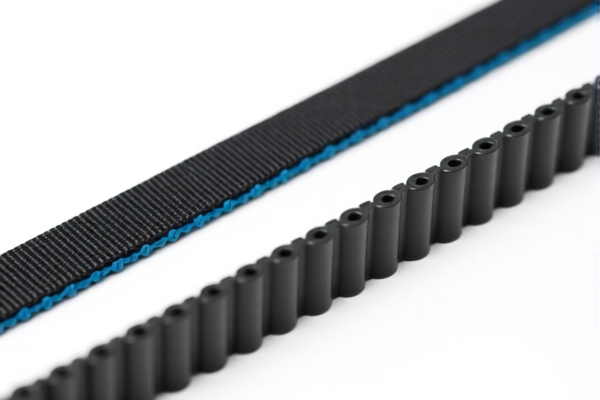
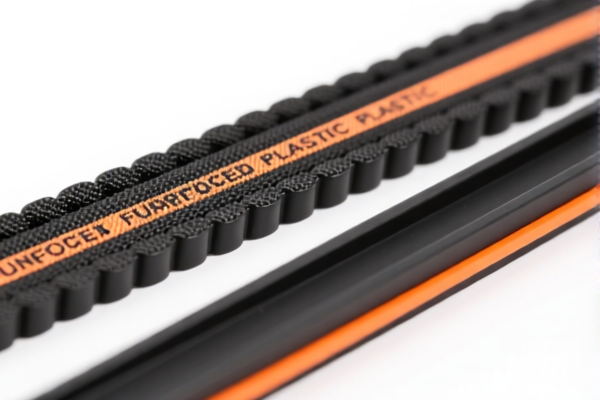
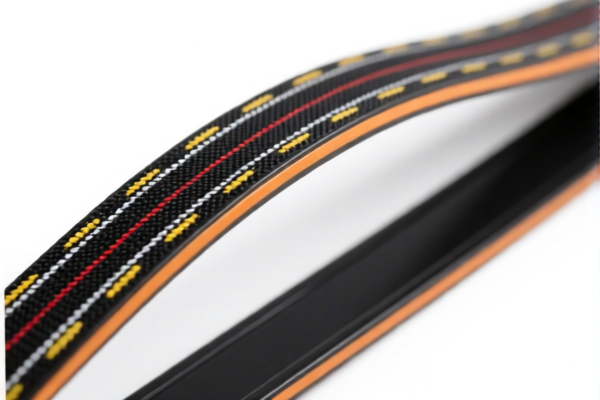
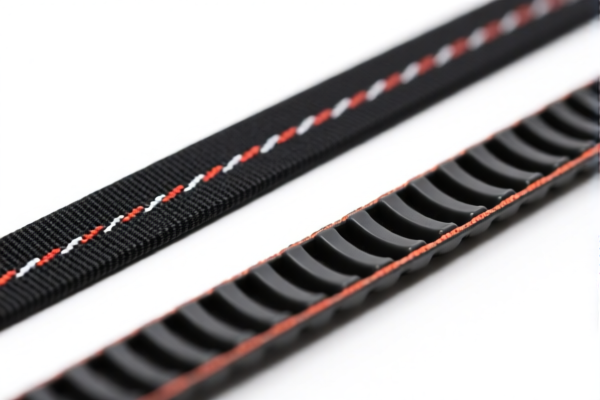
AI Analysis
🏭 Textile Reinforced Plastic Machine Belt (Industrial V-Belts & Conveyor Belts)
🌐 HS Code Reference & Customs Clearance Guide | 2026 Tariff Analysis | Professional Strategy for US Imports
📌 I. Product Definition & Classification: What Exactly Is This?
"Textile Reinforced Plastic Machine Belt" is a broad commercial term. In international trade and US Customs (CBP) terms, these are primarily classified as V-belts or Transmission Belts used in industrial machinery. The key distinction lies in the reinforcement material:
1. Synthetic Fiber Reinforced (e.g., Polyester, Nylon, Aramid):
These belts use high-strength synthetic cords for tensile strength. They are typically classified under Heading 4010 (Vulcanized Rubber Transmission Belts).
2. Artificial/Man-made Fiber Reinforced (e.g., Rayon, Viscose):
These use regenerated cellulose fibers. They are typically classified under Heading 5910 (Textile Belting, whether or not impregnated or coated with plastic or other substances).
⚠️ Critical Distinction Point:
- If the belt is made of rubber with synthetic fiber cords → 4010
- If the belt is made of textile fabric (even with plastic coating) or artificial fibers → 5910
- Do not confuse with simple canvas belts (which may fall under 5910 but different subheadings) or endless textile products.
📦 II. HS Code Classification Details (2026 Latest Tariff Schedule)
Based on the specific material composition and usage described, here are the relevant HS Codes and their associated tax liabilities.
| HS Code | Product Description | Material/Feature Match | Applicable Scenario |
|---|---|---|---|
4010.12.55.00 |
V-belts and other transmission belts in the flat, V, tangential or multi-V forms, of vulcanised rubber other than hard rubber, containing fabric only, whether or not coated with plastic or other substances: Other: Of textile material (synthetic) | Synthetic Fiber Reinforced Matches: Synthetic material characteristics & form |
Industrial V-belts with polyester/nylon cords |
4010.12.50.00 |
V-belts and other transmission belts... containing fabric only... Other: Of textile material (natural/other) | Synthetic/General Textile Reinforced Matches: Fabric reinforcement characteristics |
General industrial belts with textile cords |
5910.00.10.10 |
Transmission or conveyor belting of textile material, whether or not impregnated, coated, covered or laminated with plastics, whether or not cut to length or otherwise finished; V-belts of any material other than leather | Artificial Fiber Reinforced Matches: V-belt material & form requirements |
Belts made from Rayon/Viscose (Artificial Fibers) |
5910.00.10.20 |
Transmission or conveyor belting of textile material... V-belts of any material other than leather | Artificial Fiber Reinforced Matches: Industrial transmission classification |
Industrial transmission belts using artificial fibers |
5910.00.90.00 |
Transmission or conveyor belting of textile material... Other | Textile Reinforced Conveyor Matches: Textile material manufacturing & conveyance use |
Flat conveyor belts or other textile-based belts not fitting V-belt specs |
🔍 Key Reminder:
- Heading 4010 applies to Rubber belts reinforced with Textile (including synthetic).
- Heading 5910 applies to Textile belts (which may be coated/laminated with plastic) or belts made of Artificial Fibers.
- Misclassification between 4010 and 5910 can lead to significant duty differences and delays.
💰 III. 2026 Latest Tariff Rate Breakdown (Including Additional Taxes & Policy Surcharges)
✅ Applicable Country: United States (US)
✅ Country of Origin: China (CN)
✅ Effective Date: Tariffs apply to imports from China (subject to current Section 301 and IEEPA rules)
🎯 1. 4010.12.55.00 —— Synthetic Fiber Reinforced V-Belts
| Item | Details |
|---|---|
| Base Duty Rate | 6.4% (Ad Valorem) |
| Section 301 Surcharge | +25.0% (Additional Duty under Section 301) |
| IEEPA Surcharge | +10.0% (Under 122 Section of IEEPA, effective Nov 10, 2025) |
| Total Effective Rate | 41.4% |
| Tax Calculation | CIF Value × 41.4% |
| De Minimis Exemption | ❌ Not Eligible (High tariff rates exclude small packages from de minimis relief) |
| Legal Authority Path | HTSUS:4010.12.55.00 → USITC:301 → IEEPA:122 |
📌 Explanation:
- Base 6.4%: Standard MFN (Most Favored Nation) rate for rubber belts with textile reinforcement.
- 25% Section 301: Retaliatory tariff on Chinese rubber/textile products.
- 10% IEEPA: Additional surcharge imposed under the International Emergency Economic Powers Act for specific Chinese goods.
- Total 41.4%: This is a high-cost category. Profit margins must account for this.
🎯 2. 4010.12.50.00 —— General Textile Reinforced V-Belts
| Item | Details |
|---|---|
| Base Duty Rate | 8.0% (Ad Valorem) |
| Section 301 Surcharge | +25.0% |
| IEEPA Surcharge | +10.0% |
| Total Effective Rate | 43.0% |
| Tax Calculation | CIF Value × 43.0% |
| De Minimis Exemption | ❌ Not Eligible |
| Legal Authority Path | HTSUS:4010.12.50.00 → USITC:301 → IEEPA:122 |
📌 Note:
- Slightly higher base rate than synthetic-specific codes, but same additional taxes.
- Applies to belts with natural or mixed textile reinforcement not specifically classified elsewhere.
🎯 3. 5910.00.10.10 & 5910.00.10.20 —— Artificial Fiber Reinforced V-Belts
| Item | Details |
|---|---|
| Base Duty Rate | 4.0% (Ad Valorem) |
| Section 301 Surcharge | +25.0% |
| IEEPA Surcharge | +10.0% |
| Total Effective Rate | 39.0% |
| Tax Calculation | CIF Value × 39.0% |
| De Minimis Exemption | ❌ Not Eligible |
| Legal Authority Path | HTSUS:5910.00.10.10/20 → USITC:301 → IEEPA:122 |
📌 Key Advantage:
- Lower Base Rate (4.0%) compared to rubber-based belts (6.4%-8.0%).
- Total Rate 39.0%: Still high, but 2.4% cheaper than4010.12.55.00.
- Applies specifically to belts reinforced with artificial fibers (like rayon/viscose) or textile belts used for V-belt applications.
🎯 4. 5910.00.90.00 —— Other Textile Reinforced Belts
| Item | Details |
|---|---|
| Base Duty Rate | 2.6% (Ad Valorem) |
| Section 301 Surcharge | +25.0% |
| IEEPA Surcharge | +10.0% |
| Total Effective Rate | 37.6% |
| Tax Calculation | CIF Value × 37.6% |
| De Minimis Exemption | ❌ Not Eligible |
| Legal Authority Path | HTSUS:5910.00.90.00 → USITC:301 → IEEPA:122 |
📌 Best Option for Cost?:
- If the belt is a conveyor belt (flat) or non-V-belt textile belt, this code offers the lowest total rate at 37.6%.
- However, misclassifying a V-belt as "Other" can lead to audits and penalties. Ensure the belt geometry and usage match "Other" (not V-belt).
🛠️ IV. Customs Clearance Practical Advice (Battle-Tested Pitfall Guide)
✅ 1. Required Documentation Checklist (Non-negotiable)
| Document | Must Provide | Explanation |
|---|---|---|
| ✅ Product Specification Sheet | ✔️ | Details: Material (Rubber vs. Textile), Reinforcement (Synthetic vs. Artificial), Dimensions, Pitch |
| ✅ Cross-Section Image | ✔️ | Crucial to prove V-belt shape (for 5910.10) vs. Flat/Conveyor (for 5910.90) |
| ✅ Commercial Invoice | ✔️ | Must clearly state: "V-Belt" or "Conveyor Belt", Material Composition, Country of Origin |
| ✅ Certificate of Origin (CO) | ✔️ | Required to confirm Chinese origin for accurate tariff application |
| ✅ Packing List | ✔️ | Shows quantity, weight, and packaging type |
| ✅ Brand & Model Info | ✔️ | Helps Customs verify against known classifications |
✅ 2. Declaration Tips (Key Mantra)
🔥 "Material Defines Heading, Shape Defines Subheading, Origin Defines Tax!"
| Scenario | Correct Declaration | Wrong Action |
|---|---|---|
| V-Belt with Synthetic Cords | 4010.12.55.00 |
Misclassifying as 5910 → Risk of audit |
| V-Belt with Rayon/Artificial Cords | 5910.00.10.10/20 |
Misclassifying as 4010 → Overpaying base duty? Or underpaying if base is lower? (Here, 4010 is higher base, but total is similar) |
| Flat Conveyor Belt (Textile) | 5910.00.90.00 |
Declaring as V-Belt → Incorrect classification |
| Mixed Shipment | Split Declaration | Blending types → Customs rejection |
✅ 3. Special Case Handling
| Scenario | Handling Advice |
|---|---|
| OEM Custom Belts | Provide engineering drawings showing cord material and belt profile |
| Belts with Plastic Coating | If primarily textile with plastic coating, use 5910. If primarily rubber with textile cords, use 4010. |
| Sample Imports | Even samples are subject to full duties if HS code is high-tax. Do not rely on de minimis for these codes. |
| Origin Substitution | If belts are manufactured in Vietnam/Malaysia but using Chinese rubber, origin rules may still apply. Check USMCA/GSP (if applicable, though unlikely for China-origin inputs). |
🌍 V. Global Market Comparison (2026 Latest)
| Country/Region | Recommended HS Code | Base Duty | Additional Taxes (China Origin) | Total Approx. | Remarks |
|---|---|---|---|---|---|
| 🇺🇸 United States | 4010.12.55.00 |
6.4% | +35% (301 + 122) | 41.4% | High barrier; plan pricing accordingly |
| 🇺🇸 United States | 5910.00.90.00 |
2.6% | +35% (301 + 122) | 37.6% | Lowest US rate if product fits |
| 🇨🇳 China | 4010.12.55.00 |
6.4% | None (Domestic) | 6.4% | For export to China |
| 🇪🇺 European Union | 4010.12.90 |
~7-10% | None (General Tariff) | ~10% | No 301 tariffs; check EORI requirements |
| 🇬🇧 United Kingdom | 4010.12.90 |
~7-10% | None (Post-Brexit) | ~10% | Check UK Global Tariff |
📌 Conclusion:
- US Market is the most expensive due to cumulative 301 and IEEPA tariffs.
- EU/UK are significantly cheaper for these goods.
- If targeting the US, consider supply chain diversification (e.g., manufacturing in non-China countries) to avoid Section 301 and IEEPA duties.
📌 VI. Common Errors & Pitfall Guide (Lessons Learned)
❌ Error 1: Calling all belts "Rubber Belts" regardless of material
👉 Consequence: Misclassification of Artificial Fiber belts as Rubber → Potential duty disputes or audits.
❌ Error 2: Ignoring the "122 Section" IEEPA tariff
👉 Consequence: Underpaying taxes by 10% → Back taxes + Penalties + Interest upon audit.
❌ Error 3: Assuming De Minimis ($800) applies
👉 Consequence: CBP will seize packages or demand payment because high-duty goods are excluded from de minimis relief under current rules.
❌ Error 4: Failing to specify Reinforcement Material
👉 Consequence: Customs cannot determine if it’s 4010 (Rubber+Synthetic) or 5910 (Textile/Artificial) → Delays and additional fees.
✅ Correct Practice:
"V-Belt, Vulcanized Rubber, Reinforced with Polyester Synthetic Fibers, Pitch 10mm, Length 1000mm, Made in China"
🎯 VII. Conclusion: Precision Classification Saves Money!
🎯 Remember the Mantra:
🔹 "Rubber + Synthetic = 4010 (41.4%)
🔹 "Artificial/Textile V-Belt = 5910.10 (39.0%)
🔹 "Textile Conveyor = 5910.90 (37.6%)
🔹 "China Origin = +35% Total Tax!"
📌 Pro Tip:
If your supplier offers Rayon/Artificial fiber belts, using 5910.00.10.10 or 5910.00.10.20 might save you 2.4% compared to synthetic rubber belts. If they are flat conveyors, 5910.00.90.00 saves 3.8%.
Always verify the core material and reinforcement type with your manufacturer before declaring!
📣 Immediate Action:
📞 Contact your freight forwarder to confirm HS Code accuracy based on actual material samples.
📄 Prepare detailed product specifications including fiber type (Synthetic vs. Artificial vs. Natural).
🚀 Optimize your supply chain to mitigate 35% tariff impact.
✨ Professional Clearance Starts with Accurate Classification!
💼 Every Percent Counts in High-Tariff Imports!
Customer Reviews
About HS Code Classification
The Harmonized System (HS) is an internationally standardized nomenclature developed by the World Customs Organization (WCO) to classify traded products. Over 200 countries use the HS system as the basis for customs tariffs, trade statistics, and import/export regulations.
Each HS code follows a hierarchical structure:
- Chapter (2 digits) — Broad category of goods (e.g., Chapter 84: Machinery and Mechanical Appliances)
- Heading (4 digits) — More specific grouping within the chapter
- Subheading (6 digits) — Internationally standardized breakdown, used by all WCO member countries
- National subdivisions (8-10 digits) — Country-specific extensions for further classification, such as US HTSUS 10-digit codes
Correct HS code classification is essential for smooth customs clearance, accurate duty payment, and compliance with trade regulations. Misclassification can lead to customs delays, overpayment of duties, or penalties.
When importing from CN to US, the applicable tariff rates may include:
- Most-Favored-Nation (MFN) rate — The standard duty rate applied to WTO members
- General rate — Applied to countries without trade agreements
- Trade remedy duties — Additional tariffs such as Section 301 (anti-dumping), Section 232 (national security), or countervailing duties
The information provided on this page is for reference purposes only. For official classification, please consult with your local customs authority or a licensed customs broker.