Tire (HS Code 4011205050)
CN → US| HS Code | Tariff Rate | Origin | Destination | Doc |
|---|---|---|---|---|
| 4011205030 | 38.4% | CN | US | Official Doc |
| 4011205050 | 38.4% | CN | US | Official Doc |
| 4011801010 | 35.0% | CN | US | Official Doc |
Product Images
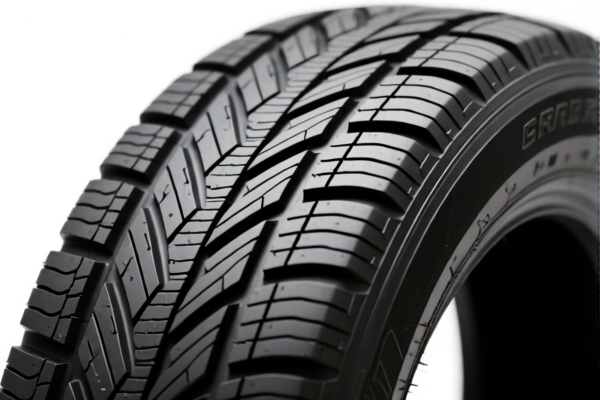
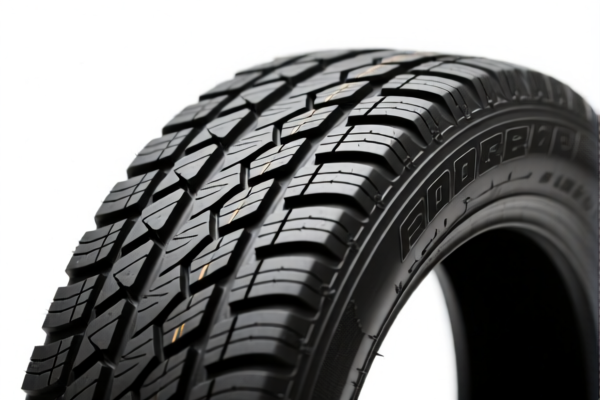
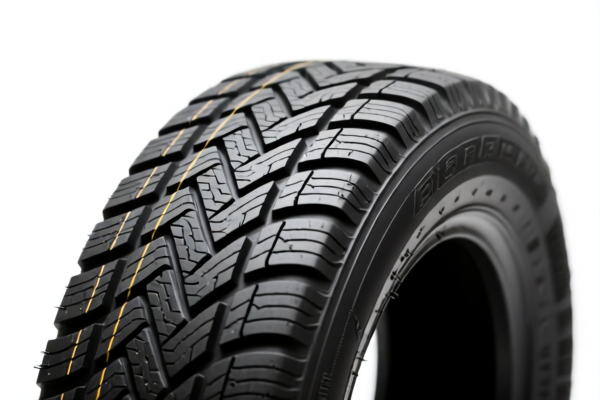
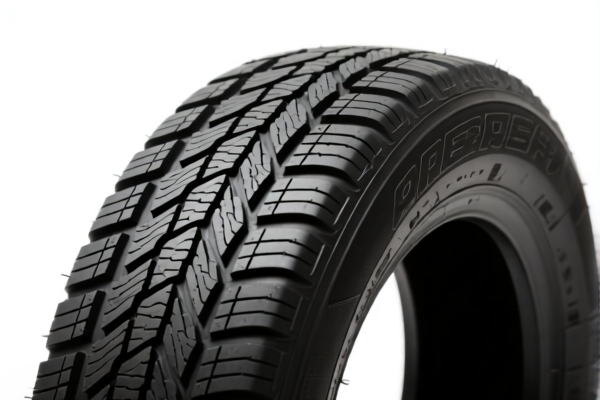
AI Analysis
🚛 Tires for Trucks & Buses (HS Code 4011.20.50.50)
🌐 HS Code Reference & Customs Clearance Guide | 2026 Latest Tariff Analysis | Professional-Level Clearance Strategy
📌 1. Product Definition & Classification: Do You Really Understand "Tires"?
In international trade, rubber pneumatic tires are strictly categorized by their material and intended vehicle type. For HS Code 4011.20.50.50, the product refers specifically to rubber pneumatic tires designed for trucks or buses.
⚠️ Critical Distinction:
- If the tire is for cars/passenger vehicles → It falls under 4011.10, 4011.20.10, etc.
- If the tire is for trucks/buses → It falls under 4011.20.50.50 (or 4011.20.50.30 for specific bus/truck applications).
- If the tire is not pneumatic (solid rubber) → It falls under Chapter 40 but not 4011.🔍 Key Note:
HS Code4011.20.50.50is the standard classification for pneumatic tires for trucks or buses when specific sub-categories (like 4011.20.50.30) do not apply or when the usage is broadly defined as "truck/bus related" without further specificity.
📦 2. HS Code Classification Details (2026 Latest Tariff Authority)
Based on the provided data, here are the relevant HS Codes and their explanations:
| HS Code | Product Description | Application/Usage | Material/Type |
|---|---|---|---|
4011.20.50.30 |
Rubber pneumatic tires, new, of a kind used on buses or trucks | Specifically for buses or trucks | Rubber, Pneumatic |
4011.20.50.50 |
Rubber pneumatic tires, new, of a kind used on trucks or buses | Broadly for trucks or buses (inferred from lack of specific sub-use) | Rubber, Pneumatic |
4011.80.10.10 |
Other pneumatic tires, new, of rubber | Other vehicles (e.g., motorcycles, farm equipment, or general purpose) | Rubber, Pneumatic |
✅ Why 4011.20.50.50?
- The product is a tire (Tire).
- Material: Rubber.
- Form: Pneumatic (Air-filled).
- Usage: Truck/Bus related.
- Since the product name does not specify a highly specific sub-use (like "heavy-duty truck" vs. "city bus"), 4011.20.50.50 is a reasonable and compliant inference under HS Code 4011.20. There is no conflict in material or form.
💰 3. 2026 Latest Tariff Rate Breakdown (Including Additional Duties & Policy Surcharges)
✅ Applicable Country: United States (US)
✅ Origin: China (CN)
✅ Effective Date: Current (as per 2025-2026 trade policies)
🎯 1. 4011.20.50.30 & 4011.20.50.50 —— Rubber Pneumatic Tires (Trucks/Buses)
| Item | Details |
|---|---|
| Base Tariff Rate | 3.4% (ad valorem) |
| Section 301 Additional Tariff | +25.0% (from USITC Footnote 9903.88.01) |
| Section 122 Tariff | +10.0% (Against China) |
| Total Tariff Rate | 38.4% |
| Tax Calculation | CIF Value × 38.4% |
| De Minimis Exemption | ❌ Not Eligible (deny_de_minimis) |
| Legal Basis Path | Base: 4011.20 → USITC:9903.88.01 → IEEPA/Section 122: 10% |
📌 Explanation:
- Base Tariff (3.4%): Standard Most-Favored-Nation (MFN) rate for rubber tires.
- Section 301 (25%): Added under the "Trade Act of 1974, Section 301" due to unfair trade practices.
- Section 122 (10%): Additional tariff imposed on Chinese goods under specific emergency provisions.
- Total: 38.4% is a high tariff rate, significantly impacting profit margins.
🎯 2. 4011.80.10.10 —— Other Rubber Pneumatic Tires
| Item | Details |
|---|---|
| Base Tariff Rate | 0.0% (ad valorem) |
| Section 301 Additional Tariff | +25.0% |
| Section 122 Tariff | +10.0% |
| Total Tariff Rate | 35.0% |
| Tax Calculation | CIF Value × 35.0% |
| De Minimis Exemption | ❌ Not Eligible |
| Legal Basis Path | Base: 4011.80 → USITC:9903.88.01 → IEEPA/Section 122: 10% |
📌 Note:
- Although the base rate is 0%, the additional tariffs still apply.
- Total rate is 35.0%, slightly lower than the 38.4% for truck/bus tires.
- Caution: Misclassifying a truck tire as "other tire" (4011.80) is a major compliance risk and may lead to penalties.
🛠️ 4. Customs Clearance Practical Advice (Combat-Proven Pitfall Avoidance)
✅ 1. Documentation Checklist (All Mandatory)
| Document | Required? | Description |
|---|---|---|
| ✅ Product Specification Sheet | ✔️ | Must include: Size (e.g., 11R22.5), Load Index, Speed Rating, Tread Pattern, Material (Rubber). |
| ✅ Product Photos (with Label) | ✔️ | Clear images of the tire sidewall showing size, brand, and "Made in China". |
| ✅ Commercial Invoice | ✔️ | Must state: "Rubber Pneumatic Tire for Truck/Bus, HS Code 4011.20.50.50". |
| ✅ Packing List | ✔️ | Detail weight, dimensions, and quantity per carton/pallet. |
| ✅ Certificate of Origin (CO) | ✔️ | Required for proving Chinese origin (to apply correct tariffs). |
| ✅ Third-Party Test Report | ✔️ | DOT certification, ISO standards, or other safety certifications (if applicable). |
✅ 2. Declaration Tips (Key Mantra)
🔥 "Match Vehicle Type, Declare Tire Type, Avoid Misclassification!"
| Scenario | Correct Declaration | Wrong Practice |
|---|---|---|
| Tire for Truck | 4011.20.50.50 |
Misdeclare as "Car Tire" → Higher penalty risk |
| Tire for Bus | 4011.20.50.30 |
Misdeclare as "Other Tire" → 35% vs 38.4% (but compliance issue) |
| Solid Rubber Tire | 4011.80 (if pneumatic) or 4011.19 (if non-pneumatic) |
Declare as pneumatic → Customs rejection |
| Tire + Rim | Declare as Tire Only if rim is separate | Combined declaration → May affect tariff rate |
✅ 3. Special Cases Handling
| Situation | Recommendation |
|---|---|
| OEM Custom Tires | Provide customer order + design drawings to prove specific usage (truck/bus). |
| Retreaded Tires | NOT covered under these HS codes. Retreads fall under 4012.13 or 4012.20, with different tariff structures. |
| Tire Accessories (Valves, Caps) | Declare separately as accessories (e.g., under 4016.93 or 8483.90) to avoid overpaying on the main product. |
| Mixed Shipments | Ensure invoices clearly separate Car Tires (4011.10) and Truck Tires (4011.20) to apply correct rates. |
🌍 5. Global Market Customs Comparison (2026 Latest)
| Country/Region | Recommended HS Code | Tariff (China Origin) | Certification | Remarks |
|---|---|---|---|---|
| 🇺🇸 USA | 4011.20.50.50 |
38.4% (3.4% + 25% + 10%) | DOT, ISO | High tariff due to Section 301 & 122 |
| 🇨🇳 China | 4011.20.50.50 |
~10-15% (Import Duty) | CCC (if applicable) | No additional Section 301/122 |
| 🇪🇺 EU | 4011.20.90 |
4.5% | ECE R117 (Safety) | No Section 301/122 |
| 🇦🇺 Australia | 4011.20.90 |
5% | ADR | No additional tariffs |
| 🇯🇵 Japan | 4011.20.90 |
0% | JIS Standards | No additional tariffs |
📌 Conclusion:
- USA is the most expensive market for Chinese truck/bus tires due to 38.4% total tariffs.
- EU, Australia, and Japan have much lower or zero tariffs, making them more attractive for cost-sensitive markets.
- Strategic Tip: If exporting to the US, consider supply chain diversification (e.g., manufacturing in Vietnam or Thailand) to potentially avoid Section 301 tariffs (subject to current trade rules).
📌 6. Common Mistakes & Pitfall Guide (Lessons from Blood & Tears)
❌ Mistake 1: Misclassifying Truck Tires as Car Tires (4011.10)
👉 Consequence: Base tariff is lower, but Section 301 still applies. However, if caught, penalties and back duties apply.
✅ Correct: Always specify Truck/Bus in the declaration.
❌ Mistake 2: Declaring Retreaded Tires as New Tires
👉 Consequence: Customs Seizure, fines, and blacklisting. Retreads are different HS codes.
✅ Correct: Use HS Code 4012.13 or 4012.20 for retreads.
❌ Mistake 3: Ignoring Section 122 and Section 301 in Tariff Calculation
👉 Consequence: Underpayment of duties → Audit triggers and late fees.
✅ Correct: Calculate 38.4% total duty for Chinese truck/bus tires entering the US.
❌ Mistake 4: Missing DOT Certification
👉 Consequence: Goods held at customs until proof of safety certification is provided.
✅ Correct: Ensure all tires have DOT marking on the sidewall.
✅ Correct Declaration Example:
"Rubber Pneumatic Tire for Truck, Size 11R22.5, Load Index 160/156, Speed Rating L, Made in China, HS Code 4011.20.50.50, DOT Certified"
🎯 7. Conclusion: Professional Declaration Saves Money!
🎯 Remember the Mantra:
🔹 "Truck/Bus Tires = 4011.20.50, Total Duty 38.4%, No De Minimis!"
🔹 "Retreads are Different, DOT is Mandatory, Misclassification is Risky!"
📌 Pro Tip:
If your tires are originally manufactured in Vietnam, Thailand, or Malaysia, you may qualify for lower or zero Section 301 tariffs.
✅ Recommendation:
📞 Consult a professional customs broker + Provide product photos + Apply for Advance Ruling if unsure.
🚀 Ensure smooth customs clearance, cost efficiency, and profit maximization!
✨ Professional clearance starts with accurate classification!
💼 Every penny of cost deserves precise calculation!
Customer Reviews
About HS Code Classification
The Harmonized System (HS) is an internationally standardized nomenclature developed by the World Customs Organization (WCO) to classify traded products. Over 200 countries use the HS system as the basis for customs tariffs, trade statistics, and import/export regulations.
Each HS code follows a hierarchical structure:
- Chapter (2 digits) — Broad category of goods (e.g., Chapter 84: Machinery and Mechanical Appliances)
- Heading (4 digits) — More specific grouping within the chapter
- Subheading (6 digits) — Internationally standardized breakdown, used by all WCO member countries
- National subdivisions (8-10 digits) — Country-specific extensions for further classification, such as US HTSUS 10-digit codes
Correct HS code classification is essential for smooth customs clearance, accurate duty payment, and compliance with trade regulations. Misclassification can lead to customs delays, overpayment of duties, or penalties.
When importing from CN to US, the applicable tariff rates may include:
- Most-Favored-Nation (MFN) rate — The standard duty rate applied to WTO members
- General rate — Applied to countries without trade agreements
- Trade remedy duties — Additional tariffs such as Section 301 (anti-dumping), Section 232 (national security), or countervailing duties
The information provided on this page is for reference purposes only. For official classification, please consult with your local customs authority or a licensed customs broker.