Tire (HS Code 4011801010)
CN → US| HS Code | Tariff Rate | Origin | Destination | Doc |
|---|---|---|---|---|
| 4011801010 | 35.0% | CN | US | Official Doc |
| 4011205030 | 38.4% | CN | US | Official Doc |
| 4011205050 | 38.4% | CN | US | Official Doc |
| 4011801010 | 35.0% | CN | US | Official Doc |
| 4011205030 | 38.4% | CN | US | Official Doc |
Product Images
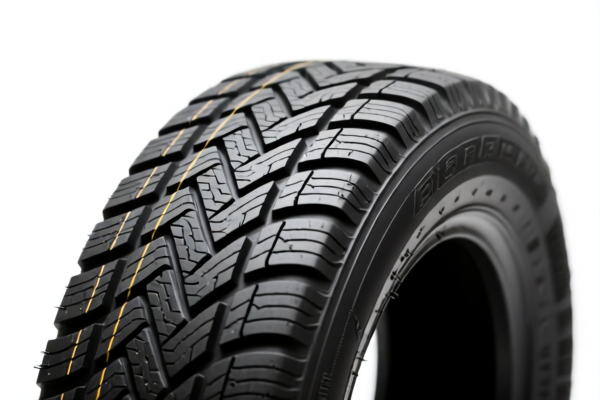
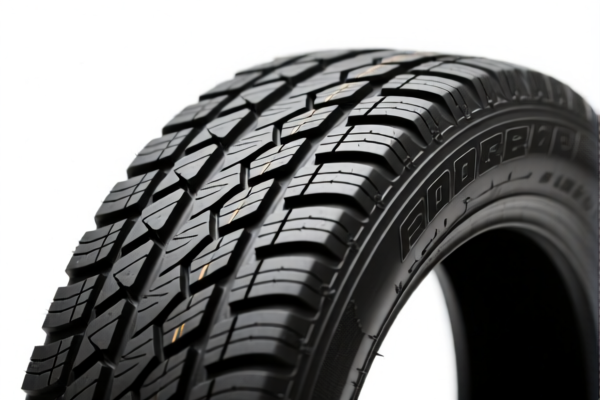
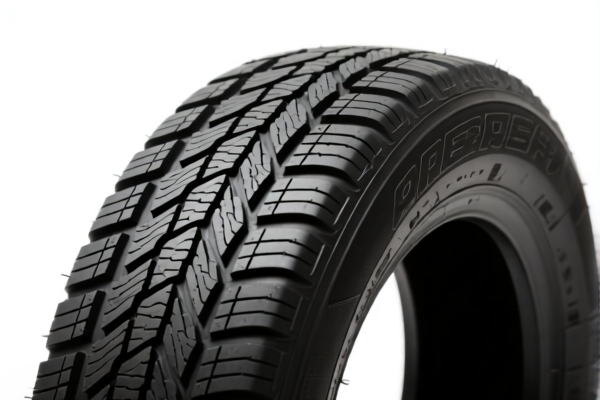
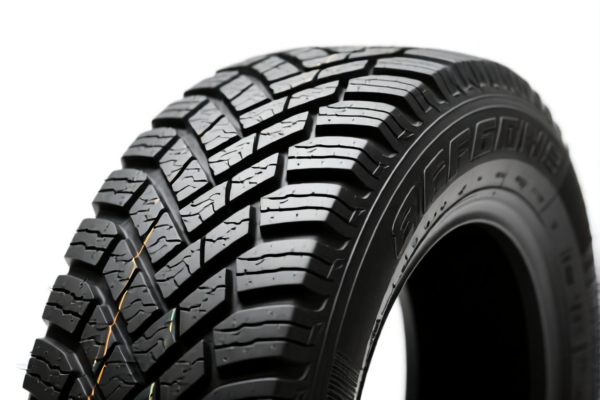
AI Analysis
🚗 Tires (Tires for Vehicles)
🌐 HS Code Reference & Customs Clearance Guide | 2026 Latest Tariff Analysis | Professional-Level Compliance Strategy
📌 I. Product Definition & Classification: Do You Really Understand "Tires"?
Tires are the critical interface between vehicles and the road, ensuring traction, steering, and load-bearing capacity. In international trade, they are strictly categorized by material (Rubber) and form (Pneumatic/Inflatable or Non-Pneumatic).
Key Distinctions for Classification: * Pneumatic Tires (Air-filled): The vast majority of vehicle tires (cars, buses, trucks). These fall primarily under Heading 40.11. * Solid/Non-Pneumatic Tires: Often used for industrial equipment or specific heavy machinery. These may fall under Heading 40.11 or 40.12 depending on specific construction. * Material Constraint: The summary explicitly confirms the material is Rubber, which aligns strictly with Chapter 40.
⚠️ Critical Distinction Point:
- If the tire is Pneumatic (Air-filled): It must be classified under 40.11.
- If the tire is Solid Rubber (not pneumatic): It typically falls under 40.12.10.00 (Solid tires), not 40.11.
- Note: The provided data suggests pneumatic classification (4011.xx), so this guide focuses on Pneumatic Tires.
📦 II. HS Code Classification Details (2026 Latest Authorized对照)
Based on the provided data, here are the specific HS Codes, summaries, and tax implications:
| HS Code | Product Description | Summary from Data | Total Tax Rate |
|---|---|---|---|
4011.80.10.10 |
Tires (General/Pneumatic) | Material: Rubber. Use: Tires. Match: Perfect alignment with core classification elements. |
35.0% |
4011.20.50.30 |
Tires (Bus/Truck Specific) | Material: Pneumatic Rubber Tires. Use: Bus/Truck-related. Match: Direct correspondence with classification definition. |
38.4% |
4011.20.50.50 |
Tires (Other Pneumatic) | Material: Rubber. Form: Inflatable. Match: Highly consistent with 4011.20; inferred as non-road/others due to lack of specific use. |
38.4% |
🔍 Key Insight:
-4011.80.10.10appears to be a broader or different sub-category (possibly car tires or general purpose) with a lower total tax (35.0%).
-4011.20.50.30and4011.20.50.50are associated with Bus/Truck/Heavy Duty or Other pneumatic tires, carrying a higher total tax (38.4%).
- Crucial: Misclassifying a Bus/Truck tire as4011.80.10.10could lead to underpayment and penalties.
💰 III. 2026 Latest Tariff Rate Breakdown (Detailed Tax Clauses)
✅ Applicable Country: United States (US)
✅ Origin: China (CN)
✅ Effective Date: Post-2025 policies (including Section 301 and IEEPA)
🎯 1. 4011.80.10.10 – Tires (General/Pneumatic)
| Item | Detail |
|---|---|
| Base Duty Rate | 0.0% (Ad Valorem) |
| Section 301 Duty (Add-on) | +25.0% (Under USITC Footnote 9903.88.01 for certain tires) |
| Section 122 / IEEPA Duty | +10.0% (Additional levy on Chinese rubber/pneumatic goods) |
| Total Effective Rate | 35.0% |
| Tax Calculation | CIF Value × 35% |
| De Minimis Exemption | ❌ NOT Eligible (Denied due to Section 301/IEEPA applicability) |
| Legal Authority Path | USITC:4011.80.10.10 → Section 301: Footnote 9903.88.01 → IEEPA: Section 122 Add-on |
📌 Explanation:
- Base Rate 0%: Standard MFN duty for many rubber tires is often low or zero.
- 25% Section 301: This is the major trade war tariff applied to specific rubber articles.
- 10% Section 122/IEEPA: This is an additional surcharge often applied to Chinese-origin goods in strategic sectors.
- Total 35%: This is a high burden. Importers must price accordingly.
🎯 2. 4011.20.50.30 – Tires (Bus/Truck/Pneumatic)
| Item | Detail |
|---|---|
| Base Duty Rate | 3.4% (Ad Valorem) |
| Section 301 Duty (Add-on) | +25.0% |
| Section 122 / IEEPA Duty | +10.0% |
| Total Effective Rate | 38.4% |
| Tax Calculation | CIF Value × 38.4% |
| De Minimis Exemption | ❌ NOT Eligible |
| Legal Authority Path | USITC:4011.20.50.30 → Section 301 → IEEPA |
📌 Explanation:
- Base Rate 3.4%: Slightly higher base duty than the general category.
- Add-ons Same: The 25% + 10% add-ons apply uniformly to these pneumatic rubber tires.
- Total 38.4%: This is the highest rate in the dataset. Heavy-duty tires face the steepest costs.
🎯 3. 4011.20.50.50 – Tires (Other Pneumatic)
| Item | Detail |
|---|---|
| Base Duty Rate | 3.4% |
| Section 301 Duty (Add-on) | +25.0% |
| Section 122 / IEEPA Duty | +10.0% |
| Total Effective Rate | 38.4% |
| Tax Calculation | CIF Value × 38.4% |
| De Minimis Exemption | ❌ NOT Eligible |
| Legal Authority Path | USITC:4011.20.50.50 → Section 301 → IEEPA |
📌 Explanation:
- Similar to Above: Classified as "Other Pneumatic Tires."
- Risk: Since the summary notes "inferred as non-road/other," ensure the use case is accurately declared. If it’s for a truck, it should ideally be4011.20.50.30. If for other vehicles, this code is appropriate.
🛠️ IV. Customs Clearance Practical Advice (Pitfall Avoidance Guide)
✅ 1. Preparation Checklist (Non-Negotiable)
| Document | Required | Explanation |
|---|---|---|
| ✅ Product Specifications | ✔️ | Must state: Pneumatic, Rubber, Size, Load Index, Speed Rating. |
| ✅ Material Declaration | ✔️ | Explicitly state "100% Rubber" or composite composition if applicable. |
| ✅ Use Case Description | ✔️ | Crucial for 4011.20 vs 4011.80. Specify: "For Trucks," "For Cars," "For Industrial." |
| ✅ Commercial Invoice | ✔️ | Clearly mark "Tires" and HS Code. Do not use vague terms like "Auto Parts." |
| ✅ Country of Origin | ✔️ | Must be China to trigger the 35%/38.4% rates. If transshipped, ensure no rule of origin violation. |
| ✅ FCC/EPA Certifications | ✔️ | Not typically for tires, but ensure DOT Certification (for US market) is available. |
✅ 2. Declaration Tips (Key Mantras)
🔥 “Match Use, Declare Form, Avoid Vague Terms!”
| Scenario | Correct Declaration | Incorrect Action |
|---|---|---|
| Car Tire | 4011.80.10.10 (if applicable) or 4011.61/62 |
Misclassifying as "Rubber Part" → Higher scrutiny |
| Truck/Bus Tire | 4011.20.50.30 |
Using 4011.80.10.10 → Underpayment Risk (3.4% diff + penalties) |
| Solid Tire | 4012.10.00 |
Using 4011 → Wrong Classification (Pneumatic vs Solid) |
| Tire Inner Tubes | 4009.41 |
Declaring as "Tire" → Wrong chapter |
📌 Critical Note:
-4011.80.10.10vs4011.20: The difference lies in the Vehicle Type (Car vs. Truck/Bus).
-4011.20.50.30vs4011.20.50.50: One is specific (Bus/Truck), the other is "Other." Be precise.
✅ 3. Special Considerations
| Scenario | Handling Advice |
|---|---|
| OEM/Aftermarket | Provide proof of origin and brand authorization if requested. |
| Retreaded Tires | Different HS Code (4012.12)! Do not declare new tires as retreaded or vice versa. |
| Tire Wheels Assembled | If mounted on rims, Tire is still the primary item, but declare clearly. |
| Free Trade Agreements | Check if tires qualify for any preferential rates under USMCA (Mexico/Canada) if sourced outside China. |
🌍 V. Global Market Comparison (2026 Latest)
| Country/Region | Recommended HS Code | Total Tax (China Origin) | Key Certification | Notes |
|---|---|---|---|---|
| 🇺🇸 USA | 4011.80.10.10 / 4011.20.50.30 |
35.0% - 38.4% | DOT, EPA (if applicable) | High Tariff Due to Section 301 & IEEPA |
| 🇨🇳 China | 4011.80.10 / 4011.20 |
10% - 15% | CCC (if applicable) | Lower base duty |
| 🇪🇺 EU | 4011 |
~3% + Anti-Dumping | ECE R117 | Anti-Dumping Duties Apply! |
| 🇯🇵 Japan | 4011 |
~5% - 10% | JIS | Moderate tariffs |
| 🇦🇺 Australia | 4011 |
~5% | ADR | Low tariffs, strict safety standards |
📌 Conclusion:
- USA is the most expensive market for Chinese tires due to Section 301 (25%) and IEEPA (10%).
- EU has hidden costs via Anti-Dumping Duties (varies by manufacturer).
- No De Minimis Exemption in the US for these goods means even small shipments are taxed.
📌 VI. Common Mistakes & Pitfalls (Blood Lessons)
❌ Mistake 1: Declaring a Truck Tire as 4011.80.10.10
👉 Consequence: Underpayment of tax (35% vs 38.4%). CBP may assess Back Duties + Penalties (20-30%).
❌ Mistake 2: Using vague terms like "Rubber Parts" on Invoice
👉 Consequence: Customs may reclassify to a higher general duty rate or hold shipment for Detailed Classification Review.
❌ Mistake 3: Ignoring Section 122 / IEEPA
👉 Consequence: If the 10% add-on is missed, it’s treated as fraudulent underpayment.
❌ Mistake 4: Assuming De Minimis (Under $800) applies
👉 Consequence: DENIED. Section 301 and IEEPA goods are explicitly excluded from De Minimis relief. Full tax applies from Unit 1.
✅ Correct Approach:
"Pneumatic Rubber Tires, Size 225/60R16, for Passenger Cars, DOT Certified, Made in China. HS: 4011.80.10.10."
🎯 VII. Conclusion: Professional Classification, Cost Control!
🎯 Remember the Mantra:
🔹 "Pneumatic vs. Solid: Know Your Form!"
🔹 "Truck vs. Car: Know Your Use!"
🔹 "Section 301 & IEEPA: No De Minimis! Tax It All!"
📌 Pro Tip:
- For high-volume imports, consider applying for an Advance Ruling (CBP Ruling) to confirm the correct HS Code (e.g.,
4011.80.10.10vs4011.20.50.30) and tariff liability.- If sourcing from Vietnam, Thailand, or Malaysia, check for Country-Specific Tariffs to avoid China-based surcharges.
📣 Immediate Action:
📞 Contact your customs broker with Product Specs + Intended Use.
🚀 Calculate Landed Cost: CIF + 35%/38.4% + Brokerage + Merchandise Processing Fee (MPF).
💼 Precision Classification Saves Thousands!
✨ Professional Customs Clearance Starts with Accurate Classification!
💼 Your Bottom Line Depends on Every Percent Point!
Customer Reviews
About HS Code Classification
The Harmonized System (HS) is an internationally standardized nomenclature developed by the World Customs Organization (WCO) to classify traded products. Over 200 countries use the HS system as the basis for customs tariffs, trade statistics, and import/export regulations.
Each HS code follows a hierarchical structure:
- Chapter (2 digits) — Broad category of goods (e.g., Chapter 84: Machinery and Mechanical Appliances)
- Heading (4 digits) — More specific grouping within the chapter
- Subheading (6 digits) — Internationally standardized breakdown, used by all WCO member countries
- National subdivisions (8-10 digits) — Country-specific extensions for further classification, such as US HTSUS 10-digit codes
Correct HS code classification is essential for smooth customs clearance, accurate duty payment, and compliance with trade regulations. Misclassification can lead to customs delays, overpayment of duties, or penalties.
When importing from CN to US, the applicable tariff rates may include:
- Most-Favored-Nation (MFN) rate — The standard duty rate applied to WTO members
- General rate — Applied to countries without trade agreements
- Trade remedy duties — Additional tariffs such as Section 301 (anti-dumping), Section 232 (national security), or countervailing duties
The information provided on this page is for reference purposes only. For official classification, please consult with your local customs authority or a licensed customs broker.