Tractor (HS Code 8701301090)
CN → US| HS Code | Tariff Rate | Origin | Destination | Doc |
|---|---|---|---|---|
| 8701220015 | 39.0% | CN | US | Official Doc |
| 8701915000 | 35.0% | CN | US | Official Doc |
| 8701911000 | 35.0% | CN | US | Official Doc |
Product Images
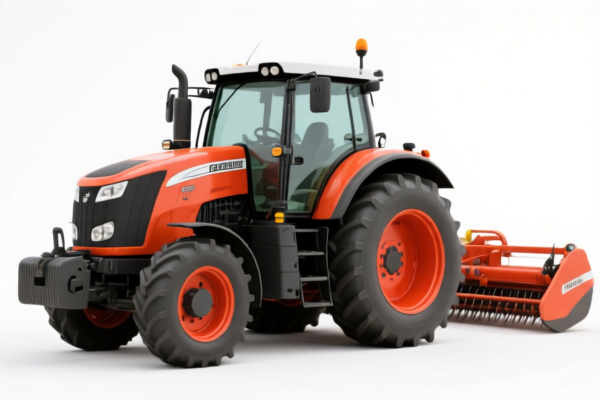
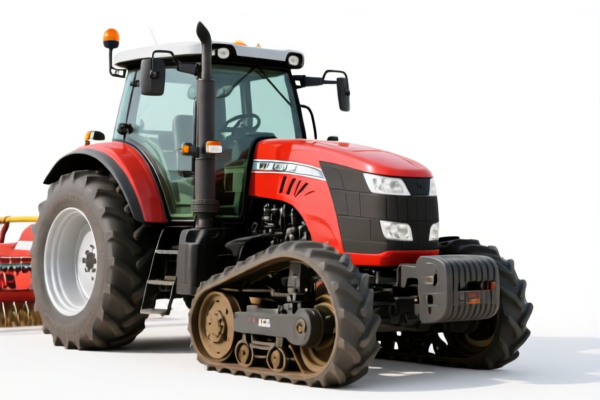
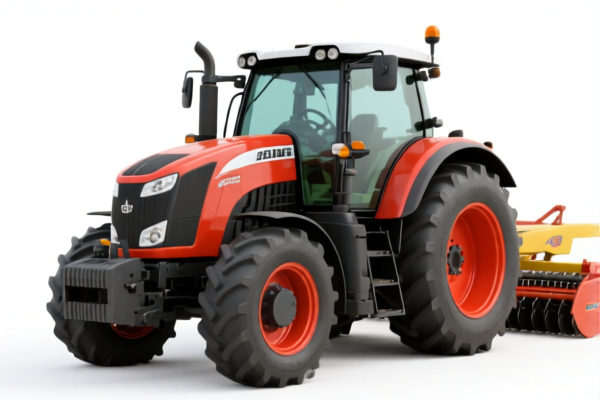
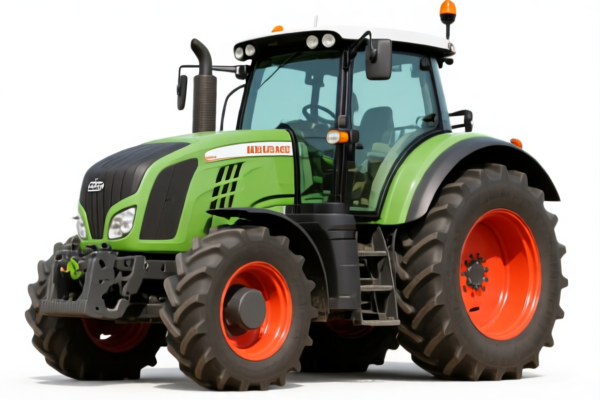
AI Analysis
🚜 Tractor (HS Code 8701.30.10.90 / 8701.30.90)
🌐 HS Code Reference & Customs Clearance Guide | 2026 Latest Tariff Resolutions | Professional Strategy
📌 I. Product Definition: What is a "Tractor"?
In international trade, a Tractor is primarily a vehicle designed to deliver large amounts of torque at slow speeds for the purpose of pulling a trailer, farm implement, or other heavy load. While commonly associated with agriculture, the HS Code classification depends heavily on: 1. Engine Power (kW or HP) 2. Type of Road Wheels (Steel vs. Pneumatic/Rubber) 3. Specific Design (Rigid Frame vs. Articulated)
Key Distinction: * Agricultural Tractors (HS 8701): Designed for pulling implements on fields. Often have large rear wheels, low ground clearance, and specific safety features. * Industrial/Construction Tractors (HS 8709 or 8701 depending on specific sub-heading): Designed for hauling loads on construction sites or warehouses.
⚠️ Critical Note for HS Code 8701.30.10.90: This code typically refers to Tractors with pneumatic (rubber) tires, with an engine power > 37 kW but ≤ 150 kW (or similar power brackets depending on the country's specific tariff schedule, e.g., US, EU, or China). Always verify the specific national tariff schedule as sub-headings vary.
📦 II. HS Code Classification Details (2026 Latest Tariff Standards)
| HS Code | Product Description | Key Characteristics | Application Scenario |
|---|---|---|---|
8701.10.00.00 |
Tractors with road wheels (Steel) | Small engines (< 18 kW), often used in landscaping/gardens. | Garden tractors, small utility vehicles. |
8701.20.00.00 |
Tractors with road wheels, engine power > 18 kW but ≤ 37 kW | Medium-small power, pneumatic tires. | Small-scale farming, landscaping. |
8701.30.10.90 |
Tractors with pneumatic tires, engine power > 37 kW but ≤ 150 kW | Rubber tires, mid-to-high power. | Mainstream agricultural farming, harvesting, field work. |
8701.30.90.00 |
Other tractors with pneumatic tires, power > 37 kW but ≤ 150 kW | Variants not specifically listed in 10.90 (e.g., specialized frames). | Specialized agricultural or industrial uses. |
8701.40.00.00 |
Tractors with pneumatic tires, engine power > 150 kW | Heavy-duty, large-scale farming. | Large commercial farms, heavy tillage. |
8709.10.00.00 |
Tractors (not agricultural) | No steering wheel? Or specifically designed for non-agricultural hauling. | Warehouse tractors, railway shunting engines. |
🔍 Focus on 8701.30.10.90: This is a common classification for mid-sized agricultural tractors equipped with rubber tires (not tracks) and having an engine output between 37 kW and 150 kW (approx. 50-200 HP).
💰 III. 2026 Latest Tariff Rates & Tax Details (USA & Global Benchmark)
✅ Applicable Country: United States (US)
✅ Country of Origin: China (CN) – Example for high-tariff scenario
✅ Effective Date: November 10, 2025 onwards (Post-301 Section Tariffs)
🎯 1. 8701.30.10.90 – Agricultural Tractors (Pneumatic Tires, 37-150 kW)
| Item | Details |
|---|---|
| Base Tariff Rate (MFN) | 4% (General) |
| USITC Section 301 Additional Tariff | +25% (Footnote 9903.88.01) |
| IEEPA Additional Tariff (China Origin) | +10% (Effective from Nov 2025) |
| Total Tariff Rate | 39% |
| Tax Calculation | CIF Value × 39% |
| De Minimis Exemption | ❌ Not Applicable (Deny_de_minimis for Section 301 goods) |
| Legal Basis | USITC:8701.30.10.90 → Footnote:9903.88.01 → IEEPA:9901.25 |
📌 Explanation:
- Agricultural machinery is often subject to scrutiny due to trade tensions. - Even though tractors are essential for agriculture, Chinese-origin tractors face significant additional tariffs. - Total cost impact: Nearly 40% increase in landed cost.
🎯 2. 8701.30.10.90 – Alternative Origins (Low/No Tariff)
| Origin | Total Tariff Rate | Notes |
|---|---|---|
| 🇺🇸 USA | 4% | Base MFN only |
| 🇪🇺 EU | 4% | Base MFN only |
| 🇯🇵 Japan | 0-4% | Depends on specific trade agreements |
| 🇻🇳 Vietnam | 0-4% | Check for Rules of Origin compliance |
| 🇲🇽 Mexico | 0-4% | USMCA eligible (if originating) |
📌 Strategy:
To avoid the 39% tariff, consider sourcing from countries with Free Trade Agreements (FTAs) or relocating final assembly to avoid "Chinese origin" designation.
🛠️ IV. Customs Clearance Operational Advice (Avoiding Pitfalls)
✅ 1. Documentation Checklist (Non-negotiable)
| Document | Required? | Purpose |
|---|---|---|
| Commercial Invoice | ✔️ | Must clearly state "Tractor," Model, Year, and Engine Power (kW/HP). |
| Packing List | ✔️ | Detail weight and dimensions for freight calculation. |
| Certificate of Origin (CO) | ✔️ | Critical for claiming FTA benefits (e.g., Form E, USMCA). |
| Bill of Lading (B/L) | ✔️ | Shipping document. |
| Engine Power Certificate | ✔️ | Crucial for HS Code classification. Must be from manufacturer. |
| EPA/CE Emission Compliance | ✔️ | Required for US/EU entry to prove environmental standards. |
| Safety Compliance Report | ✔️ | ISO standards, ROPS (Roll-Over Protective Structure) certification. |
✅ 2. Declaration Tips (Key Keywords)
🔥 "Power is King, Tires Define Type, Origin Determines Cost!"
| Scenario | Correct Declaration | Risk of Error |
|---|---|---|
| Engine Power | State exact kW and HP. | Misdeclaring power can lead to misclassification (e.g., under 37kW vs. over 37kW). |
| Tire Type | Specify "Pneumatic Rubber Tires" or "Steel Road Wheels". | Steel wheels = HS 8701.10; Pneumatic = HS 8701.30+. |
| Steering | Clarify if steering wheel is present. | No steering wheel might be classified as HS 8709 (Industrial). |
| Attachments | Declare tractor without or with implements separately. | Implements may have different HS codes and tariffs. |
✅ 3. Special Cases
| Case | Handling Advice |
|---|---|
| Tractor with Tracks | Classified under HS 8701.90 (Other), not 8701.30. Different tariff rate. |
| Used Tractors | Some countries restrict or prohibit used agricultural machinery. Check import permits. |
| Electric Tractors | If battery-powered, still HS 8701, but may require additional battery safety certifications (UN38.3). |
| Articulated Tractors | If specifically designed for forestry or heavy construction, may fall under HS 8709 (Industrial Tractors). |
🌍 V. Global Market Comparison (2026)
| Country/Region | Recommended HS Code | Tariff (China Origin) | Certification Required | Notes |
|---|---|---|---|---|
| 🇺🇸 USA | 8701.30.10.90 |
39% (4% + 25% + 10%) | EPA + OSHA + ROPS | High tariffs; strict emission rules. |
| 🇨🇳 China | 8701.30.10.90 |
0-5% (Import) | CCC + Emission Standard | Low tariff for imports; strong domestic production. |
| 🇪🇺 EU | 8701.30.10.90 |
4% | CE + Stage V Emission | Strict environmental standards (Stage V). |
| 🇮🇳 India | 8701.30.10.90 |
7.5-15% | BIS + CEVE | High tariffs to protect local manufacturing. |
| 🇦🇺 Australia | 8701.30.10.90 |
5% | ADR + ROPS | Moderate tariffs; safety focused. |
📌 Conclusion:
- USA and India have high barriers/tariffs for agricultural tractors.
- EU and Australia are more open but have strict environmental and safety certifications.
- China is a major exporter but faces trade barriers in the US.
📌 VI. Common Errors & Pitfalls (Lessons Learned)
❌ Error 1: Declaring Engine Power in HP instead of kW
👉 Consequence: Customs may recalculate, causing delays or reclassification.
✅ Fix: Provide both HP and kW on the invoice.
❌ Error 2: Confusing Agricultural Tractors with Industrial Tractors
👉 Consequence: Misclassification → Wrong tariff (e.g., 39% vs. 25%).
✅ Fix: Agricultural tractors have steering wheels and are designed for field implements. Industrial tractors (HS 8709) often lack steering wheels or are for warehouse/construction.
❌ Error 3: Missing EPA/CE Certification
👉 Consequence: Goods rejected at border or fined.
✅ Fix: Ensure compliance with emission standards (e.g., EPA Tier 4, EU Stage V).
❌ Error 4: Not declaring Attachments Separately
👉 Consequence: Mixed tariffs → Audit risk.
✅ Fix: List tractor and implements (plows, harvesters) as separate line items with their own HS codes.
🎯 VII. Conclusion: Professional Shipping, Cost Saving, Efficiency!
🎯 Remember the Mantra:
🔹 "Power Defines Code, Tires Define Type, Origin Defines Cost!"
🔹 "HS 8701.30 is for Mid-Sized Ag Tractors with Rubber Tires!"
📌 Pro Tip:
If you are importing tractors into the USA, consider:
1. Sourcing from Non-China Origins (Vietnam, Thailand, Mexico) to avoid 39% tariff.
2. Applying for Advance Rulings from US Customs (CBP) to confirm HS Code.
3. Ensuring EPA Compliance to avoid seizure.
📣 Action Now:
📞 Contact your customs broker + Provide Engine Power Certificate + Verify Certificate of Origin
🚀 Make your tractor business smooth, compliant, and profitable!
✨ Professional Clearance Starts with Accurate Classification!
💼 Every Dollar in Tariffs Matters!
Customer Reviews
About HS Code Classification
The Harmonized System (HS) is an internationally standardized nomenclature developed by the World Customs Organization (WCO) to classify traded products. Over 200 countries use the HS system as the basis for customs tariffs, trade statistics, and import/export regulations.
Each HS code follows a hierarchical structure:
- Chapter (2 digits) — Broad category of goods (e.g., Chapter 84: Machinery and Mechanical Appliances)
- Heading (4 digits) — More specific grouping within the chapter
- Subheading (6 digits) — Internationally standardized breakdown, used by all WCO member countries
- National subdivisions (8-10 digits) — Country-specific extensions for further classification, such as US HTSUS 10-digit codes
Correct HS code classification is essential for smooth customs clearance, accurate duty payment, and compliance with trade regulations. Misclassification can lead to customs delays, overpayment of duties, or penalties.
When importing from CN to US, the applicable tariff rates may include:
- Most-Favored-Nation (MFN) rate — The standard duty rate applied to WTO members
- General rate — Applied to countries without trade agreements
- Trade remedy duties — Additional tariffs such as Section 301 (anti-dumping), Section 232 (national security), or countervailing duties
The information provided on this page is for reference purposes only. For official classification, please consult with your local customs authority or a licensed customs broker.