Transparent OPP Tape within 5cm
CN → US| HS Code | Tariff Rate | Origin | Destination | Doc |
|---|---|---|---|---|
| 3919102030 | 40.8% | CN | US | Official Doc |
| 3919102040 | 40.8% | CN | US | Official Doc |
| 3926904800 | 13.4% | CN | US | Official Doc |
| 3926909989 | 22.8% | CN | US | Official Doc |
| 3919102030 | 40.8% | CN | US | Official Doc |
Product Images
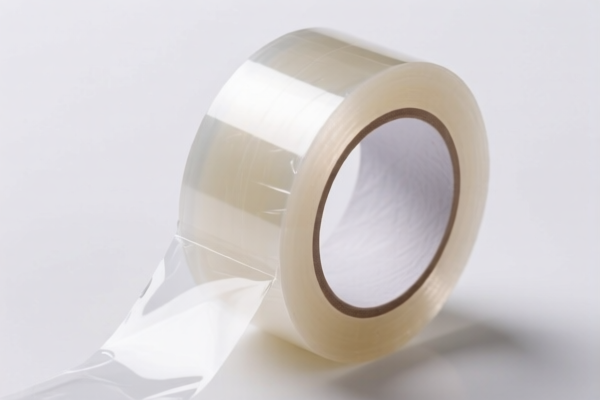
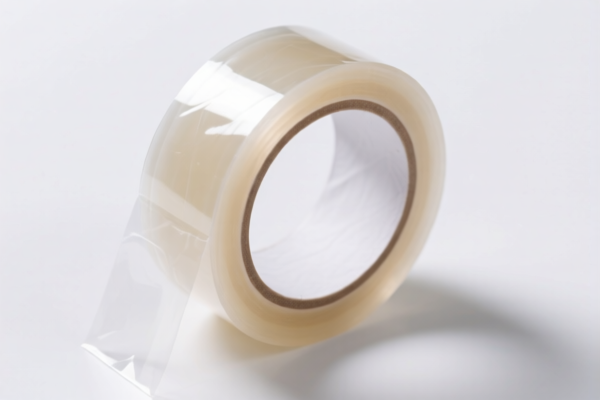
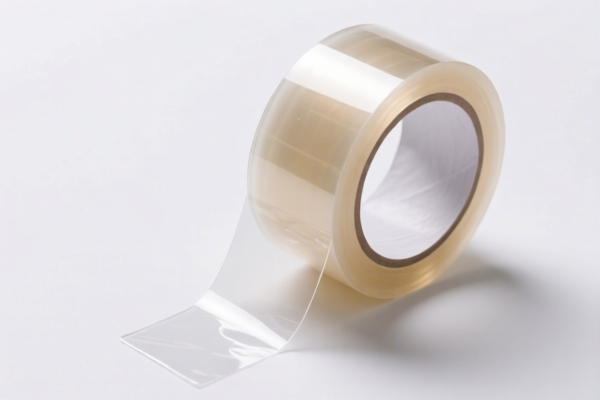
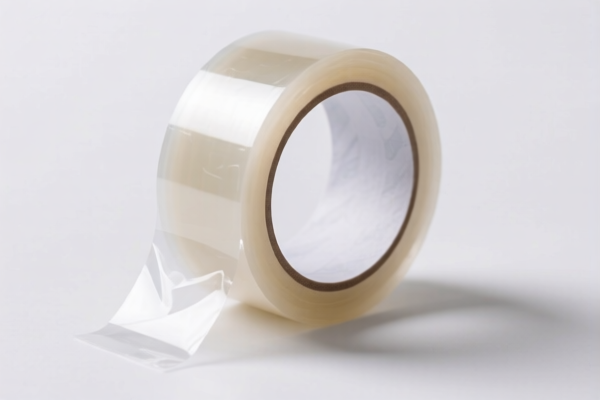
AI Analysis
🎀 Clear OPP Tape (Width ≤ 5cm) | High-Volume Low-Value Item Guide
🌐 HS Code Reference & Clearance Guide | 2026 Latest Tariff Analysis | Strategic Customs Strategy
📌 One, Product Definition & Classification: Do You Really Understand "Clear Tape"?
Transparent OPP (Oriented Polypropylene) tape is one of the most commonly used packaging materials in global logistics, e-commerce, and light industrial packaging. It is a thin, clear adhesive tape made from polypropylene film.
In international trade, its classification depends heavily on width and specific usage characteristics, especially under current US trade policies regarding Chinese-origin goods.
⚠️ Key Distinction Point:
- If the tape is ≤ 5cm width and meets specific material/form criteria → It often falls under 3919.10.20.30 (Subject to HIGH tariffs).
- If the tape is used for repair purposes or fits other general plastic article definitions → It may fall under 3919.10.20.40 or 3926.90.48.00 / 3926.90.99.89 (Variable tariffs).
- CRITICAL: Width and physical form are decisive factors for HS Code assignment.
📦 Two, HS Code Classification Details (2026 Latest Tariff Authority Comparison)
Based on the provided data, here are the precise HS Codes and their corresponding explanations for "Transparent OPP Tape ≤ 5cm":
| HS Code | Product Description | Applicable Scenario | Key Characteristics |
|---|---|---|---|
3919.10.20.30 |
Transparent tape, width ≤ 5cm, material: transparent plastic, form: tape | Standard packaging tape, office use, light shipping | Width ≤ 5cm, transparent OPP material |
3919.10.20.40 |
Transparent tape, use: repair, material: plastic, fits other category features | Repair tape, specialized adhesive applications | Repair purpose, plastic material |
3926.90.48.00 |
Plastic articles, material: plastic, form: article, fits Chapter 39 classification | General plastic items not specifically categorized as tapes | General plastic article, non-specific tape |
3926.90.99.89 |
Other plastic articles, material: polymer, not excluded specific categories | General polymer products, miscellaneous plastic goods | Polymer-based, general exclusion |
🔍 Important Reminder:
-3919.10.20.30and3919.10.20.40are the primary codes for tapes under Chapter 39 (Plastics and Articles Thereof).
-3926codes are for other plastic articles. If the product is clearly a "tape," prefer Chapter 39. If it’s a specialized plastic item that doesn’t fit tape definitions, consider Chapter 3926.
- Width matters: ≤ 5cm is a specific trigger for some subcategories.
💰 Three, 2026 Latest Tariff Rate Details (Including Surcharges & Policy Add-ons)
✅ Applicable Country: United States (US)
✅ Origin: China (CN)
✅ Effective Time: 2025 onwards (Including subsequent imports)
🎯 1. 3919.10.20.30 —— Transparent Tape (Width ≤ 5cm)
| Item | Content |
|---|---|
| Base Tariff | 5.8% |
| Additional Tariff (Section 301) | +25.0% |
| Section 122 Tariff | +10.0% |
| Total Tariff Rate | 40.8% |
| Tax Calculation | CIF Value × 40.8% |
| De Minimis Eligibility | ❌ Not Eligible (High tariff items often excluded) |
| Legal Basis Path | Base: 5.8% → 301: 25.0% → Sec122: 10.0% |
📌 Explanation:
- "Base Tariff 5.8%": Standard MFN rate for plastic tapes.
- "Section 301 Tariff 25%": Additional duty on Chinese-origin goods under US Trade Act Section 301.
- "Section 122 Tariff 10%": Additional duty under Section 122 of the Trade Expansion Act (national security/trade balance).
- Total 40.8%: This is a very high effective rate. Must be factored into cost calculations.
🎯 2. 3919.10.20.40 —— Transparent Tape (Repair Use)
| Item | Content |
|---|---|
| Base Tariff | 5.8% |
| Additional Tariff (Section 301) | +25.0% |
| Section 122 Tariff | +10.0% |
| Total Tariff Rate | 40.8% |
| Tax Calculation | CIF Value × 40.8% |
| De Minimis Eligibility | ❌ Not Eligible |
| Legal Basis Path | Base: 5.8% → 301: 25.0% → Sec122: 10.0% |
📌 Note:
- Same tariff structure as3919.10.20.30.
- Even if labeled as "repair tape," the tariff burden remains the same under current US policy.
🎯 3. 3926.90.48.00 —— Other Plastic Articles
| Item | Content |
|---|---|
| Base Tariff | 3.4% |
| Additional Tariff (Section 301) | +0.0% |
| Section 122 Tariff | +10.0% |
| Total Tariff Rate | 13.4% |
| Tax Calculation | CIF Value × 13.4% |
| De Minimis Eligibility | ❓ Check Specifics (Lower base may allow different treatment) |
| Legal Basis Path | Base: 3.4% → 301: 0.0% → Sec122: 10.0% |
📌 Advantage:
- Significantly lower total tariff (13.4%) compared to tape-specific codes.
- No Section 301 tariff. Only Section 122 applies.
- Strategy: If the product can be justified as a "general plastic article" rather than a "tape," this code offers major savings. However, risk of reclassification by CBP exists.
🎯 4. 3926.90.99.89 —— Other Plastic Articles (General)
| Item | Content |
|---|---|
| Base Tariff | 5.3% |
| Additional Tariff (Section 301) | +7.5% |
| Section 122 Tariff | +10.0% |
| Total Tariff Rate | 22.8% |
| Tax Calculation | CIF Value × 22.8% |
| De Minimis Eligibility | ❓ Check Specifics |
| Legal Basis Path | Base: 5.3% → 301: 7.5% → Sec122: 10.0% |
📌 Middle Ground:
- Higher than3926.90.48.00but lower than3919codes.
- Applies if the item doesn’t fit specific tape definitions but is a general plastic polymer product.
🛠️ Four, Clearance Practical Advice (Battle-Tested Pitfall Guide)
✅ 1. Documentation Checklist (Essential Items)
| Document | Must Provide | Description |
|---|---|---|
| ✅ Product Specification Sheet | ✔️ | Width, material (OPP), adhesive type, length |
| ✅ Product Photos (Clear) | ✔️ | Show transparency, width reference, packaging |
| ✅ Commercial Invoice | ✔️ | Describe as "Clear Plastic Tape" or "Plastic Article" |
| ✅ Packing List | ✔️ | Quantity, weight, dimensions |
| ✅ Origin Certificate (if any) | ✔️ | For potential preferential treatment |
✅ 2. Declaration Strategy (Key Mnemonics)
🔥 "Width Determines Code, Purpose Matters Less, Article May Save Costs!"
| Scenario | Correct Declaration | Wrong Approach |
|---|---|---|
| Tape ≤ 5cm, transparent | 3919.10.20.30 |
Misdeclare as general plastic → Risk of penalty |
| Repair tape | 3919.10.20.40 |
Declare as packaging → May still be same tax |
| General plastic item (not clear tape) | 3926.90.48.00 |
Force tape code → 40.8% vs 13.4% |
| Polymer-based non-tape | 3926.90.99.89 |
Misclassify as tape → Higher tax |
✅ 3. Special Situation Handling
| Situation | Recommendation |
|---|---|
| OEM Custom Tape | Provide design specs to justify "general plastic article" if possible |
| Mixed Shipments | Separate clear tape ≤5cm from other items to avoid misclassification |
| De Minimis Claims | Be cautious. High-tariff items (40.8%) often block Section 321 de minimis entry |
| Pre-Ruling | Apply for CBP Advance Ruling to lock in HS Code and tariff rate |
🌍 Five, Global Market Clearance Comparison (2026 Latest)
| Country/Region | Recommended HS Code | Tariff (China Origin) | Certification | Notes |
|---|---|---|---|---|
| 🇺🇸 US | 3919.10.20.30 |
40.8% | None | High tariff due to 301 + Sec122 |
| 🇺🇸 US | 3926.90.48.00 |
13.4% | None | Lower if classified as general plastic |
| 🇨🇳 China | 3919.10.20.30 |
~5-10% | CCC (if applicable) | No additional surcharges |
| 🇪🇺 EU | 3919.10.20 |
~6.5% | CE (if applicable) | No major surcharges |
| 🇬🇧 UK | 3919.10.20 |
~6.5% | UKCA | Post-Brexit rules |
| 🇯🇵 Japan | 3919.10.20 |
~6.0% | PSE (if applicable) | No major surcharges |
📌 Conclusion:
- US is the most challenging market due to cumulative tariffs (301 + Sec122).
- Consider restructuring product description to3926.90.48.00if legally justifiable to save 27.4% in tariffs.
- Non-US markets have significantly lower tariff burdens.
📌 Six, Common Mistakes & Pitfalls (Blood Lessons)
❌ Mistake 1: Declaring all tapes as 3926 to avoid higher taxes
👉 Consequence: CBP reclassification → Back taxes + penalties.
Rule: If it’s clearly a "tape" (adhesive, rolls, transparent),
3919is more accurate.
❌ Mistake 2: Ignoring Section 122 Tariff
👉 Consequence: Underpayment of 10% → Audit target.
Rule: Always include Section 122 if applicable.
❌ Mistake 3: Assuming De Minimis Applies to High-Tariff Items
👉 Consequence: Shipment seized at border.
Rule: Items with >20% total tariff often excluded from Section 321.
❌ Mistake 4: Vague Description ("Plastic Tape")
👉 Consequence: Delays in clearance, request for more info.
Rule: Specify "Width ≤ 5cm," "Transparent OPP," "Adhesive Type."
✅ Correct Approach:
“Clear OPP Adhesive Tape, Width 4cm, Transparent Polypropylene, for Packaging Use, Model XYZ, Non-Retail”
🎯 Seven, Conclusion: Precision Classification Saves Money!
🎯 Remember the Mnemonic:
🔹 "Width ≤5cm? Check 3919. 40.8% Tax. Try 3926? 13.4% Save."
🔹 "HS Code Determines Cost, Tariff Difference is Huge, Wrong Class = Big Fine!"
📌 Pro Tip:
If your tape is originating from Vietnam, Thailand, or Malaysia, you may qualify for Tariff Exemptions under US trade policies, reducing rates to 0%~5%.
Recommend Applying for CBP Advance Ruling before shipment to lock in the correct HS Code and tariff rate.
📣 Immediate Action:
📞 Consult Customs Broker + Provide Product Specs + Apply for HS Code Pre-Ruling
🚀 Ensure Smooth Clearance, Reduce Costs, Maximize Profit!
✨ Professional Clearance Starts with Accurate Classification!
💼 Every Cent of Cost Should Be Precisely Calculated!
Customer Reviews
About HS Code Classification
The Harmonized System (HS) is an internationally standardized nomenclature developed by the World Customs Organization (WCO) to classify traded products. Over 200 countries use the HS system as the basis for customs tariffs, trade statistics, and import/export regulations.
Each HS code follows a hierarchical structure:
- Chapter (2 digits) — Broad category of goods (e.g., Chapter 84: Machinery and Mechanical Appliances)
- Heading (4 digits) — More specific grouping within the chapter
- Subheading (6 digits) — Internationally standardized breakdown, used by all WCO member countries
- National subdivisions (8-10 digits) — Country-specific extensions for further classification, such as US HTSUS 10-digit codes
Correct HS code classification is essential for smooth customs clearance, accurate duty payment, and compliance with trade regulations. Misclassification can lead to customs delays, overpayment of duties, or penalties.
When importing from CN to US, the applicable tariff rates may include:
- Most-Favored-Nation (MFN) rate — The standard duty rate applied to WTO members
- General rate — Applied to countries without trade agreements
- Trade remedy duties — Additional tariffs such as Section 301 (anti-dumping), Section 232 (national security), or countervailing duties
The information provided on this page is for reference purposes only. For official classification, please consult with your local customs authority or a licensed customs broker.