Travel Car Radial Tires (17 18 Inch)
CN → US| HS Code | Tariff Rate | Origin | Destination | Doc |
|---|---|---|---|---|
| 4011101060 | 39.0% | CN | US | Official Doc |
| 4012114000 | 39.0% | CN | US | Official Doc |
| 4011101050 | 39.0% | CN | US | Official Doc |
| 4013905050 | 38.7% | CN | US | Official Doc |
Product Images
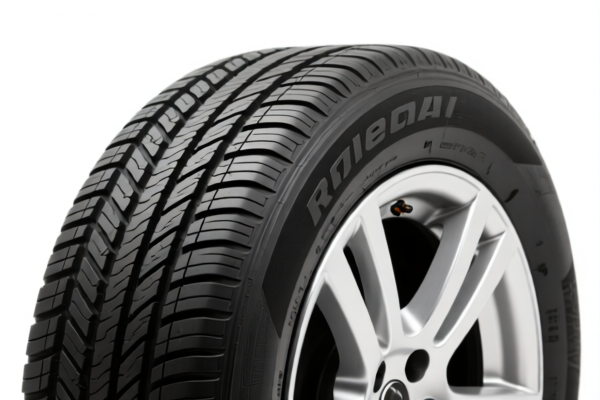
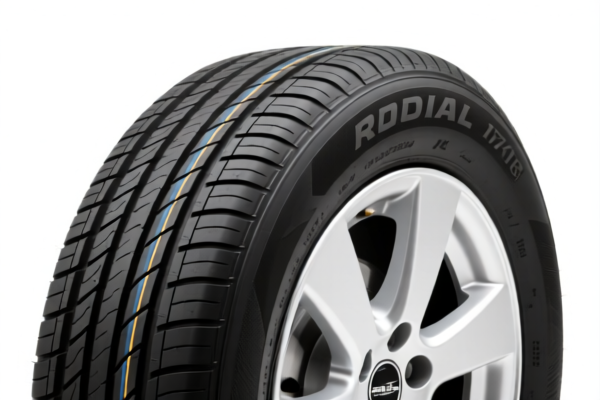
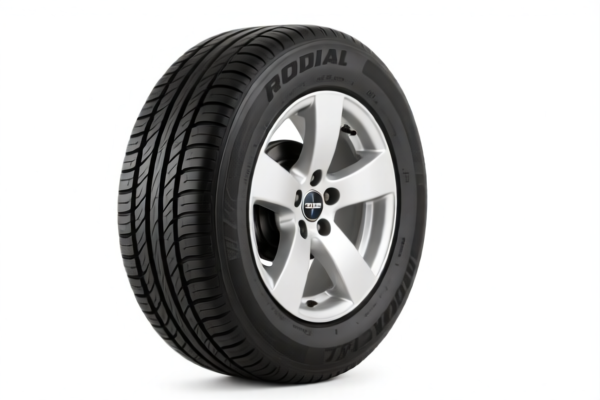
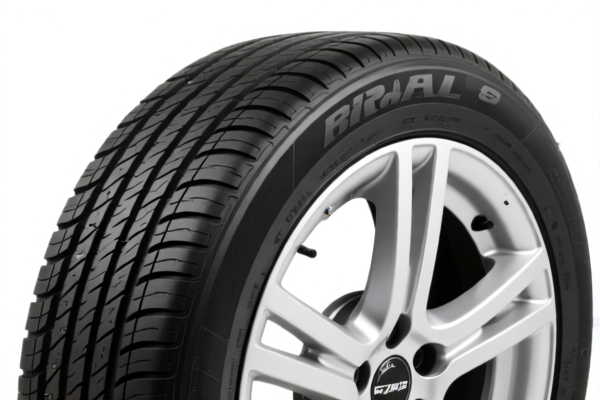
AI Analysis
🚗 Tires for Travel Cars (Radial Tires, 17-18 Inch)
🌐 HS Code Reference & Clearance Guide | 2026 Latest Tariff Full Analysis | Professional Customs Clearance Strategy
📌 I. Product Definition and Classification: Do You Really Understand "Travel Car Radial Tires"?
Radial Tires for Travel Cars (17-18 Inch) are high-performance rubber products designed for passenger vehicles (sedans, SUVs, etc.). In international trade, they are classified based on their material (rubber), structure (radial/carcass), and application (passenger cars). The key distinction lies in the rim diameter and whether they are new radials or inner tubes.
⚠️ Key Distinction Point:
- If the product is a new radial tire for passenger cars with rim diameters of 17-18 inches → Classify under 4011.10 series.
- If the product is described vaguely as "tire-related" but lacks specific radial/passenger car details → May be misclassified under 4013.90 (Inner Tubes/Other Rubber Tire Articles), leading to tax discrepancies.
📦 II. HS Code Classification Details (2026 Latest Tariff Authority Comparison)
| HS Code | Product Description | Application Scenario | Rim Diameter | Tax Rate (China to US) |
|---|---|---|---|---|
4011.10.10.60 |
New rubber tires for passenger cars, with a carcass constructed predominantly of plies oriented at substantially right angles to the equatorial plane (Radial) | Passenger car radials, rim diameter 17-18 inches | 17-18 Inch | 39.0% |
4012.11.40.00 |
Retreaded or used pneumatic rubber tires for buses or cars, or for light commercial vehicles | Used/retreaded tires for cars | Any | 39.0% |
4011.10.10.50 |
New rubber tires for passenger cars, radial, with rim diameter specifications consistent with classification explanation | Passenger car radials, rim diameter consistent with specs | Consistent Specs | 39.0% |
4013.90.50.50 |
Other inflatable rubber tires and other inflatable rubber articles (e.g., inner tubes) | Inner tubes or non-specific rubber tire parts | N/A | 38.7% |
🔍 Key Reminder:
- New Radial Tires for Passenger Cars must be classified under 4011.10.10.60 or 4011.10.10.50 if the rim diameter matches.
- 4012.11.40.00 is for retreaded/used tires; do not confuse with new tires.
- 4013.90.50.50 is for inner tubes or other rubber tire articles; if the product is a complete tire, misclassification here may lead to lower tax but higher compliance risk (audit target).
💰 III. 2026 Latest Tariff Rate Detailed Explanation (Including Surcharges, Policy Surcharges)
✅ Applicable Country: United States (US)
✅ Country of Origin: China (CN)
✅ Effective Date: From November 10, 2025 (including subsequent imports)
🎯 1. 4011.10.10.60 & 4011.10.10.50 —— New Rubber Tires for Passenger Cars (Radial)
| Item | Content |
|---|---|
| Base Tariff | 4.0% (ad valorem) |
| USITC Surtax | +25.0% (from USITC Footnote 9903.88.01) |
| IEEPA Surtax | +10.0% (for China/Hong Kong products, effective from November 10, 2025) |
| Total Tariff | 39.0% |
| Tax Calculation | CIF Value × 39.0% |
| De Minimis Exemption Available? | ❌ No (deny_de_minimis) |
| Legal Basis Path | IEEPA:9903.01.25 → IEEPA:9903.01.24 → USITC:4011.10.10.60 → FOOTNOTE:9903.88.01 |
📌 Explanation:
- The "USITC Surtax 25%" comes from the "Additional Tariffs" under Section 301 of the US Trade Act;
- The "IEEPA 10%" is the additional tariff imposed on China under the International Emergency Economic Powers Act;
- Total 39.0%, which is a very high tariff, must be anticipated in advance!
🎯 2. 4012.11.40.00 —— Retreaded/Used Pneumatic Rubber Tires for Cars
| Item | Content |
|---|---|
| Base Tariff | 4.0% |
| USITC Surtax | +25.0% |
| IEEPA Surtax | +10.0% |
| Total Tariff | 39.0% |
| Tax Calculation | CIF × 39.0% |
| De Minimis Exemption Available? | ❌ No |
| Legal Basis Path | IEEPA:9901.25 → IEEPA:9903.01.24 → USITC:4012.11.40.00 → FOOTNOTE:9903.88.01 |
📌 Note:
- Same tax rate as new radials for passenger cars;
- Applies to retreaded or used tires, not new ones.
🎯 3. 4013.90.50.50 —— Other Inflatable Rubber Articles (e.g., Inner Tubes)
| Item | Content |
|---|---|
| Base Tariff | 3.7% |
| USITC Surtax | +25.0% |
| IEEPA Surtax | +10.0% |
| Total Tariff | 38.7% |
| Tax Calculation | CIF × 38.7% |
| De Minimis Exemption Available? | ❌ No |
| Legal Basis Path | IEEPA:9901.25 → IEEPA:9903.01.24 → USITC:4013.90.50.50 → FOOTNOTE:9903.88.01 |
📌 Note:
- Slightly lower base rate (3.7% vs 4.0%), but still subject to 35% surcharges;
- Only applicable if the product is not a complete tire (e.g., inner tubes, valve stems, etc.).
🛠️ IV. Customs Clearance Practical Advice (Practical Pitfall Avoidance Guide)
✅ 1. Required Document Checklist (All Mandatory)
| Document | Must Provide | Explanation |
|---|---|---|
| ✅ Product Specification Sheet | ✔️ | Includes size (e.g., 225/55R17), load index, speed rating, brand |
| ✅ Product Photos (with Label) | ✔️ | Clear display of model, brand, rim diameter, "Radial" marking |
| ✅ Commercial Invoice | ✔️ | Clearly mark "New Radial Tire for Passenger Car, Rim Diameter 17-18 Inch" |
| ✅ Packing List | ✔️ | Explain relationship between main goods and accessories, avoid split declaration |
| ✅ Certificate of Origin (CO) | ✔️ | If non-China product, can apply for preferential tariff |
✅ 2. Declaration Tips (Key Mantra)
🔥 "New Radial, Rim 17-18, Declare 4011.10.10.60, Tax 39%, Don't Split!"
| Scenario | Correct Declaration Method | Wrong Practice |
|---|---|---|
| New Radial Tire for Passenger Car | 4011.10.10.60 |
Misdeclare as "Inner Tube" → 38.7% + Audit Risk |
| Used/Retreaded Tire | 4012.11.40.00 |
Misdeclare as "New Tire" → Penalty for Fraud |
| Inner Tube Only | 4013.90.50.50 |
Misdeclare as "Complete Tire" → Overpayment + Delay |
| Tire + Valve Stem + Balance Weight | Declare as Tire | Split Declaration → Higher Total Tax |
✅ 3. Special Case Handling
| Scenario | Handling Advice |
|---|---|
| OEM Custom Tires | Provide customer order + design drawings, avoid being deemed "non-standard" |
| Tires with Run-Flat Technology | Still classify as 4011.10.10.60 if radial passenger car tires |
| Tires for Electric Vehicles (EV) | Still classify as 4011.10.10.60, but may require EV-specific certification |
| Tires for Military Use | May apply for "Special Purpose" declaration, but generally still subject to 39% |
🌍 V. Global Major Market Clearance Comparison (2026 Latest)
| Country/Region | Recommended HS Code | Tariff | Certification Requirements | Remarks |
|---|---|---|---|---|
| 🇺🇸 United States | 4011.10.10.60 |
39.0% (China Origin) | DOT + US Treadwear Standards | High tariff, strict compliance |
| 🇨🇳 China | 4011.10.10.60 |
5% | CCC + GB Standards | No additional surcharges |
| 🇪🇺 European Union | 4011.10.10.60 |
0% (if meets ECE) | ECE R117, Labeling | No surcharges |
| 🇦🇺 Australia | 4011.10.10.60 |
5% | RCM | No surcharges |
| 🇯🇵 Japan | 4011.10.10.60 |
0% | JIS | No surcharges |
📌 Conclusion:
- The United States is the only market imposing significant additional surcharges on Chinese-made tires;
- Chinese-origin tires for US clearance have extremely high costs, it is recommended to evaluate in advance whether to adjust production or supply chain.
📌 VI. Common Mistakes & Pitfall Avoidance Guide (Blood and Tears Lessons)
❌ Mistake 1: Declaring "Tire" vaguely without specifying "Radial" or "Passenger Car"
👉 Consequence: Customs may reclassify under 4013.90.50.50 (38.7%) or trigger an audit for misdeclaration → Delay + Fine!
❌ Mistake 2: Claiming "De Minimis" for tires under $800
👉 Consequence: Tires are explicitly excluded from de minimis exemption → Confiscation + Penalty!
❌ Mistake 3: Splitting declaration into "Tire + Valve Stem + Balance Weight"
👉 Consequence: Each item taxed separately → Total tax exceeds 40%!
❌ Mistake 4: Using "Retreaded" description for new tires
👉 Consequence: Misclassification under 4012.11.40.00 → Penalty for Fraudulent Declaration!
✅ Correct Practice:
"New Radial Tire for Passenger Car, Size 225/55R17, Load Index 91, Speed Rating V, with DOT Certification, Model XYZ"
🎯 VII. Conclusion: Professional Declaration, Save Time, Reduce Costs!
🎯 Remember the Mantra:
🔹 "New Radial, Rim 17-18, Declare 4011.10.10.60, Tax 39%, Don't Split!"
🔹 "HS Code Determines Destiny, Tax Rate Differs by 25 Points, One Step Wrong, Thousands of Dollars Lost!"
📌 Tips:
- If your tires are originally from Vietnam, Mexico, Thailand, or Malaysia, you can apply for IEEPA Exemption, and the tariff is only 0%~5%;
- It is recommended to apply for an Advance Ruling in advance to avoid clearance risks.
📣 Take Action Immediately:
📞 Contact Professional Customs Broker + Provide Product Photos + Apply for HS Code Advance Ruling
🚀 Let Your Tires Clear Customs Smoothly, Export Efficiently, and Double Profits!
✨ Professional Customs Clearance Starts with Accurate Classification!
💼 Every Penny of Your Cost Deserves to Be Precisely Calculated!
Customer Reviews
About HS Code Classification
The Harmonized System (HS) is an internationally standardized nomenclature developed by the World Customs Organization (WCO) to classify traded products. Over 200 countries use the HS system as the basis for customs tariffs, trade statistics, and import/export regulations.
Each HS code follows a hierarchical structure:
- Chapter (2 digits) — Broad category of goods (e.g., Chapter 84: Machinery and Mechanical Appliances)
- Heading (4 digits) — More specific grouping within the chapter
- Subheading (6 digits) — Internationally standardized breakdown, used by all WCO member countries
- National subdivisions (8-10 digits) — Country-specific extensions for further classification, such as US HTSUS 10-digit codes
Correct HS code classification is essential for smooth customs clearance, accurate duty payment, and compliance with trade regulations. Misclassification can lead to customs delays, overpayment of duties, or penalties.
When importing from CN to US, the applicable tariff rates may include:
- Most-Favored-Nation (MFN) rate — The standard duty rate applied to WTO members
- General rate — Applied to countries without trade agreements
- Trade remedy duties — Additional tariffs such as Section 301 (anti-dumping), Section 232 (national security), or countervailing duties
The information provided on this page is for reference purposes only. For official classification, please consult with your local customs authority or a licensed customs broker.