Tropical Logs (excluding Teak) Unprocessed
CN → US| HS Code | Tariff Rate | Origin | Destination | Doc |
|---|---|---|---|---|
| 4403490200 | 35.0% | CN | US | Official Doc |
| 4403990195 | 35.0% | CN | US | Official Doc |
Product Images
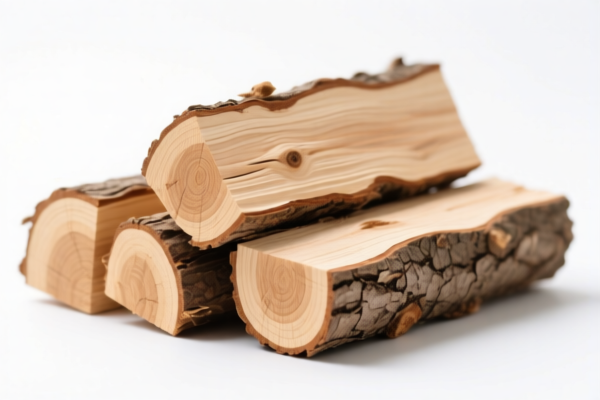
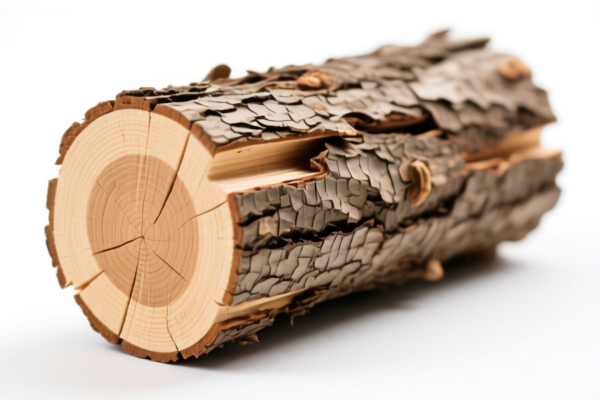
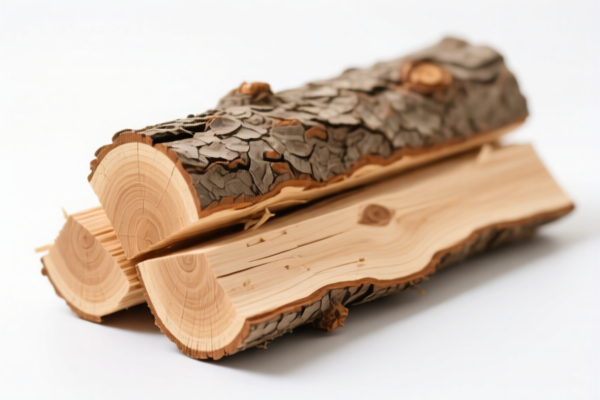
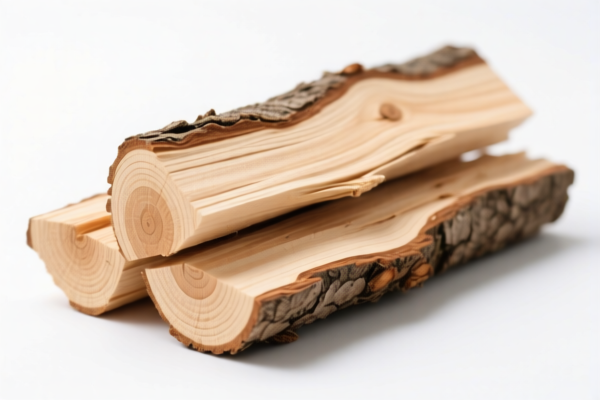
AI Analysis
🌲 Tropical Logs (Excluding Teak) Unprocessed
🌐 HS Code Reference & Customs Clearance Guide | 2026 Latest Tariff Analysis | Professional Compliance Strategy
📌 I. Product Definition & Classification: What are "Unprocessed Tropical Logs"?
Tropical Logs (Unprocessed) refer to raw timber in its natural state, primarily sourced from tropical regions, specifically excluding Teak (which often has distinct trade restrictions or separate categorization). These logs are the foundational raw materials for the global furniture, flooring, and construction industries.
In international trade, the classification hinges on three critical factors:
1. Bark & Sapwood Status: Whether the bark or sapwood has been stripped.
2. Squaring Process: Whether the log has been roughly squared (e.g., cant logs) or remains cylindrical.
3. Wood Type: Specifically identified as "Other Tropical Wood" (not Teak, not Coniferous).
⚠️ Key Distinction:
- If the wood is stripped of bark/sapwood AND roughly squared → It may move towards Chapter 44 (Sawn wood/Lumber) depending on precision.
- If the wood is roughly squared OR retains bark/cross-section → It falls under HS Code 4403 (Wood in the rough).
- "Excluding Teak" means we must look at the "Other" sub-categories under Tropical Woods.
📦 II. HS Code Classification Details (2026 Latest Tariff Authority)
Based on the provided data, the specific goods fall into two primary HS Codes under Heading 4403 (Wood in the rough).
| HS Code | Product Description | Applicable Scenario | Key Characteristics |
|---|---|---|---|
4403.49.02.00 |
Wood in the rough... Other, of tropical wood: Other | Logs that are roughly squared (even if stripped of bark/sapwood) but not fully sawn into lumber. | ✅ Roughly Squared ❌ Not fully processed |
4403.99.01.95 |
Wood in the rough... Other: Other: Other | Logs that are NOT roughly squared (cylindrical/raw) or are of a tropical species not specifically listed elsewhere, excluding Teak. | ✅ Unprocessed/Cylindrical ❌ Roughly Squared |
🔍 Critical Note:
- The phrase "Wood in the rough, whether or not stripped of bark or sap-wood, or roughly squared" is the legal definition for HS 4403.
- "Roughly squared" means the log has been cut to reduce its cross-section (e.g., from round to rectangular-ish) but not to the precise dimensions of lumber (which would be Chapter 4404 or 4407).
- "Other" implies it is not a specific high-value tropical wood like Ipe, Mahogany, or Teak (if Teak were included, it might have a different code; here, "Excluding Teak" forces it into the "Other" bucket).
💰 III. 2026 Latest Tariff Rate Breakdown (Including Surcharges)
✅ Applicable Country: United States (US)
✅ Origin: China (CN) (Assumed based on typical 25% surcharge context, adjust if origin differs)
✅ Effective Time: Current applicable rates under US Trade Policy
🎯 1. 4403.49.02.00 – Roughly Squared Tropical Logs (Other)
| Item | Content |
|---|---|
| Base Tariff | 0.0% (Ad Valorem) |
| Additional Tariff (Section 301) | +25.0% |
| Total Tax Rate | 25.0% |
| Tax Calculation | CIF Value × 25% |
| De Minimis Eligibility | ❌ No (Deny de minimis for Section 301 goods) |
| Legal Basis | USITC 4403.49.02.00 + Section 301 Footnote |
📌 Explanation:
- The 0% base rate reflects standard MFN (Most Favored Nation) treatment for raw wood.
- The 25% additional tariff is imposed under Section 301 of the Trade Act of 1974 against Chinese-origin goods deemed to involve unfair trade practices.
- Total Cost: For every $10,000 CIF value, you pay $2,500 in duties alone.
🎯 2. 4403.99.01.95 – Other Unprocessed Tropical Logs (Non-Squared/Other Species)
| Item | Content |
|---|---|
| Base Tariff | 0.0% (Ad Valorem) |
| Additional Tariff (Section 301) | +25.0% |
| Total Tax Rate | 25.0% |
| Tax Calculation | CIF Value × 25% |
| De Minimis Eligibility | ❌ No (Deny de minimis for Section 301 goods) |
| Legal Basis | USITC 4403.99.01.95 + Section 301 Footnote |
📌 Explanation:
- Identical tax treatment to4403.49.02.00.
- Whether the log is roughly squared or not, the 25% penalty applies equally to these "Other" tropical wood categories.
🛠️ IV. Customs Clearance Practical Advice (Avoiding Pitfalls)
✅ 1. Required Documentation Checklist (Mandatory)
| Document | Must Provide | Purpose |
|---|---|---|
| ✅ Commercial Invoice | ✔️ | Must explicitly state "Tropical Logs, Unprocessed, Excluding Teak" |
| ✅ Packing List | ✔️ | Detail volume (CBM), weight, and number of logs per package |
| ✅ Phytosanitary Certificate | ✔️ | CRITICAL: Issued by the exporting country's plant protection agency to prove freedom from pests |
| ✅ Fumigation Certificate | ✔️ | Proof of treatment for wood packaging material (ISPM 15) if logs are packed in wood crates |
| ✅ Declaration of Non-Teak | ✔️ | Explicit statement confirming the wood is NOT Teak (to avoid misclassification) |
| ✅ Bill of Lading (B/L) | ✔️ | Clean on-board bill of lading |
✅ 2. Declaration Tips (Key Mantras)
🔥 “Roughly Squared? Code 49. Not Squared? Code 99. Both Pay 25%!”
| Scenario | Correct HS Code | Wrong Practice | Consequence |
|---|---|---|---|
| Logs cut into rectangular beams but not smoothed | 4403.49.02.00 |
Declaring as "Lumber" (4407) | Risk of penalty for misclassification |
| Cylindrical logs with bark intact | 4403.99.01.95 |
Declaring as "Sawn Wood" | High duty risk + rejection |
| Any Tropical Log (Excl. Teak) | 4403.xx |
Trying to use "Furniture Parts" code | Immediate audit flag |
✅ 3. Special Handling for Wood Imports
| Issue | Solution |
|---|---|
| Pest Inspection | CBP (Customs and Border Protection) works with APHIS (Animal and Plant Health Inspection Service). Expect physical inspection. |
| Wood Packaging (ISPM 15) | If logs are stacked on pallets, pallets must bear the ISPM 15 mark. Otherwise, the entire shipment may be held or fumigated at your cost. |
| Teak Confusion | Do NOT use HS codes for Teak (often 4403.41 or similar). If Teak is present, it must be separated or declared separately, as Teak may have different regulatory scrutiny. |
🌍 V. Global Market Comparison (2026 Latest)
| Country/Region | Recommended HS Code | Base Duty | Additional Surcharge | Total Effective Rate | Notes |
|---|---|---|---|---|---|
| 🇺🇸 USA | 4403.49.02.00 / 4403.99.01.95 |
0% | +25% | 25% | Strict phytosanitary checks |
| 🇨🇳 China | 4403.49 / 4403.99 |
Varies | 0% | ~2-5% | Imports raw wood for processing |
| 🇪🇺 EU | 4403.49 / 4403.99 |
Varies (often 0-6%) | 0% (if FLEGT verified) | 0-6% | Requires FLEGT License or EUTS compliance to prevent illegal logging |
| 🇨🇦 Canada | 4403.49 / 4403.99 |
0% | 0% (if CUSMA compliant) | 0% | Check for phytosanitary rules |
📌 Conclusion:
- USA: High duty burden (25%). Cost-prohibitive for low-margin raw logs.
- EU: High regulatory burden (FLEGT). Duty may be low, but compliance cost is high.
- China/Canada: Lower duties, but focus is on quality and health certificates.
📌 VI. Common Mistakes & Pitfalls (Lessons Learned)
❌ Mistake 1: Declaring "Roughly Squared" logs as "Sawn Lumber" (HS 4407)
👉 Consequence: If they are not planed/smoothed, CBP will reclassify them to 4403, but may impose penalties for inaccurate description. Plus, you lose the "roughly squared" distinction.
❌ Mistake 2: Failing to declare "Excluding Teak"
👉 Consequence: If Teak is found, you may face additional scrutiny, different duty rates, or allegations of smuggling restricted species.
❌ Mistake 3: Ignoring Phytosanitary Requirements
👉 Consequence: Shipment held at port for fumigation ($5,000+ cost) or returned. Delays are the biggest cost driver for wood imports.
❌ Mistake 4: Using "De Minimis" for Section 301 Goods
👉 Consequence: Packages <$800 shipped via e-commerce are NOT exempt from the 25% tariff if they fall under Section 301 codes. Customs will catch this.
✅ Correct Declaration Example:
"Tropical Wood Logs, Unprocessed, Roughly Squared, Excluding Teak. No Bark Stripped. HS Code: 4403.49.02.00. Country of Origin: [Country]."
🎯 VII. Conclusion: Professional Clearance, Cost Control!
🎯 Remember the Mantra:
🔹 "Roughly Squared? 4403.49. Not Squared? 4403.99. Both 25% Duty in USA!"
🔹 "No Teak? Say it clearly! No Phytosanitary? You stay!"
📌 Pro Tip:
- If you are importing into the USA, calculate the 25% duty into your landed cost immediately.
- If you are importing into the EU, ensure you have the FLEGT License or valid Timber Due Diligence Statement.
- Always request the Phytosanitary Certificate before shipping.
📣 Action Required:
📞 Consult a licensed customs broker for pre-classification.
📄 Ensure all wood packaging is ISPM 15 compliant.
🚀 Smooth clearance, low risk, high profit!
✨ Professional Customs Clearance Starts with Accurate Classification!
💼 Your Landed Cost Should Be Precise, Not Guesswork!
Customer Reviews
About HS Code Classification
The Harmonized System (HS) is an internationally standardized nomenclature developed by the World Customs Organization (WCO) to classify traded products. Over 200 countries use the HS system as the basis for customs tariffs, trade statistics, and import/export regulations.
Each HS code follows a hierarchical structure:
- Chapter (2 digits) — Broad category of goods (e.g., Chapter 84: Machinery and Mechanical Appliances)
- Heading (4 digits) — More specific grouping within the chapter
- Subheading (6 digits) — Internationally standardized breakdown, used by all WCO member countries
- National subdivisions (8-10 digits) — Country-specific extensions for further classification, such as US HTSUS 10-digit codes
Correct HS code classification is essential for smooth customs clearance, accurate duty payment, and compliance with trade regulations. Misclassification can lead to customs delays, overpayment of duties, or penalties.
When importing from CN to US, the applicable tariff rates may include:
- Most-Favored-Nation (MFN) rate — The standard duty rate applied to WTO members
- General rate — Applied to countries without trade agreements
- Trade remedy duties — Additional tariffs such as Section 301 (anti-dumping), Section 232 (national security), or countervailing duties
The information provided on this page is for reference purposes only. For official classification, please consult with your local customs authority or a licensed customs broker.