Uncured Allyl Resin Powder
CN → US| HS Code | Tariff Rate | Origin | Destination | Doc |
|---|---|---|---|---|
| 3907912000 | 35.0% | CN | US | Official Doc |
| 3907914000 | 40.8% | CN | US | Official Doc |
Product Images
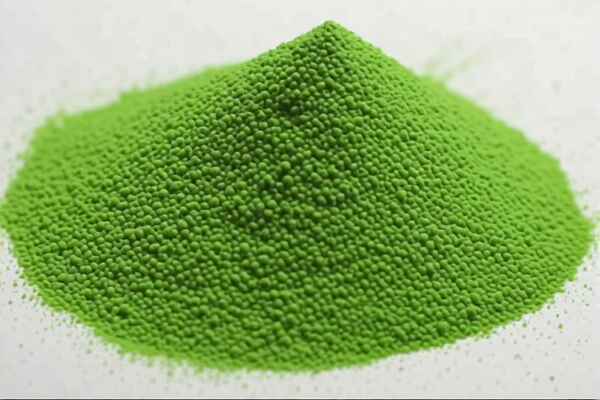

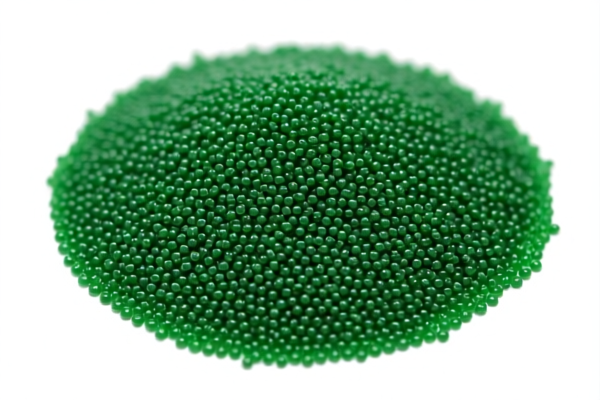
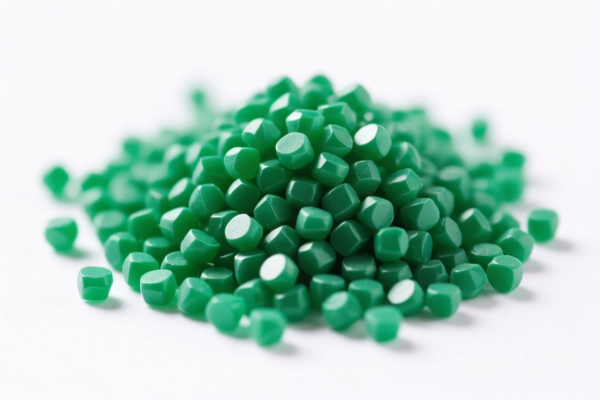
AI Analysis
🧪 Uncured Allyl Resin Powder (Uncompounded)
🌐 HS Code Reference & Customs Clearance Guide | 2026 Latest Tariff Analysis | Professional Strategy for Polymer Imports
📌 Part I: Product Definition & Classification: Do You Understand "Uncured Allyl Resin"?
Allyl Resins are a type of unsaturated polyester resin derived from allyl alcohol and various acids/anhydrides. In international trade, the distinction between "uncompounded" (raw material) and "compounded" (finished/semi-finished with fillers/additives) is critical for classification.
- Uncured/Uncompounded Allyl Resin Powder: This refers to the raw polymer resin in its basic form, specifically unsaturated, without added cross-linking agents, fillers, or stabilizers that would alter its primary chemical structure for immediate end-use. It is typically in the form of powder or flakes, intended for further processing (e.g., compression molding).
- Key Distinction:
- If it is a raw, uncompounded polymer (powder) → Chapter 39 (Plastics in primary forms).
- If it is compounded (mixed with fillers, curing agents, etc.) → It may fall under different chapters (e.g., Chapter 3907 as "other polyesters" or potentially Chapter 35/38 depending on composition, but usually 3907.91 for resins).
⚠️ Critical Classification Point:
- The term "Uncompounded" explicitly directs the classification to HS Code 3907.91.20.00.
- If the product description omits "uncompounded" or implies it is ready for molding with additives, it may be classified under HS Code 3907.91.40.00 ("Other" polyesters).
- Do not assume all allyl resins are the same; the degree of compounding determines the tax rate.
📦 Part II: HS Code Classification Details (2026 Tariff Authority Comparison)
| HS Code | Product Description | Application Scenario | Compounding Status | Tax Rate (US) |
|---|---|---|---|---|
3907.91.20.00 |
Allyl resins, uncompounded | Raw allyl resin powder, precursor for molding compounds | ❌ Uncompounded (Pure Resin) | 25.0% |
3907.91.40.00 |
Other polyesters (Uncompounded) | Other unsaturated polyesters (non-allyl) or compounded allyl resins | ✅ Compounded/Other | 0.0% |
🔍 Important Note:
-3907.91.20.00is specifically for Allyl Resins that are uncompounded. This is the most likely code for "Uncured Allyl Resin Powder" if it is pure.
-3907.91.40.00covers other polyesters or allyl resins that are compounded (e.g., mixed with fillers). If your powder is a pre-mixed molding compound, use this code.
- Tax Differential: The difference is 25%! Misclassification can lead to significant duties or penalties.
💰 Part III: 2026 Latest Tariff Rate Details (Including Additional Taxes)
✅ Applicable Country: United States (US)
✅ Origin: China (CN) (Assumed based on common trade context; adjust if different)
✅ Effective Date: 2025–2026
🎯 1. 3907.91.20.00 —— Uncured, Uncompounded Allyl Resins
| Item | Detail |
|---|---|
| Base Tariff | 0.0% (Ad Valorem) |
| Section 301 Additional Tariff | +25.0% |
| Total Tariff | 25.0% |
| Tax Calculation | CIF Value × 25% |
| De Minimis Exemption | ❌ Not Eligible (Section 301 tariffs apply regardless of value for most categories, but check current CBP rulings for de minimis thresholds under Section 321) |
| Legal Basis Path | USITC:3907.91.20.00 → Footnote 9903.88.01 (Section 301 List 4) |
📌 Explanation:
- The base tariff for most plastics in primary forms is 0%.
- However, Section 301 tariffs (originating from the Trade Act of 1974) add 25% on many Chinese-origin plastic products, including specific polyesters.
- Total Duty: 25%. This is a high tariff for raw materials.
🎯 2. 3907.91.40.00 —— Other Polyesters (e.g., Compounded)
| Item | Detail |
|---|---|
| Base Tariff | 0.0% |
| Section 301 Additional Tariff | 0.0% |
| Total Tariff | 0.0% |
| Tax Calculation | CIF Value × 0% |
| De Minimis Exemption | ✅ Potentially Eligible (Under $800 if Section 301 doesn't apply) |
| Legal Basis Path | USITC:3907.91.40.00 |
📌 Explanation:
- "Other polyesters" or compounded forms often do not carry the Section 301 tariff.
- Total Duty: 0%. This is a significant cost advantage.
🛠️ Part IV: Customs Clearance Practical Advice (Avoid Pitfalls)
✅ 1. Document Checklist (Mandatory)
| Document | Required? | Description |
|---|---|---|
| ✅ Product Specification Sheet | ✔️ | Must explicitly state "Uncompounded" or "Pure Allyl Resin". |
| ✅ Chemical Composition Report | ✔️ | SDS (Safety Data Sheet) confirming no fillers, curing agents, or additives. |
| ✅ Commercial Invoice | ✔️ | Clearly describe as "Uncured, Uncompounded Allyl Resin Powder". |
| ✅ Certificate of Origin | ✔️ | If claiming preferential treatment or verifying origin. |
| ✅ MSDS/SDS | ✔️ | For safety and chemical identification. |
✅ 2. Classification Strategy (Key Rules)
🔥 "Check for Fillers, Check for Additives: Pure = 25%, Mixed = 0%?"
| Scenario | Correct HS Code | Risk if Misclassified |
|---|---|---|
| Pure Allyl Resin Powder (No additives) | 3907.91.20.00 |
High risk: If misclassified as 3907.91.40.00, Customs may assess 25% duty + penalties. |
| Allyl Resin + Fillers (Pre-mixed) | 3907.91.40.00 |
Low risk: If labeled "uncompounded" but contains fillers, Customs may reclassify to 3907.91.20.00 + 25% duty. |
| Other Unsaturated Polyesters | 3907.91.40.00 |
N/A |
📌 Critical Advice:
- If your product is "Uncured Allyl Resin Powder", verify if it contains any compounding agents.
- If it is pure, you must use3907.91.20.00and prepare for a 25% duty.
- If it is pre-mixed (e.g., with fiberglass or fillers), use3907.91.40.00and benefit from 0% duty.
✅ 3. Special Cases
| Scenario | Handling Advice |
|---|---|
| OEM Custom Powder | Provide detailed chemical formula to prove "uncompounded" status. |
| Blend with Other Resins | If blended with other polyesters, it may still be 3907.91.20.00 if allyl is the main component. |
| Sample Shipments | Even samples are subject to duty. Declare accurately to avoid delays. |
🌍 Part V: Global Market Comparison (2026)
| Country/Region | Recommended HS Code | Tariff (China Origin) | Certification | Notes |
|---|---|---|---|---|
| 🇺🇸 USA | 3907.91.20.00 |
25% (Section 301) | None specific | High duty; consider supply chain diversification. |
| 🇨🇳 China | 3907.91.20.00 |
0% | None | Low duty. |
| 🇪🇺 EU | 3907.91.20.00 |
5.3% | REACH Compliance | No Section 301 equivalent. |
| 🇦🇺 Australia | 3907.91.20.00 |
5% | None | Moderate duty. |
📌 Conclusion:
- The USA is the most expensive market for uncompounded allyl resins due to Section 301 tariffs.
- EU and Australia offer lower duties (~5%), making them more attractive for import if supply chain allows.
📌 Part VI: Common Errors & Pitfalls (Blood Lessons)
❌ Error 1: Labeling compounded resin as "uncompounded"
👉 Consequence: Customs reclassifies to 3907.91.20.00, assesses 25% duty + penalties.
❌ Error 2: Using "Allyl Resin" without specifying "uncompounded"
👉 Consequence: Customs may default to 3907.91.40.00 (0% duty) but later audit and demand back taxes.
❌ Error 3: Ignoring Section 301 tariffs
👉 Consequence: Unexpected 25% cost increase at customs clearance.
✅ Correct Declaration Example:
"Uncured, Uncompounded Allyl Resin Powder, Chemical Formula CxHy, Pure Polymer, No Additives, For Further Processing Only."
🎯 Part VII: Conclusion: Precision in Classification Saves Money!
🎯 Remember:
🔹 "Pure Allyl = 25% Duty; Compounded Allyl = 0% Duty."
🔹 "Verify Composition: One Ingredient Can Change Tax by 25%."
🔹 "US Market is High-Cost; Consider Alternatives or Pre-Rulings."
📌 Pro Tip:
- Request a Binding Ruling from CBP before large shipments if the compounding status is ambiguous.
- Check for Supply Chain Diversification: Consider sourcing from countries not subject to Section 301 tariffs if cost is a major factor.
📣 Immediate Action:
📞 Contact your customs broker with SDS and chemical analysis to confirm classification.
🚀 Optimize your supply chain to minimize tariff impact!
✨ Professional Customs Clearance Starts with Accurate Classification!
💼 Every Percent Saved is Profit Gained!
Customer Reviews
About HS Code Classification
The Harmonized System (HS) is an internationally standardized nomenclature developed by the World Customs Organization (WCO) to classify traded products. Over 200 countries use the HS system as the basis for customs tariffs, trade statistics, and import/export regulations.
Each HS code follows a hierarchical structure:
- Chapter (2 digits) — Broad category of goods (e.g., Chapter 84: Machinery and Mechanical Appliances)
- Heading (4 digits) — More specific grouping within the chapter
- Subheading (6 digits) — Internationally standardized breakdown, used by all WCO member countries
- National subdivisions (8-10 digits) — Country-specific extensions for further classification, such as US HTSUS 10-digit codes
Correct HS code classification is essential for smooth customs clearance, accurate duty payment, and compliance with trade regulations. Misclassification can lead to customs delays, overpayment of duties, or penalties.
When importing from CN to US, the applicable tariff rates may include:
- Most-Favored-Nation (MFN) rate — The standard duty rate applied to WTO members
- General rate — Applied to countries without trade agreements
- Trade remedy duties — Additional tariffs such as Section 301 (anti-dumping), Section 232 (national security), or countervailing duties
The information provided on this page is for reference purposes only. For official classification, please consult with your local customs authority or a licensed customs broker.