Unprocessed Wild Mink Skins (Whole)
CN → US| HS Code | Tariff Rate | Origin | Destination | Doc |
|---|---|---|---|---|
| 4302110020 | 37.1% | CN | US | Official Doc |
| 4302110010 | 37.1% | CN | US | Official Doc |
| 4302110010 | 37.1% | CN | US | Official Doc |
| 4302110020 | 37.1% | CN | US | Official Doc |
| 4103901190 | 17.5% | CN | US | Official Doc |
Product Images
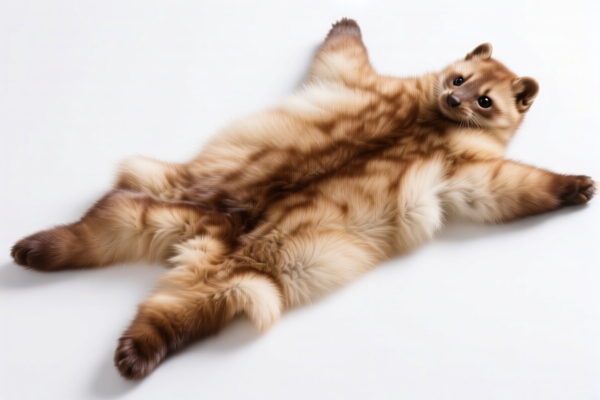
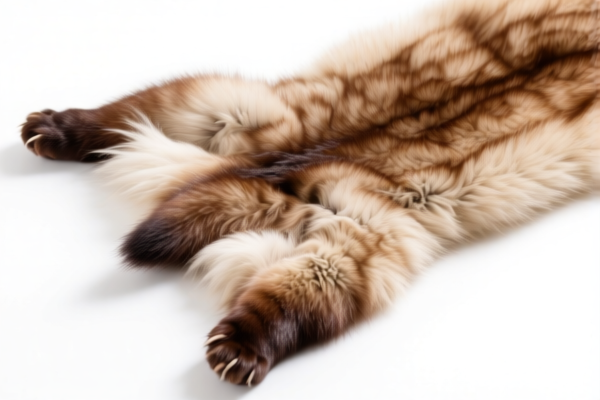
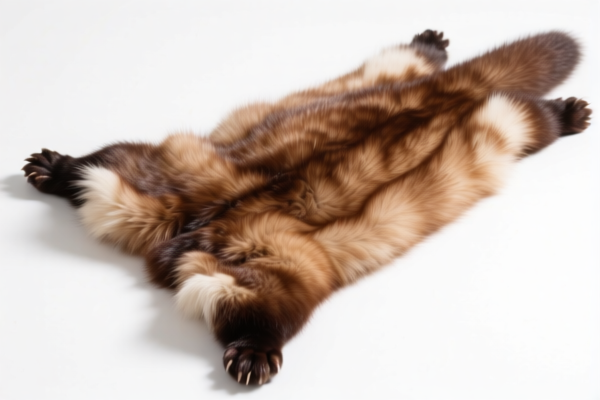
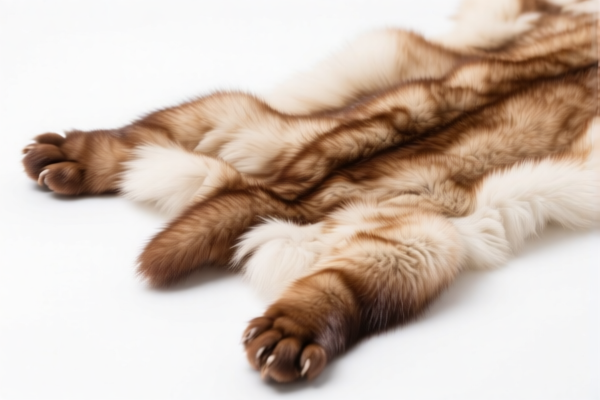
AI Analysis
🐾 Wild Mink Skins (Unprocessed & Whole) – HS Code & Tax Strategy Guide 2026
🌐 HS Code Reference & Customs Clearance Guide | 2026 Latest Tariff Analysis | Professional Clearance Strategy
📌 1. Product Definition: What are "Unprocessed Wild Mink Skins"?
Unprocessed wild mink skins refer to the whole pelts of wild-caught minks that have not undergone tanning, dyeing, or assembly. In international trade, these raw materials are classified based on two key factors: 1. Species: Distinguishing between Kolinsky mink and other mink. 2. State: Confirming they are "unprocessed" (raw skins), not yet tanned or assembled into garments.
⚠️ Key Distinction:
- If the skin is Kolinsky mink (a high-value species), it falls under specific subheadings.
- If it is other wild mink or undyed/unassembled mink, it may fall under "Other" categories.
- Crucial Note: These are raw hides, not tanned leather. Misclassification as "tanned leather" (Chapter 41) is a common error.
📦 2. HS Code Classification Details (2026 Authoritative Alignment)
| HS Code | Product Description | Summary from Data | Total Tax |
|---|---|---|---|
| 4302.11.00.10 | Kolinsky Mink Skins (Unprocessed) | Matches Kolinsky mink whole skins. | 37.1% |
| 4302.11.00.20 | Other Mink Skins (Unprocessed) | Matches non-Kolinsky wild mink or undyed/unassembled mink. | 37.1% |
| 4103.90.11.90 | Other Raw Hides (Unprocessed) | Matches undyed/unassembled mink classified as untanned raw hides. | 17.5% |
🔍 Critical Insight:
- 4302.11.00.10/20: Correct for fur skins (Chapter 43) before tanning.
- 4103.90.11.90: Used if customs classifies the skin as "other raw hides" (Chapter 41) due to lack of fur preservation. This is a lower-tax route but requires strict justification.
💰 3. 2026 Tax Rate Breakdown (Including Surcharges & Policy Add-ons)
✅ Applicable Country: United States (US)
✅ Origin: China (CN)
✅ Effective Date: November 10, 2025 (and subsequent imports)
🎯 1. 4302.11.00.10 & 4302.11.00.20 – Mink Skins (Fur Category)
| Item | Detail |
|---|---|
| Base Tariff | 2.1% |
| USITC Surcharge (Section 301) | +25.0% |
| IEEPA Surcharge (Section 122) | +10.0% |
| Total Tax Rate | 37.1% |
| Tax Calculation | CIF Value × 37.1% |
| De Minimis Eligibility | ❌ Not Applicable (High-value fur goods excluded) |
| Legal Basis Path | USITC:4302.11.00.10/20 → IEEPA:9903.01.25 → FOOTNOTE:9903.88.01 |
📌 Explanation:
- 2.1% is the standard MFN base rate for mink skins.
- +25% is the Section 301 tariff on Chinese-origin goods.
- +10% is the IEEPA surcharge for Chinese products.
- Total 37.1% is a high tariff, significantly impacting cost.
🎯 2. 4103.90.11.90 – Other Raw Hides (Lesser-Used Route)
| Item | Detail |
|---|---|
| Base Tariff | 0.0% |
| USITC Surcharge (Section 301) | +7.5% |
| IEEPA Surcharge (Section 122) | +10.0% |
| Total Tax Rate | 17.5% |
| Tax Calculation | CIF Value × 17.5% |
| De Minimis Eligibility | ❌ Not Applicable |
| Legal Basis Path | USITC:4103.90.11.90 → IEEPA:9901.25 → FOOTNOTE:9903.88.01 |
📌 Warning:
- This code applies only if the skin is considered "other raw hides" (not preserved fur).
- Risk: Customs may reclassify as 4302.11, leading to back taxes + penalties.
- Savings: 19.6% lower than fur classification, but requires strong documentation.
🛠️ 4. Customs Clearance Practical Advice (Risk Avoidance Guide)
✅ 1. Required Documentation Checklist
| Document | Must Provide | Notes |
|---|---|---|
| ✅ Species Certificate | ✔️ | Proves if mink is Kolinsky or Other Wild. |
| ✅ Processing Status Proof | ✔️ | Certify unprocessed, un-dyed, unassembled. |
| ✅ Commercial Invoice | ✔️ | Clearly state "Unprocessed Wild Mink Skins (Whole)". |
| ✅ Packing List | ✔️ | Detail number of skins, weight, and dimensions. |
| ✅ Photos of Skins | ✔️ | Show fur texture, lack of tanning, and whole pelt structure. |
| ✅ Origin Certificate | ✔️ | For country-of-origin verification. |
✅ 2. Declaration Strategy (Key Tips)
🔥 "Species Clear, State Raw, Code Right, Tax Low!"
| Scenario | Correct HS Code | Wrong Code | Consequence |
|---|---|---|---|
| Kolinsky Mink | 4302.11.00.10 |
4302.11.00.20 |
Minor misclassification, but tax same. |
| Other Wild Mink | 4302.11.00.20 |
4103.90.11.90 |
Risk of reclassification + penalties. |
| Tanned Mink | 4302.30 |
4302.11 |
Wrong chapter → High penalty. |
| Assembled Garment | 4303.00 |
4302.11 |
Wrong stage → Higher tax. |
✅ 3. Special Case Handling
| Situation | Recommendation |
|---|---|
| Undyed/Unassembled | Use 4302.11.00.20 as primary choice. Avoid 4103 unless proven raw hide. |
| Kolinsky vs. Other | Provide species proof to avoid 4302.11.00.20 if it’s Kolinsky. |
| Raw Hide Claim | If using 4103.90.11.90, provide expert testimony on "untanned" status. |
| High-Value Shipments | Consider Advance Ruling to lock in classification. |
🌍 5. Global Market Comparison (2026 Latest)
| Country/Region | Recommended HS Code | Tax Rate | Notes |
|---|---|---|---|
| 🇺🇸 USA | 4302.11.00.20 |
37.1% | High tariffs on Chinese mink skins. |
| 🇨🇳 China | 4302.11.00.20 |
2.1% | No surcharges for domestic trade. |
| 🇪🇺 EU | 4302.11 |
~3-5% | No Section 301/IEEPA. |
| 🇬🇧 UK | 4302.11 |
~3-5% | Post-Brexit tariffs apply. |
| 🇯🇵 Japan | 4302.11 |
~0-3% | Low base tariff, no surcharges. |
📌 Conclusion:
- USA is the most expensive market due to 35%+ surcharges.
- EU/UK/Japan offer significantly lower tax burdens.
- Recommendation: Evaluate supply chain shifts if targeting US market.
📌 6. Common Errors & Pitfalls (Lessons Learned)
❌ Error 1: Declaring tanned skins as unprocessed.
👉 Result: Customs reclassification → 37.1% instead of base rate.
❌ Error 2: Mixing Kolinsky and Other Mink in one shipment without distinction.
👉 Result: Confusion in classification → Delays or penalties.
❌ Error 3: Using 4103.90.11.90 for fur skins without proof.
👉 Result: High risk of rejection and back taxes.
❌ Error 4: Failing to provide species proof.
👉 Result: Customs defaults to most unfavorable code.
✅ Correct Practice:
"Unprocessed Wild Mink Skins (Whole), Kolinsky Species, Not Tanned, Not Dyed, Not Assembled"
🎯 7. Conclusion: Professional Declaration Saves Money!
🎯 Remember the Key Points:
🔹 "Kolinsky vs. Other" determines subcode.
🔹 "Unprocessed" is key for 4302.11.
🔹 37.1% is the US reality for mink skins.
🔹 17.5% is possible but risky with4103.
📌 Pro Tip:
- If your mink skins are not Chinese, check for preferential trade agreements.
- For high-volume imports, apply for Customs Advance Ruling to confirm HS Code.
- Document everything: Species, processing stage, and origin.
📣 Immediate Action:
📞 Consult Customs Broker + Provide Species Proof + Apply for Advance Ruling
🚀 Ensure Smooth Clearance, Avoid Penalties, Maximize Profit!
✨ Professional Clearance Starts with Accurate Classification!
💼 Every Percent of Tax Matters!
Customer Reviews
About HS Code Classification
The Harmonized System (HS) is an internationally standardized nomenclature developed by the World Customs Organization (WCO) to classify traded products. Over 200 countries use the HS system as the basis for customs tariffs, trade statistics, and import/export regulations.
Each HS code follows a hierarchical structure:
- Chapter (2 digits) — Broad category of goods (e.g., Chapter 84: Machinery and Mechanical Appliances)
- Heading (4 digits) — More specific grouping within the chapter
- Subheading (6 digits) — Internationally standardized breakdown, used by all WCO member countries
- National subdivisions (8-10 digits) — Country-specific extensions for further classification, such as US HTSUS 10-digit codes
Correct HS code classification is essential for smooth customs clearance, accurate duty payment, and compliance with trade regulations. Misclassification can lead to customs delays, overpayment of duties, or penalties.
When importing from CN to US, the applicable tariff rates may include:
- Most-Favored-Nation (MFN) rate — The standard duty rate applied to WTO members
- General rate — Applied to countries without trade agreements
- Trade remedy duties — Additional tariffs such as Section 301 (anti-dumping), Section 232 (national security), or countervailing duties
The information provided on this page is for reference purposes only. For official classification, please consult with your local customs authority or a licensed customs broker.