Unsaturated Polyester Board
CN → US| HS Code | Tariff Rate | Origin | Destination | Doc |
|---|---|---|---|---|
| 3920631000 | 39.2% | CN | US | Official Doc |
| 3921190090 | 41.5% | CN | US | Official Doc |
| 3920632000 | 40.8% | CN | US | Official Doc |
| 3907995050 | 41.5% | CN | US | Official Doc |
| 3921905050 | 39.8% | CN | US | Official Doc |
| 3907915000 | 41.5% | CN | US | Official Doc |
Product Images
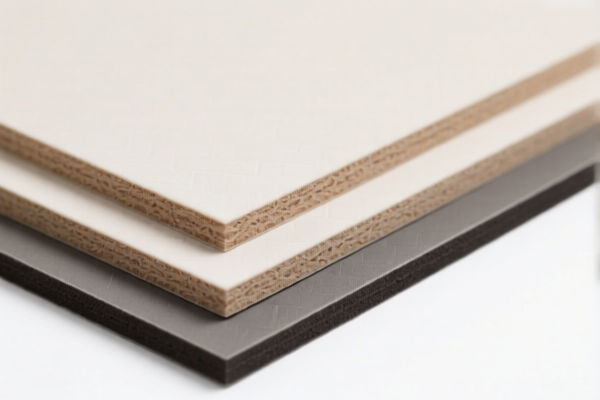
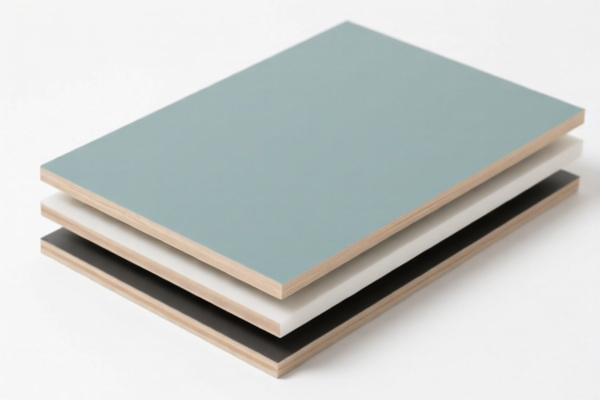
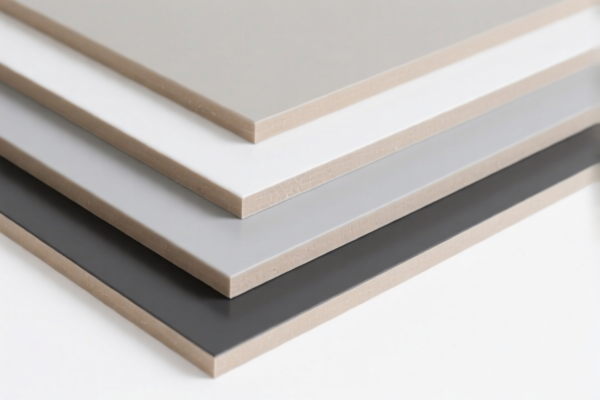
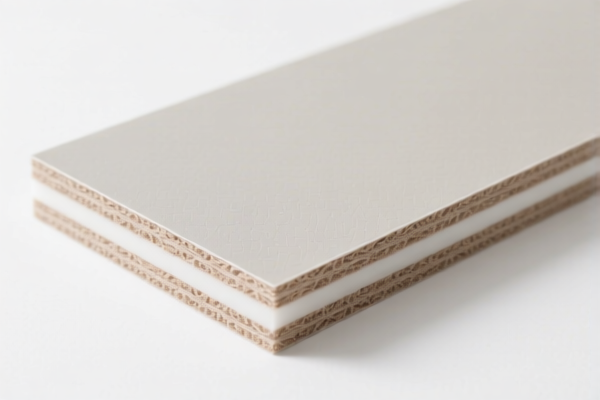
AI Analysis
🛢️ Unsaturated Polyester Board (UP Boards/Sheets)
🌐 HS Code Reference & Customs Clearance Guide | 2026 Latest Tariff Analysis | Professional Clearance Strategy
📌 I. Product Definition & Classification: Do You Really Understand "Unsaturated Polyester"?
Unsaturated Polyester (UP) is a thermosetting polymer commonly used in fiberglass-reinforced plastics (FRP), automotive parts, construction materials, and electronic components. In international trade, the classification of UP products is highly sensitive to form factor (sheet, film, foil vs. plate, board) and raw material state (raw resin vs. processed composite).
Two Main Categories in HS Code Logic:
-
Sheets, Films, Foils, Strips, and Rolls (Chapter 39.01–39.02 or specific subheadings like 3920/3921):
- Flexible or semi-flexible forms.
- Often used for laminating, coating, or further processing.
- Key HS Codes:
3920.63,3921.19,3921.90.
-
Primary Forms / Semi-Finished / Other Plastic Plates, Sheets, Film, Foil, Strip, and Block (Chapter 39.07):
- Raw resin blocks, pellets, or unfinished boards not yet cut to specific sheet/plate shapes defined in 3920/3921.
- Key HS Code:
3907.99,3907.91.
⚠️ Critical Distinction Point:
- If the product is a finished or semi-finished sheet, film, or foil (even if rigid), it typically falls under 3920 or 3921.
- If the product is a raw block, pre-preg, or unprocessed board not meeting the "sheet/film/foil" definition, it may fall under 3907.
- Misclassification Risk: Declaring a rigid UP board as "film" (3920) vs. "plate" (3921) or "primary form" (3907) drastically affects the Base Tariff Rate, though the Total Tax may remain similar due to fixed surcharges.
📦 II. HS Code Classification Details (2026 Latest Tariff Authority Cross-Reference)
Based on the provided data, here are the 6 specific HS Codes for Unsaturated Polyester Boards, categorized by form and material nuance.
| HS Code | Product Description (Summary) | Form Factor | Material Type | Applicable Scenario |
|---|---|---|---|---|
3920.63.10.00 |
Unsaturated Polyester Sheets/Films/Foils | Sheets, Films, Foils | Unsaturated Polyester | Standard UP sheets for laminating or coating |
3921.19.00.90 |
Unsaturated Polyester Boards (Plastic/Polyester Class) | Plates, Boards | Plastic (Polyester Class) | Rigid UP boards, general-purpose plastic sheets |
3920.63.20.00 |
Unsaturated Polyester Sheets/Films/Foils | Sheets, Films, Foils | Unsaturated Polyester | Alternative UP sheet variant (possibly different thickness/density) |
3907.99.50.50 |
Unsaturated Polyester Boards (Other Polyester) | Primary/Semi-finished | Other Polyester | Raw resin blocks, unprocessed UP boards |
3921.90.50.50 |
Unsaturated Polyester Boards (Plastic/Resin Class) | Plates, Sheets | Plastic/Resin Class | General UP resin boards, not fitting other specific plastic categories |
3907.91.50.00 |
Unsaturated Polyester Boards (Common Processing Form) | Common Processing Form | Unsaturated Polyester | Standard processed UP boards, intermediate products |
🔍 Key Insight:
- 3920.xxxx codes generally apply to sheets, films, foils (flexible or thin rigid).
- 3921.xxxx codes apply to plates, sheets (thicker, rigid boards).
- 3907.xxxx codes apply to primary forms (raw, unprocessed, or semi-finished blocks/pre-pregs).
- Note: All codes above carry heavy surcharges (see below).
💰 III. 2026 Latest Tariff Rate Breakdown (Including Surcharges & Policy Add-ons)
✅ Applicable Country: USA (US)
✅ Origin: China (CN)
✅ Effective Date: 2025/2026 (Post-122 & Section 301 tariffs apply)
🎯 Universal Tax Structure for All 6 HS Codes
| Component | Rate | Explanation |
|---|---|---|
| Base Tariff | Varies (4.2% – 6.5%) | Standard Most-Favored-Nation (MFN) duty for plastics |
| Section 301 Tariff | +25.0% | "25% surcharge" under US Trade Act Section 301 (China-specific) |
| Section 122 Tariff | +10.0% | "122 Clause Tariff" (specific to certain plastic/polymer imports) |
| TOTAL TAX RATE | 39.2% – 41.5% | High Cost Category |
🎯 1. 3920.63.10.00 – Unsaturated Polyester Sheets/Films/Foils
| Item | Value |
|---|---|
| Base Tariff | 4.2% |
| Section 301 Surcharge | 25.0% |
| Section 122 Surcharge | 10.0% |
| Total Tax Rate | 39.2% |
| Calculation | CIF Value × 39.2% |
| De Minimis Exemption | ❌ NO (Section 301 and 122 tariffs deny de minimis) |
📌 Note:
- Low base tariff (4.2%) due to "sheet/film" classification.
- Still subject to 35% total surcharges.
🎯 2. 3921.19.00.90 – Unsaturated Polyester Boards (Plastic/Polyester Class)
| Item | Value |
|---|---|
| Base Tariff | 6.5% |
| Section 301 Surcharge | 25.0% |
| Section 122 Surcharge | 10.0% |
| Total Tax Rate | 41.5% |
| Calculation | CIF Value × 41.5% |
| De Minimis Exemption | ❌ NO |
📌 Note:
- Higher base tariff (6.5%) as "board/plate" is often seen as more processed.
- Highest total tax rate among the 6 codes.
🎯 3. 3920.63.20.00 – Unsaturated Polyester Sheets/Films/Foils (Variant)
| Item | Value |
|---|---|
| Base Tariff | 5.8% |
| Section 301 Surcharge | 25.0% |
| Section 122 Surcharge | 10.0% |
| Total Tax Rate | 40.8% |
| Calculation | CIF Value × 40.8% |
| De Minimis Exemption | ❌ NO |
📌 Note:
- Middle-tier base tariff (5.8%).
- Total tax rate is 40.8%.
🎯 4. 3907.99.50.50 – Unsaturated Polyester Boards (Other Polyester, Primary Form)
| Item | Value |
|---|---|
| Base Tariff | 6.5% |
| Section 301 Surcharge | 25.0% |
| Section 122 Surcharge | 10.0% |
| Total Tax Rate | 41.5% |
| Calculation | CIF Value × 41.5% |
| De Minimis Exemption | ❌ NO |
📌 Note:
- Classified as "primary/semi-finished."
- High base tariff (6.5%) due to raw material status.
- Total tax rate is 41.5%.
🎯 5. 3921.90.50.50 – Unsaturated Polyester Boards (Plastic/Resin Class)
| Item | Value |
|---|---|
| Base Tariff | 4.8% |
| Section 301 Surcharge | 25.0% |
| Section 122 Surcharge | 10.0% |
| Total Tax Rate | 39.8% |
| Calculation | CIF Value × 39.8% |
| De Minimis Exemption | ❌ NO |
📌 Note:
- Lower base tariff (4.8%) despite being "board/plate."
- Total tax rate is 39.8%.
🎯 6. 3907.91.50.00 – Unsaturated Polyester Boards (Common Processing Form)
| Item | Value |
|---|---|
| Base Tariff | 6.5% |
| Section 301 Surcharge | 25.0% |
| Section 122 Surcharge | 10.0% |
| Total Tax Rate | 41.5% |
| Calculation | CIF Value × 41.5% |
| De Minimis Exemption | ❌ NO |
📌 Note:
- Standard base tariff (6.5%) for common processing forms.
- Total tax rate is 41.5%.
🛠️ IV. Customs Clearance Practical Advice (Real-World Pitfall Avoidance Guide)
✅ 1. Document Preparation Checklist (Mandatory)
| Document | Required? | Explanation |
|---|---|---|
| ✅ Product Specification Sheet | ✔️ | Must detail: Thickness, Width, Length, Density, Curing State |
| ✅ Material Safety Data Sheet (MSDS) | ✔️ | Required for chemical/plastic imports |
| ✅ Product Photos (Clear & Labeled) | ✔️ | Show texture, edges, and any markings |
| ✅ Commercial Invoice | ✔️ | Must specify "Unsaturated Polyester Board" and HS Code |
| ✅ Packing List | ✔️ | Detail weight, dimensions, and package count |
| ✅ Certificate of Origin (CO) | ✔️ | Crucial for proving China origin (triggers 301 & 122 tariffs) |
| ✅ Third-Party Test Report | ✔️ | ASTM, ISO, or other standards if applicable |
⚠️ Critical Warning:
- Do NOT claim de minimis (Section 321) for shipments valued under $800. Section 301 and 122 tariffs override de minimis exemptions for China-origin goods.
- Be precise in describing the form: "Sheet," "Film," "Foil," "Plate," or "Board." Mislabeling can lead to audits, penalties, or reclassification.
✅ 2. Declaration Strategy (Key Mantras)
🔥 “Form Determines Code, Code Determines Rate, Accuracy Saves Thousands!”
| Scenario | Correct Declaration | Incorrect Declaration | Consequence |
|---|---|---|---|
| Rigid UP Board | 3921.19.00.90 or 3921.90.50.50 |
Declaring as "Sheet" (3920) |
Risk of audit; potential penalty for misclassification |
| Thin UP Film | 3920.63.10.00 or 3920.63.20.00 |
Declaring as "Board" | Possible reclassification; minor rate difference but audit risk |
| Raw UP Resin Block | 3907.99.50.50 |
Declaring as "Sheet" | Major misclassification; high risk of detention |
| Intermediate UP Board | 3907.91.50.00 |
Declaring as "Finished Board" | Potential duty adjustment |
✅ 3. Special Case Handling
| Situation | Recommendation |
|---|---|
| Mixed Shipments | Separate HS Codes for each item type in the commercial invoice |
| OEM/Custom Orders | Provide customer specs and design drawings to justify form factor |
| Re-imports | Check for duty drawback eligibility if originally exported and re-imported |
| Valuation Disputes | Maintain proof of transaction value (invoices, payment records) |
🌍 V. Global Market Comparison (2026 Latest)
| Country/Region | Recommended HS Code | Base Tariff | Total Tax (incl. Surcharges) | Notes |
|---|---|---|---|---|
| 🇺🇸 USA | 3920.63.10.00 – 3907.91.50.00 |
4.2% – 6.5% | 39.2% – 41.5% | High Surcharges (301 + 122) |
| 🇨🇳 China | 3920.63.10.00 etc. |
5% – 8% | ~5% – 8% | No surcharges for domestic trade |
| 🇪🇺 EU | 3920.63.10 etc. |
5% – 6% | ~5% – 6% | No Section 301/122; standard EU duties |
| 🇯🇵 Japan | 3920.63.10 etc. |
5% – 6% | ~5% – 6% | No US-style surcharges |
📌 Conclusion:
- USA is the most expensive market for Unsaturated Polyester Boards due to 35% total surcharges.
- EU, Japan, and China have significantly lower tariff burdens.
- Supply Chain Strategy: Consider sourcing from or routing through non-China origins to avoid US surcharges.
📌 VI. Common Errors & Pitfall Avoidance (Lessons Learned)
❌ Error 1: Declaring a Rigid Board as a Film (3920)
👉 Consequence: Customs may reject the classification; potential penalty for misdeclaration.
❌ Error 2: Claiming De Minimis for China-origin UP Boards
👉 Consequence: Always denied due to Section 301 and 122 tariffs; shipment held for duty payment.
❌ Error 3: Vague Description ("Plastic Sheet")
👉 Consequence: Customs request for additional info; delays in clearance.
❌ Error 4: Incorrect Origin Declaration
👉 Consequence: If origin is not China, surcharges may not apply. If wrongly declared as non-China, severe penalties.
✅ Correct Practice:
"Unsaturated Polyester Board, Rigid, Thickness: 5mm, Size: 1200x2400mm, Made in China, HS Code: 3921.19.00.90"
🎯 VII. Conclusion: Professional Declaration, Cost Efficiency, Smooth Clearance
🎯 Remember the Mantras:
🔹 "Form Determines Code, Code Determines Rate!"
🔹 "301 + 122 = 35% Surcharge, No De Minimis!"
🔹 "Accuracy Saves Money, Misclassification Costs Thousands!"
📌 Pro Tips:
- If your UP Boards are originating from Vietnam, Thailand, or Malaysia, you may avoid US surcharges (check for substantial transformation rules).
- Apply for an Advance Ruling from US Customs and Border Protection (CBP) to confirm HS Code classification before shipment.
- Maintain Detailed Records of material composition and form factor to support your declaration.
📣 Immediate Action Required:
📞 Consult with a Licensed Customs Broker
📄 Provide Product Photos & Specifications
🚀 Ensure Accurate HS Code Declaration to Avoid Delays & Penalties
✨ Professional Customs Clearance Starts with Precise Classification!
💼 Every Penny Saved is a Penny Earned!
Customer Reviews
About HS Code Classification
The Harmonized System (HS) is an internationally standardized nomenclature developed by the World Customs Organization (WCO) to classify traded products. Over 200 countries use the HS system as the basis for customs tariffs, trade statistics, and import/export regulations.
Each HS code follows a hierarchical structure:
- Chapter (2 digits) — Broad category of goods (e.g., Chapter 84: Machinery and Mechanical Appliances)
- Heading (4 digits) — More specific grouping within the chapter
- Subheading (6 digits) — Internationally standardized breakdown, used by all WCO member countries
- National subdivisions (8-10 digits) — Country-specific extensions for further classification, such as US HTSUS 10-digit codes
Correct HS code classification is essential for smooth customs clearance, accurate duty payment, and compliance with trade regulations. Misclassification can lead to customs delays, overpayment of duties, or penalties.
When importing from CN to US, the applicable tariff rates may include:
- Most-Favored-Nation (MFN) rate — The standard duty rate applied to WTO members
- General rate — Applied to countries without trade agreements
- Trade remedy duties — Additional tariffs such as Section 301 (anti-dumping), Section 232 (national security), or countervailing duties
The information provided on this page is for reference purposes only. For official classification, please consult with your local customs authority or a licensed customs broker.