Unwrought or Powdered Gold Including Gilded
CN → US| HS Code | Tariff Rate | Origin | Destination | Doc |
|---|---|---|---|---|
| 7108110000 | 35.0% | CN | US | Official Doc |
| 7108121013 | 35.0% | CN | US | Official Doc |
Product Images
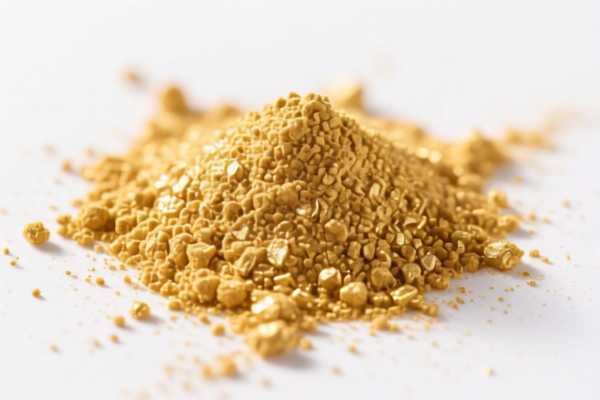
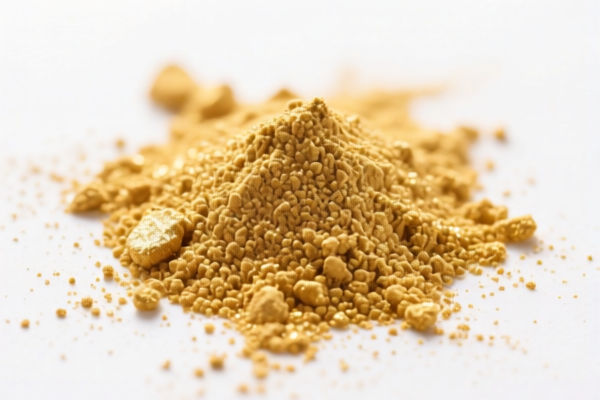
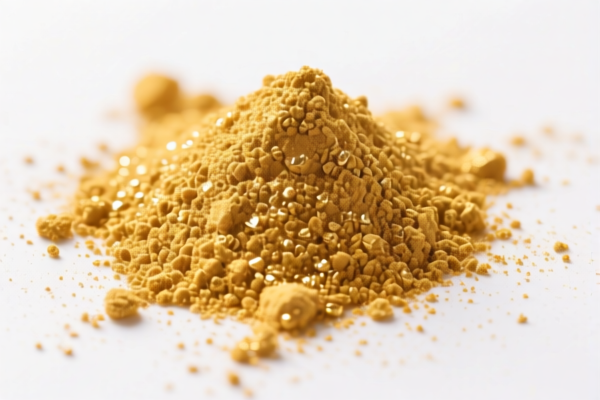
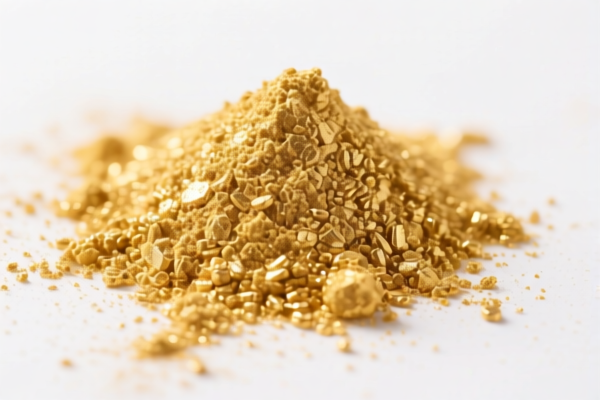
AI Analysis
🥇 Gold: Unwrought, Semimanufactured, or Powder Form (Including Gold-Plated with Platinum)
🌐 HS Code Reference & Customs Clearance Guide | 2026 Latest Tariff Analysis | Professional Clearance Strategy
📌 I. Product Definition & Classification: What Exactly Is "Non-Monetary Gold"?
Gold, in the context of international trade, is classified under Chapter 71 of the Harmonized System. When referring to "unwrought or powdered gold, including gold plated with platinum," the key distinction lies in its form and intended use.
In trade terminology, "Gold (including gold plated with platinum) unwrought or in semimanufactured forms, or in powder form" refers to raw or semi-processed precious metals that are not used as legal tender (non-monetary). This category excludes coins, jewelry, or finished articles, focusing instead on industrial, investment, or raw material forms.
⚠️ Key Distinction:
- If the gold is in powder form, it is typically used for industrial applications (e.g., electronics, catalysis, dental alloys).
- If the gold is in other unwrought forms (e.g., bars, ingots, dore), it is often used for investment or further smelting.
- "Platinum-plated gold" is explicitly included, meaning even if the surface is platinum, the core material determines the classification.
📦 II. HS Code Classification Details (2026 Latest Tariff Authority Comparison)
| HS Code | Product Description | Application Scenario | Purity/Specs |
|---|---|---|---|
7108.11.00.00 |
Powder Form: Gold (including gold plated with platinum) unwrought or in semimanufactured forms, or in powder form: Nonmonetary: Powder | Industrial use, electronics manufacturing, catalytic converters, dental labs | No specific purity requirement mentioned for powder; typically fine gold powder |
7108.12.10.13 |
Other Unwrought Forms: Bullion and doré. Bullion: Containing by weight not less than 99.95 percent of gold | Investment, central bank reserves, high-purity industrial use | ≥ 99.95% Au content |
🔍 Key Reminder:
- Powder vs. Solid: If the gold is in powder form, it falls under7108.11.00.00.
- Bullion/Doré: If it is in solid unwrought forms (bars, ingots) and meets the 99.95% purity threshold, it falls under7108.12.10.13.
- Platinum Plating: Even if gold is plated with platinum, it is still classified under these codes, provided the base material is gold.
💰 III. 2026 Latest Tariff Rate Breakdown (Including Base Tariffs, Additional Taxes, Policy Surcharges)
✅ Applicable Country: United States (US)
✅ Origin: China (CN)
✅ Effective Date: 2025-11-10 onwards (including subsequent imports)
🎯 1. 7108.11.00.00 —— Gold Powder (Nonmonetary)
| Item | Content |
|---|---|
| Base Tariff | 0.0% (ad valorem) |
| Additional Tariff (Section 301 / IEEPA) | 0.0% |
| Total Tariff Rate | 0.0% |
| Tax Calculation | CIF Value × 0.0% = $0 |
| De Minimis Exemption Available? | ❌ No (Gold is generally excluded from de minimis thresholds due to value and regulatory scrutiny) |
| Legal Basis Path | 7108.11.00.00 → 0.0% |
📌 Explanation:
- Gold powder is classified as a raw material with zero tariff impact under current US trade policies.
- No Section 301 or IEEPA surcharges apply to this specific subheading.
🎯 2. 7108.12.10.13 —— Bullion/Doré (≥ 99.95% Gold)
| Item | Content |
|---|---|
| Base Tariff | 0.0% (ad valorem) |
| Additional Tariff (Section 301 / IEEPA) | 0.0% |
| Total Tariff Rate | 0.0% |
| Tax Calculation | CIF Value × 0.0% = $0 |
| De Minimis Exemption Available? | ❌ No (High-value goods are exempt from de minimis) |
| Legal Basis Path | 7108.12.10.13 → 0.0% |
📌 Note:
- This code applies specifically to investment-grade bullion or doré with ≥ 99.95% gold purity.
- Like gold powder, it is tariff-free under current US trade agreements and policies.
🛠️ IV. Customs Clearance Practical Advice (Real-World Pitfall Avoidance Guide)
✅ 1. Documentation Checklist (Mandatory)
| Document | Required | Notes |
|---|---|---|
| ✅ Certificate of Purity | ✔️ | For 7108.12.10.13, must confirm ≥ 99.95% Au. For powder, specify mesh size and form. |
| ✅ Product Specification Sheet | ✔️ | Include form (powder/bullion), weight, packaging, and intended use (industrial/investment). |
| ✅ Commercial Invoice | ✔️ | Clearly state "Nonmonetary Gold" and exact HS Code. |
| ✅ Packing List | ✔️ | Detail net/gross weight, number of packages, and packaging type (secure for precious metals). |
| ✅ Origin Certificate | ✔️ | If applicable, to verify origin and ensure no additional country-specific tariffs. |
| ✅ Import License / Permit | ✔️ | Some jurisdictions require special permits for importing precious metals. |
✅ 2. Declaration Tips (Key Mnemonics)
🔥 “Powder is 11, Bullion is 12, Purity is King, Tariff is Free!”
| Scenario | Correct Declaration | Wrong Practice |
|---|---|---|
| Gold Powder | 7108.11.00.00 |
Misdeclaring as "jewelry" → High tariff + penalties |
| Bullion (≥99.95% Au) | 7108.12.10.13 |
Misdeclaring as "semimanufactured gold" → Potential audit |
| Platinum-Plated Gold | 7108.11.00.00 or 7108.12.10.13 |
Ignoring plating → Misclassification risk |
| Gold Coins | Not applicable | Declaring non-monetary gold as coins → Legal violation |
✅ 3. Special Handling Considerations
| Scenario | Handling Advice |
|---|---|
| High-Value Shipments | Use secure logistics (e.g., Brinks, Loomis) and insure fully. |
| Powdered Gold | Ensure packaging is leak-proof and labeled as "Precious Metal Powder." |
| Bullion/Doré | Provide assay reports to prove ≥99.95% purity. |
| Platinum-Plated Gold | Declare both gold and platinum content if required by local customs. |
| Industrial vs. Investment Use | Clearly state end-use to avoid suspicion of smuggling or tax evasion. |
🌍 V. Global Major Market Customs Comparison (2026 Latest)
| Country/Region | Recommended HS Code | Tariff | Certification Requirements | Notes |
|---|---|---|---|---|
| 🇺🇸 USA | 7108.11.00.00 / 7108.12.10.13 |
0.0% | No special certification | Tariff-free, but secure transport required |
| 🇨🇳 China | 7108.11.00.00 / 7108.12.10.13 |
0.0% | No special certification | Zero tariff for precious metals |
| 🇪🇺 EU | 7108.11.00 / 7108.12.10 |
0.0% | CE marking not applicable | Zero tariff, VAT may apply |
| 🇬🇧 UK | 7108.11.00 / 7108.12.10 |
0.0% | No special certification | Post-Brexit, still 0% for gold |
| 🇯🇵 Japan | 7108.11.00 / 7108.12.10 |
0.0% | No special certification | Zero tariff |
📌 Conclusion:
- Gold is tariff-free globally under current trade policies for both powder and bullion forms.
- Zero tariff applies regardless of origin, but security and compliance are critical.
📌 VI. Common Mistakes & Pitfall Avoidance (Blood Lessons)
❌ Mistake 1: Declaring gold powder as "jewelry" or "finished goods"
👉 Consequence: High tariff + fraud suspicion → Seizure & Penalties
❌ Mistake 2: Failing to provide purity certificates for bullion
👉 Consequence: Customs delays, potential reclassification → Delays & Extra Costs
❌ Mistake 3: Ignoring platinum plating in description
👉 Consequence: Misclassification → Audits & Fines
❌ Mistake 4: Using "Gold" as the sole product name
👉 Consequence: Ambiguity → Customs Query & Hold-up
✅ Correct Practice:
"Nonmonetary Gold Powder, Mesh Size 200, Industrial Grade, 1kg Package"
or
"Gold Bullion, 99.95% Purity, 1kg Bar, Investment Grade"
🎯 VII. Conclusion: Professional Declaration, Save Time & Cost!
🎯 Remember the Mnemonic:
🔹 "Powder is 11, Bullion is 12, Purity is King, Tariff is Free!"
🔹 "HS Code Determines Fate, Tariff is Zero, Declaration Precision Matters!"
📌 Pro Tip:
- Ensure all documents are accurate and consistent.
- Use secure logistics for high-value shipments.
- Declare clearly with HS Codes and product specifics to avoid customs delays.
📣 Immediate Action:
📞 Contact a licensed customs broker + Provide product specs + Ensure secure packaging
🚀 Let your gold pass through customs smoothly, efficiently, and tariff-free!
✨ Professional clearance starts with precise classification!
💼 Every gram of gold counts—make sure your documentation is flawless!
Customer Reviews
About HS Code Classification
The Harmonized System (HS) is an internationally standardized nomenclature developed by the World Customs Organization (WCO) to classify traded products. Over 200 countries use the HS system as the basis for customs tariffs, trade statistics, and import/export regulations.
Each HS code follows a hierarchical structure:
- Chapter (2 digits) — Broad category of goods (e.g., Chapter 84: Machinery and Mechanical Appliances)
- Heading (4 digits) — More specific grouping within the chapter
- Subheading (6 digits) — Internationally standardized breakdown, used by all WCO member countries
- National subdivisions (8-10 digits) — Country-specific extensions for further classification, such as US HTSUS 10-digit codes
Correct HS code classification is essential for smooth customs clearance, accurate duty payment, and compliance with trade regulations. Misclassification can lead to customs delays, overpayment of duties, or penalties.
When importing from CN to US, the applicable tariff rates may include:
- Most-Favored-Nation (MFN) rate — The standard duty rate applied to WTO members
- General rate — Applied to countries without trade agreements
- Trade remedy duties — Additional tariffs such as Section 301 (anti-dumping), Section 232 (national security), or countervailing duties
The information provided on this page is for reference purposes only. For official classification, please consult with your local customs authority or a licensed customs broker.