Vacuum Cleaner Nozzle
CN → US| HS Code | Tariff Rate | Origin | Destination | Doc |
|---|---|---|---|---|
| 8508190000 | 35.0% | CN | US | Official Doc |
| 8508700000 | 85.0% | CN | US | Official Doc |
| 8421990180 | 35.0% | CN | US | Official Doc |
| 8421916000 | 35.0% | CN | US | Official Doc |
| 9603500000 | 17.5% | CN | US | Official Doc |
Product Images
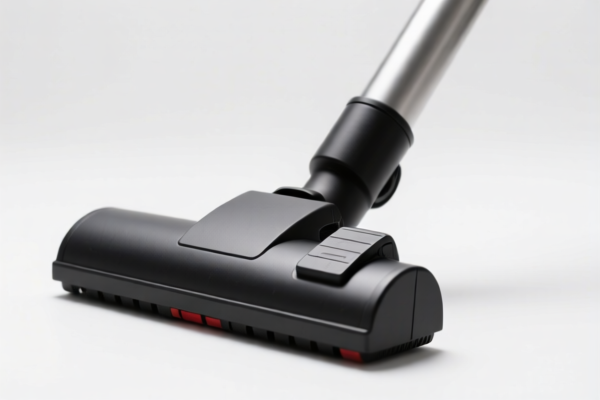
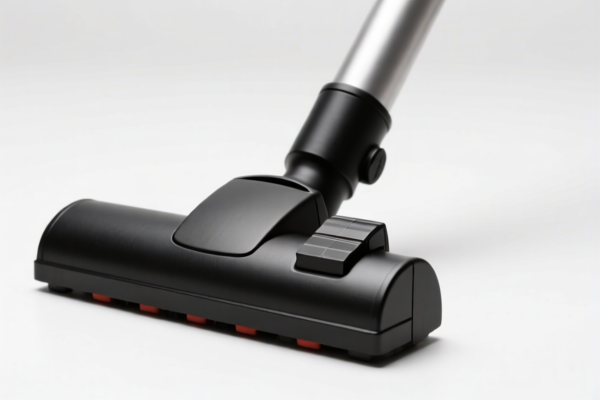
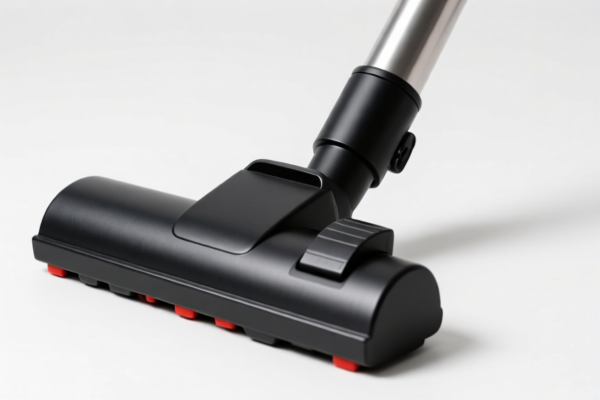
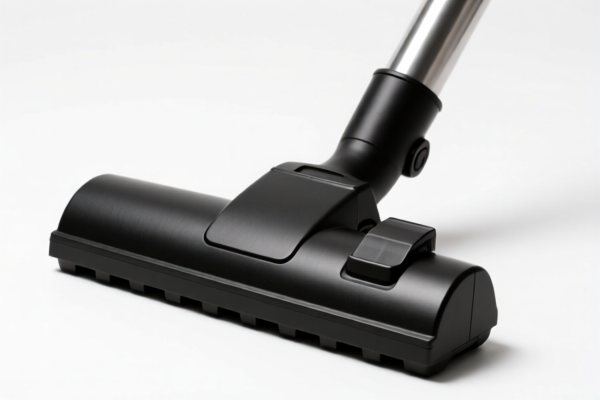
AI Analysis
🌪️ Vacuum Cleaner Nozzle (Vacuum Cleaner Attachments)
🌐 HS Code Reference & Customs Clearance Guide | 2026 Latest Tariff Analysis | Strategic Compliance Strategy
📌 I. Product Definition & Classification: What Exactly Is a "Vacuum Cleaner Nozzle"?
A vacuum cleaner nozzle is a critical accessory or part of a vacuum cleaner, designed to direct airflow and facilitate cleaning. In international trade, its classification depends heavily on its structural features (e.g., presence of brush bristles) and functional role (part vs. complete unit).
The data provided highlights four distinct classification pathways, each with vastly different tariff implications. Understanding the nuances is key to avoiding overpayment or customs delays.
⚠️ Key Distinction Points:
- If the nozzle is primarily a mechanical accessory for an electric vacuum cleaner → It is classified as a part.
- If the nozzle contains bristle structures acting as a machine component → It may be classified as a brush.
- If it is used for gas filtration/purification context → It may be classified under centrifuge parts (rare but possible in specific industrial contexts).
📦 II. HS Code Classification Details (2026 Latest Tariff Alignment)
Based on the provided data, here are the four possible HS Codes, their rationales, and total tax rates.
| HS Code | Product Description & Rationale | Total Tax Rate | Key Tariff Components |
|---|---|---|---|
9603.50.00.00 |
Other Brushes: If the nozzle contains bristle structures, it is classified as a brush constituting a part of a machine. This is often the lowest tariff option if structurally valid. | 17.5% | Base: 0% Add-on: 7.5% Section 301: 10% |
8508.70.00.00 |
Parts of Vacuum Cleaners: Classified directly under "Vacuum Cleaner and Parts" as a part specifically for vacuum cleaners. High duty due to specific material restrictions (Steel/Aluminum/Copper). | 85.0% | Base: 0% Add-on: 25% Section 301: 10% Steel/Al/Cu Add-on: 50% |
8421.99.01.80 |
Parts of Electrical/Mechanical Appliances: Classified under "Other Parts" for electrical/mechanical appliances, assuming no material conflict. | 35.0% | Base: 0% Add-on: 25% Section 301: 10% |
8421.91.60.00 |
Parts of Gas Filter/Purification Devices: Classified as a part for centrifuges or gas filtration devices (fallback logic for filtration functions). | 35.0% | Base: 0% Add-on: 25% Section 301: 10% |
8508.19.00.00 |
Parts of Electric Vacuums: Classified as a part for electric vacuum cleaners (with motor), matching the function of vacuum cleaner accessories. | 35.0% | Base: 0% Add-on: 25% Section 301: 10% |
🔍 Critical Analysis:
-9603.50.00.00(17.5%) is the most cost-effective if the nozzle has bristles and can be justified as a "brush."
-8508.70.00.00(85.0%) is the most expensive due to the additional 50% tariff on Steel/Aluminum/Copper products under specific sections. Avoid this unless structurally unavoidable.
- The 35.0% rate applies to generic "parts" classifications (8421and8508.19).
💰 III. 2026 Latest Tariff Breakdown (Including Additional Duties)
✅ Applicable Country: United States (US)
✅ Origin: China (CN)
✅ Effective Date: Ongoing (Subject to Section 301 and IEEPA provisions)
🎯 1. 9603.50.00.00 – Other Brushes (Best Case Scenario)
| Item | Detail |
|---|---|
| Base Duty | 0% |
| USITC Add-on Duty (Section 301) | +7.5% |
| Section 301 Additional (122 Clause) | +10% |
| Total Effective Rate | 17.5% |
| Calculation | CIF Value × 17.5% |
| De Minimis Exemption | ❌ Not Eligible (High risk of seizure if declared incorrectly) |
| Legal Basis | USITC Tariff Schedule → Section 301 Footnotes |
📌 Explanation:
- This classification treats the nozzle as a brush.
- Crucial: Must have visible bristles or brush-like structure. If it’s a smooth plastic nozzle, this classification may be rejected by customs.
🎯 2. 8508.70.00.00 – Parts of Vacuum Cleaners (Highest Risk)
| Item | Detail |
|---|---|
| Base Duty | 0% |
| USITC Add-on Duty (Section 301) | +25% |
| Section 301 Additional (122 Clause) | +10% |
| Steel/Aluminum/Copper Add-on | +50% |
| Total Effective Rate | 85.0% |
| Calculation | CIF Value × 85.0% |
| De Minimis Exemption | ❌ Not Eligible |
| Legal Basis | USITC Tariff Schedule → Section 301 + Section 232 (if metals apply) |
📌 Explanation:
- This is the "default" part classification for vacuum cleaners.
- High Danger: The 50% additional tariff on steel, aluminum, or copper components makes this extremely expensive. Even small metal parts in the nozzle can trigger this.
🎯 3. 8421.99.01.80 / 8508.19.00.00 / 8421.91.60.00 – Generic Parts (Moderate Cost)
| Item | Detail |
|---|---|
| Base Duty | 0% |
| USITC Add-on Duty (Section 301) | +25% |
| Section 301 Additional (122 Clause) | +10% |
| Total Effective Rate | 35.0% |
| Calculation | CIF Value × 35.0% |
| De Minimis Exemption | ❌ Not Eligible |
| Legal Basis | USITC Tariff Schedule → Section 301 Footnotes |
📌 Explanation:
- These codes apply if the nozzle is viewed as a general mechanical part or a part of a filtration device.
- 35% is significantly cheaper than 85%, but more expensive than 17.5%.
- Use this if the nozzle has bristles but cannot be strictly classified as a "brush" under 9603, or if it lacks metal components triggering the 50% surcharge.
🛠️ IV. Customs Clearance Practical Advice (Avoid Pitfalls)
✅ 1. Preparation Checklist (Mandatory)
| Document | Required? | Notes |
|---|---|---|
| ✅ Product Specifications | ✔️ | Must detail materials (plastic vs. metal/bristles). |
| ✅ Photos of Nozzle | ✔️ | Show if it has bristles, metal parts, or is pure plastic. |
| ✅ Material Declaration | ✔️ | Explicitly state if steel, aluminum, or copper is present. |
| ✅ Functional Description | ✔️ | Describe whether it’s a "brush attachment" or "mechanical part." |
| ✅ Commercial Invoice | ✔️ | Use precise HS Code description matching the classification. |
✅ 2. Declaration Strategy (Key Tactics)
🔥 “Brush Structure = Low Duty, Metal Content = High Duty!”
| Scenario | Recommended HS Code | Duty Rate | Why? |
|---|---|---|---|
| Nozzle with Bristles (No major metal) | 9603.50.00.00 |
17.5% | Classified as a brush. Lowest risk of high tariffs. |
| Nozzle with Metal Parts (Steel/Al/Cu) | 8508.70.00.00 |
85.0% | Triggers 50% surcharge. Avoid if possible. |
| Nozzle without Bristles (Plastic/Mechanical) | 8508.19.00.00 |
35.0% | Classified as a general vacuum part. Safe middle ground. |
| Filtration Context | 8421.91.60.00 |
35.0% | If used in gas/air purification systems. |
⚠️ Warning:
- Do not declare a bristled nozzle as a "vacuum part" (8508) if it qualifies as a "brush" (9603). Customs may reclassify it, leading to penalties.
- Do not hide metal components. If the nozzle has steel springs or metal caps, the 50% surcharge may apply.
✅ 3. Special Handling Tips
| Situation | Advice |
|---|---|
| OEM Custom Nozzles | Provide design specs showing material composition. |
| Mixed Shipments | If shipping brushes and plastic nozzles together, consider separate entries to optimize duty. |
| Pre-Ruling Application | Apply for a Binding Ruling from CBP if the product has ambiguous features (e.g., semi-bristled, mixed materials). |
🌍 V. Global Market Comparison (2026)
| Country | Recommended HS Code | Duty Rate (China Origin) | Notes |
|---|---|---|---|
| 🇺🇸 USA | 9603.50.00.00 |
17.5% | Best for bristled nozzles. 8508 is 85% due to metal surcharges. |
| 🇪🇺 EU | 9603.30 |
0% - 4.5% | Generally lower duties. No Section 301 equivalent. |
| 🇨🇳 China | 8508.70 |
0% - 5% | Import duties may be low, but check export regulations. |
| 🇬🇧 UK | 9603.30 |
4.5% | Post-Brexit tariffs apply. |
| 🇯🇵 Japan | 9603.30 |
0% - 3% | Generally favorable. |
📌 Conclusion:
- The US market is highly sensitive to material composition and classification.
- Bristled nozzles should aim for 9603.50 to save ~67.5% in duties compared to8508.70.
- Plastic/no-bristle nozzles should use 8508.19 or 8421.99 to avoid the 85% rate.
📌 VI. Common Errors & Pitfalls (Lessons Learned)
❌ Error 1: Declaring a bristled nozzle as 8508.70.00.00
👉 Result: Pay 85% instead of 17.5%. Overpay by ~$67,500 per $100k shipment.
❌ Error 2: Hiding metal components in plastic nozzles
👉 Result: Customs detects metal → Applies 50% steel/aluminum surcharge → Rate jumps from 35% to 85%.
❌ Error 3: Using vague descriptions like "Vacuum Accessory"
👉 Result: Customs reclassifies to highest applicable rate → Delays + Penalties.
✅ Correct Practice:
"Vacuum Cleaner Brush Nozzle, Plastic Body with Synthetic Bristles, Model XYZ, No Metal Parts" → HS: 9603.50.00.00
🎯 VII. Conclusion: Strategic Classification for Maximum Savings
🎯 Key Takeaway:
🔹 Bristles = Brush (9603) = 17.5% Duty
🔹 Plastic/No Bristles = Part (8508.19) = 35% Duty
🔹 Metal Components = High Surcharge (8508.70) = 85% Duty
📌 Action Plan:
1. Audit Material Composition: Check for any steel, aluminum, or copper.
2. Check for Bristles: If yes, push for 9603.50.00.00.
3. Apply for Pre-Ruling: If unsure, get a CBP ruling before shipping.
4. Optimize Declaration: Use precise language to support the chosen HS Code.
📣 Immediate Action:
📞 Consult Customs Broker + Provide Product Photos + Apply for HS Code Pre-Ruling
🚀 Save Up to 67.5% in Duties!
✨ Precision in Classification, Profit in Clearance!
💼 Every Percent Saved is Pure Profit!
Customer Reviews
About HS Code Classification
The Harmonized System (HS) is an internationally standardized nomenclature developed by the World Customs Organization (WCO) to classify traded products. Over 200 countries use the HS system as the basis for customs tariffs, trade statistics, and import/export regulations.
Each HS code follows a hierarchical structure:
- Chapter (2 digits) — Broad category of goods (e.g., Chapter 84: Machinery and Mechanical Appliances)
- Heading (4 digits) — More specific grouping within the chapter
- Subheading (6 digits) — Internationally standardized breakdown, used by all WCO member countries
- National subdivisions (8-10 digits) — Country-specific extensions for further classification, such as US HTSUS 10-digit codes
Correct HS code classification is essential for smooth customs clearance, accurate duty payment, and compliance with trade regulations. Misclassification can lead to customs delays, overpayment of duties, or penalties.
When importing from CN to US, the applicable tariff rates may include:
- Most-Favored-Nation (MFN) rate — The standard duty rate applied to WTO members
- General rate — Applied to countries without trade agreements
- Trade remedy duties — Additional tariffs such as Section 301 (anti-dumping), Section 232 (national security), or countervailing duties
The information provided on this page is for reference purposes only. For official classification, please consult with your local customs authority or a licensed customs broker.