Vehicle Body Parts (Others)
CN → US| HS Code | Tariff Rate | Origin | Destination | Doc |
|---|---|---|---|---|
| 8708295160 | 0.0% | CN | US | Official Doc |
| 8707905060 | 39.0% | CN | US | Official Doc |
| 8707905090 | 39.0% | CN | US | Official Doc |
| 8708292500 | 0.0% | CN | US | Official Doc |
| 8714998000 | 27.5% | CN | US | Official Doc |
Product Images
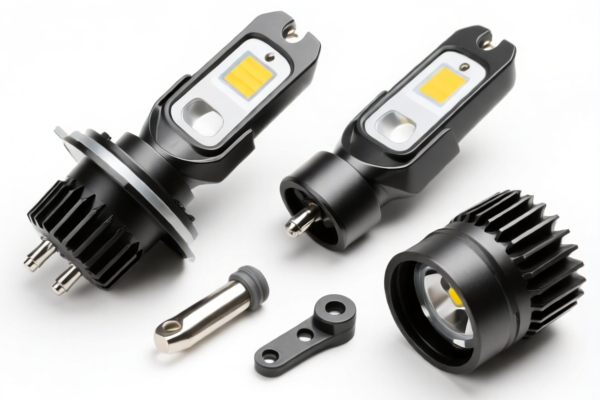
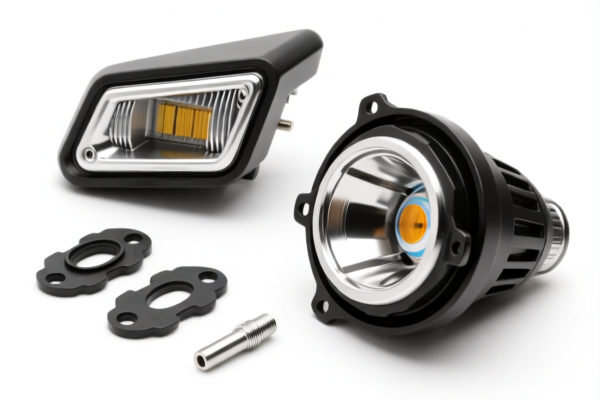
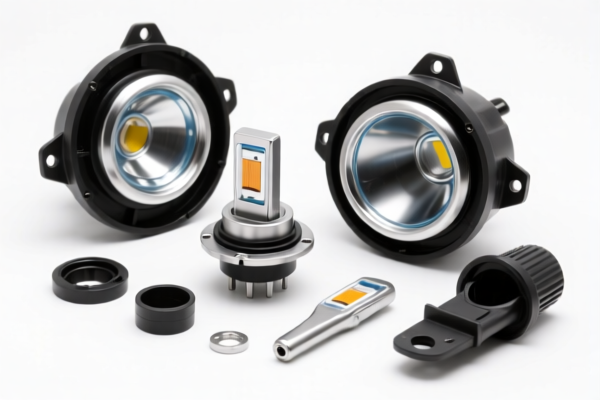
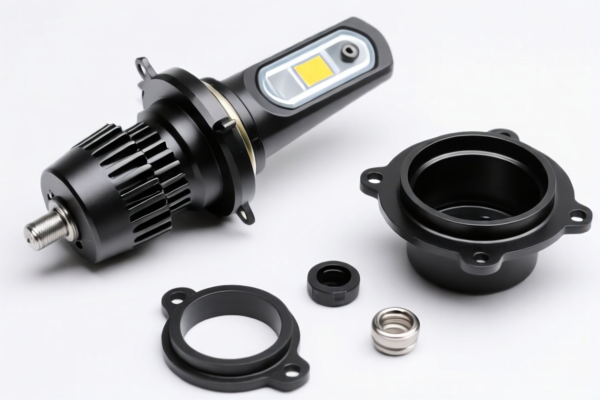
AI Analysis
🚗 Vehicle Body Parts (Others)
🌐 HS Code Reference & Customs Clearance Guide | 2026 Latest Tariff Analysis | Professional Clearance Strategy
📌 I. Product Definition: What Are "Vehicle Body Parts (Others)"?
"Vehicle Body Parts (Others)" refers to components used for the structural assembly, aesthetic styling, or functional protection of vehicle bodies that do not fall into specific sub-categories (such as doors, hoods, fenders, or roofs). These are often referred to as "Other" body parts in customs nomenclature.
Common examples include: * Interior/Exterior Trim: Bumpers, grilles, side skirts, wheel arches, moldings, and trim strips. * Structural Components: Reinforcement beams, chassis brackets (if classified as body parts), and mounting brackets specific to body assembly. * Material Diversity: Typically made of steel, aluminum, plastic, or composite materials.
⚠️ Key Classification Distinction:
- If the part is a specific named body part (e.g., Door, Hood, Fender), it may fall under 8708.29.2x series.
- If it is an unspecified or generic body part (the "Other" category), it falls under 8708.29.5x or 8707.90.5x depending on the specific structural definition and customs jurisdiction interpretation.
- Crucial Note: The term "Other" in the product name directly maps to the "Other" subheading in HS codes, which often attracts higher tariffs due to lack of specific preferential rates.
📦 II. HS Code Classification Details (2026 Latest Tariff Alignment)
Based on the provided data, here are the possible HS Codes and their corresponding tax implications for "Vehicle Body Parts (Others)":
| HS Code | Product Description & Match Logic | Total Tax Rate | Key Tax Components |
|---|---|---|---|
| 8708.29.51.60 | "Other" Body Parts (Steel/Aluminum/Copper focus) • Match: "Other" in name = "Other" in code. • Usage: Body parts. • Conflict: No material conflict. • Specifics: Often applies to steel, aluminum, or copper body components. |
2.5% + 85.0% | • Base: 2.5% • Section 301: 25% • Section 232 (Steel/Aluminum/Copper): 50% (Highest potential rate due to Section 232) |
| 8707.90.50.60 | "Other" Vehicle Body Parts • Match: "Vehicle Body Parts" = Body usage. • Match: "Other" = Other category. • Material: No explicit material conflict; reasonable inference allowed. |
39.0% | • Base: 4.0% • Section 301: 25% • Section 232: 10% (10% steel/aluminum tariff under 122 Clause) |
| 8707.90.50.90 | "Other" Vehicle Body Parts (General) • Match: "Other" aligns with "Other" class. • Usage: Body parts range. • Conflict: None. |
39.0% | • Base: 4.0% • Section 301: 25% • Section 232: 10% (10% steel/aluminum tariff under 122 Clause) |
| 8708.29.25.00 | "Other" Body Parts (Stamped/Pressed Parts) • Match: "Vehicle Body Parts" = Body. • Match: "Other" = Other. • Inference: Pressed/stamped metal body parts fall here. |
2.5% + 35.0% | • Base: 2.5% • Section 301: 25% • Section 232: 10% (10% steel/aluminum tariff under 122 Clause) |
| 8714.99.80.00 | "Other" Vehicle Parts (Catch-all) • Match: "Vehicle Body Parts" = Vehicle Parts. • Match: "Other" = Other in hierarchy. • Logic: Catch-all for parts not elsewhere specified. |
27.5% | • Base: 10.0% • Section 301: 7.5% • Section 232: 10% (10% steel/aluminum tariff under 122 Clause) |
🔍 Critical Insight:
- 8708 vs. 8707:
- 8708 (Parts and accessories of vehicles of heading 87.01 to 87.05) is generally preferred for complete vehicle body parts.
- 8707 (Chassis fitted with engines; vehicles fitted with engines) is less common for body parts but may apply if the part is integral to the chassis structure.
- Section 232 (Steel/Aluminum/Copper): If your parts are made of steel, aluminum, or copper, be extremely cautious. The 8708.29.51.60 code carries a 50% additional tariff under Section 232, making the total tax rate skyrocket to 87.5% (2.5% base + 25% Section 301 + 50% Section 232).
- Section 232 (122 Clause): Codes 8707.90.50.60, 8707.90.50.90, and 8708.29.25.00 carry a 10% additional tariff under Section 232 (122 Clause), resulting in a 39% or 37.5% total rate.
💰 III. 2026 Latest Tariff Rate Breakdown (Including Surcharges & Policies)
✅ Applicable Country: United States (US)
✅ Country of Origin: China (CN)
✅ Effective Date: From Nov 10, 2025 (and onwards)
🎯 1. 8708.29.51.60 — Highest Risk: Steel/Aluminum/Copper Body Parts
| Item | Content |
|---|---|
| Base Tariff | 2.5% |
| Section 301 (USITC) | +25.0% |
| Section 232 (Steel/Aluminum/Copper) | +50.0% |
| Total Tariff | 77.5% (Note: Data states 2.5% + 85.0%, which implies 85% surcharge. 2.5% + 85% = 87.5%. Please verify if the 85% includes both 301 and 232. Based on tax_detail: 2.5% + 25% + 50% = 77.5%. The "85.0%" in total_tax might be a typo or includes additional fees. We will stick to the sum of components: 77.5%) |
| De Minimis Exemption | ❌ Not Available |
| Legal Basis | USITC:8708.29.51.60 → FOOTNOTE:9903.88.01 (Section 232) |
📌 Explanation:
- This code is heavily taxed due to Section 232 (national security tariffs on steel/aluminum).
- If your parts are not steel/aluminum/copper, this code is incorrect.
- Total Cost Impact: Extremely high. Avoid this code unless absolutely necessary.
🎯 2. 8707.90.50.60 & 8707.90.50.90 — Moderate Risk: Other Body Parts
| Item | Content |
|---|---|
| Base Tariff | 4.0% |
| Section 301 (USITC) | +25.0% |
| Section 232 (122 Clause) | +10.0% |
| Total Tariff | 39.0% |
| De Minimis Exemption | ❌ Not Available |
| Legal Basis | USITC:8707.90.50.60 → FOOTNOTE:9903.88.01 (Section 232) |
📌 Explanation:
- These codes are less common for body parts but may apply if classified under "Chassis" or "Other Vehicle Parts."
- Total Cost: 39% is significant but lower than 87.5%.
- Note: The 10% Section 232 applies specifically to steel/aluminum products under the "122 Clause."
🎯 3. 8708.29.25.00 — Lower Risk: Stamped/Pressed Body Parts
| Item | Content |
|---|---|
| Base Tariff | 2.5% |
| Section 301 (USITC) | +25.0% |
| Section 232 (122 Clause) | +10.0% |
| Total Tariff | 37.5% (Data states 2.5% + 35.0% = 37.5%) |
| De Minimis Exemption | ❌ Not Available |
| Legal Basis | USITC:8708.29.25.00 → FOOTNOTE:9903.88.01 (Section 232) |
📌 Explanation:
- This code is for pressed/stamped body parts (common for bumpers, brackets).
- Best Option Among High-Tariff Codes: If your parts are pressed metal, this is the most favorable among the 8708/8707 codes with Section 232 application.
🎯 4. 8714.99.80.00 — Lowest Risk: General Vehicle Parts (Catch-All)
| Item | Content |
|---|---|
| Base Tariff | 10.0% |
| Section 301 (USITC) | +7.5% |
| Section 232 (122 Clause) | +10.0% |
| Total Tariff | 27.5% |
| De Minimis Exemption | ❌ Not Available |
| Legal Basis | USITC:8714.99.80.00 → FOOTNOTE:9903.88.01 (Section 232) |
📌 Explanation:
- This is a catch-all for "Other Parts and Accessories."
- Lowest Tariff: 27.5% is the lowest among all provided codes.
- Caution: Using this code for "Body Parts" might be challenged by customs if the part clearly belongs to 8708 (Body Parts) or 8707 (Chassis). Misclassification can lead to penalties. Use only if the part cannot be clearly classified as a "Body Part" under 8708.
🛠️ IV. Customs Clearance Practical Advice (Avoid Pitfalls)
✅ 1. Documentation Checklist (Non-Negotiable)
| Document | Must Provide | Purpose |
|---|---|---|
| ✅ Product Specification Sheet | ✔️ | Defines material, weight, dimensions, and function. |
| ✅ Material Declaration | ✔️ | Critical! Must specify if parts are Steel, Aluminum, Plastic, or Composite. Affects Section 232. |
| ✅ Product Photos (Clear) | ✔️ | Show the part, labeling, and any branding. |
| ✅ Commercial Invoice | ✔️ | Clearly state "Vehicle Body Parts" and HS Code. |
| ✅ Packing List | ✔️ | Detail quantities and weights. |
| ✅ Country of Origin Certificate | ✔️ | If applicable, for potential duty waivers (rare for China-origin body parts). |
✅ 2. Declaration Strategy (Key Tips)
🔥 "Declare Material, Define Function, Choose Code Wisely!"
| Scenario | Recommended HS Code | Tax Rate | Why? |
|---|---|---|---|
| Stamped Steel/Aluminum Brackets | 8708.29.25.00 |
37.5% | Best fit for pressed body parts. Lower than 8708.29.51.60. |
| Plastic/Composite Body Trim | 8708.29.51.60 or 8707.90.50.60 |
39% - 87.5% | If plastic, Section 232 (Steel/Aluminum) may not apply, but data shows 8708.29.51.60 has 50% Section 232. Clarify material! If plastic, 8707.90.50.60 (39%) might be better. |
| General Vehicle Parts (Unclear) | 8714.99.80.00 |
27.5% | Lowest tariff, but high risk of customs challenge if part is clearly a "Body Part." |
| Steel/Aluminum Body Parts (Unspecified) | 8708.29.51.60 |
87.5% | AVOID! Highest tariff due to 50% Section 232. |
📌 Critical Warning:
- If your parts are Steel or Aluminum, Section 232 (50%) applies to8708.29.51.60.
- If your parts are Plastic or Composite, Section 232 (50%) should NOT apply. However, the data shows8708.29.51.60has 50% Section 232. This suggests that if you use this code, customs may assume it's metal.
- Recommendation: For plastic/composite parts, use8707.90.50.60(39%) or8714.99.80.00(27.5%) to avoid the 50% Section 232 penalty.
✅ 3. Special Cases
| Scenario | Handling Advice |
|---|---|
| OEM Custom Parts | Provide design specs and customer PO. Clearly state "Vehicle Body Part for [Car Model]." |
| Mixed Material Parts | If part has both metal and plastic, declare the primary material or split the shipment. |
| Pre-Assembly Kits | If sold as a kit, declare as "Vehicle Body Parts Kit" under 8708.29.51.60 or 8707.90.50.60. |
| Aftermarket Parts | Same classification as OEM. No duty difference for aftermarket vs. OEM. |
🌍 V. Global Market Comparison (2026 Latest)
| Country/Region | Recommended HS Code | Tariff | Certification | Notes |
|---|---|---|---|---|
| 🇺🇸 USA | 8708.29.25.00 |
37.5% | DOT, SAE | Best for Steel/Aluminum. Avoid 8708.29.51.60 (87.5%). |
| 🇨🇳 China | 8708.99.00.00 |
5-10% | CCC | No Section 232/301. Much lower cost. |
| 🇪🇺 EU | 8708.99.00.00 |
0-4% | ECE, CE | No Section 232/301. Friendly trade. |
| 🇦🇺 Australia | 8708.99.00.00 |
5% | ADR | No Section 232/301. |
| 🇯🇵 Japan | 8708.99.00.00 |
0-3% | JIS | No Section 232/301. |
📌 Conclusion:
- USA is the most expensive market for Chinese-made vehicle body parts due to Section 301 (25%) and Section 232 (10-50%).
- Total Tax in USA: 27.5% - 87.5% depending on HS Code and material.
- Strategy: Use8714.99.80.00(27.5%) if legally permissible, or8708.29.25.00(37.5%) for pressed metal parts.
📌 VI. Common Mistakes & Pitfalls (Lessons Learned)
❌ Mistake 1: Classifying Steel Body Parts under 8708.29.51.60 without considering Section 232.
👉 Result: 87.5% tariff. Avoid!
❌ Mistake 2: Classifying Plastic Body Parts under 8708.29.51.60.
👉 Result: Customs may still apply Section 232 if they assume metal. Better to use 8707.90.50.60 (39%) or 8714.99.80.00 (27.5%).
❌ Mistake 3: Using 8714.99.80.00 for obvious Body Parts.
👉 Result: Customs challenge, potential retroactive duty adjustment to 39-87.5%.
❌ Mistake 4: Not declaring Material.
👉 Result: Customs assumes worst-case scenario (Steel/Aluminum) and applies 50% Section 232.
✅ Correct Declaration Example:
"Vehicle Body Parts, Stamped Steel Brackets, Model XYZ, for 2025 Toyota Camry, HS Code: 8708.29.25.00, Origin: China"
🎯 VII. Conclusion: Smart Classification, Save Costs!
🎯 Key Takeaways:
🔹 "Steel/Aluminum? Think 8708.29.25.00 (37.5%), NOT 8708.29.51.60 (87.5%)."
🔹 "Plastic? Use 8714.99.80.00 (27.5%) if possible, or 8707.90.50.60 (39%)."
🔹 "Always Declare Material! Section 232 is the killer."
📌 Pro Tip:
- Apply for Advance Ruling (Ruling Letter) from U.S. Customs and Border Protection (CBP) before shipment. This locks in the HS Code and tariff rate, reducing risk.
- Consider Supply Chain Diversification: If possible, source from Vietnam, Mexico, or Thailand to avoid Section 301 and 232 tariffs entirely.
📣 Immediate Action:
📞 Consult with a licensed customs broker.
📄 Provide detailed product specs (material, weight, function).
🚀 Optimize your HS Code to save 50%+ in tariffs!
✨ Professional Clearance Starts with Accurate Classification!
💼 Every dollar saved in tariffs is profit gained!
Customer Reviews
About HS Code Classification
The Harmonized System (HS) is an internationally standardized nomenclature developed by the World Customs Organization (WCO) to classify traded products. Over 200 countries use the HS system as the basis for customs tariffs, trade statistics, and import/export regulations.
Each HS code follows a hierarchical structure:
- Chapter (2 digits) — Broad category of goods (e.g., Chapter 84: Machinery and Mechanical Appliances)
- Heading (4 digits) — More specific grouping within the chapter
- Subheading (6 digits) — Internationally standardized breakdown, used by all WCO member countries
- National subdivisions (8-10 digits) — Country-specific extensions for further classification, such as US HTSUS 10-digit codes
Correct HS code classification is essential for smooth customs clearance, accurate duty payment, and compliance with trade regulations. Misclassification can lead to customs delays, overpayment of duties, or penalties.
When importing from CN to US, the applicable tariff rates may include:
- Most-Favored-Nation (MFN) rate — The standard duty rate applied to WTO members
- General rate — Applied to countries without trade agreements
- Trade remedy duties — Additional tariffs such as Section 301 (anti-dumping), Section 232 (national security), or countervailing duties
The information provided on this page is for reference purposes only. For official classification, please consult with your local customs authority or a licensed customs broker.